Academia remembers Acton-born historian Gordon S. Wood, 92
Wood’s examinations of the American Revolution earned him the Pulitzer and Bancroft Prizes.
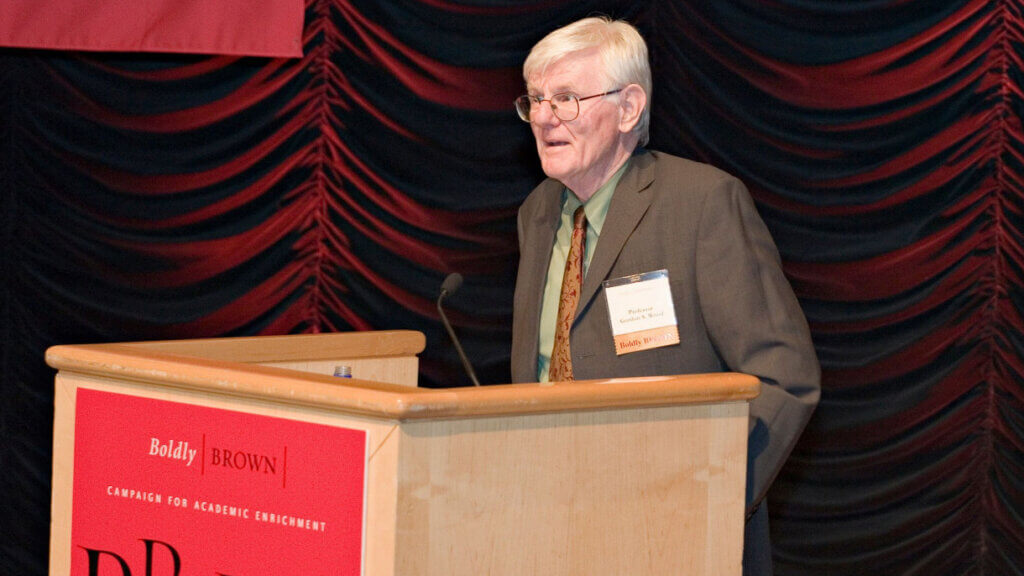
Gordon Wood, the renowned Acton-born historian whose scholarship on the American Revolution earned him many of the highest honors in his field, died Sunday.
His “The Radicalism of the American Revolution” won the Pulitzer Prize for History in 1993, 23 years after his first book, “The Creation of the American Republic, 1776-1787,” captured the Bancroft Prize.
Wood taught history at Brown University for nearly 40 years.
Police in East Providence, Rhode Island, said in a statement that Wood, 92, of Providence, suffered critical injuries when a car struck him in a parking lot.
‘Keenly attuned’
In 2017, Wood spoke at the Acton Free Public Library as the recipient of that year’s Ruth Ratner Miller Award for Excellence in American History.
He also lent his expertise to the Ken Burns PBS series, “The American Revolution,” which aired last year in conjunction with the semiquincentennial of the war’s opening salvos.
Wood “was keenly attuned to the ironies of history — of how people did things with consequences that they never anticipated,” Concordian Robert A. Gross, a fellow Bancroft Prize recipient who met Wood before they both became widely known historians, told The Acton Bridge.
“He also was a keen student of political theory, of government, of political philosophy, and so he could read John Adams or Jefferson and think about how their ideas and ways of developing arguments were bound up with theories of the great thinkers of the Enlightenment,” Gross said.
“He had a sense of the interplay between society and economy and ideas and philosophy.”
‘A towering historian’
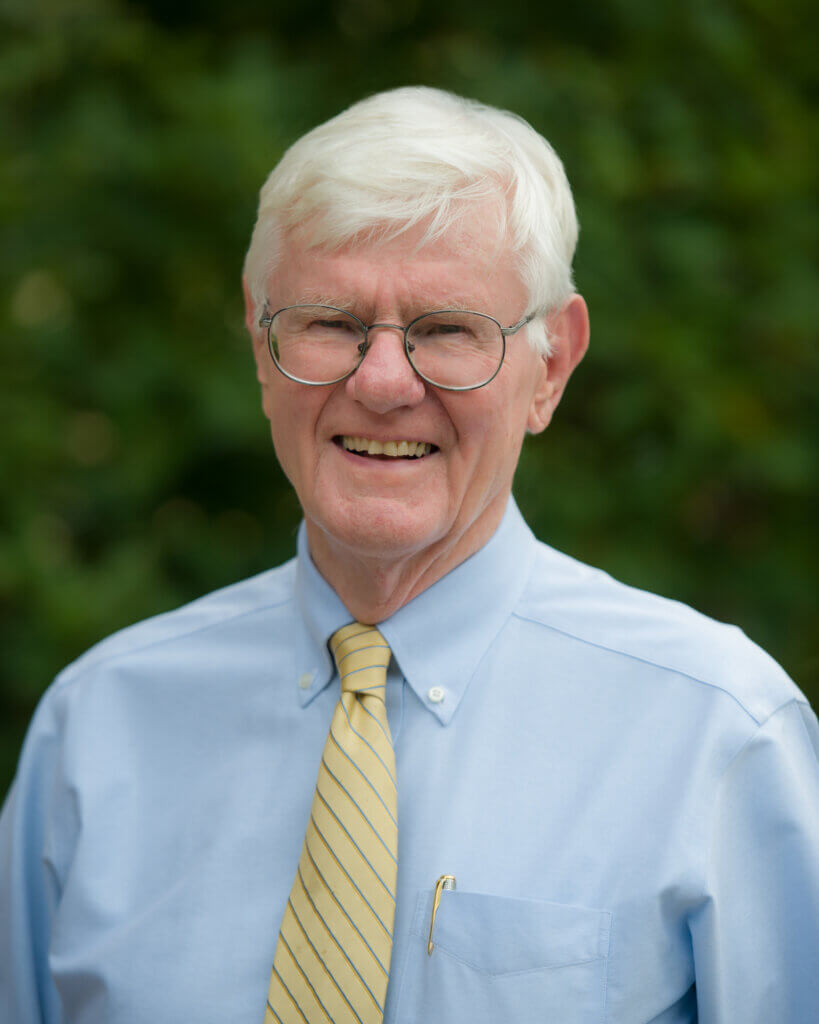
Wood lived for some time in Worcester and graduated from Waltham High School.
He earned degrees from Tufts and Harvard, teaching at the latter and at the University of Michigan before joining the Brown faculty in 1969.
“A preeminent scholar of American history, Gordon Wood helped countless readers understand the events and forces that led to the birth of the United States with depth, nuance and clarity,” Brown President Christina Paxson said in a statement on the death of the scholar, who received a National Humanities Medal from then-President Barack Obama in 2011.
“We mourn the loss of a towering historian whose insights will inform both academic scholarship and public understanding for generations to come,” she said.
Wood retired from Brown in 2008, but remained involved in academic life.
His most recent book, “Power and Liberty: Constitutionalism in the American Revolution,” was published in 2021.
“What Gordon Wood did is he saw that actually people could hold ideas that were related to their position in society that shaped the worldview that we call ideology,” Gross said of his expansive work.
Wood even had a pop culture moment in 1997, when the title character in “Good Will Hunting” slapped down a pompous Harvard student’s borrowed interpretation of Wood’s scholarship.
“Even when he could sound curmudgeonly about the way people were misreading the past — or for that matter the present,” Gross said, Wood in fact had a “really sunny, optimistic disposition.”
Acton Museum Curator David Wood (no relation), said: “I had opportunities to talk with Gordon at Colonial Society meetings over the years — he was a 60-year member — but like anyone else, it is the voice of such works as ‘The Idea of America’ that speaks to me.”
Burns and fellow documentarians Sarah Botstein and David Schmidt said in a joint statement that Wood was not only “known to many as one of the foremost scholars on the American Revolution,” but “also a teacher of generations of students and other historians who, like him, help us better understand who we are as a country and a people.”
Revolutionary beginnings
Gross, who won the 1977 Bancroft Prize for his first book, “The Minutemen and Their World,” crossed paths with Wood many times in the world of academia. They appeared together in a 2025 Federalist Society short documentary on the Revolution.
He remembered first meeting Wood in 1969. Gross was assigned to cover a Manhattan meeting of the American Historical Association for Newsweek. Wood was then an assistant professor at Michigan.
“He was very gracious. And then the book came out. He became pretty famous. I would say that he was a remarkably modest person for his accomplishments,” Gross said.
Wood “knew where he stood; he clearly had a keen sense of his account of the 18th-century revolutionaries, but he was open to argument and disagreement, and he was incredibly generous to me,” he said. In fact, he said, “I got to be a visiting professor at Brown because he nominated me for it.”
In the field of history, “There were those who thought, ‘Oh, [Wood is] just apologizing for [the] dead white men,’ but he wasn’t really doing that,” Gross said.
“He was more interested in how — whoever you wrote about — how did you connect them to the larger American story?”
This story has been updated.