After fits and starts, amenities building wins Acton approvals
Officials have started to close the book on the much-discussed CCHS bathroom building after the Public Works Commission gave its blessing.
It’s not a done deal, but officials across town government have started to close the book on the much-discussed Acton-Carlisle High School bathroom building after the Public Works Commission gave its blessing.
The Community Preservation Committee also backed funding the project.
“Good news for those who want toilets at the high school,” Finance Committee member Peggy Briggs told her colleagues.
“And good news for us, because we can stop talking about toilets,” FinCom Chair Lois Wasoff added.
Although the Carlisle CPC still has to review its portion of the cost, and both towns would need to approve the grants at Town Meeting, officials are feeling optimistic that the project will finally come to fruition without any extra tax increases or debt.
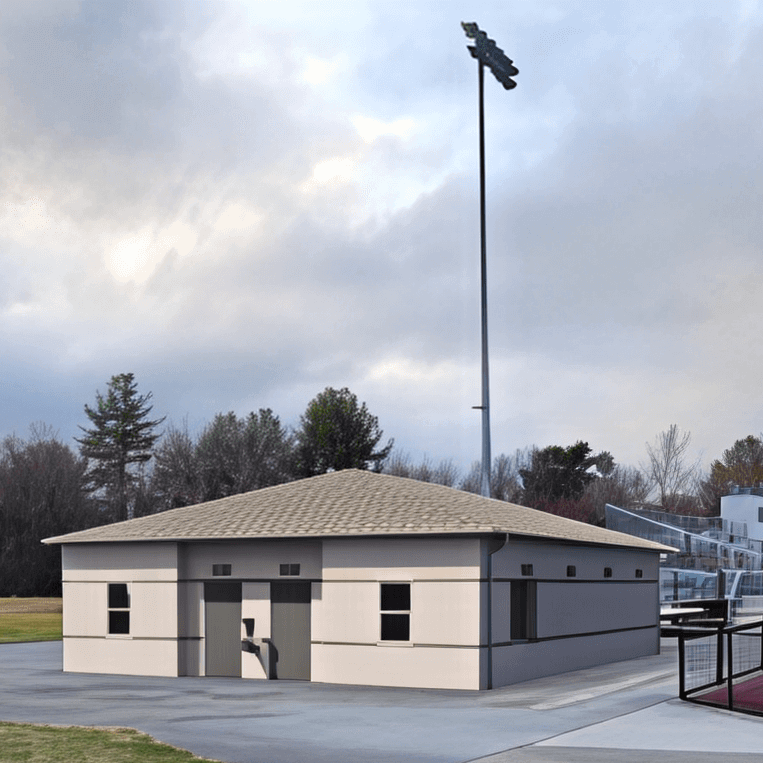
Project backers say the amenities building will bring the Memorial Field stadium into compliance with the state plumbing code and the Americans with Disabilities Act.
Memorial Field currently has only three portable toilets. The new building will have 16 permanent toilets.
Many critics acknowledged the need but bristled at the process after officials missed a deadline to get Acton CPC cash in the previous Town Meeting cycle. Sewerage questions emerged this spring, and voters who went to the polls rejected a tax hike to pay for the project.
Officials assured the PWC that their building won’t use much of Acton’s limited sewer capacity.
Acton-Carlisle School Committee Chair Tracey Marano was in the PWC audience for the December 11 unanimous vote and said the project reached this point “due to the support and assistance of many residents as well as local boards.”
She told The Acton Bridge she’s grateful to those who worked on the effort and lauded “strong collaboration” between the school and the town.
Carlisle approved its amenities funding last year, but the allocation expired. School Committee member and Carlisle resident Brian Waterson has said he’s confident a new request will succeed.
School officials have money reserved for a sewer hookup fee in addition to the original $1.85 million budget.
PWC Chair Andrea Solomon said the facility is “a needed building,” and praised school leaders for downsizing from their original concept.
“They really did shrink it down,” she told The Bridge after her panel adjourned.
PWC approval
Public Works Director Alan Cathcart said Acton has plenty of capacity in its treatment plant. But the town is up against an Environmental Protection Agency cap limiting how much treated wastewater it releases.
Then-PWC chair Sven Weber asked about a sewer hookup before Town Meeting this year, and school officials scrambled to meet with the panel. Members had questions, and the school tried to get voters’ green light without a sewer solution.
Assistant Superintendent of Finance and Operations Robert Conry sent new information to the PWC late last month.
He said the sewer flow estimate assumes the stadium’s 1,812 seats are full every day. In reality, only a handful of events, such as graduation, draw large crowds.
The amenities building might produce a large amount of sewage on a few days each year. But Weber said that will have a negligible impact on the monthly average used to calculate Acton’s compliance with its federal capacity limit.
Officials will also close the unheated amenities building during the winter, taking it offline during some months when Acton has historically exceeded its limit. Water and Sewer Superintendent Darin LaFalam said that “further increases my comfort.”
Composting or sewer?
CPC members and others have asked why the schools didn’t opt for composting toilets.
Conry, in his PWC memo, said composting would add extra maintenance costs and risk odors and health issues. Although officials argue the amenities building won’t add too much sewer flow, Conry said this is a “busy location” for a composting toilet.
Solomon said PWC asked “great questions” in its initial sitdown with Conry. “We kept waiting for them to come back and have those answers,” she said.
She said, “Everyone has to come through the same process.”
Even if the amenities process is all but complete, she said the sewer questions that this effort faced will resurface until Acton gets more capacity.
“It’s going to come up again,” she said.


