After marathon debate, Select Board stands by antisemitism definition
“At some point, you change it [or] you don’t,” the board’s Cameron McKennitt said. “You can’t win.”
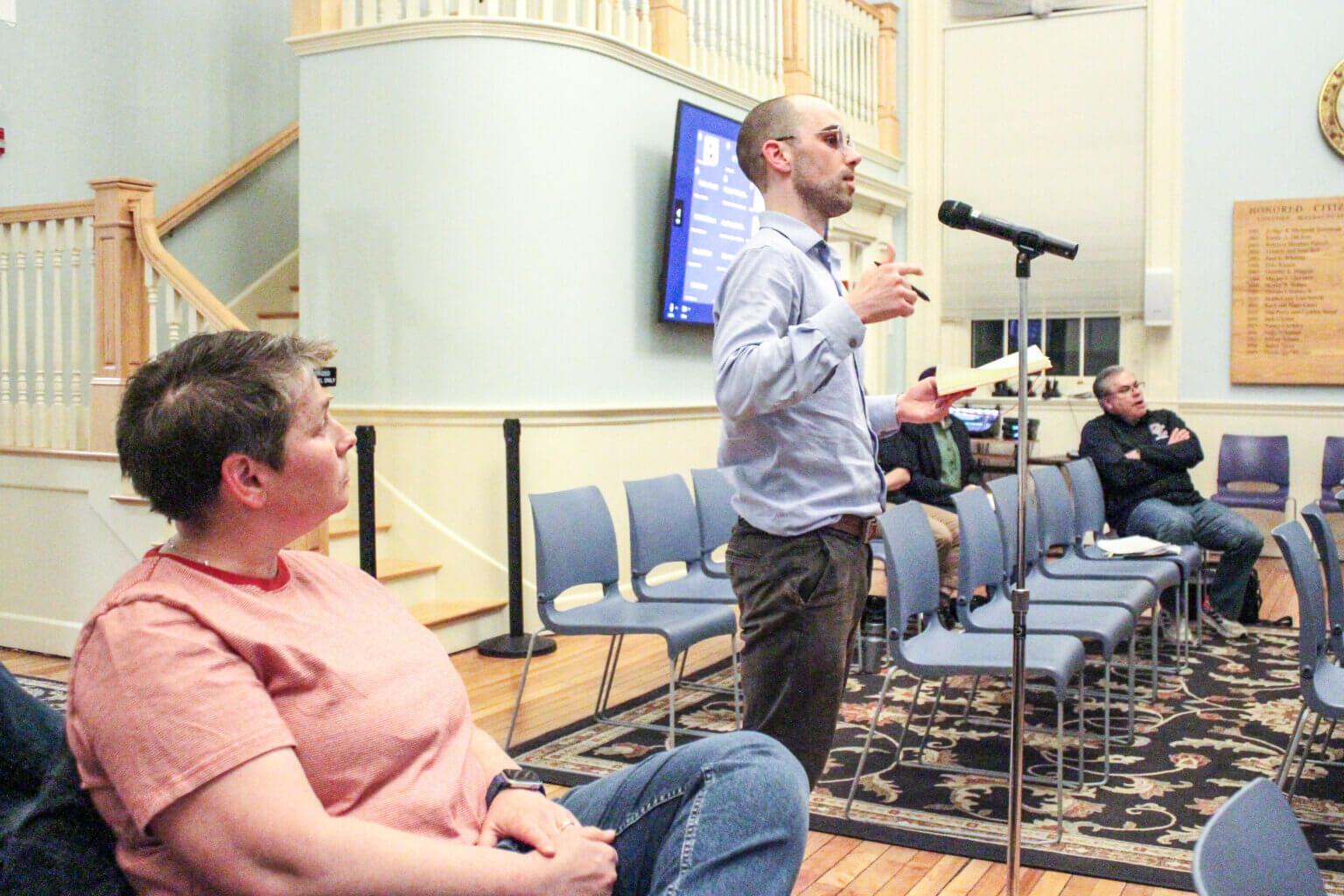
The Select Board’s January decision to adopt a controversial definition of antisemitism may have been a uniquely polarizing one.
On Monday, members stood by their vote and said they hope to move forward.
“At some point, you change it [or] you don’t,” the board’s Cameron McKennitt said. “You can’t win.”
Members backed the International Holocaust Remembrance Alliance’s working definition as part of a larger proclamation opposing anti-Jewish hate. They said they weren’t creating “new legal standards, enforcement authority,” or free-speech limits.
Where supporters see a useful definition, opponents say the IHRA framework chills criticism of Israel.
McKennitt said he heard more feedback on this issue than on any other since joining the Select Board. Chair Mark Howell said he thinks the board has “become unnecessarily distracted” from its goal of showing support for the Jewish community, and he never intended to choose a side in a debate about IHRA that stretches far beyond Acton.
Some on the board drew a distinction between the definition and IHRA’s antisemitism examples, which critics especially oppose.
Pro and con
The Select Board spent an hour of its five-hour April 13 meeting discussing IHRA.
Resident Mikhail Nitko mentioned a 2025 legal filing from the Anti-Defamation League that alleged rampant antisemitism in Acton public schools.
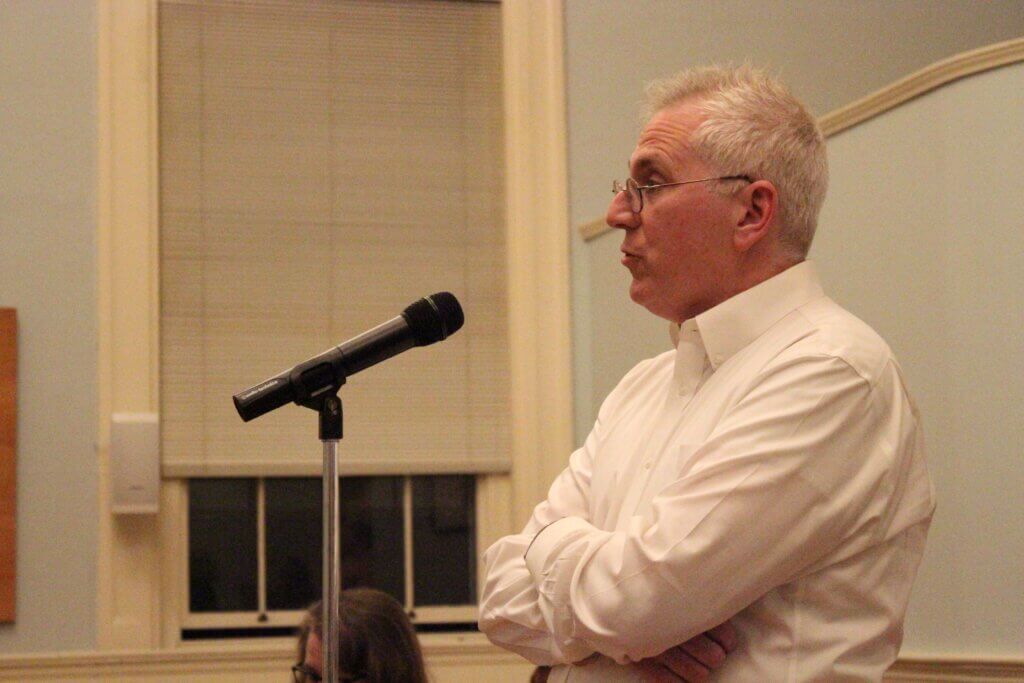
Nitko, father of a 6-week-old son, said the IHRA adoption “definitely made us feel a lot safer.” He urged the Select Board to leave it unchanged.
Concordian Brian Farber said he wasn’t going to “fall on my sword for IHRA.” On free speech concerns, though, he said he’s been critical of the Israeli government and “I’ve not been arrested” or “told to shut up.”
Farber is on the Diversity, Equity, and Inclusion Commission but said he was speaking on his own behalf.
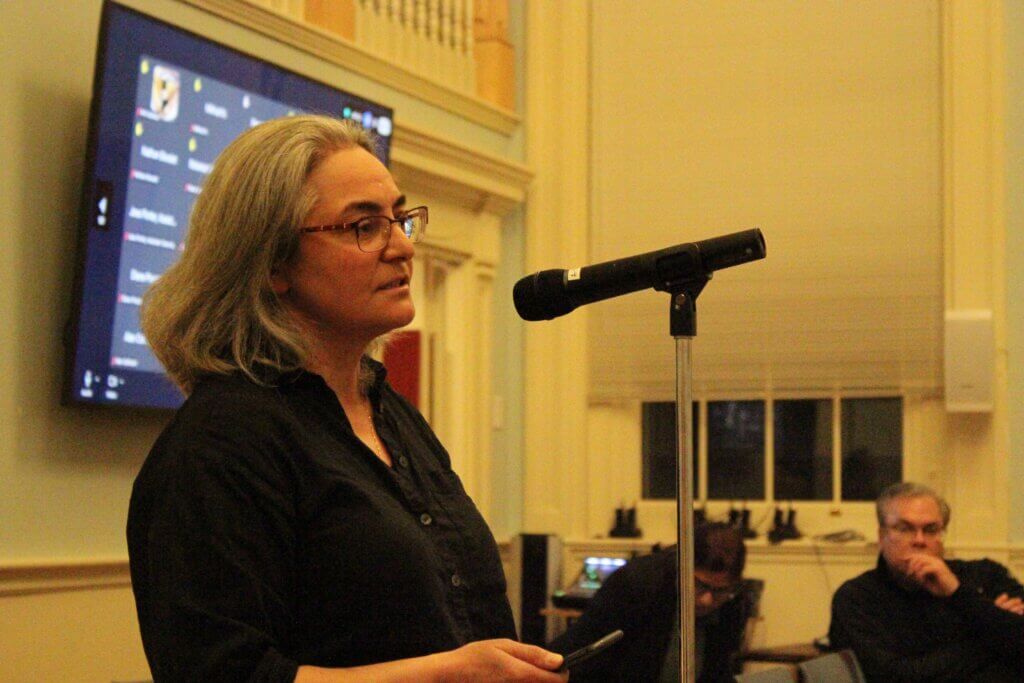
Resident Pamela Dritt said she’s been falsely accused of being antisemitic “because I have supported justice for Palestine.” She pushed the Select Board to ditch the IHRA examples.
“They are horrifyingly wrong,” she said.
Since its January vote, the Select Board has fielded Open Meeting Law complaints and impassioned arguments for and against the IHRA framework.
Some members originally suggested amending the proclamation to de-emphasize IHRA but the board took no such action. The board considered — but ultimately did not vote on — a statement clarifying that members did not adopt the examples.
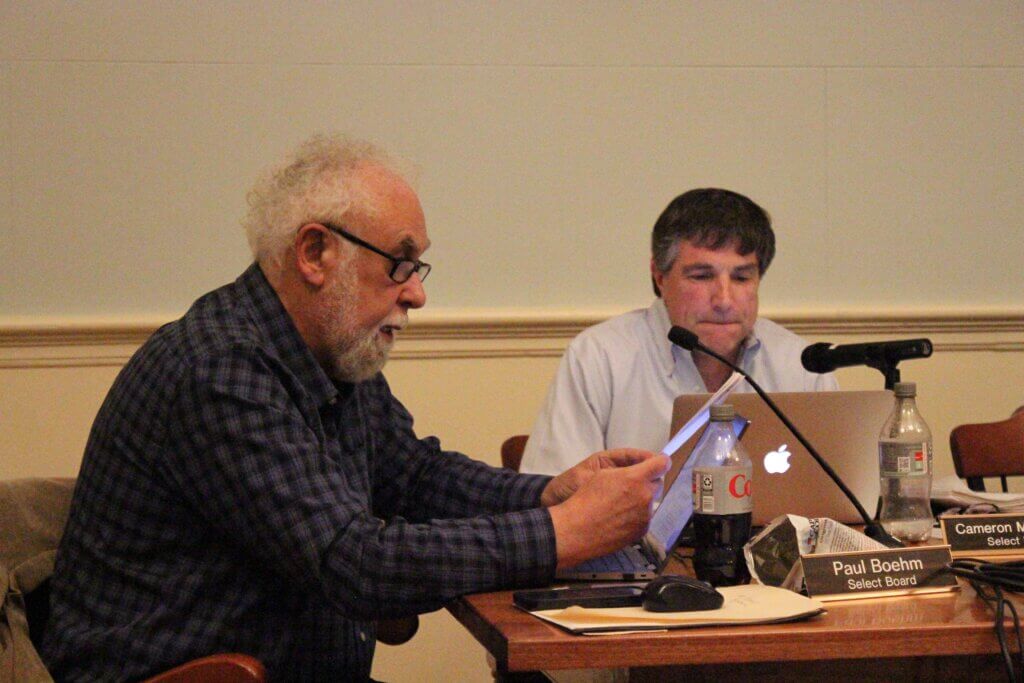
The proclamation “speaks for itself,” member Paul Boehm said. “I think we would be doing harm, at this point, if we changed it.”
Now “we need to get to work,” Rovelli said.
Howell highlighted upcoming efforts to fight hate through education. Among them:
- Town groups are sponsoring a workshop series by author and “dignity expert” Donna Hicks.
- The Acton-Carlisle Human Rights Council is rolling out a new round of “active bystander trainings” to help people intervene in hate incidents.
- The Bias and Hate Incident Reporting Work Group continues meeting.
“When we spend our time wordsmithing documents, then that’s good to a point,” Howell said, “but it doesn’t really move the ball down the field.”


