At ‘crossroads,’ Black Heritage Trail accord elusive
“We manufacture something to have a debate about, so that we don’t have to admit what the real issue is.”
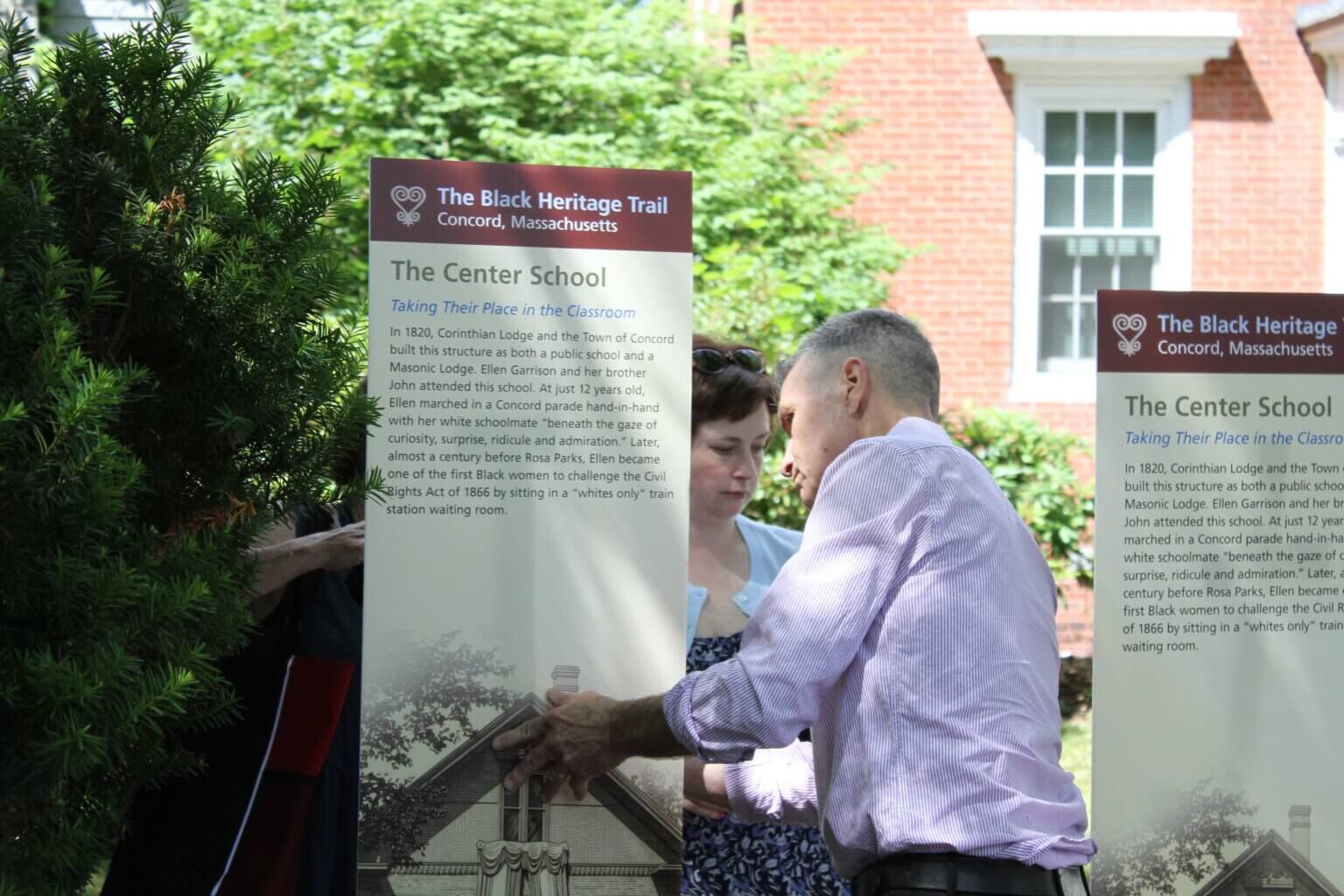
Almost everyone involved says they’re on board, in theory, with proposed Acton Black Heritage Trail Markers.
How the signs will look in practice remains the issue — and to some, what seems like a dispute over aesthetics reflects a larger problem.
“I don’t think anyone expected that it would be this difficult to try and bring forward the history [and] the story of Concordians that have a place here,” sign supporter Michael Williams, the lone Black member of the School Committee, told the Select Board on Monday night.
He says the current effort feels like “fighting for your life.”
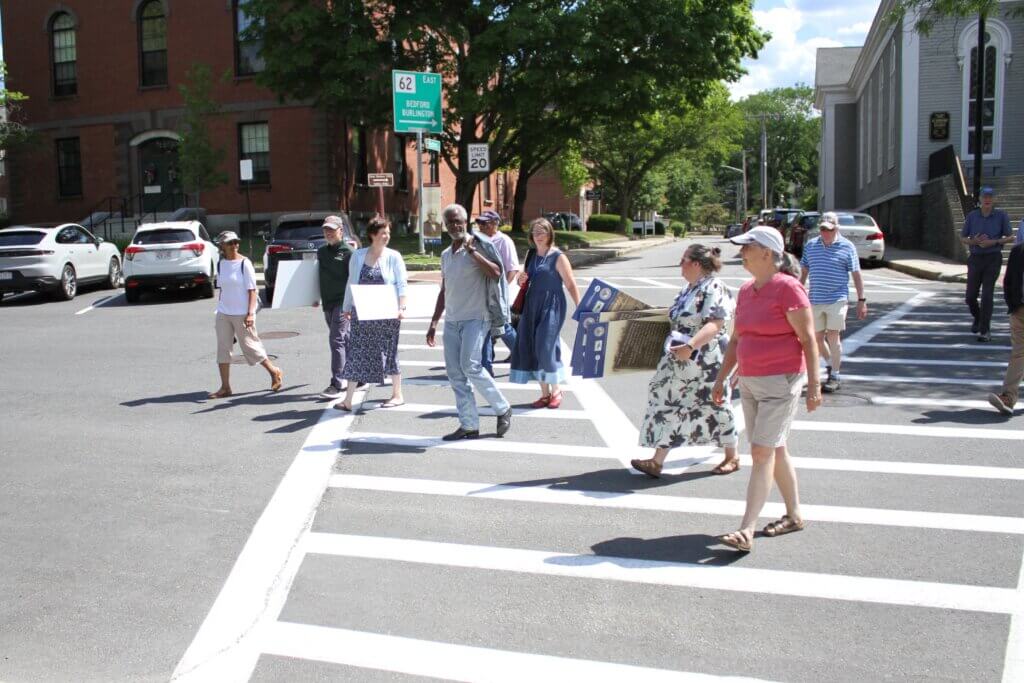
The town’s Historic Districts Commission gets a say over signs in places like Monument Square and, last week, delayed an up-or-down vote.
HDC members have cited obligations under their group’s founding law to preserve the town’s most historic areas and insist they’re agnostic to any sign’s content.
Chair Kate Chartener said concerns about the effect of the process on the Black community are valid.
“This is an unprecedented situation,” she told The Acton Bridge after Williams and others spoke. “I wish I could give an unprecedented response.”
Plans call for markers denoting historic locations, including a church where Frederick Douglass once spoke and a house where Harriet Tubman spent the night.
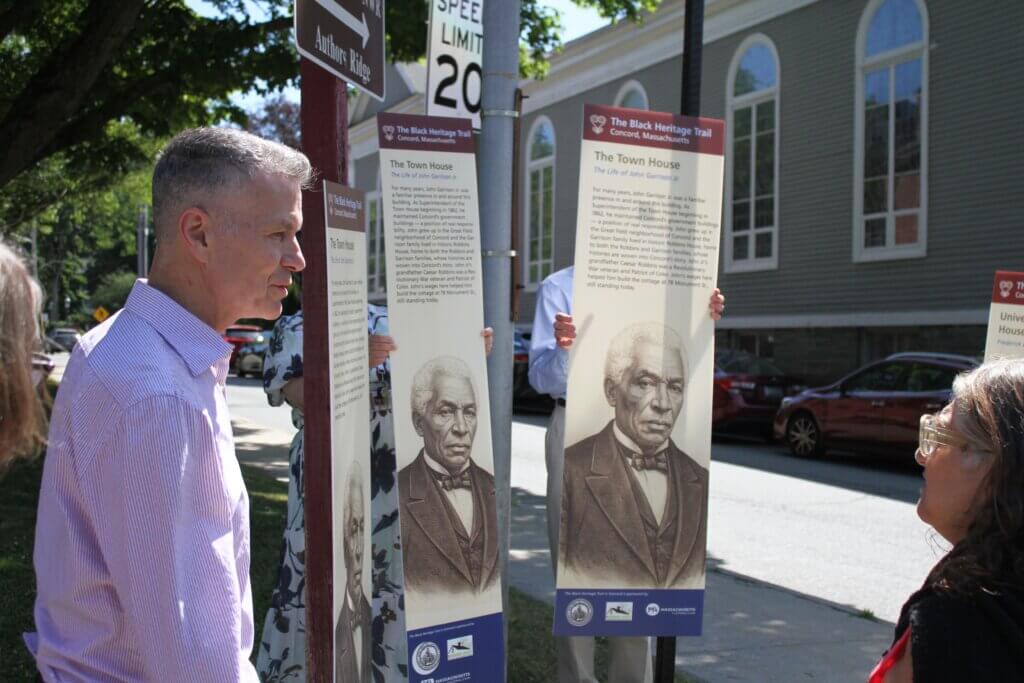
The commission “likes this project,” Chartener said. But members have worried that proposed 5-foot-by-18-inch signs are too big for Acton Center.
Sign supporters remain frustrated.
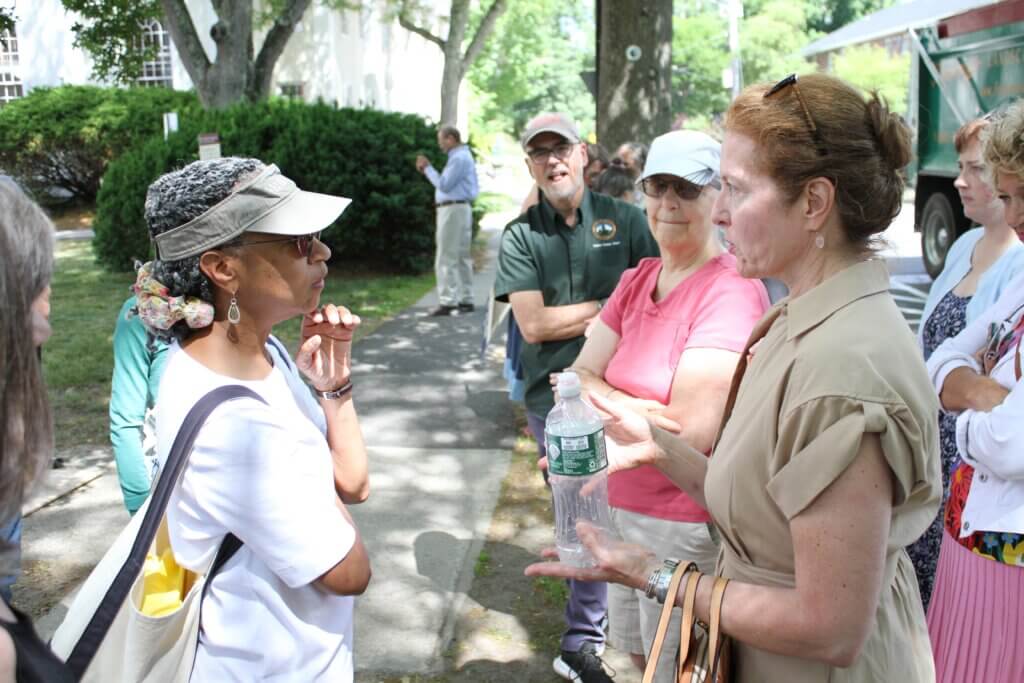
‘Haggling over 2 inches’
The current debate comes more than two years after a push to name Acton’s new middle school after Black Civil War-era activist Ellen Garrison.
Other controversies have flared since, including one over removing state tercentenary markers deemed offensive to Indigenous people.
HDC members said they asked for proportionally scaled-down Black Heritage Trail sign mockups. Advocates narrowed their markers for a site visit last week but didn’t shorten them.
HDC’s Walter Clay asked whether there was “any spirit of compromise.” Town Economic Vitality Coordinator Mimi Graney chalked the issue up to a miscommunication.
“We’re haggling over 2 inches” between an 18-inch-wide sign and a 16-inch alternative, Williams said. (Clay reiterated that the group was asking for smaller signs in both width and height.)
Acton won a $14,000 grant to cover half the cost of the sign project but would have to spend the money by June 30. With HDC approval now delayed until at least July, officials expect to lose most or all of the grant.
‘No perfect marriage’
Historical Commission member Nancy Fresella-Lee said she thinks the signs are too big. But amid rancorous discourse during HDC’s June 17 session — including a complaint of “white supremacist” historical standards — she said she was afraid to speak.
She encouraged the community to “take out the emotion.”
“This is a lot about design,” she said.
Asked about calls for harmony, Robbins House Board of Directors co-Chair and project supporter Nikki Turpin said, “There’s no perfect marriage where no one’s arguing, so this is OK.”
She said the town is her partner in the relationship, and it needs to “do better.”
Trail marker supporters say Acton is proud of its history as a cradle of early patriotism and American literature. They see reluctance to acknowledge more sinister truths, such as the town’s history of slavery.
Zoë Pollak moved here roughly three years ago and is working with The Robbins House. She told The Bridge, at a Juneteenth event, that she expected “more than lip service” progressivism in Acton.
In a separate conversation, resident Nick Pappas said the fight over trail marker dimensions seems “so typically Acton.”
“We manufacture something to have a debate about,” he said, “so that we don’t have to admit what the real issue is.”
He supports the signs as is. The real issue, he said, “is that the community isn’t recognizing what it’s like to be a Black person in the United States.”
Although grant money will soon expire, the trail marker push isn’t dead. Officials hope to find alternative funding if they get approval.
‘We’re not going anywhere’
“The town is really at a crossroads,” Select Board member Dean Banfield said as the group picked up the conversation.
He said he thinks HDC is operating in “good faith” and hopes for an agreement to install the signs. His colleagues relayed similar hopes.
This debate “doesn’t feel necessarily easier” than the middle school naming talks, Turpin said, “but it feels different.”
More people of color publicly backed the marker effort, she said, because “they knew somebody was fighting.”
“A lot of the town is like, ‘Oh, wait, there are Black people,’” she said.
Whatever the resolution on trail markers, advocates say they’ll keep working, and Turpin again alluded to matrimony.
“We’re not going anywhere,” she said. “We didn’t get married to break up.”


