Baseball games and ‘moving pictures’: 150 years of patriotic celebrations
“A Celebration Heard ‘Round the World” follows the town’s festivities from the first significant event through the Bicentennial.
We know how Acton partied in 2025.
The 250th anniversary of the American Revolution on April 19 was an all-day affair, from a pre-dawn salute to a parade to an evening drone show.
But how did it celebrate the 50th anniversary? And the 100th, 150th, and 200th?
An exhibit titled “A Celebration Heard ‘Round the World” at the Acton Free Public Library follows the town’s festivities from the first significant event — in 1825 — through the Bicentennial in 1975.
It’s the result of a monthslong project conducted by the library’s William Munroe Special Collections.
A few months ago, outside archivist Julia Klukoff came in to help process items in multiple collections housed in the library. “A Celebration Heard ‘Round the World” was “a team effort” that included Nate Smith, the town’s archivist, says Anke Voss, curator of Special Collections.
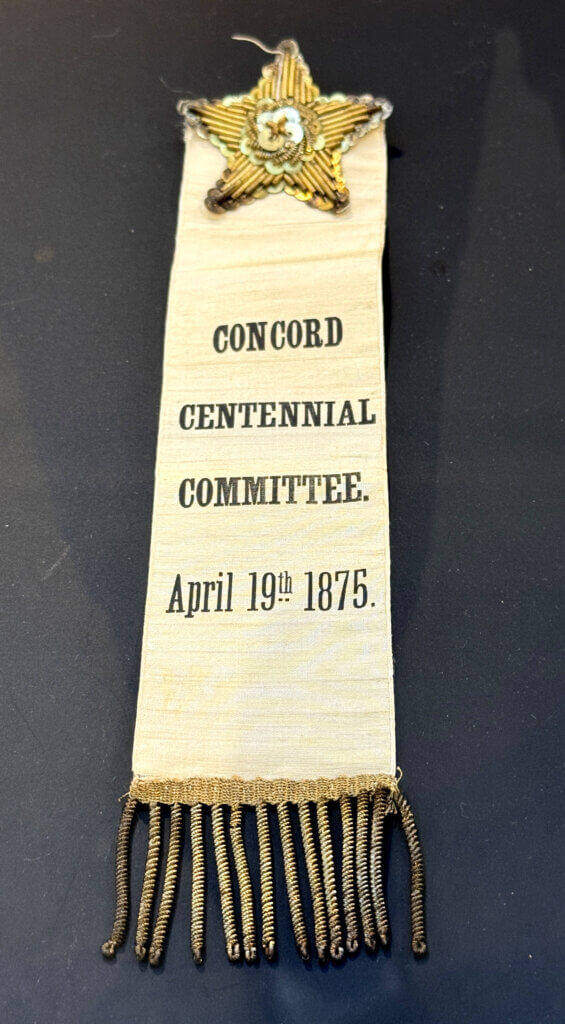
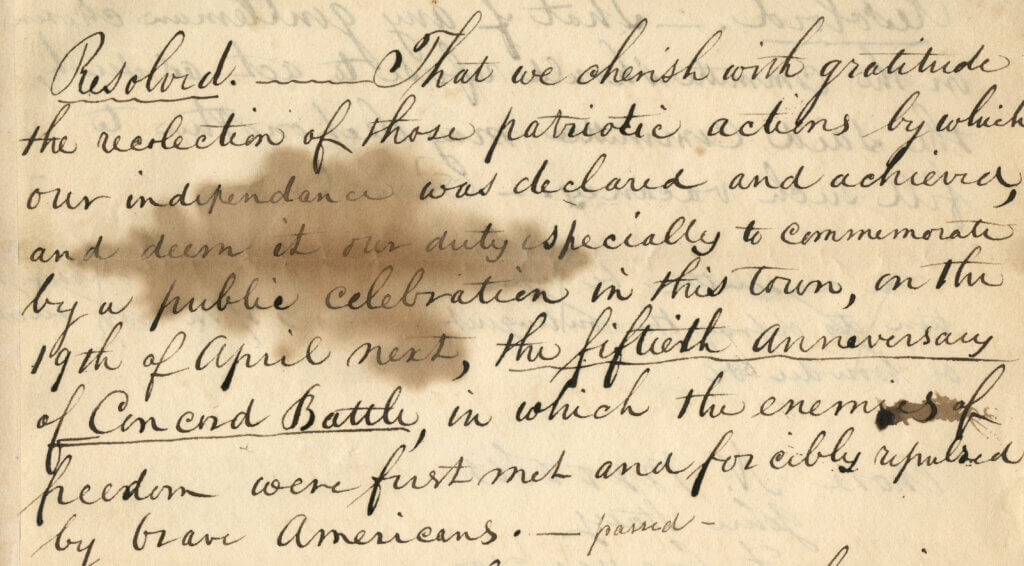
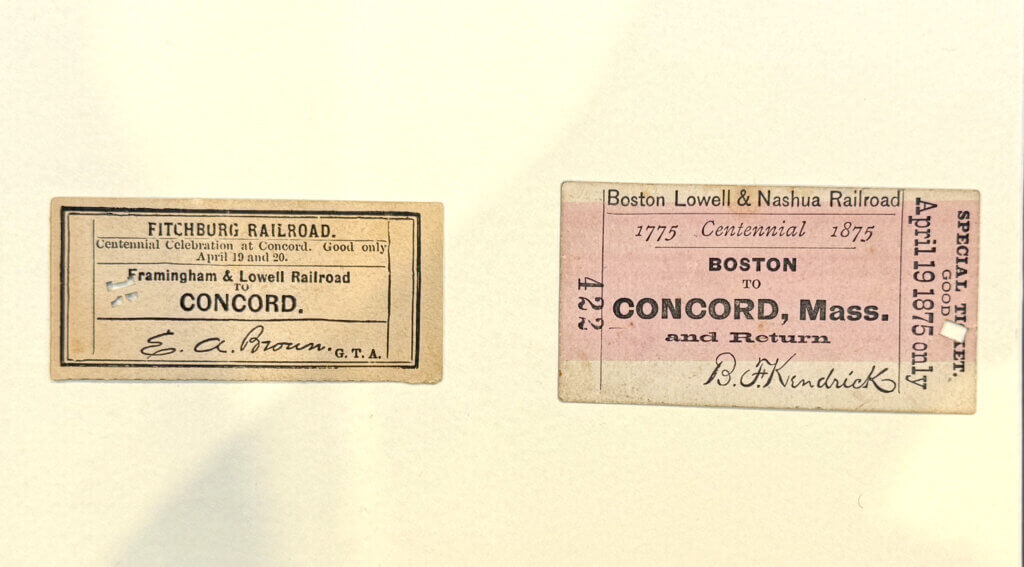
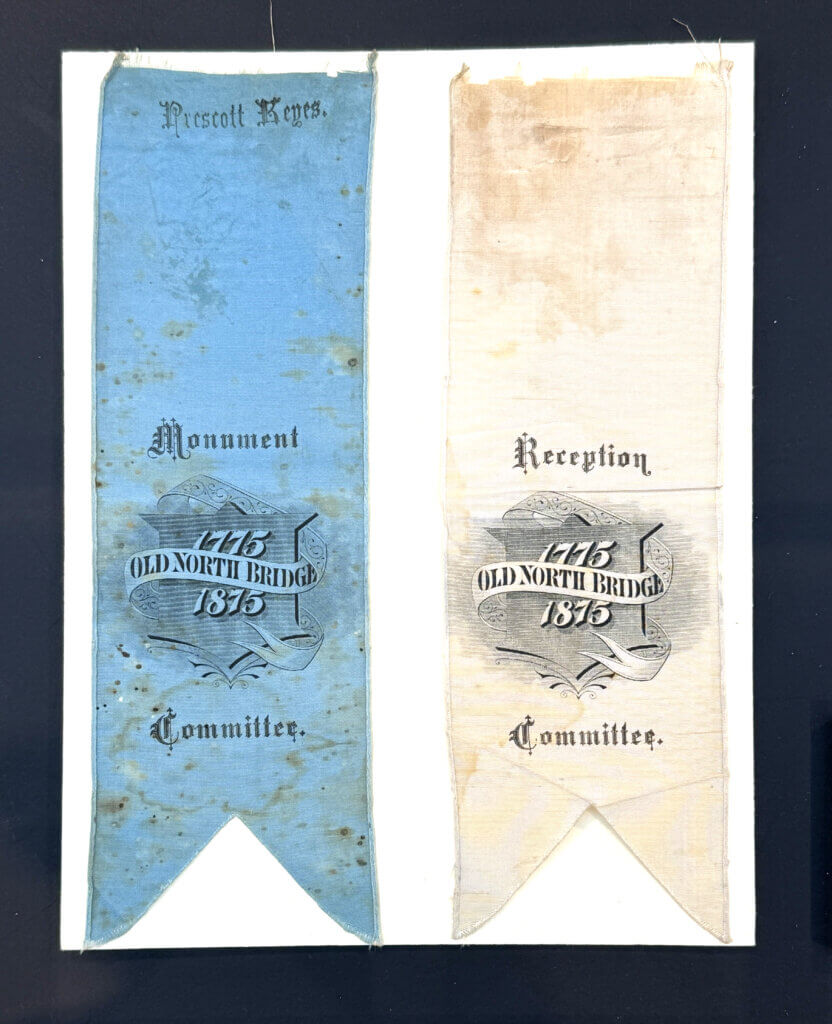
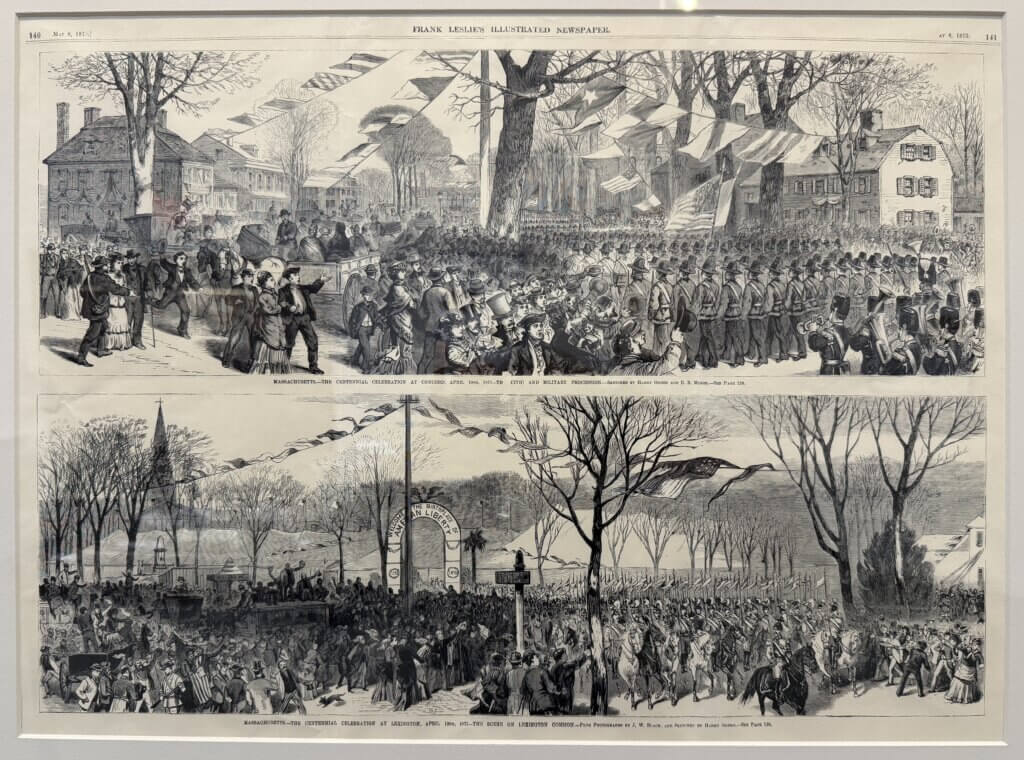
On walls or in cases in the Munroe Gallery and on the first floor are records and memorabilia of the observances over the years, including paintings, photographs, tickets, committee ribbons, broadsides, and official documents.
‘Moving pictures’ at the Armory
An 1824 visit to Acton during his “farewell tour” of the country by the Marquis de Lafayette, a hero of the American Revolution, indirectly prompted the first major commemoration of the war held a year later. Inspired, town officials formed a planning committee for the 50th anniversary of the “Acton Fight.”
The 1825 celebration was relatively modest, featuring a procession and a dinner during which toasts were made to George Washington, the Commonwealth of Massachusetts, and the surviving patriots in the room, who received commemorative badges.
The exhibit illustrates that while traditional events such as parades, speakers, balls, and reenactments have prevailed in some way, other observances have also reflected the community’s diverse interests and current trends.
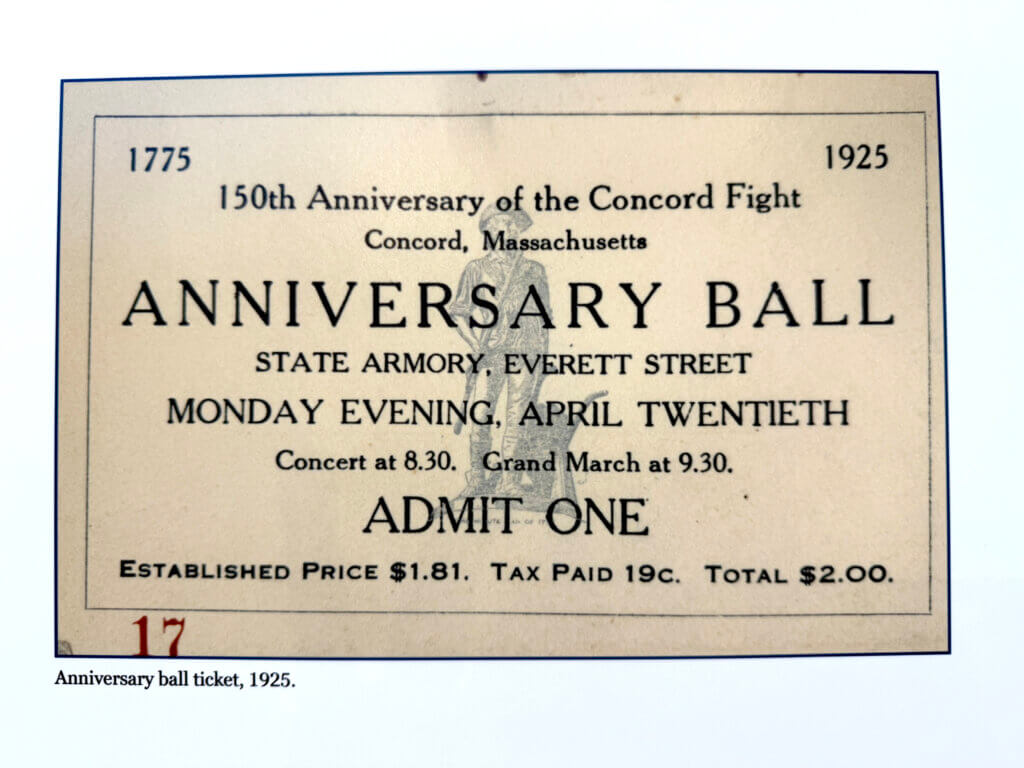
In 1850, for example, the first — and last — “Union Celebration” was held, with Acton joining forces with surrounding towns for a single event; tickets were 75 cents. Seventy-five years later, there were “moving pictures” in the Acton Armory, attendance ribbons for citizens, and athletic events such as track and field and baseball.
A souvenir booklet was produced and sold in 1950. In 1975, Daniel Chester French’s The Minute Man, installed in 1875, was temporarily removed from the Old North Bridge, and a time capsule was placed in its base. Among the contents is a personal letter from Lady Bird Johnson to a local girl named Stephanie, who had written to the first lady about a bicentennial project she had done for her Brownie troop.
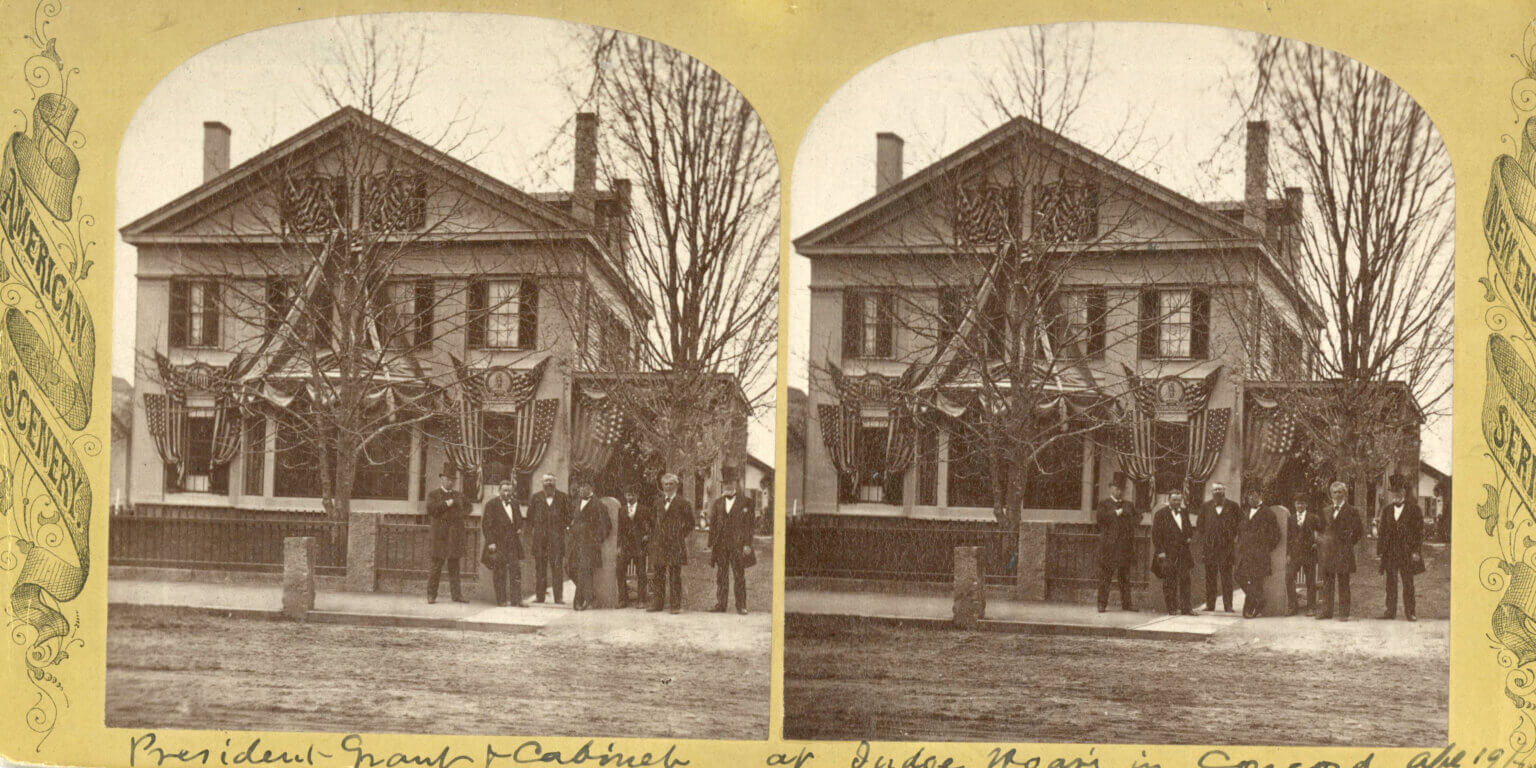
Among other items are a warrant from 1775 that calls residents to Town Meeting “in His Majesty’s name,” ribbons worn by officials at the 1925 commemoration, and from 1875, a stereoscopic image of President Ulysses S. Grant with his Cabinet in Acton for the event. A pair of railway tickets has a backstory: The trains into Lexington and Acton that day were so overloaded that they broke down.
‘Half a celebration’
“We wanted to tell a more complete story about the Acton Fight and the people who lived it,” says Jessie Hopper, assistant curator of Special Collections. Noting the displays dedicated to women and patriots of color, “we were not deterred by any changes in the national landscape,” she says of the exhibit’s inclusivity.
Women who wished to attend the 1875 exercises, according to the exhibit, were told to wait for an escort, which never came. When Louisa May Alcott and several female companions arrived on their own, they were met with derogatory comments. Ironically, when portions of the platform on which dignitaries — all men — collapsed, it was women who helped hold up the stage.
Afterward, Alcott wrote a magazine article criticizing the “neglect” of Acton’s women, which she felt was unfair, given that women paid taxes to finance the event. Another female writer referred to the event as “only half a celebration” due to the failure to acknowledge women’s contributions during the Revolutionary War and more recent movements such as suffrage.
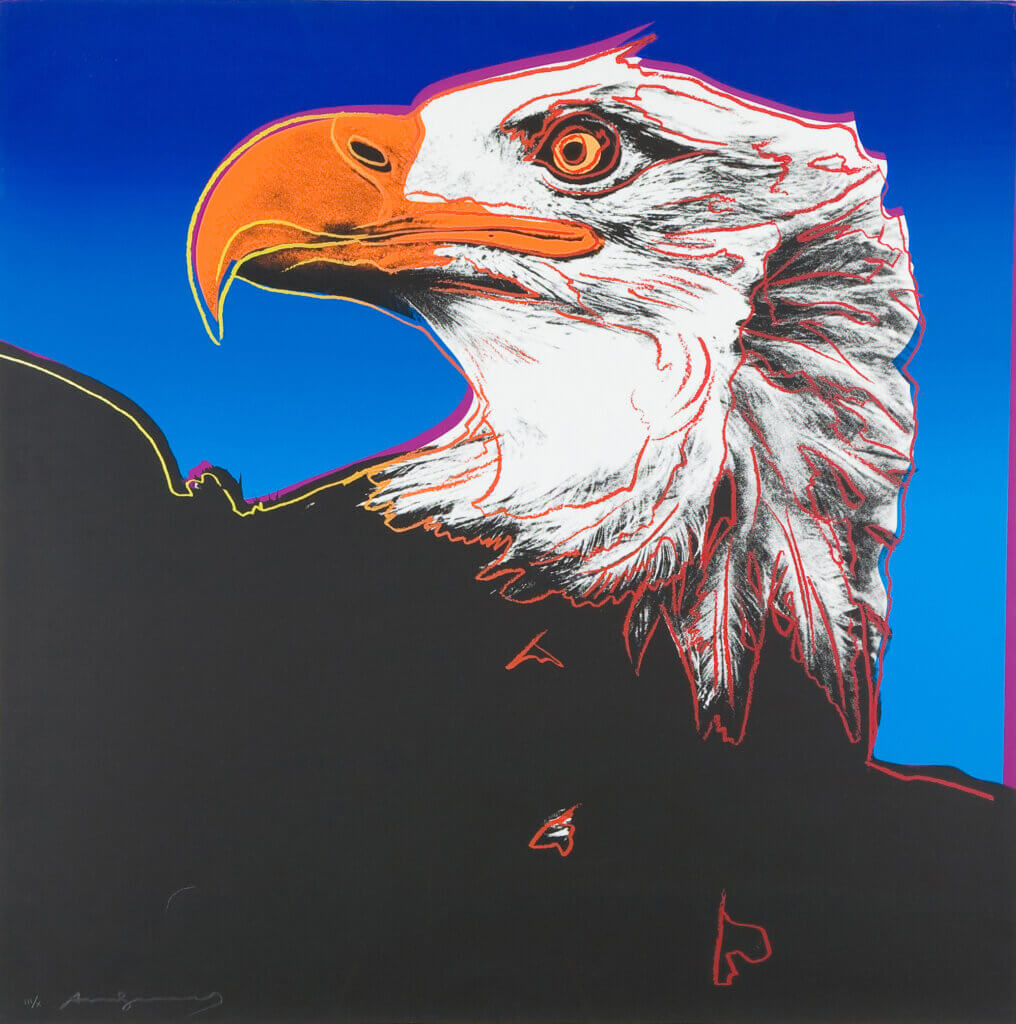
Complementing the exhibit is a striking original silkscreen of a bald eagle by Andy Warhol, on loan to the library from the Museum of American Bird Art at Mass Audubon. It hangs in the Goodwin Forum.
Hopper says she appreciates that Concordians offer historical items to Special Collections, adding, “If they are unique or in better shape than what we have, we keep them.”
“A Celebration Heard ‘Round the World” runs through June 30. Warhol’s eagle will be on display through July. Visit concordlibrary.org for library hours.