Beyond brains: How CCHS’ science team grew, triumphed, and bonded
Built from scratch. the Acton-Carllsle team placed ninth out of 78 at the recent Massachusetts State Science Olympiad.
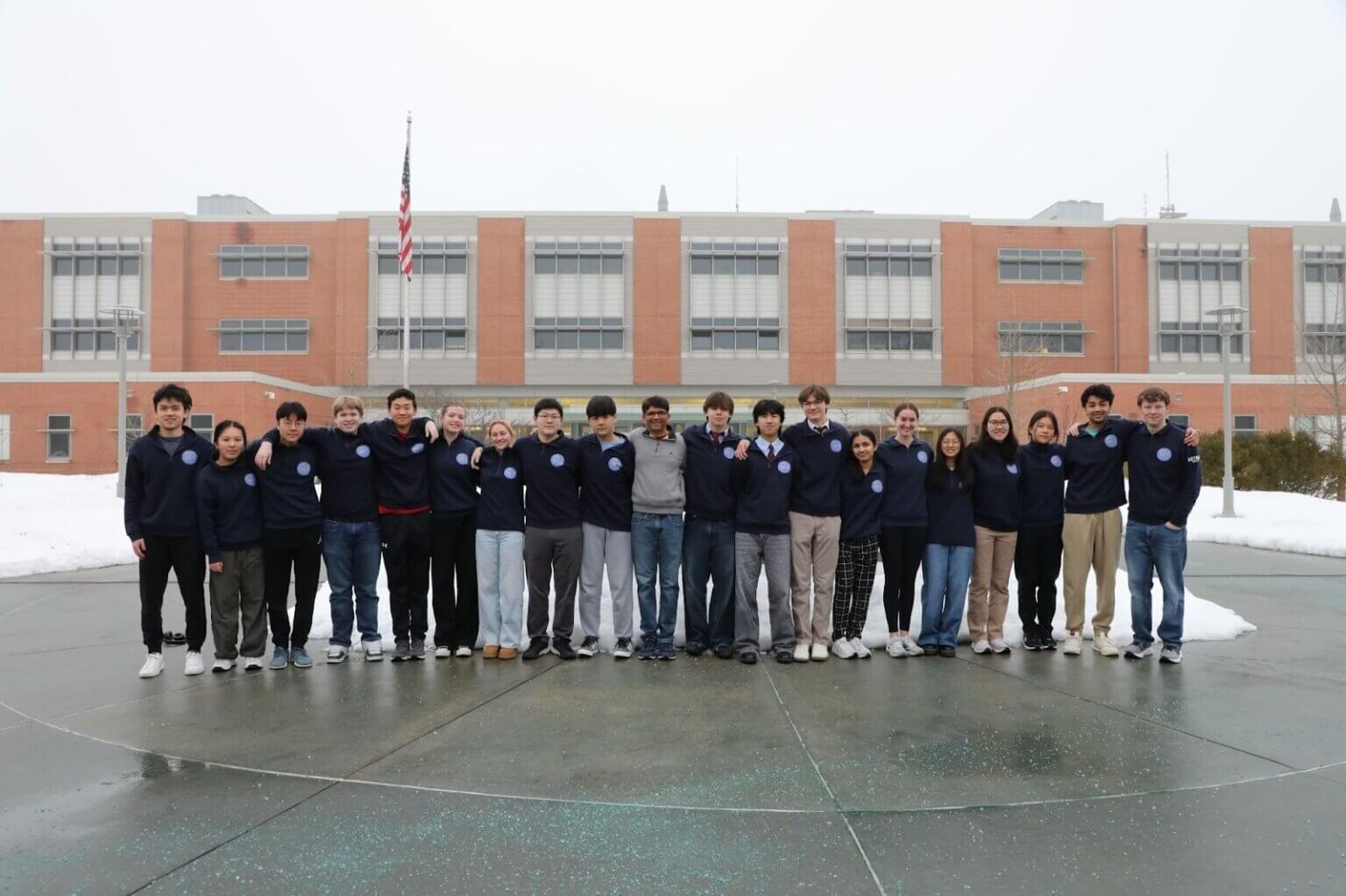
The bus ride back from the 2026 Massachusetts State Science Olympiad was anything but quiet. With the windows open, students danced and sang to music blasting from a boombox, making the celebration warm even on the cool New England evening. Earlier that day, the Acton-Carlisle High School team managed a defining moment: placing ninth out of 78 elite teams.
But the true realization of their success didn’t happen on the bus or during the ceremony.
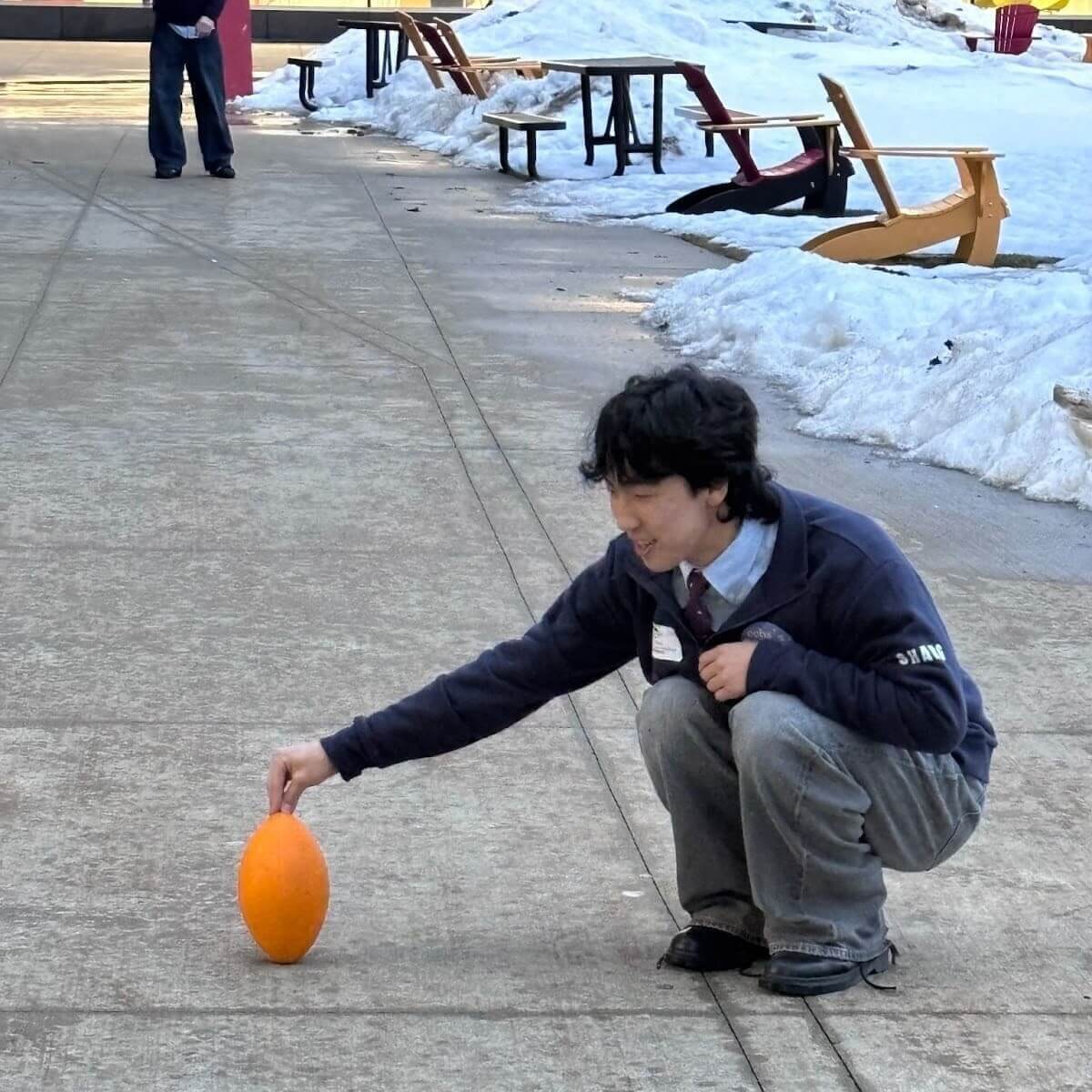
“While waiting for the awards, our team got outside and played a game of soggy football in the snow,” says senior co-founder Evan Wang. “Every single team member got into the mix. … In that moment, I realized that this was more than just a team. It’s now a family.”
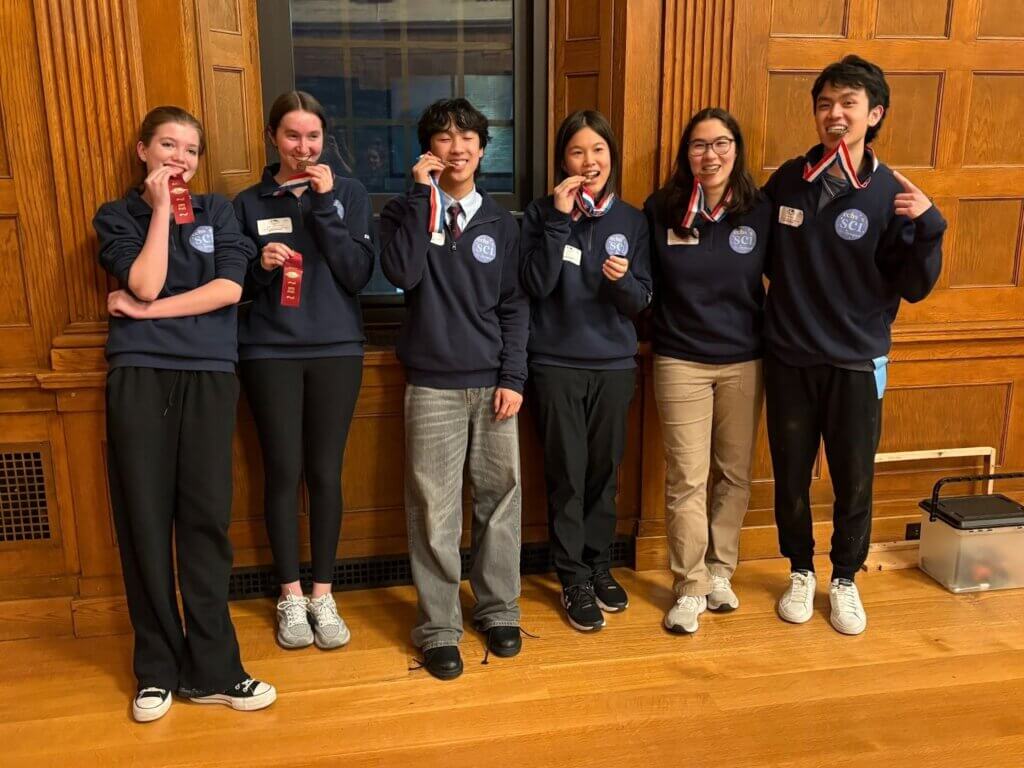
That family is now one of the top 10 science powerhouses in the state because of their dominating individual event wins on March 7, taking third in Chemistry Lab (Maggie Li and Evan), third in Entomology (Jason Shang and Maggie), and third in Rocks and Minerals (Julia Shtiliyanova and Gabrielle Whidden), as well as landing top 10 spots in Astronomy, Circuit Lab, and Material Science.
An ‘academic track meet’
The Science Olympiad isn’t your average science fair. Founded in 1984, it has grown into one of the premier STEM competitions in the world, drawing nearly 7,000 teams nationwide. It provides standards-based challenges in 23 unique events that are shuffled annually.
As Evan describes it, the Science Olympiad is an “academic track meet.” The events are categorized into three distinct genres:
- Study: Rigorous written tests on topics such as astronomy or anatomy.
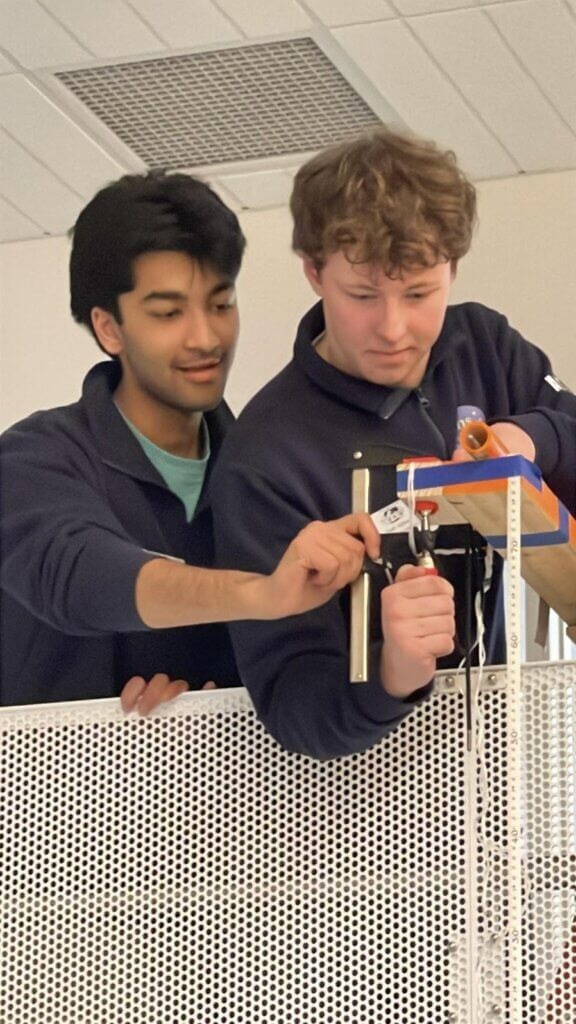
- Build: Engineering challenges involving pre-built devices including bridges or robots.
- Lab: Hands-on experiments in fields such as chemistry or materials science.
The road to Harvard and statewide competition began at a much lonelier level. In 2023, Evan realized CCHS lacked a competitive outlet for biology enthusiasts. “There was a robotics team, a math team, and AP biology, but nothing else,” he notes.
Alongside then-sophomore Noah Arthur, Evan discovered Science Olympiad and determined that if CCHS joined, it could benefit students with a passion for diverse sciences. They spent late nights at the school, building the club from scratch.
“I put my head into my hands many times, stressing myself [about] why this club idea wasn’t working out,” Evan says. In its first year, a small team of seven placed 39th, a thoroughly respectable start.
Building blocks for success
To bridge the gap between 39th and ninth, the team had to engineer a better club. Under the leadership of senior Evelyn Mudge, they launched a professional recruiting campaign, including a customized logo and an Instagram presence that drew over 200 students. Through these efforts, the program grew from a handful of members to two competitive teams with a deep bench of alternates.
To sharpen their edge, they joined the Western Suburban Science League and implemented weekly practice testing to simulate tournament conditions. By keeping strict empirical evidence of student performance, they moved away from guesswork toward a merit-based A team capable of standing toe to toe with Massachusetts’ best schools.
Even with the team’s rigorous process, the “academic track meet” throws curveballs. During the Materials Science event at States, Maggie and her partner, Noah, opened their test to find drastically different problems from those they’d studied for.
“Instead of being daunted and just leaving, we just started building on the knowledge we had prior, especially in quantum chemistry, and trying to derive equations through a mixture of unit analysis and very extreme creativity,” Maggie says.
This unpredictability is central to the experience. As freshman Lauren Wright (sixth in Astronomy) says: “Every time you compete, you find gaps in your knowledge, and then you can become more prepared for next time. It’s a never-ending cycle of learning.”
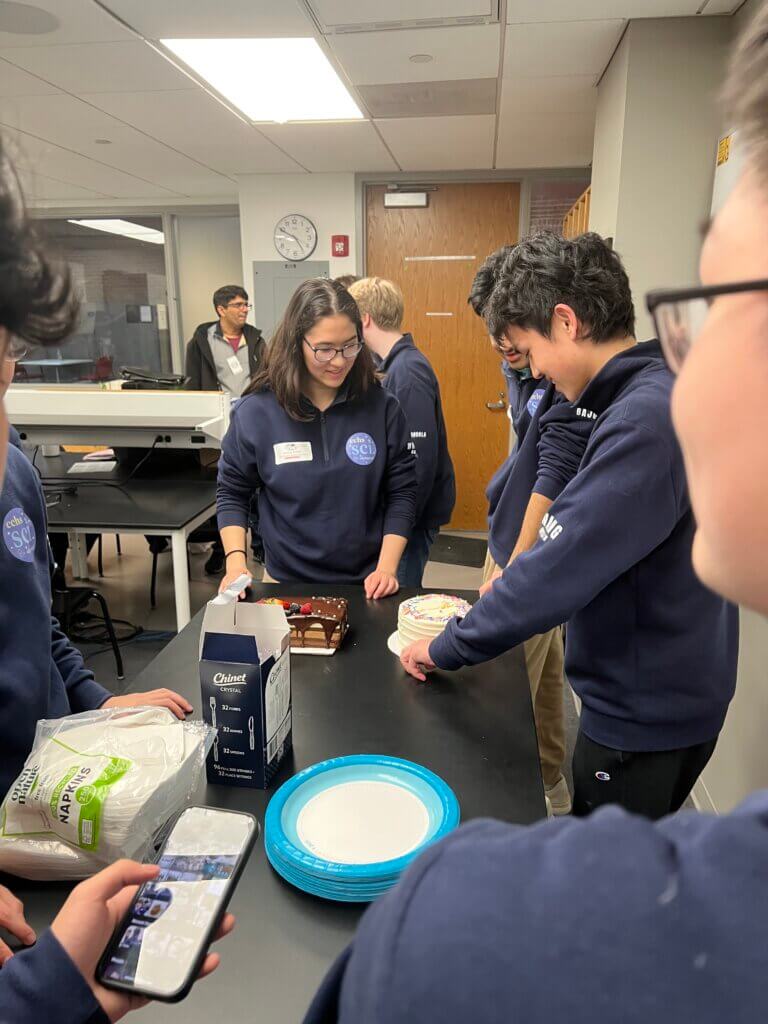
Beyond the rigors of prepping and competing, the lighter moments truly cement the team’s bond. The post-competition karaoke sessions are a must, but the season’s highlight was a stealth mission to surprise Evan for his birthday. While Noah stalled Evan, other team members sprinted to their homeroom, frantically cleaning, writing messages on the whiteboard, and hiding with the cake in the dark.
“As it turns out, we had 15 minutes because Evan is a really good self-staller,” Maggie says. When he finally walked in, the team jumped up and sang “Happy Birthday.”
And that was the icing on the cake.