Beyond clubs, schools to expand support for LGBTQ+ students
“It’s heartening; all of the teachers at CCHS [want] to just do whatever they can to make their students feel comfortable.”
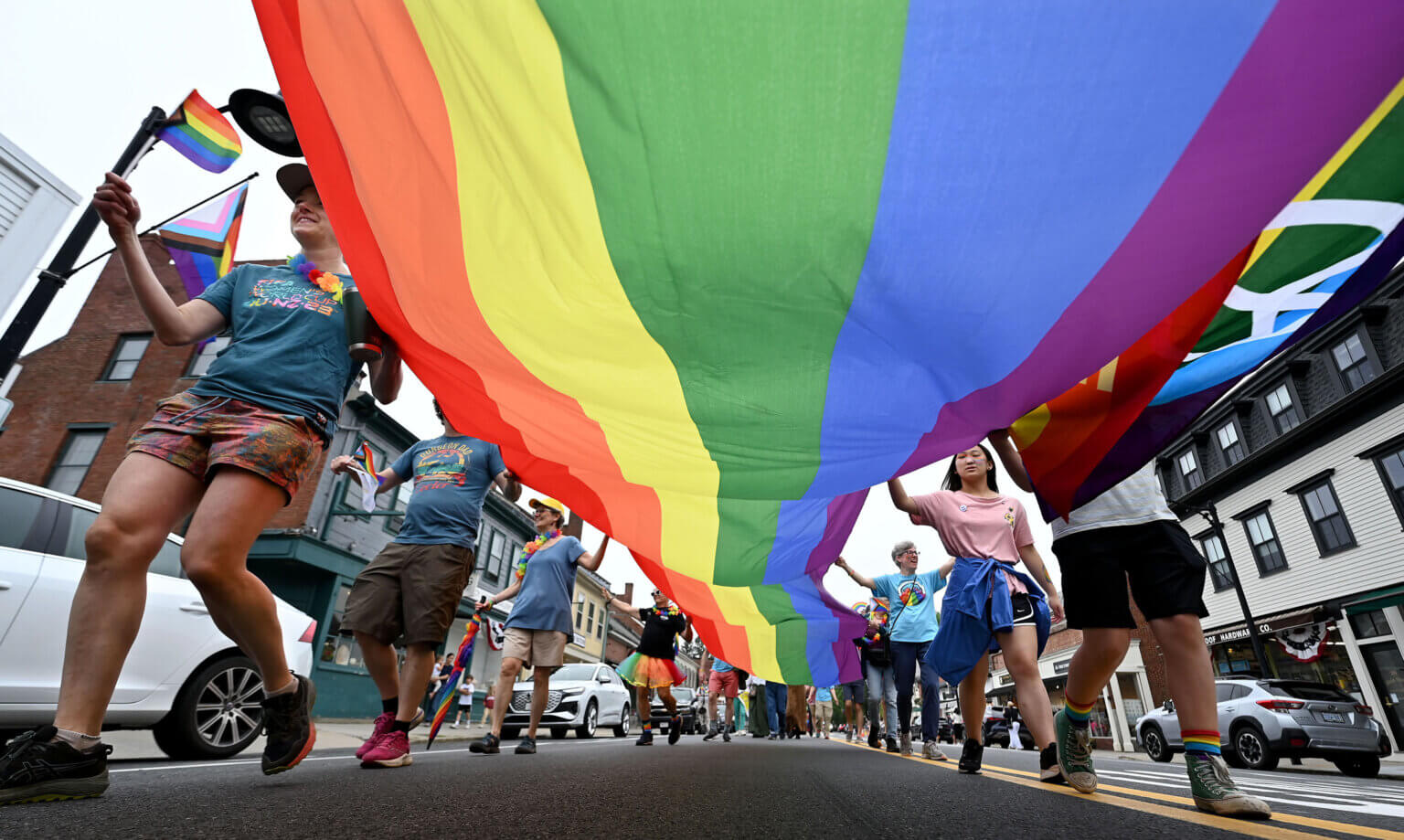
Acton school officials say they’re putting inclusion front and center for LGBTQ+ students.
That’s according both to goals laid out by Superintendent Laurie Hunter and to a newsletter sent out in mid-September by the district’s director of DEIB, Andrew Nyamekye.
Alex Nugent — a 2024 Acton-Carlisle High School graduate, former Spectrum president, and LGBTQ+ advocate — is happy to see the heightened emphasis.
“It’s heartening,” said Nugent, now a student at Harvard. “All of the teachers at CCHS [want] to just do whatever they can to make their students feel comfortable.”
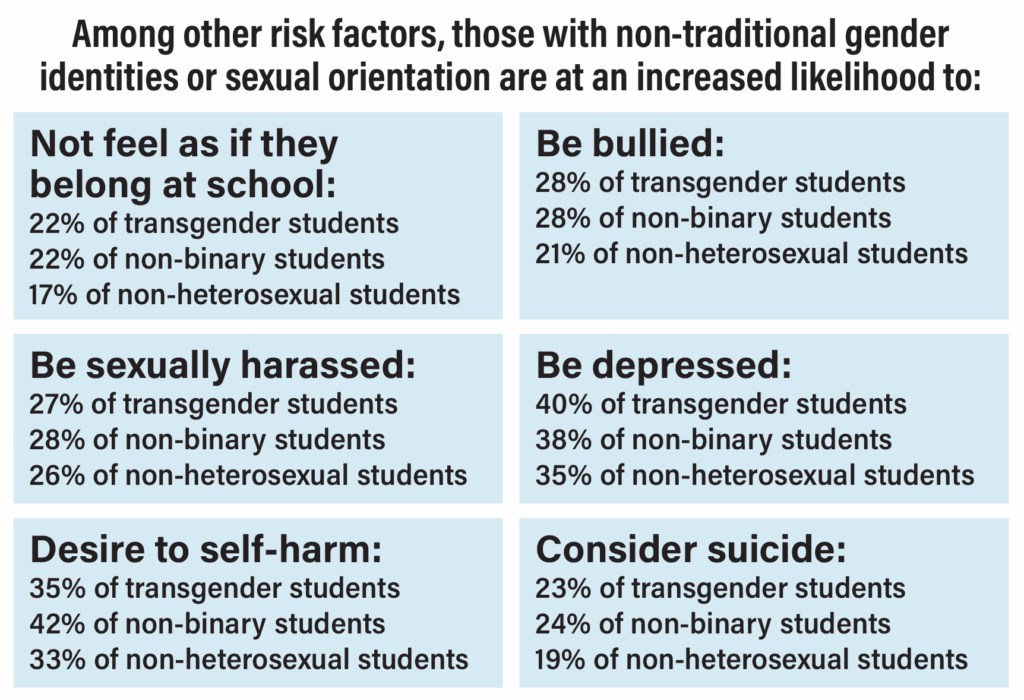
The emphasis comes after last year’s Youth Risk Behavior Survey from Emerson Hospital showed that queer students in the area are disproportionately experiencing depression, feelings of not belonging, and thoughts of self-harm and suicide.
Among transgender students, 40% experienced depression, 35% expressed a desire to self-harm, and 23% have considered suicide.
This local trend aligns with the national picture. The CDC reports that nationally, 65% of LGBTQ students have felt sad or hopeless, and 41% have seriously considered suicide, compared with 31% and 13% for heterosexual, cisgender students, respectively.
Acton Bridge attempts to ask current Spectrum leadership, Hunter, and School Committee members how the district is focusing on LGBTQ+ students and whether the initiatives and partnerships are still only exploratory elicited a written response from John Guilfoil of John Guilfoil Public Relations, the district’s new PR firm.
“A story like this is complex and would be better discussed over a period of several weeks,” he wrote. “We are happy to discuss your enterprising stories, but generally speaking, we are not going to be able to work within tight deadline windows on these kinds of pieces, so we’ll have to decline.”
The Bridge initially reached out to the PR firm on September 24 and followed up on September 30 and October 9, with no further details revealed on the district’s approach.
‘Hopeless about the future’
During her time at CCHS, Nugent said she witnessed gender-neutral bathroom signs vandalized, a trans student’s Instagram posts distributed for ridicule, and the casual use of slurs. She said all of the incidents were reported and dealt with, but it’s still challenging.
In the current political climate, stress is higher for queer students, according to Nugent. She said that previously, students here could try to separate themselves from anti-LGBTQ+ policy in other states.
“Now the federal government is making decisions that can trickle down to my school, and it can trickle down to my town,” Nugent said. “Even though I live in a blue state, what will they pass that’s going to affect me?”
Nugent’s Spectrum co-president and fellow CCHS graduate, Calliope Benjamin Sae Jong Neville, told The Acton Bridge: “The backlash is hitting a lot of kids very hard right now. … There are a lot of people who are pretty hopeless about the future as it currently stands.”
Seeking outside help
Spectrum founding member and CCHS Parent Association President Alexa Anderson told The Bridge she understands the concerns: “The things that trouble me [are that] kids who are LGBTQ+ tend to have more obstacles with their mental health and sense of belonging.”
Anderson, a former School Committee chair, said she’s seen that struggle with her own friends’ kids, even with supportive teachers and clubs already in the schools.
Nyamekye wrote in a newsletter that staff want to play a bigger role, and clubs like Spectrum can’t answer these questions alone.
The newsletter said the district is exploring potential training and guidance from programs such as the Massachusetts Department of Elementary and Secondary Education’s Safe Schools Program.
Former CCHS math teacher and Spectrum founder Peter Atlas argues that district staff should have a bigger role in shaping the programming. “Teachers should design something on their own and implement it, and that would always be more authentic and better,” he said.
Finally, Nyamekye wrote about a new bias incident response protocol and reporting form that explicitly includes sexual orientation and gender identity as protected categories.
Nyamekye did not respond to a Bridge interview request sent through John Guilfoil Public Relations.
Hunter’s publicly stated goals include developing a support plan for the LGBTQ community. At the October 8 school committee meeting, she said work on the plan would get underway in November.
A multi-faceted approach
Atlas hopes that, along with support, students are given ways to organize and advocate for themselves.
“I think they need an outlet for their rage. It is appropriate rage,” he said.
And Neville hopes teachers are given more control: “I think a lot of the top-down efforts have been very well-meaning, and some of them have been quite effective, but ultimately, the educators are the people who are going to know how to deal with these issues, because they’ve dealt with them firsthand.”
Nugent said the school administration should have training specifically on queer issues, provide class-based training instead of only large assemblies, and listen to students when issues arise.
“I still remember, when I was in eighth grade, there was a teacher who found a hateful note in the trash can of his classroom,” Nugent said. “He came to GSA and was like, ‘I just found this. If you were in my class, how would you want me to address it? What would you want me to say? What would you want me to not say?’”
Nugent said teachers asking questions like this — and getting guidance from queer students — shows support that makes students feel more comfortable.
“The fact that he came to us and asked about that was so lovely,” she said. “It’s been, what, five years now? And I still remember it. That’s how you know it made an impact.”


