Books had ‘no greater friend’ than Roger E. Stoddard
For decades, Stoddard worked to extend the scope of Harvard University’s Houghton Library’s rare book collection.
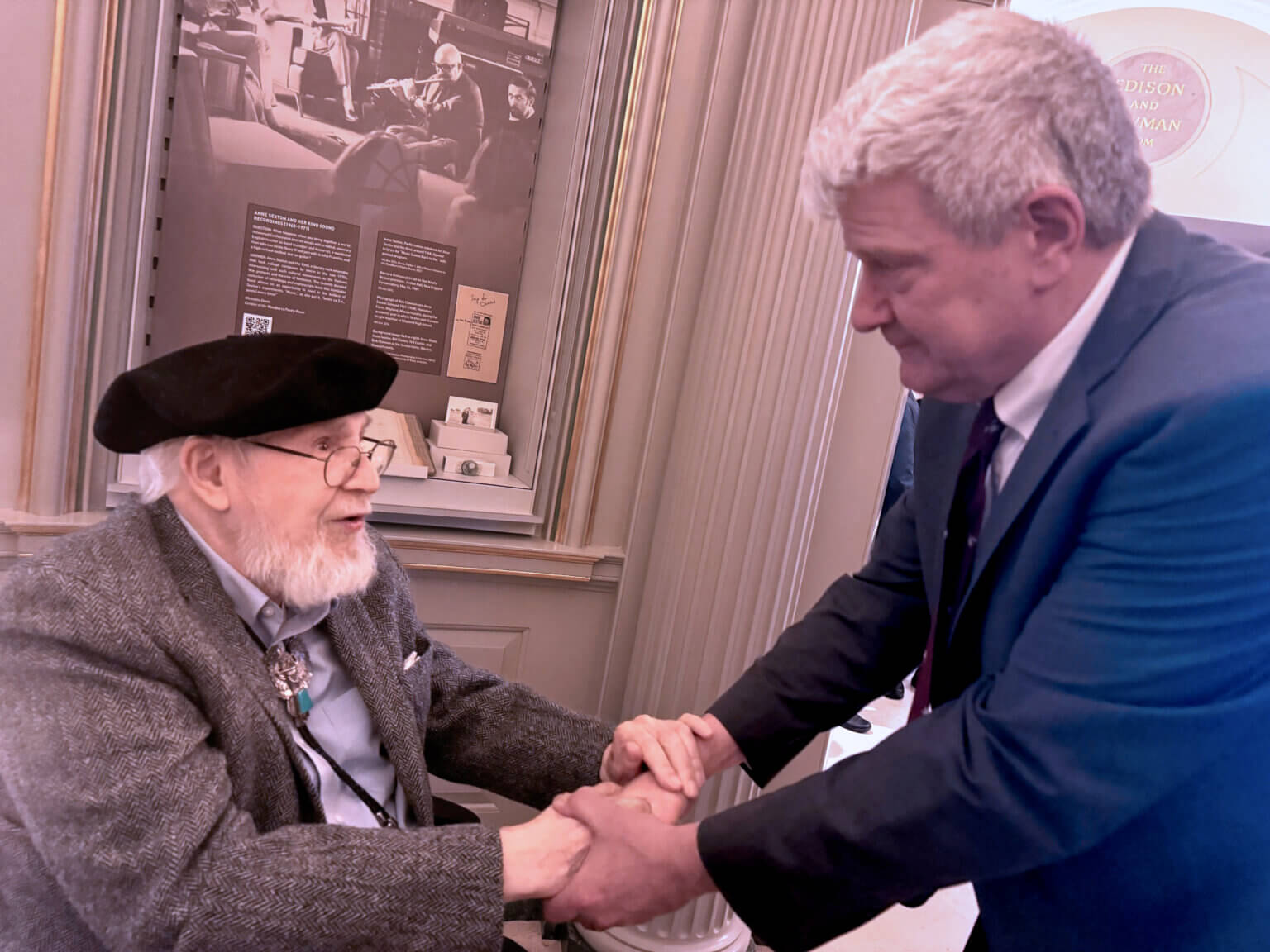
“Papa didn’t just live — he poured his whole life into living. His passions touched everyone,” Rebecca Reid says of her grandfather, Roger E. Stoddard, who passed away in January at age 89.
Of Stoddard’s passions, by far the greatest was ignited while he was an undergraduate at Brown University majoring in classics. “All he knew started with books,” says his son Christopher.
For more than four decades, Stoddard worked to extend the scope of Harvard University’s Houghton Library’s rare book collection. He was regarded by his peers as the “Dean of American Bookmen,” according to Peter X. Accardo, Stoddard’s close friend and colleague, who is Houghton’s Scholarly and Public Programs librarian.
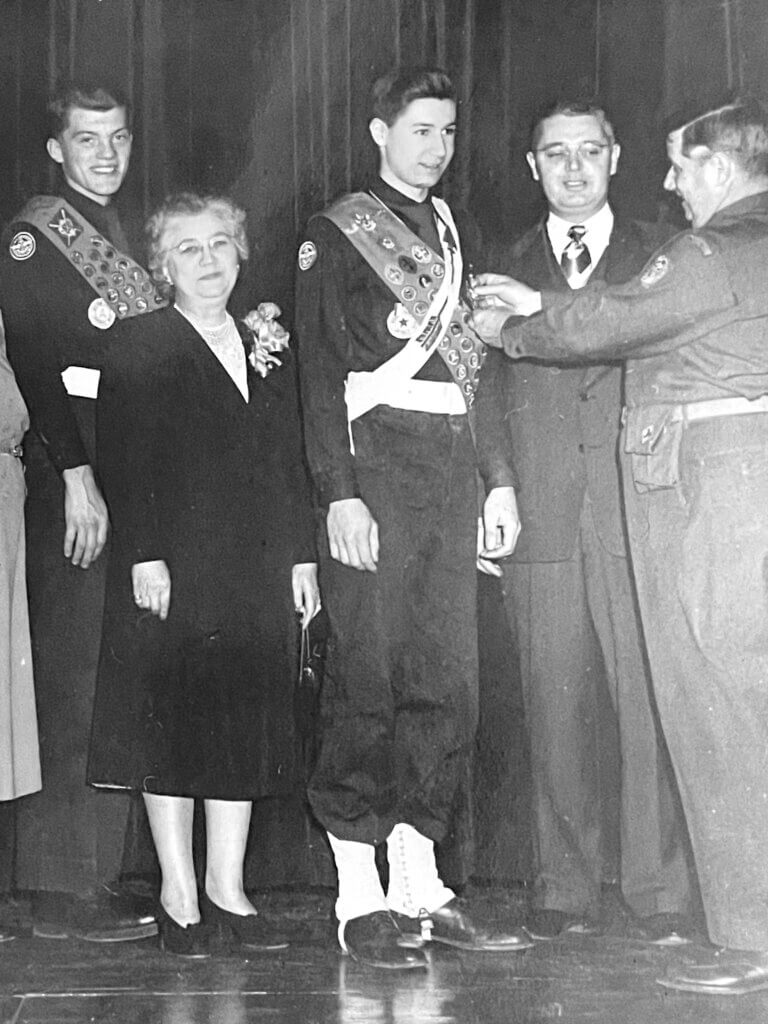
A love of collecting — postage stamps and then books — characterized Stoddard’s life while he was growing up in Needham. He would “troll secondhand shops across Boston” for books about Sherlock Holmes, Accardo says.
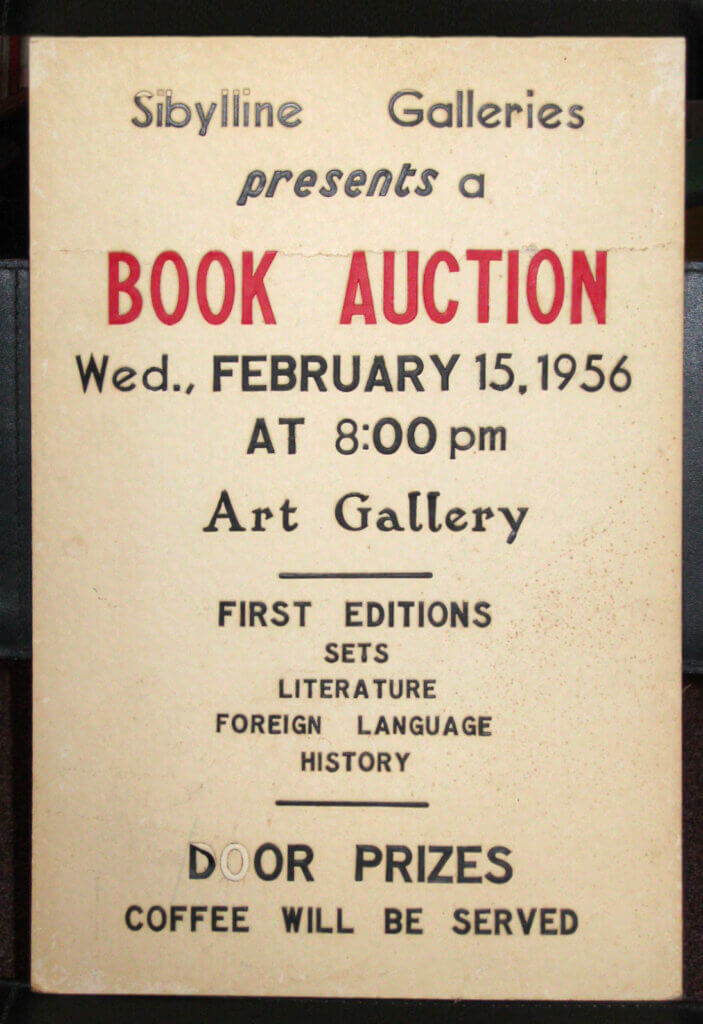
At Brown, Stoddard and a classmate, Jay Blair, formed Sibylline Books and for a while sold books from a dormitory room to offset their college expenses.
After working for Goodspeed’s Bookshop on Beacon Hill, Stoddard served in the Army Reserve for six months, after which William A. Jackson, Houghton’s first librarian, recruited him to be his bibliographic assistant.
Stoddard spent 42 years at Houghton, rising from associate librarian to senior curator of rare books and senior lecturer in the university’s English department.
‘No better education’
Matthias Röder was one of Stoddard’s students when he was working on his doctorate. “He would pass around the books that we studied,” Röder recalls. “I am talking about first editions of Manutius, Gutenberg, and stuff that you would normally only see in museums.”
Stoddard “trusted us completely with the valuable books, unlike other custodians of great collections who tried to keep the books from the people,” he adds. “There was no better education than in his classroom.”
Accardo says Stoddard would arrive at 7 a.m. at his office, a “hub of scholarly energy, alive with books, colleagues, students, and new discoveries,” and spend hours “scouring piles of catalogs and advance lists from booksellers for items that Houghton lacked.”
He recalls the day Stoddard “leapt from his chair and cried, ‘Eureka!’ after an agent called to say he had obtained a copy of Alfred Lord Tennyson’s rare student prize poem ‘Timbuctoo.’”
Another find, Accardo says, was “a battered fragment of Puritan poet Michael Wigglesworth’s ‘The Day of Doom (1662-3),’ which is now “the cornerstone of the early American poetry collection at Houghton.”
Stoddard authored, compiled, or edited some 200 bibliographies, exhibition catalogs, essays, prefaces, reviews, and biographical tributes, from the works of mystery writer Dashiell Hammett to those of Holocaust survivor Primo Levi. He traveled the world to purchase books, “returning triumphantly to his office in the Yard to await the packages,” says Accardo.
The “distinctive cadence of his baritone voice, his prodigious bibliographical memory, and [his] warm demeanor left a deep impression on all who knew him,” he adds. “Books had no greater friend.”
In 1958, Stoddard wed Helen Louise Heckel, whom he met on a blind date while at Brown, and they were married for 66 years until his death. They raised Alison and Christopher in their home near Emerson Hospital and moved to Newbury Court nine years ago, then to Rivercrest last year.
“My parents modeled what it means to be someone’s person,” says his daughter Alison Reid, a retired kindergarten teacher.
‘The unique and extraordinary’
“For those fortunate to visit my father in his home, they would have undoubtedly been led to his library,” which reflected Stoddard’s “love for the unique and extraordinary,” says Christopher.
Inside, “his world unfolded before you: hundreds of rare books and manuscripts, paintings by his favorite Maine artists, a stone tablet, a portrait of a famous author, vintage bottles of wine, and various curiosities — a Jimi Hendrix music collection, Michael Jackson memorabilia, Chinese scholar stones, and a wooden chair from Venice intricately carved in the shape of books.”
Stoddard called his and Helen’s apartment on the sixth floor of Newbury Court “Tree Tops,” as he could gaze out of his window at woods once walked by Ralph Waldo Emerson and Henry David Thoreau. Though he no longer had his library there, “its contents remained in his encyclopedic mind,” says his son, and Stoddard continued to write essays.
He also liked to share his knowledge with residents and staff, Christopher adds. Stoddard “considered his caregivers part of his family and believed that ‘community’ was an enduring source of comfort, love, and meaning.”
A bolo tie and black beret
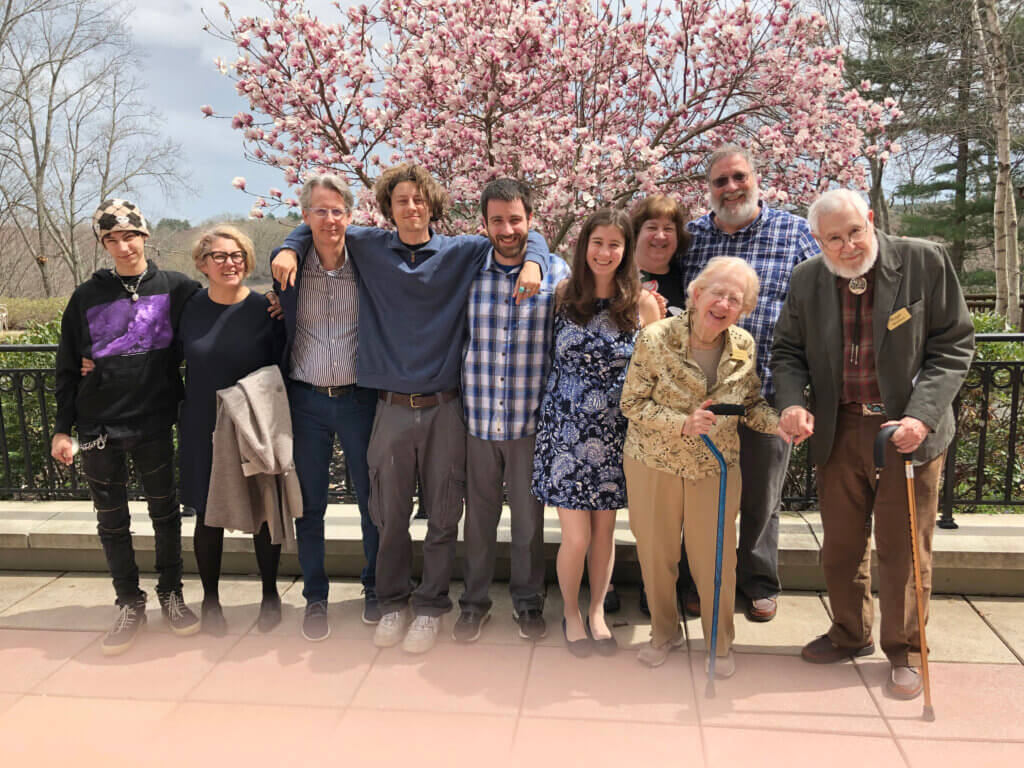
Stoddard’s children and four grandchildren — Rebecca and Gare Reid Jr. and Jasper and Zane Stoddard — carry indelible memories of him.
There’s Stoddard wearing his favorite Adidas sneakers in “the brightest colors he could find,” Alison says, plus a bolo tie, black beret, and abundant beard. Another is Stoddard “leaping over piles of books in a Maine bookstore in his 80s, looking for treasures.”
She recalls swimming laps with him in White Pond and cross-country skiing together to buy groceries at the Stop and Shop (now Crosby’s) during the blizzard of 1978.
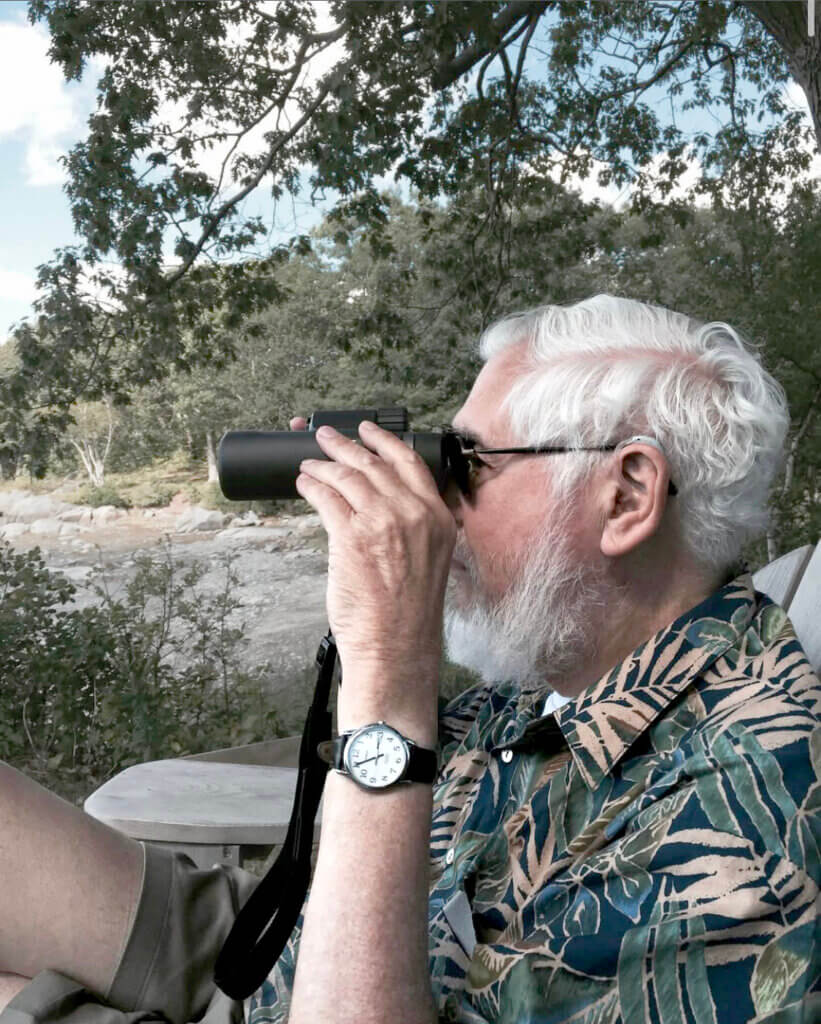
Stoddard loved Maine, where his mother was born, and the family would spend time there each summer, hiking and beach walking. He often reminisced with his family about the hikes they shared across Mount Katahdin’s Knife Edge.
Gare Jr. calls his grandfather “a true guardian of wisdom whom we lovingly called ‘The Old Man Crazy with Books.’ He was always in pursuit of knowledge.”
Zane’s brother Jasper says Stoddard was “eccentric and hilarious” and “gave me all sorts of good books and good laughs and good memories. He had the best life a book lover could ask for.”
Stoddard once offered his vision of heaven. He hoped he would be led to a library, calling that “my idea of paradise,” notes his son.
“But in many ways, he found his paradise here, in Harvard Yard, among books and scholars, surrounded by those who shared his passions,” says Christopher. “His legacy endures in the works he studied, the knowledge he imparted, and the love he gave so generously to Houghton and those around him.”


