Breaking: Emergency injunction halts dirt pile removal near rotary
“We have only been asking that the town follow the law,” lead plaintiff Keith Hannon told The Acton Bridge on Thursday afternoon.
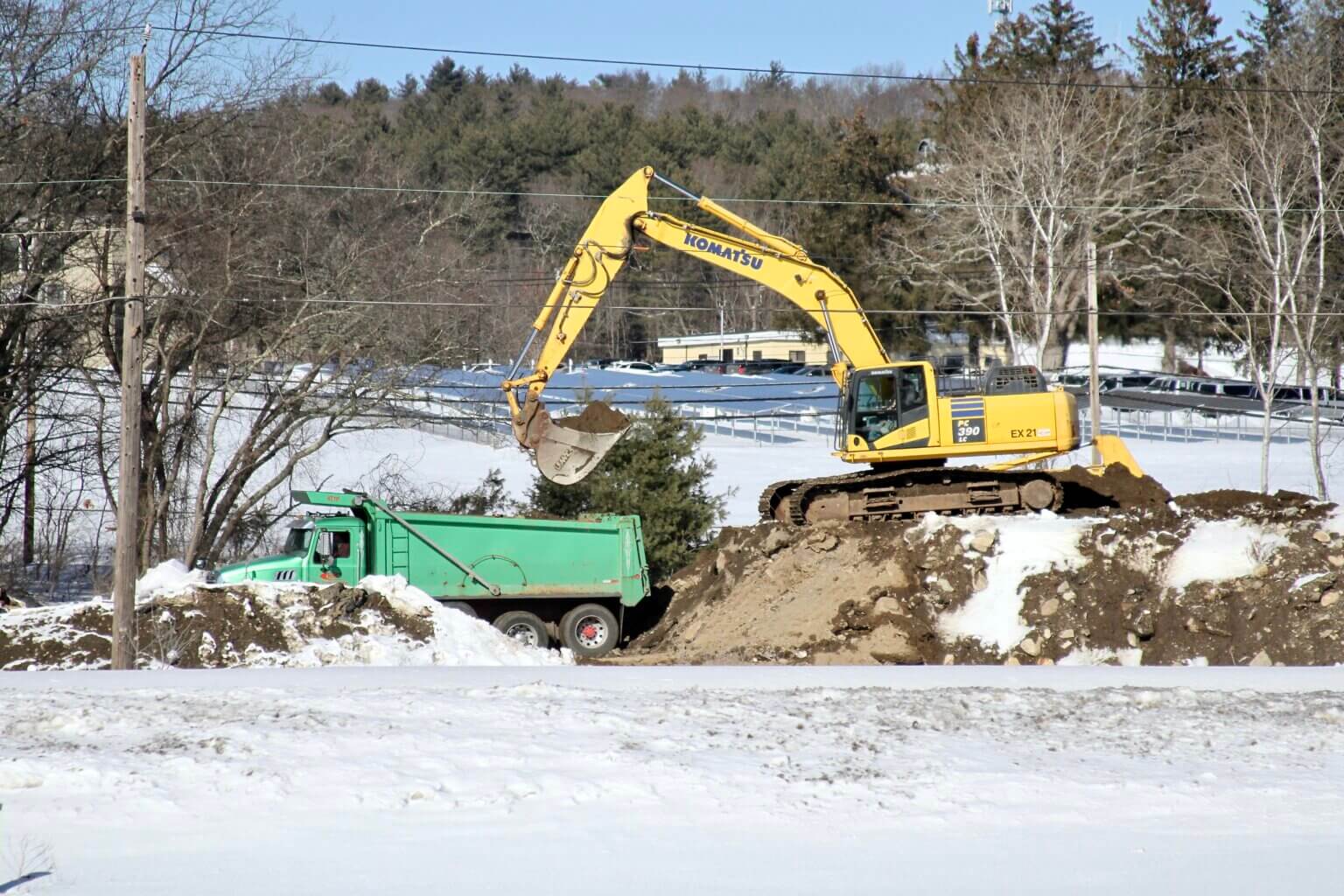
Remaining dirt removal at a site near the Acton rotary is on hold after a judge issued an emergency injunction Thursday.
Town officials had given Acton-based MIG Corp. until Friday to haul an estimated 5,000 cubic yards of soil and debris off the town-owned parcel.
As trucks started rumbling off the site this week, a group of mostly Acton residents rushed to court, saying they were worried that the action was happening without proper safeguards to prevent wetland damage.
Middlesex Superior Court Associate Justice Brent Tingle backed their argument and barred MIG from finishing its removal while the case plays out unless it files a separate application with the town and the state.
“We have only been asking that the town follow the law,” lead plaintiff Keith Hannon said in a text message to The Acton Bridge on Thursday afternoon.
Word of the injunction reached MIG officials “within minutes of its issuance,” Town Manager Kerry Lafleur said, “and we understand that they promptly stopped work at the site.”
MIG representatives didn’t immediately respond to Bridge questions about the ruling.
Legal tug-of-war
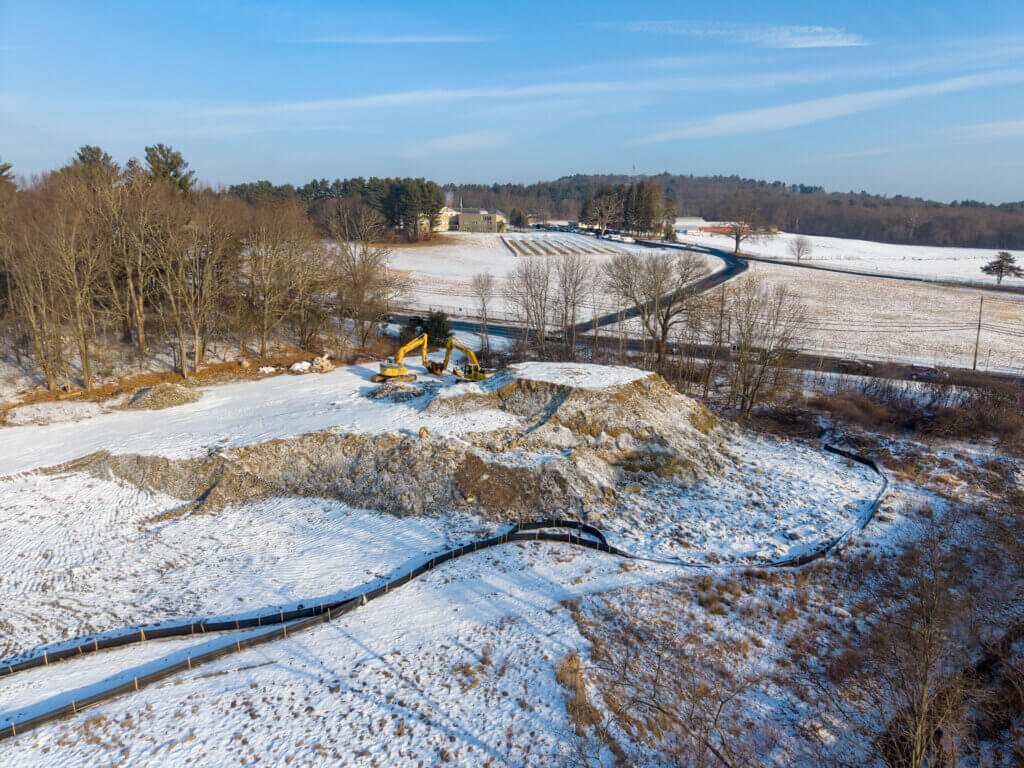
MIG has been using land between Route 2 and Elm Street behind the Gulf gas station to store soil from a construction project at Kelley’s Corner in Acton. Though separated by trees, this is part of the same property that houses Acton Municipal Light Plant headquarters.
Lafleur approved the arrangement in 2022 and later acknowledged that the Natural Resources Division wasn’t involved in the process.
Town leaders allege MIG broke the terms of the original deal by expanding its operations outside a permitted area. Even so, Natural Resources Commission members agreed late last year that officials should have sought a notice of intent (NOI). Plaintiffs say the town bears responsibility for what MIG did on its property.
A notice would have triggered a state review of plans and a public hearing process.
More than three years later, Hannon and nine other plaintiffs are arguing that officials now need a notice to properly restore the site. Though they wish the dirt piles had never appeared, they sought to temporarily stop their removal.
MIG’s work — using dump trucks and excavators — was “causing ongoing environmental harm and actively destroying evidence of the original violations,” the plaintiffs said in their complaint.
Acton officials said MIG’s access agreement expired this past fall. Absent an NOI, the town issued an enforcement order against MIG in December and required a restoration plan.
This, plaintiffs claimed, was an attempt to “avoid regulatory and public scrutiny.”

Town response
Hannon, Concordian Paul Macone, and Miguel Echavarri exchanged a flurry of emails and letters in late 2025 about the dirt piles.
Echavarri owns property in town and frequently identifies himself as a Acton homeowner. He lives in Gloucester, according to court filings.
Hannon and Echavarri threatened to sue “but fell silent for much of January,” according to a town legal filing.
Town lawyers argued officials can decide whether to go through the NOI process or use an enforcement order in cases like this.
They branded the Superior Court suit as an “eleventh-hour effort to stop the town’s use of its enforcement discretion” and said legal filings “offer only vague and speculative concerns” about removal work damaging wetlands.
Town filings say the NOI process “would have taken months,” and officials chose an enforcement order “to avoid unnecessary delay.”
Waiting until the spring to remove remaining dirt could risk further erosion, lawyers said, because the ground will no longer be frozen.
MIG, for its part, argued in court that “procedural disagreement with the NRC’s enforcement choice is not a basis for a temporary restraining order” and warned of a “regulatory catch-22.”
The Natural Resources Commission’s enforcement order set the Friday deadline. MIG now can’t do that work without violating the court order.

Not ‘overly burdensome’
Tingle heard arguments in his Lowell courtroom on Wednesday. He took a little over 24 hours to issue his decision.
The enforcement order and restoration plan are no good under Tingle’s ruling. MIG must file a NOI and obtain the necessary approval through that process before it can proceed.
Tingle said the plaintiffs “clearly establish” that MIG dumped dirt on land protected under the wetland law. He said the town’s enforcement order argument was “misplaced,” and halting removal while MIG waits for a new green light won’t be “overly burdensome.”
The underlying lawsuit is still pending. MIG and the town could still try to convince the judge that they don’t need an NOI at all.
Hannon and others allege a pattern where the town comes down hard on residents who break wetlands laws but go into “damage control” mode when violations happen on their land, the plaintiffs claim.
Beyond their process concerns, the plaintiffs have asked the judge to award “costs and expenses for this action” and “grant such other and further relief as justice so requires.”
“We saw a double standard and saw the need to correct it,” Hannon told The Bridge. “Where this leads now is up to the town.”
Responding to Bridge questions Thursday night, Lafleur said “it is our understanding” that MIG was set to finish removing dirt by the Friday deadline. Crews would have then started planting seeds as the ground thawed to prevent the site from sitting as an open dirt lot.
“Unfortunately,” she said, the injunction “will force the fill to stay on the site while MIG goes through a permitting process that we expect will not result in anything meaningfully different from the restoration that was already ordered.”
February 12, 9:38 p.m.: This breaking story has been updated.