Cell tower vote — and near re-vote — spur calls for reform
“We hear year after year that Town Meeting is not representative and it has become some kind of endurance contest.”

A late-night, razor-thin vote on cell tower rezoning is stirring up fresh calls to reform Town Meeting.
Reopening the cell debate would have been an “end run” around the will of voters, Planning Board Vice Chair Abby Flanagan told Select Board members as they considered a rare “motion to reconsider.”
Although Flanagan was against revisiting the cell issue a day after the April 28 vote, she expressed concerns that there were “far too few people” left in the room when it came time to vote, “as there often are.”
Two years after a series of petitions sought to change how Town Meeting works, and roughly a year after a study committee recommended updates, Concordians still see room for improvement.
New Town Moderator Karlen Reed is considering her options.
“Several folks did comment on how the last day and a half could have been better organized,” she told The Acton Bridge of the tail end of Town Meeting.
Possible changes
The Planning Board’s cell tower article aimed to ease restrictions on where companies can build transmitters.
Supporters said current rules block Acton from getting better coverage. Opponents expressed concerns about the locations and health effects of future transmitters.
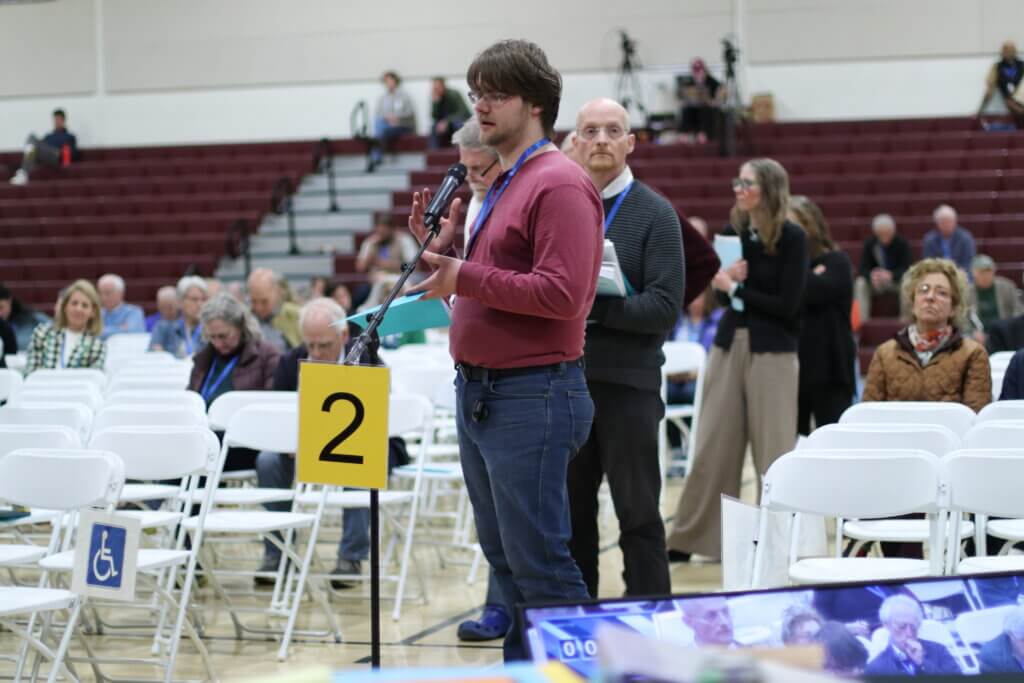
After a debate that stretched past 10:30 p.m., the proposal fell one vote short of the two-thirds majority required to pass. Only 293 people participated in the final vote.
The process resurfaced longstanding complaints about Acton’s form of self-government being antiquated, inconvenient, and onerous.
“We hear year after year that Town Meeting is not representative and it has become some kind of endurance contest,” Select Board Chair Mark Howell said in protesting a motion to keep the meeting going even later into the night of April 28.
Longtime attendee Ellie Garvey said she would have voted “yes” on the cell article but had to leave at 10 p.m. Dozens of others also streamed toward the exits as the debate continued.
Garvey thinks the vote’s timing could have affected the result. “I don’t think we’re at our best when it runs really late, and there should be a way to table discussion,” she told The Bridge.
She praised “improvements” made at the recommendation of the Town Meeting Study Committee, such as distributing a briefing book with extra information about each article. The new electronic voting clickers are a plus, she said, but “a couple more tweaks could really help.”
On the night of the controversial cell vote, meeting attendees had agreed not to take up new business after 9:30 p.m. Discussion of cell zoning started at 9:15 p.m. — and ran nearly 90 minutes.
Reed said Town Meeting could have left the cell article for the next day.
“That might have been a better way to do it,” she said, but “you can never really tell for sure how long an article is going to take.”
Howell suggested that future moderators set cell items as “high interest” topics taken up at a specific time early in the evening.
Officials prescheduled several articles last year. This spring’s meeting had none.

Considering reconsideration
The day after the cell vote, ex-moderator Eric Van Loon argued for reconsidering it. Flanagan argued against that move despite the possibility of turning a loss into a win.
The Select Board rejected the idea of reopening the cell tower discussion.
Flanagan, whose term ended after Town Meeting wrapped up, said the Planning Board didn’t hear much feedback in open meetings while it drafted its cell proposal.
Reed thinks “we would have had a much better resolution” if residents had aired their opposition earlier in the process.
To that end, West Acton voter Cynthia Katz said the town should give more thought to how it schedules the public sessions where Town Meeting articles are crafted.
“It’s problematic for citizens to really stay engaged” if they have to juggle conflicting meetings, said Katz, who opposed the Planning Board cell article.
Survey says …
Town Meeting, the system by which Acton has governed itself since Colonial times, is “what we have to work with,” Garvey said. She wishes more people would attend.
Acton has moved to introduce remote participation but needs state approval.
Despite concerns about how parts of this year’s session played out, Garvey emphasized that 10-year moderator Carmin Reiss was “fabulous” in the role.
Reed is taking over for Reiss and ran a survey to collect feedback from the 2026 meeting.
She plans to discuss the 2027 process and her findings with the Select Board this month.
Although the moderator can’t compel voters to show up, what the “Town Meeting crew” can do, Reed said, is help share information about articles, have a “reasonable schedule for when things will occur,” and make the event “as interesting as possible.”


