‘Cheered by Art and Nature’: Emerson exhibition draws to close
The Acton Free Public Library’s exhibition of artwork by Edward Waldo Emerson ends September 10.
Edward Waldo Emerson’s artistic career may have blossomed later in life — “in my case too late,” he wrote — but the only surviving son of Ralph Waldo Emerson produced a collection worthy of the historical record.
The Acton Free Public Library, in collaboration with the Ralph Waldo Emerson Memorial Association, is hosting an exhibition of artwork by Edward (1844-1930) through September 10. Visitors can explore works from the library’s William Munroe Special Collections and pieces from private collections on loan for first-time public display.
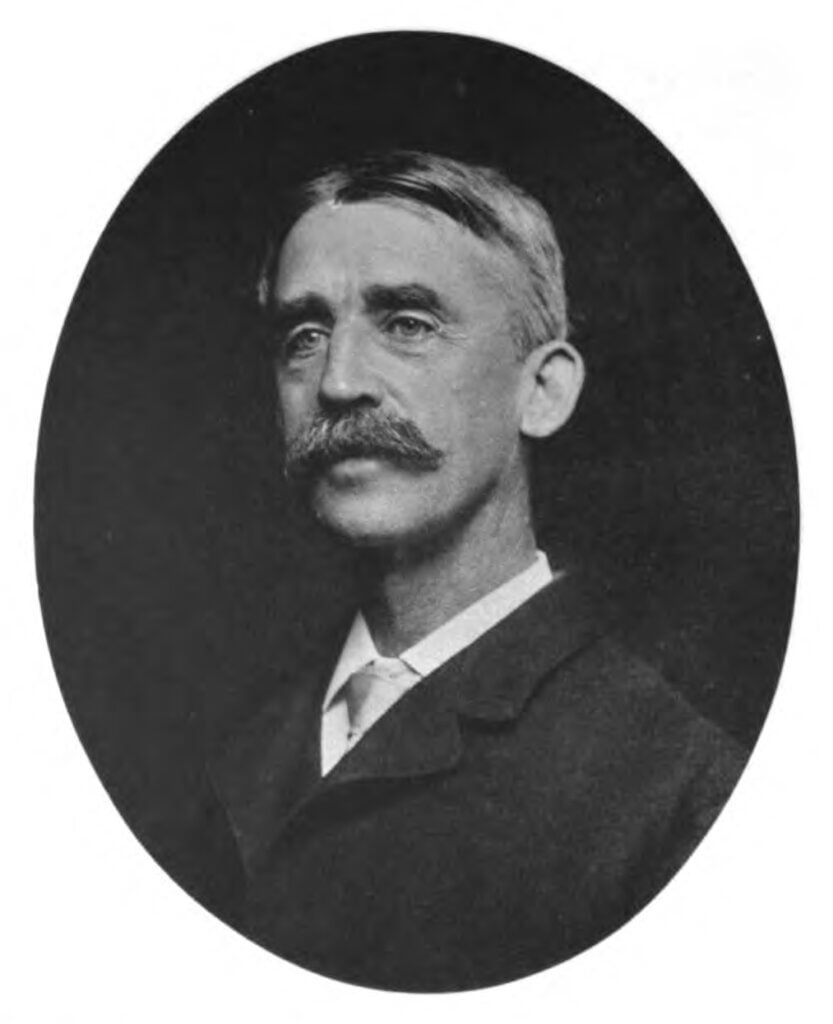
As the fourth child of the esteemed Concordian philosopher, Edward Waldo Emerson showed an interest in the visual arts from a young age, taking after his elder sister Ellen in studying figure drawing and meeting with Massachusetts artists such as portraitist William Morris Hunt and “Minute Man” sculptor Daniel Chester French.
In adulthood, Emerson pursued a career in medicine, receiving his degree from Harvard Medical School in 1874 and establishing a practice in his home on Monument Street.
Emerson was active in the community, serving as superintendent of schools, on the Board of Health and the Library and Cemetery Committees, and as a founding member of the Acton Antiquarian Society, now the Acton Museum.
‘A quiet, gentle person’
The doctor was “an example of what it is to be a great local citizen,” Jonathan Emerson Kohler, his great-great-grandson and a trustee and acting president of the Ralph Waldo Emerson Memorial Association, told The Acton Bridge.
Emerson “was a Harvard-trained physician, [but] decided that he wanted to live in Acton and be the town doctor,” said Kohler, who called his ancestor “a quiet, gentle person who deeply, deeply loved the town [and] did a huge amount of work to make it his home — and to make it a good home for the generations that came behind him.”
Following his father’s death in 1882, Emerson left the medical practice behind and resumed his career in art. He studied and painted at locations including Naushon Island in southeast Massachusetts, at Mount Monadnock in New Hampshire, and in France and England.
His medical study, too, would be of use to his art: From 1885 to 1905, he lectured on anatomy at the School of the Museum of Fine Arts in Boston.
Although his artwork never rose to wide acclaim, the J. Eastman Chase Gallery in Boston exhibited his work in 1896.
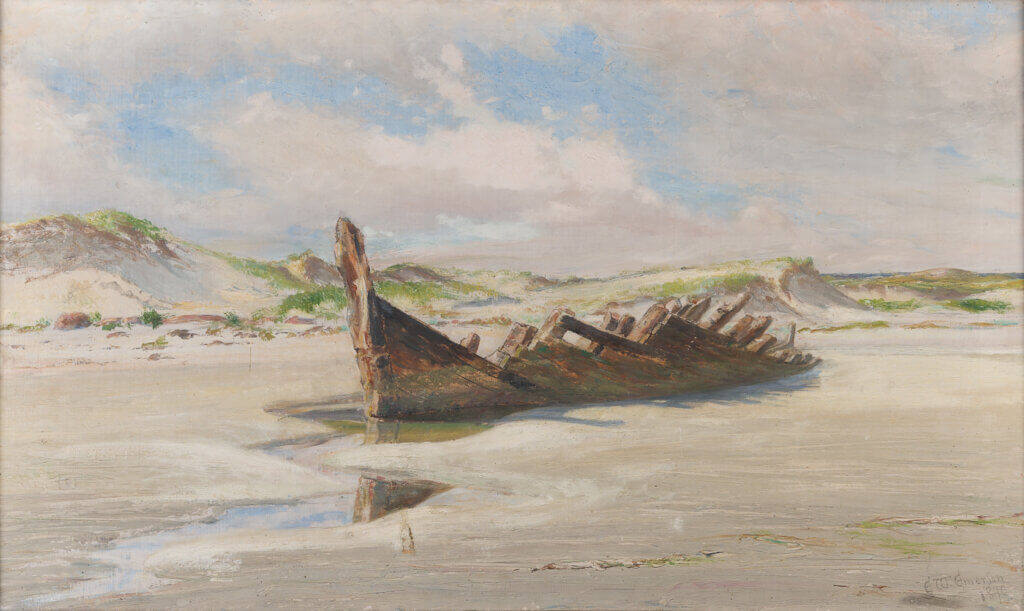
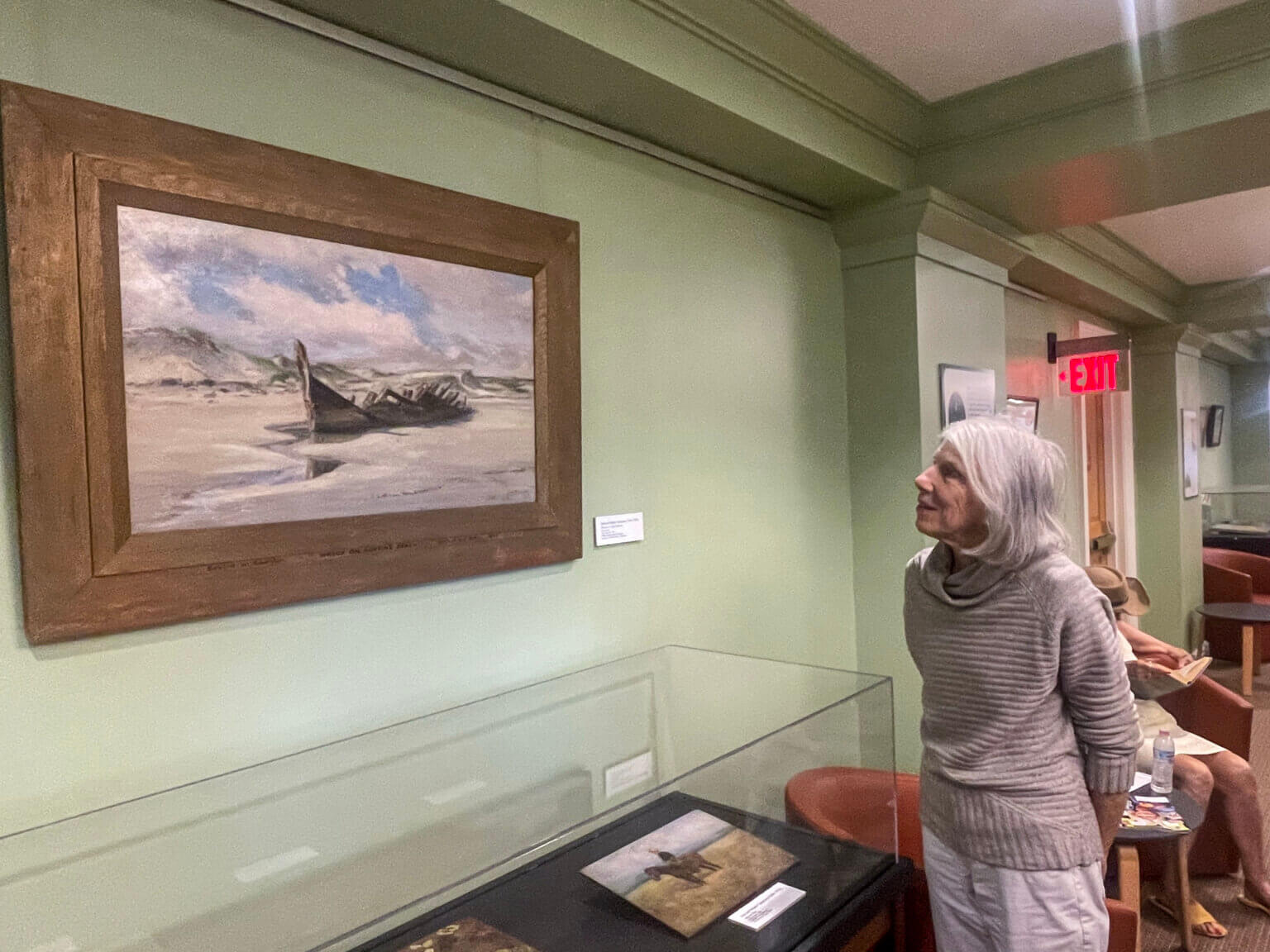
The largest of Emerson’s works on view in the current exhibition is the impressionistic landscape painting “Wreck on Coffin’s Beach” (1893), which he donated to the library. A pencil sketch copy of William James Stillman’s “The Philosophers’ Camp in the Adirondacks” shows how he studied others’ work while developing his own talent. The display is supplemented by a collection of six personal sketchbooks depicting everyday landscapes and figures.
In his 1930 “Essays, Addresses and Poems,” Edward expounded on the “relation of art to life,” writing that for him, it was “first for beauty — pleasure — then for teaching — help — whence again comes pleasure. … Like many of you, I, in a busy life, for many years only was cheered by Art and Nature as I passed to my work.
“Later, like others of you, but in my case too late, I have had the privilege of being a student of Art,” he wrote. “It is only when the spark of divine fire shines through this earthen vessel that we have the full beauty of Humanity.”