Chorus is ‘life-changing’ for people with Parkinson’s
“His speech is clearer, he sings more willingly, and we both cherish the music and the wonderful people we’ve met.”
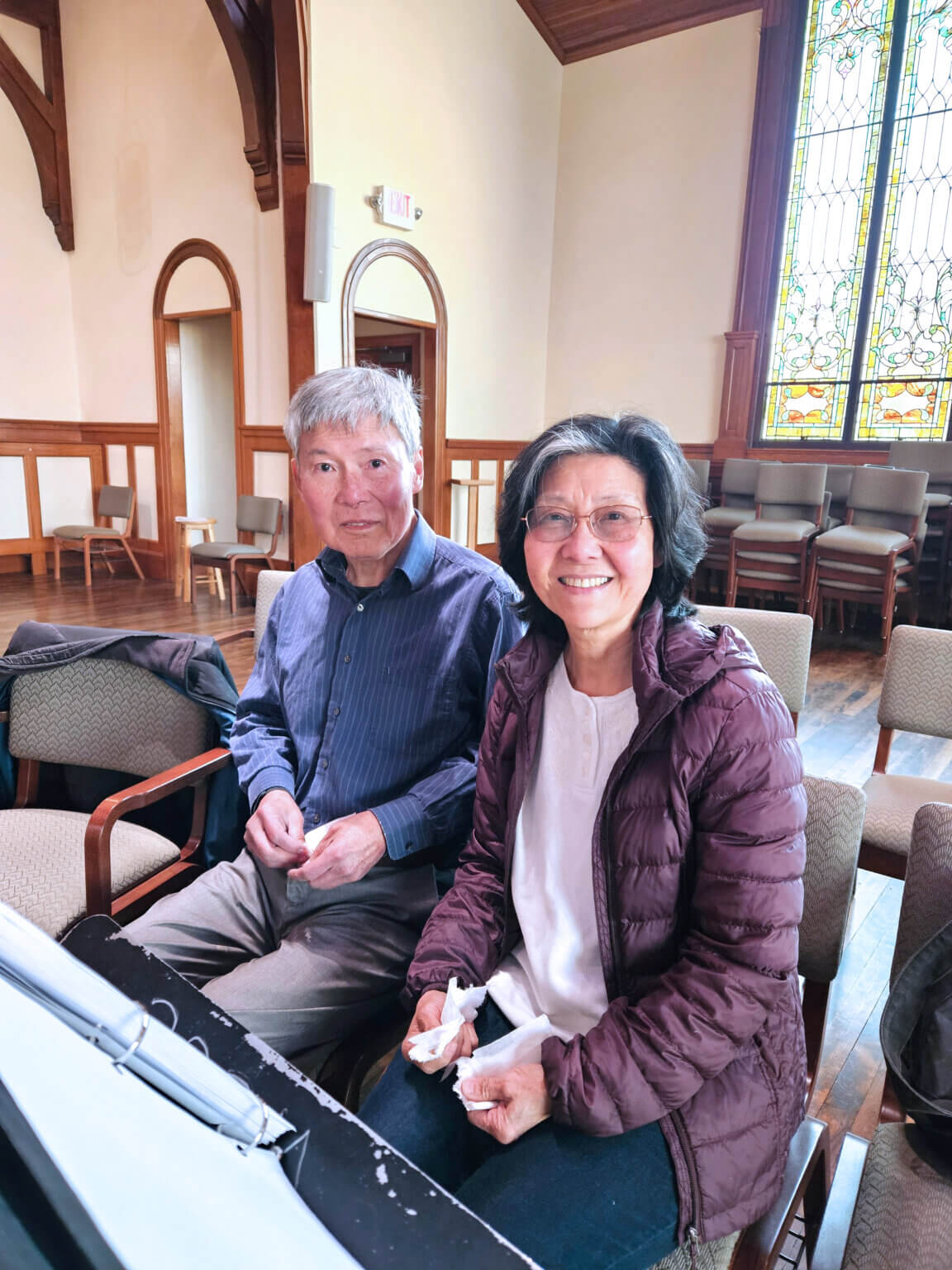
“He’s found his voice again,” says Chung-Pei Chang.
She is talking about her husband, Shih-Cho Chang, and his participation in the “Singing with Parkinson’s Chorus,” a program offered by the Acton Conservatory of Music.
Shih-Cho used to sing solos in the couple’s church until Parkinson’s disease — a central nervous system disorder that affects movement — “made it too difficult,” his wife says. Since they started attending the program, “his speech is clearer, he sings more willingly, and we both cherish the music and the wonderful people we’ve met.”
Conservatory founder Kate Yoder launched the chorus in 2019. She was inspired by her father’s experience with Parkinson’s, which helped Yoder recognize “the profound impact the disease has on vocal abilities and overall well-being.”
Under the instruction of Jay Lane, a Conservatory member, the chorus meets weekly at the West Acton Union Church. Lane, who teaches classical and sacred music, uses the McClosky Technique when working with singers who have challenges. The method is based on anatomy and physiology and can help improve a singer’s range, resonance, and stamina.
The ‘pure joy’ of singing
The program “goes beyond traditional therapy,” Yoder says.
The weekly sessions incorporate targeted breathing, stretching, posture, and vocal exercises, all of which are clinically proven to benefit people with Parkinson’s, she notes.
She adds that participants also build self-confidence and forge social connections while experiencing “the pure joy of collaborative singing.”
Those in the group are actively involved in song selection, Yoder says, “which fosters a sense of ownership and empowerment.” No prior singing experience is required to join.
Jocelyn Marsh, a speech-language pathologist at Emerson Health’s Clough Family Center for Rehabilitative and Sports Therapies, says that through singing, individuals with Parkinson’s “can work to achieve a more varied and natural vocal tone.”
Singing not only helps to keep the voice strong, Marsh adds, but it also empowers individuals to “communicate more confidently, which can be life-changing for those living with Parkinson’s.”
The chorus sessions “have become our community,” says Chung-Pei, “a place where everyone understands.” Through the friendships she and her husband have made, they have “connected with other Parkinson’s resources, such as the dance program at Emerson Health.
“It’s a blessing,” Chung-Pei says, “to have something so supportive and close to home.”
For more information about the “Singing with Parkinson’s Chorus” program, visit concordconservatory.org.