Acton beekeepers balance hives and habitat
Sarah Grimwood, head of the Middlesex County Beekeepers Association, and husband Michael Kielty have kept bees for a decade.
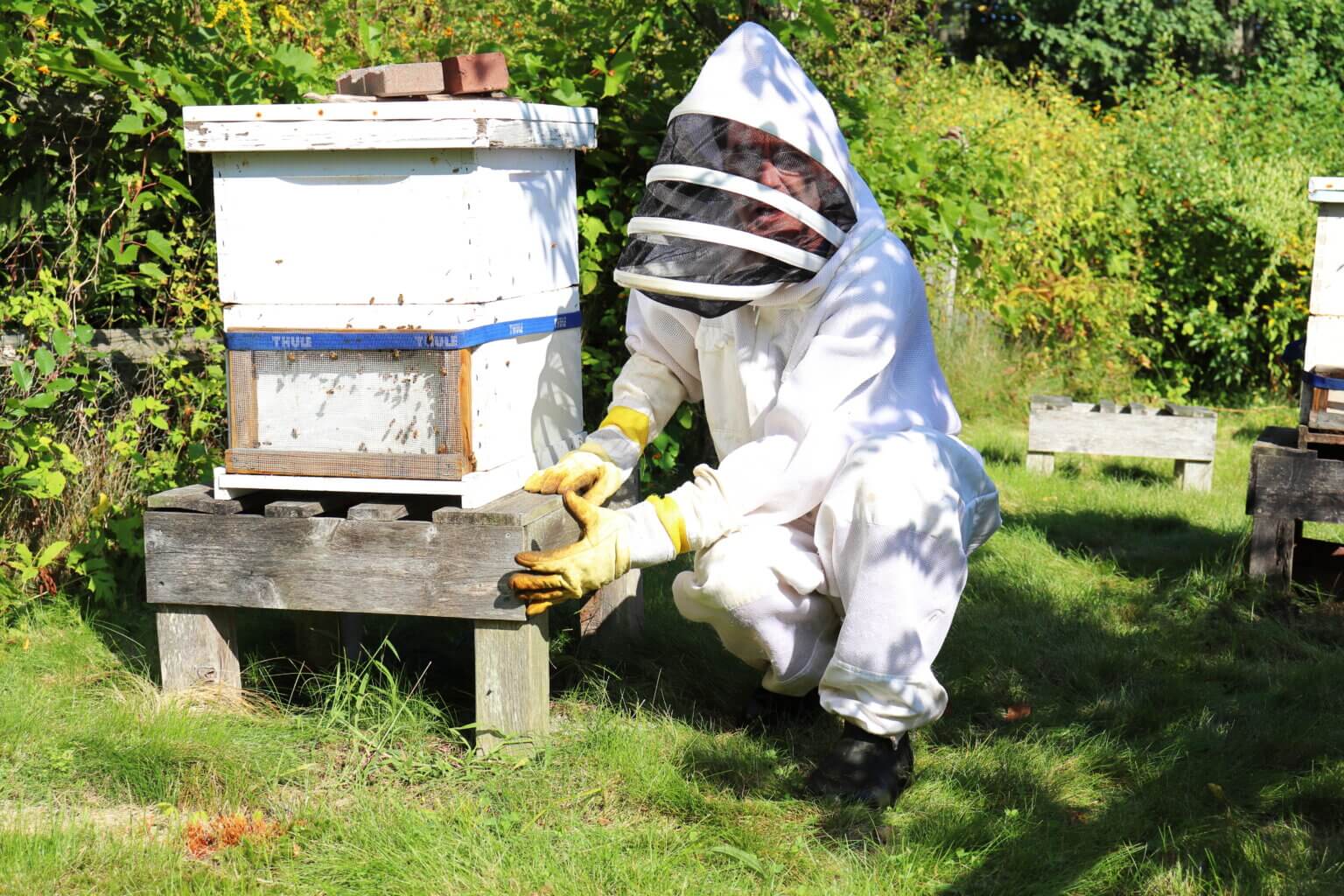
Sarah Grimwood is in charge of the Middlesex County Beekeepers Association. The twist? She’s allergic to bee stings.
“I’ve actually become more allergic as time’s gone on,” Grimwood said. “So I do really try my best to not get stung more.”
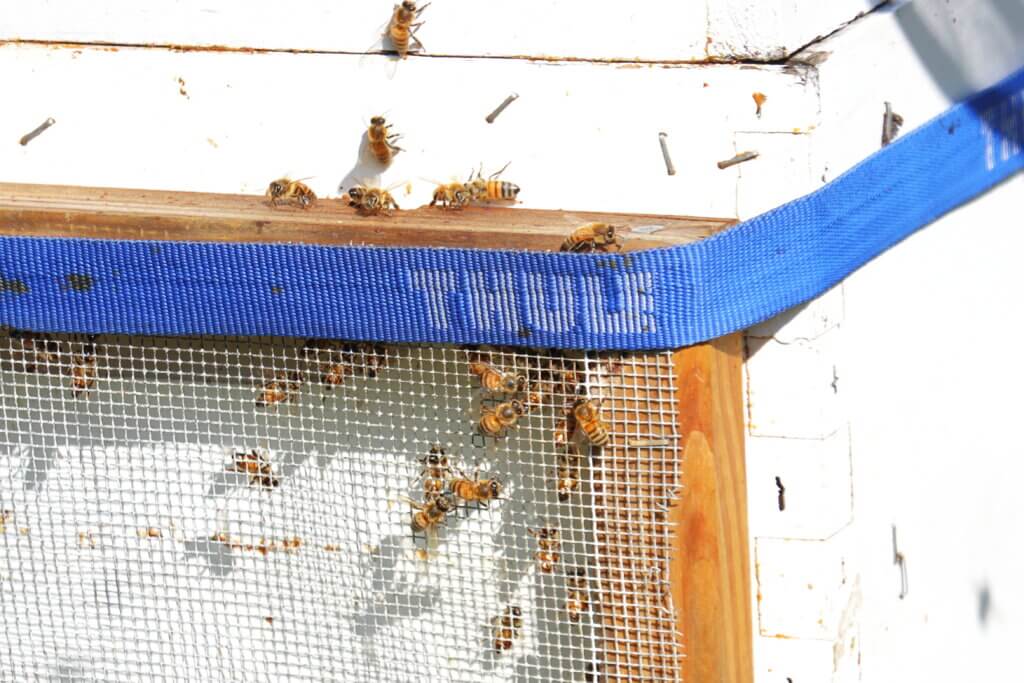
Not half an hour after saying this to a Acton Bridge reporter, she was standing just 5 feet from one of her hives, bare-faced, bare-handed, and in shin-length capri pants, explaining how each hive has a rodent screen that only the bees know how to navigate.
It’s not recklessness; it’s confidence. Grimwood simply knows her bees.
“They really only sting you when you open the hive and jostle them about,” she said. Her husband, Michael Kielty, who is much more wary of the bees, said it also helps not to give off “frightened vibes.” It’s wisdom the pair picked up the hard way: through experience and trial and error.
These days, the system works. Grimwood says she’s down to about one sting every couple of years.
Avoiding stings hasn’t been the only lesson learned. Grimwood and Kielty had to learn about pests and pesticides and the delicate effort of keeping a hive through New England winters.

Starting the hive
The two have kept bees for a decade, and their niche avocation is more popular than one might initially assume. The Middlesex County Beekeepers Association, which Grimwood helms, got its start in 1976 and currently has 19 members from Acton alone.
Her interest took root in England, where the couple once lived. Grimwood, a devoted gardener, was browsing plants at a market when she struck up a conversation with a beekeeper. The idea lingered and followed her to Acton when the couple moved here 13 years ago.
When they finally set up their first hives, Grimwood blended her gardening passion with beekeeping.
“I’ve become very much more interested in bees and insects in general,” she said. “The whole biodiversity and ecosystem, and you’ll see that we’ve been gradually digging up any lawn and replacing it with native plants and trying to really build an ecosystem.”
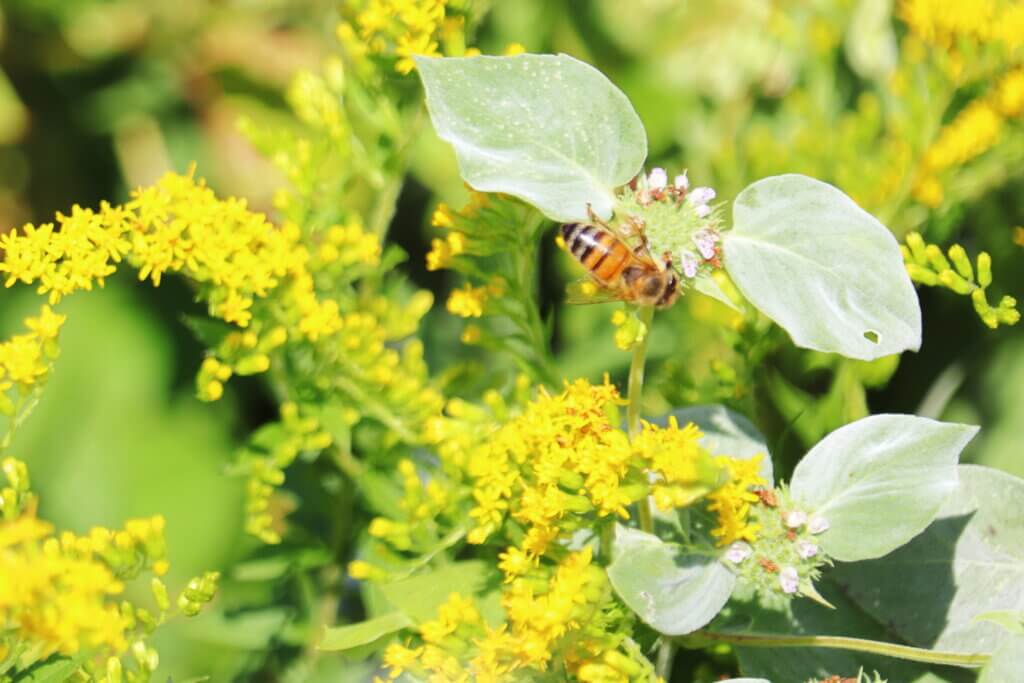
And she wasn’t joking. Between the house and the apiary were rows of native Massachusetts plants, from bushy bluestem to common thistle, all there to support area pollinators, including the couple’s bees.
Grimwood does this because she knows that sometimes a hive full of honeybees — a type of bee not native to the United States — can disrupt an ecosystem. “I make sure there is enough out there for everyone,” she said.
Mark Hanson, chair of the town Pollinator Health Advisory Committee, told The Bridge in an email that honeybees will compete with other pollinators and can damage plants that native insects need.
Pesticides and pollinators
While they can be harmful in some situations, Hanson said that honeybee hives can be a good measurement tool. “They can provide broad information on the health of an area for all pollinators,” he said,
A decade ago, he used hives to find locations where pesticides were heavily used — poisons that could harm native pollinators, too.
“My concern was that neonicotinoids were a major factor in honeybee losses,” he wrote, “and sure enough, hives around organic farms and away from turf did better because their forage was less likely to have persistent pesticides and/or herbicides.”
Hanson said the “number and diversity of all pollinators have been declining,” and the pollinator committee hopes to reduce the use of pesticides to reverse that trend.
Grimwood and Kielty have also had to deal with pesticides, but from neighbors.
“If you spray your lawn, you’re killing off everything,” Kielty said. Sometimes when their neighbor orders spraying, the workers will come onto their property, or some pesticides will drift over. It’s a mistake that can significantly harm their hives and the native pollinators the couple tries to protect.
Learning from error
One crucial mistake that Grimwood and Kielty made when starting was not correctly treating for Varroa mites, a pest that, if not properly treated, can kill off entire hives.
“One year, we gave them Formic Pro strips, which is an easy way, a common way, of treating the hive for mites,” Grimwood said. “We hadn’t realized the label had changed on the strips for a certain temperature you can’t use them at. So we put them on the hive when the temperatures were too hot.”
They lost their hives that year.
However, losing a hive, Grimwood said, comes with the territory. Many don’t survive the punishing New England winters.
Keepers can stack the odds in their bees’ favor by offering a big block of sugar called a candy board that looks like lumpy, crystallized cheesecake, or by tinkering with ventilation to block icy winds without stifling airflow.
Even then, survival isn’t guaranteed.
“It’s something that even very experienced beekeepers struggle to do,” Grimwood said.
Asked why the two put up with the expenses, the winters, and the stings for all of these years, Grimwood said she couldn’t stop because “I’d just miss them.”
“It’s just part of our home having bees around,” she said.
Sarah Grimwood’s tips for beginning beekeepers
1. Start with two hives
Hives can be better managed in pairs. If one starts to weaken, resources from the other can be pulled to help it thrive.
2. Join a bee club, and take a class
Winter “bee schools” and local associations are the best way to learn the basics and connect with mentors. Grimwood said beginners can benefit from learning from local keepers.
3. Expect to spend money
Starter boxes of bees, called nucs, cost around $250. The cost of gear and space requirements can be a daunting hurdle for new beekeepers.
4. Get familiar with honey
You’re going to have a lot of it, so learn how to use it.
5. Gear up
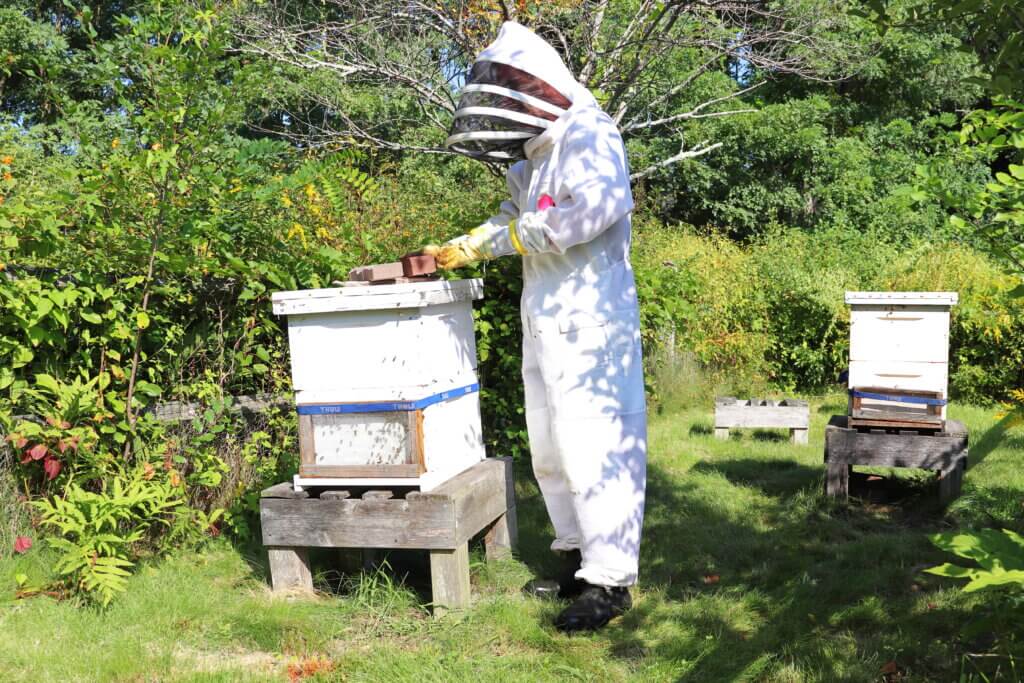
A full protective suit makes beekeeping less intimidating and keeps stings to a minimum.


