Acton ecological detective sees the forest for the treatise
Richard T.T. Forman, who’s been called “the father of landscape ecology,” sees a walk as an adventure.
Despite the enduring regard for Henry David Thoreau’s pastoral depictions of 19th-century life along Walden Pond, 1850s Acton would have looked quite different from the town today.
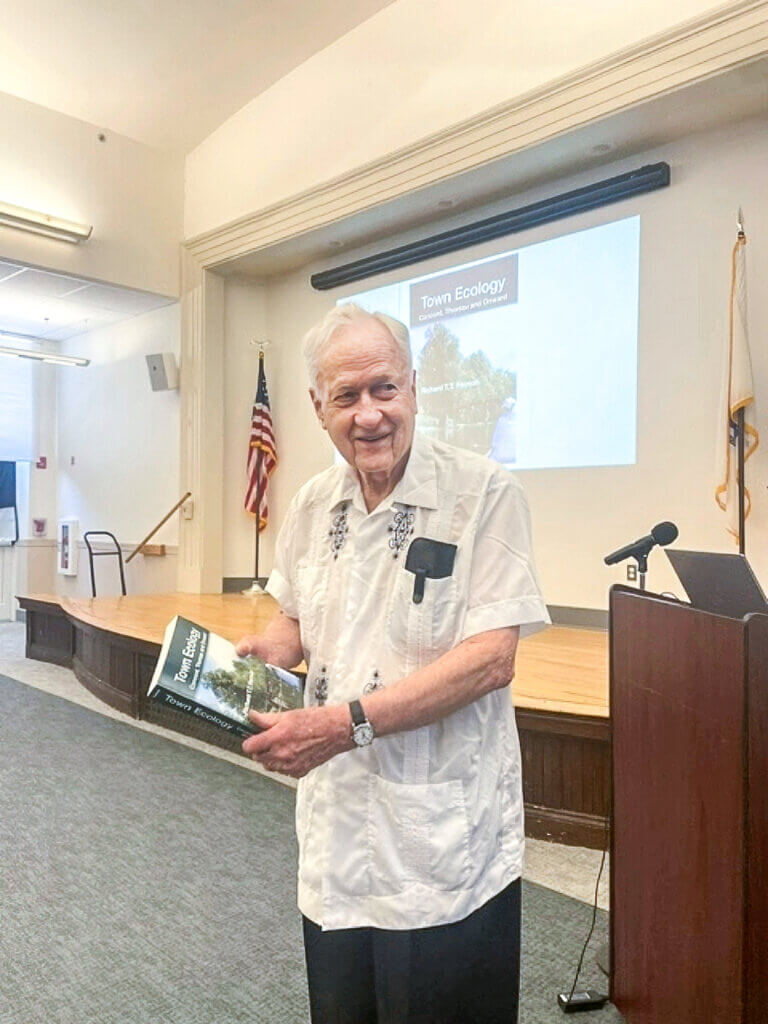
So says Richard T.T. Forman, professor emeritus at Harvard University’s Graduate School of Design, who spoke about town ecology at the Council on Aging on May 7.
When studying Walden, Forman said, his research turned out to be “not what you expect — the story of my life.”
Acton is always changing, thanks to natural and human disturbances, he said. The woods regrow, as Thoreau noted in the 1850s, but many of the town’s trees are only about 100 years old.
In discussing his expansive work “Town Ecology: Acton, Thoreau and Onward,” which he donated to the town, Forman touched on a range of natural elements that time often transforms (or eliminates outright): trees, mammals, microhabitats, amphibians, birds, and vernal pools.
“I’ve lost ponds,” he said. “Here today, gone tomorrow.”
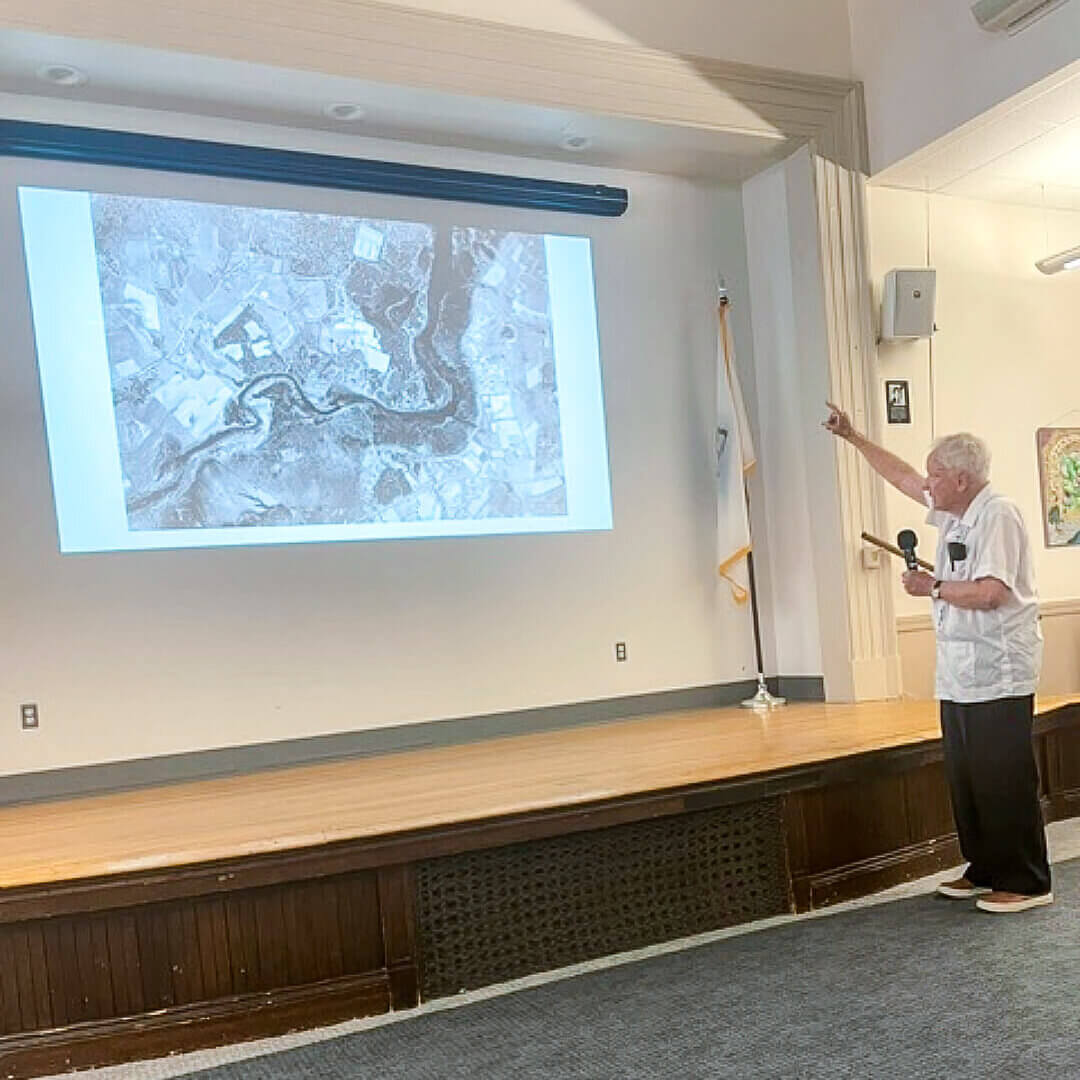
In his work as an ecological detective, Forman said he shrugs off the appearance of newer species: “I don’t judge plants by their origin.” Rather, he’s interested in seeing “what was there before what you’re seeing now.” Forman, who’s been called “the father of landscape ecology,” sees a walk as an adventure, full of “the kind of puzzle I like.”
Slides of the book’s illustrations detailed changes in Acton’s landscape from the mastodons to Native Americans’ long, sagacious use of the area’s resources, to 1635 when the first British settlers came. They chopped down trees and cleared spaces for permanent settlements.
Notably, “Henry Thoreau never saw a beaver or a moose, as they were extinct in the area at that time,” Forman said. “Animals vanish after dramatic changes to the landscape, like cutting down their habitats.”
Forman said history repeats itself, whether through development, droughts recurring, beavers returning, or new stone walls being built on large properties — though nowadays not to keep livestock from wandering onto roadways.
He also pointed out the intersecting ways humans and animals interact with the lands of Acton: Wildfires touched off by the steam from train engines killed plant roots — and created walkways that still exist today, he said. Animals use underpasses beneath Route 2 for their own commutes under manmade highways.
The scholar took audience questions on everything from the possibility of caribou returning to New England (not likely) to why coyotes here are so large (they’re bred in Canada) and even took a moment to mimic the hooting call of a barred owl.
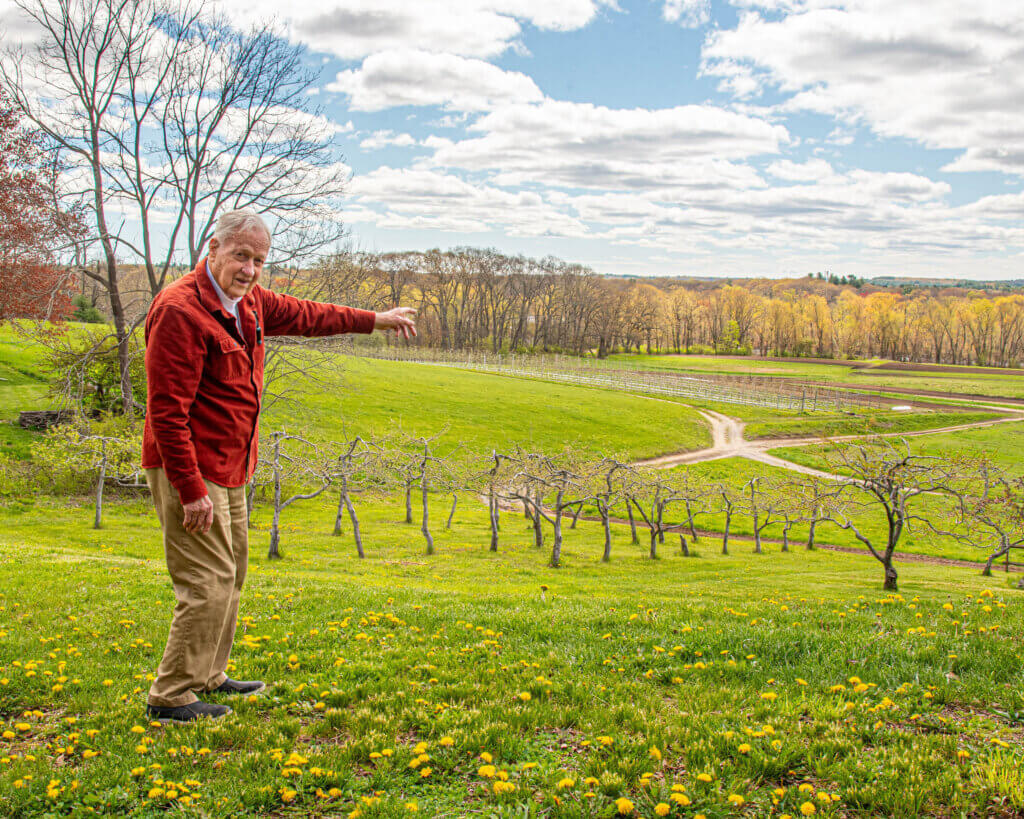
A Acton resident for over four decades, Forman has assisted on multiple local surveying projects, including the Open Spaces and Acton Trails Studies, and he co-authored a field guide on our trails co-written with Delia Kaye, the town’s director of natural resources.
“That little book,” he said, “led to this major book.”
Forman’s “Town Ecology: Acton, Thoreau and Onward,” published by the Town of Acton, is available at the Natural Resources Division and the Visitor Center.


