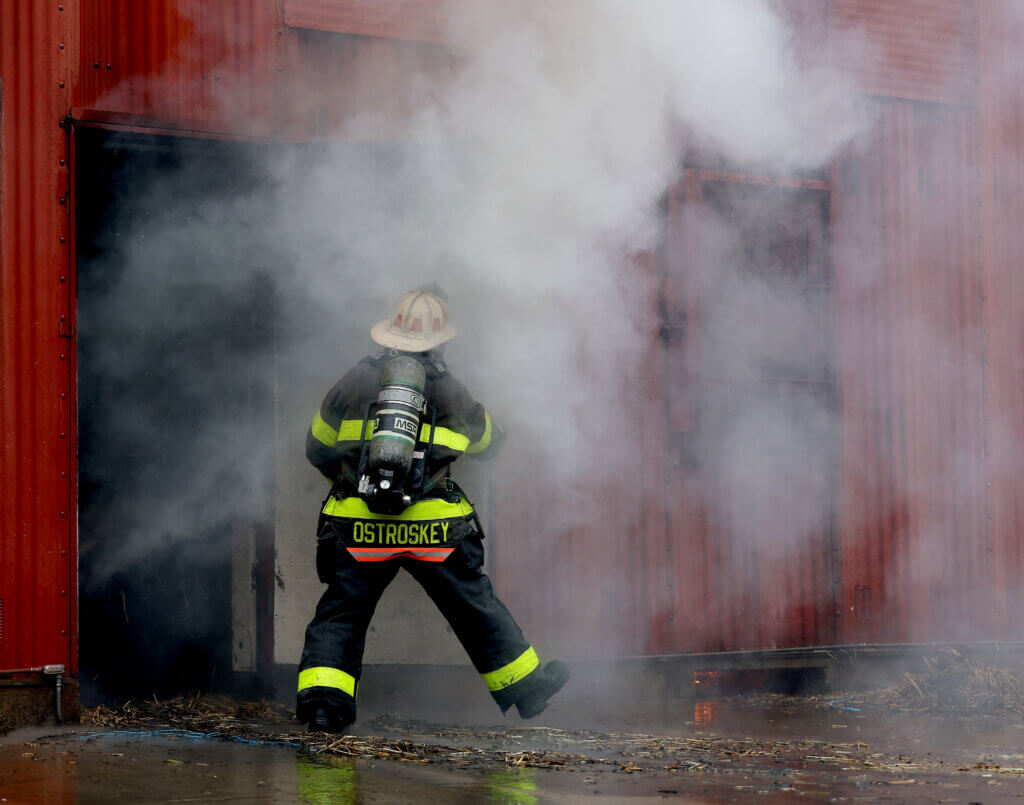
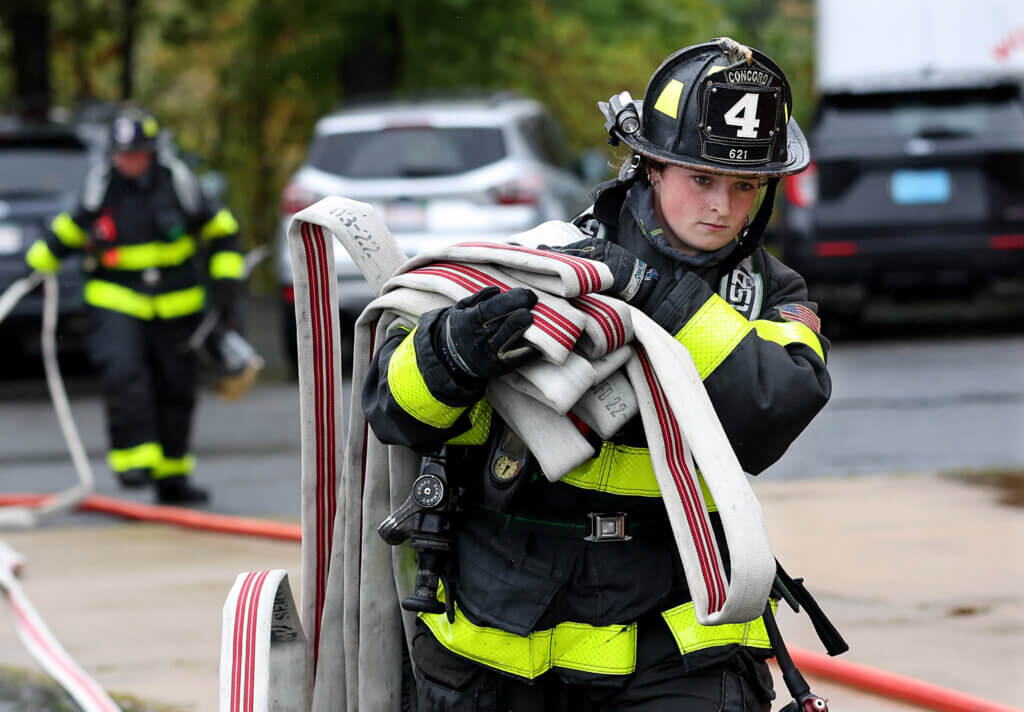
Acton firefighters get rare ‘live fire’ training
Updated with video: It’s the first time in years that Acton has offered such broad live fire training.
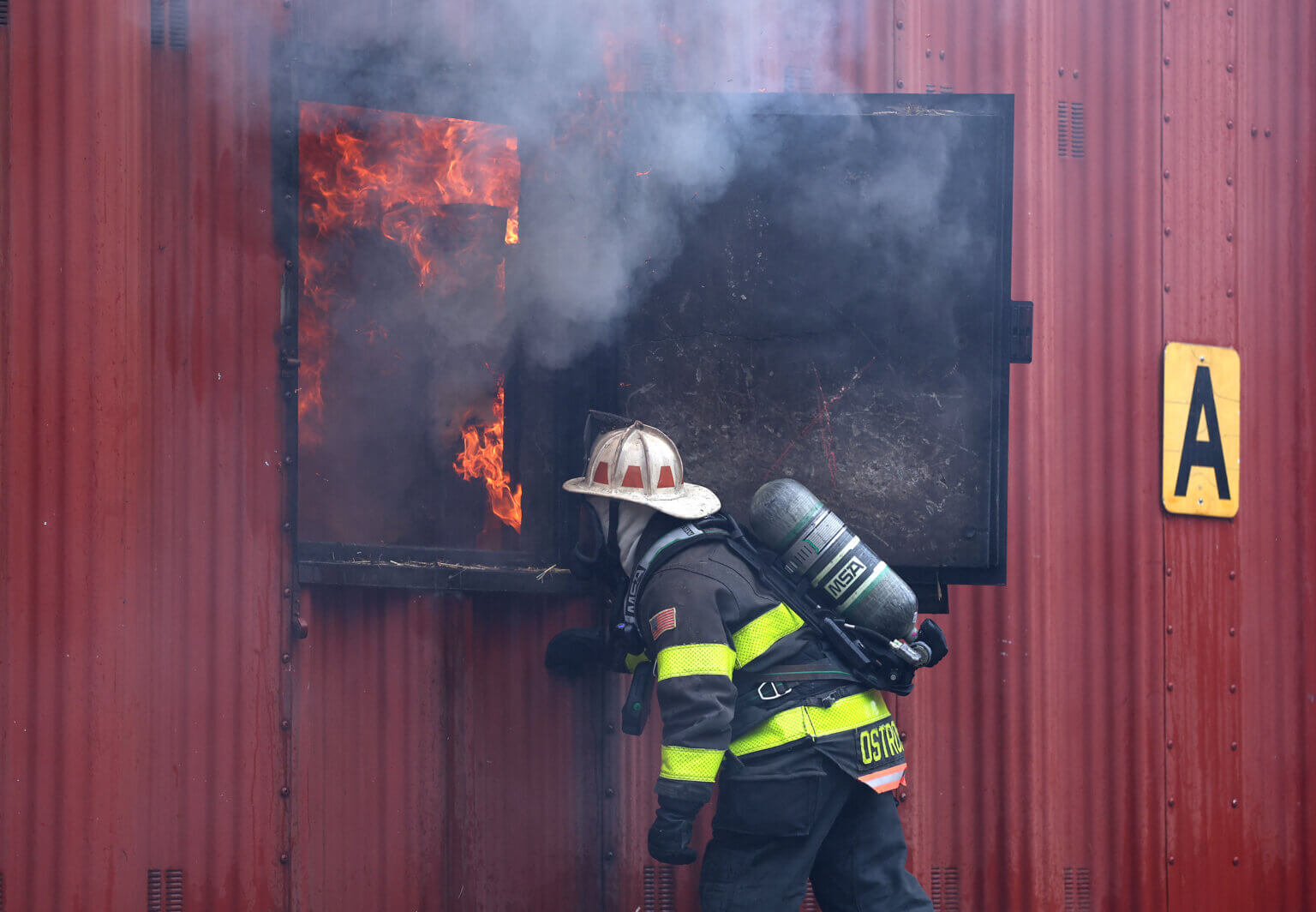
A hand-scrawled message greeted Acton firefighters at a training “burn building” in Worcester.
“Abandon hope all ye who enter here,” read the words, fingerpainted in soot on a wall. “There be monsters.”
Another sign on the corrugated metal structure proclaimed, “This is a smoke-free school.”
“That one’s got to be someone with a good sense of humor,” Acton Fire Chief Brian Whitney said.
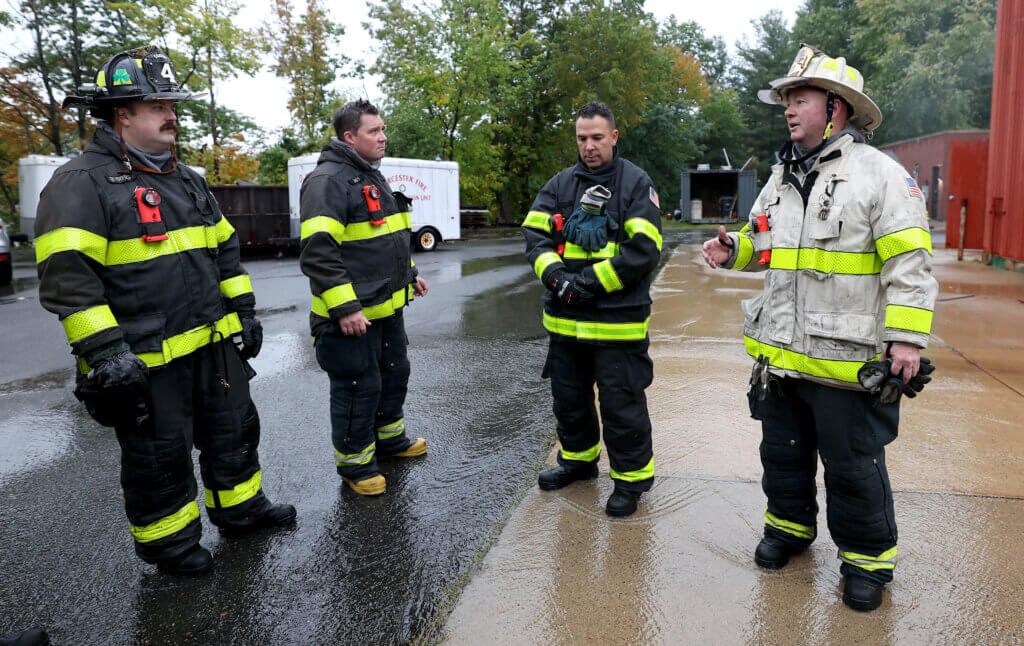
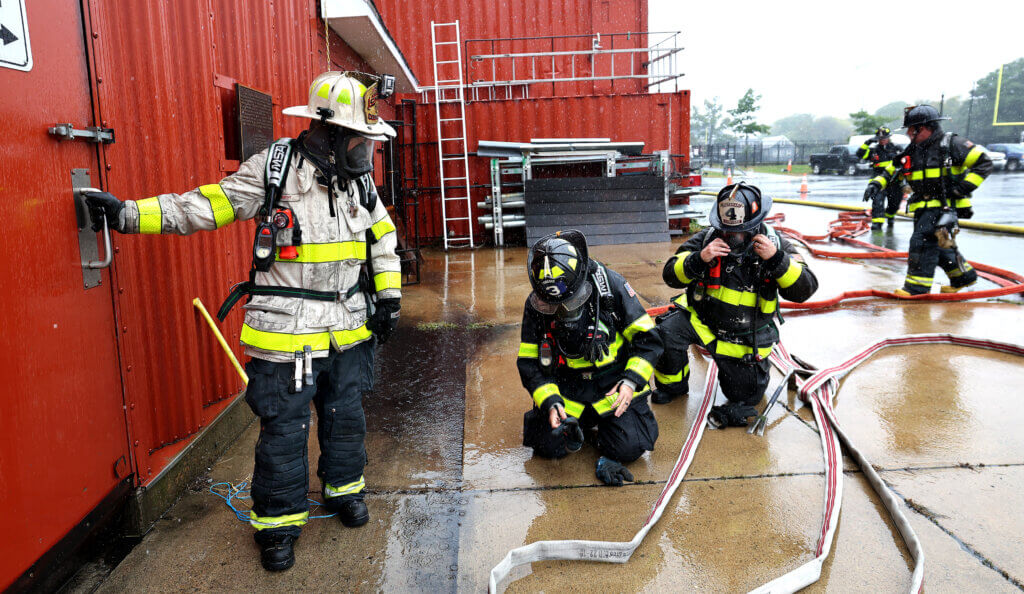
Dark comedy aside, firefighters have been tackling serious business with a round of rare “live fire” practice sessions.
Almost all of Acton’s firefighters cycled through Worcester’s training facility last month thanks to a grant of roughly $21,000 from the Leary Firefighters Foundation.
Aspiring firefighters get this kind of practice in the academy; these sessions afford Acton’s crews a refresher, Whitney said.
It’s the first time in years that Acton has offered such broad live fire training. For crews that sometimes go months without a significant structure fire, it was a welcome opportunity.
“Fire is not something we get to do every day, and it’s something we’re all super-passionate about,” firefighter Elsa Heil told The Acton Bridge after one of several practice burns conducted September 28.
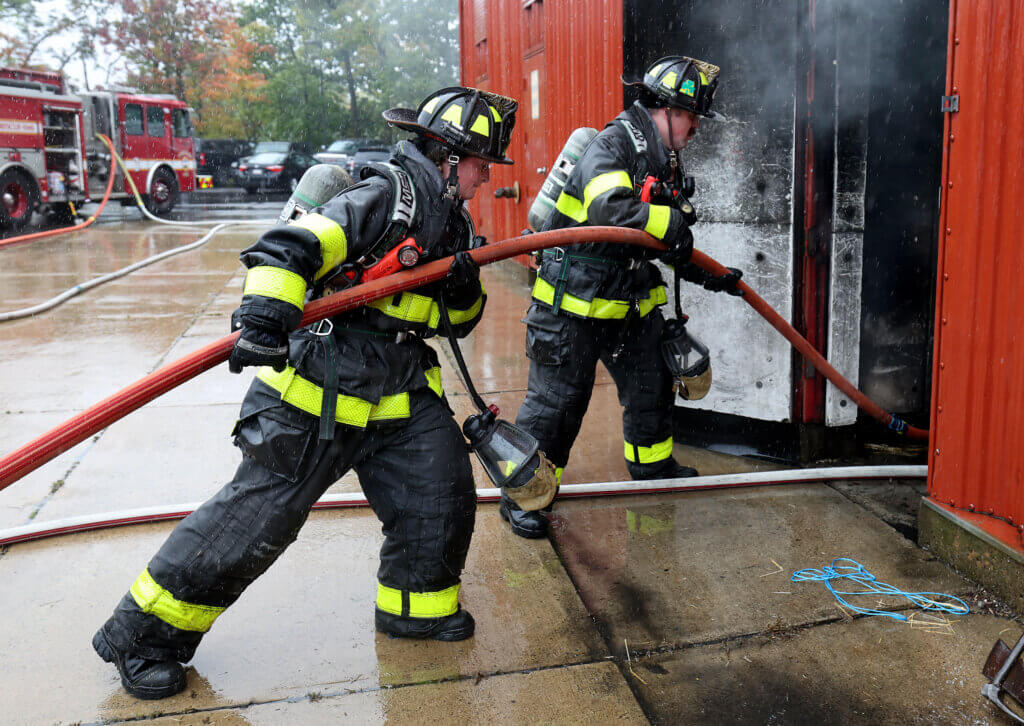
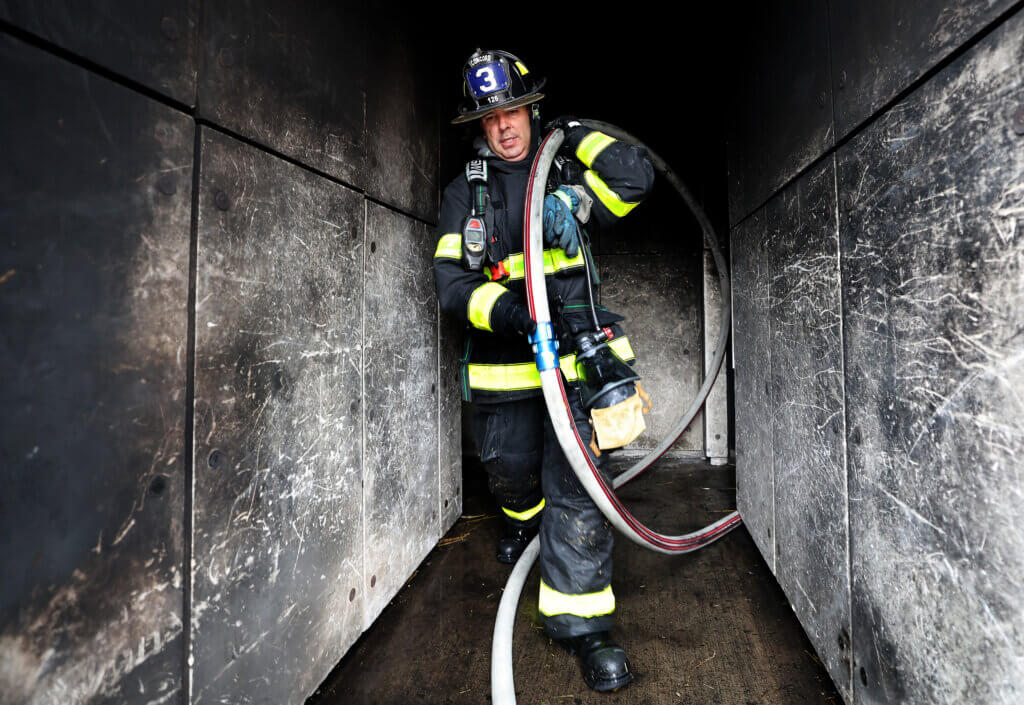
CFD officers with experience teaching at the state firefighting academy led each round.
Crews shoveled burnt hay out of the multistory Worcester burn building and restocked it with new bales to fuel the fires as rain fell in bursts.
Firefighters dragged out mannequins during each practice burn to simulate rescues.
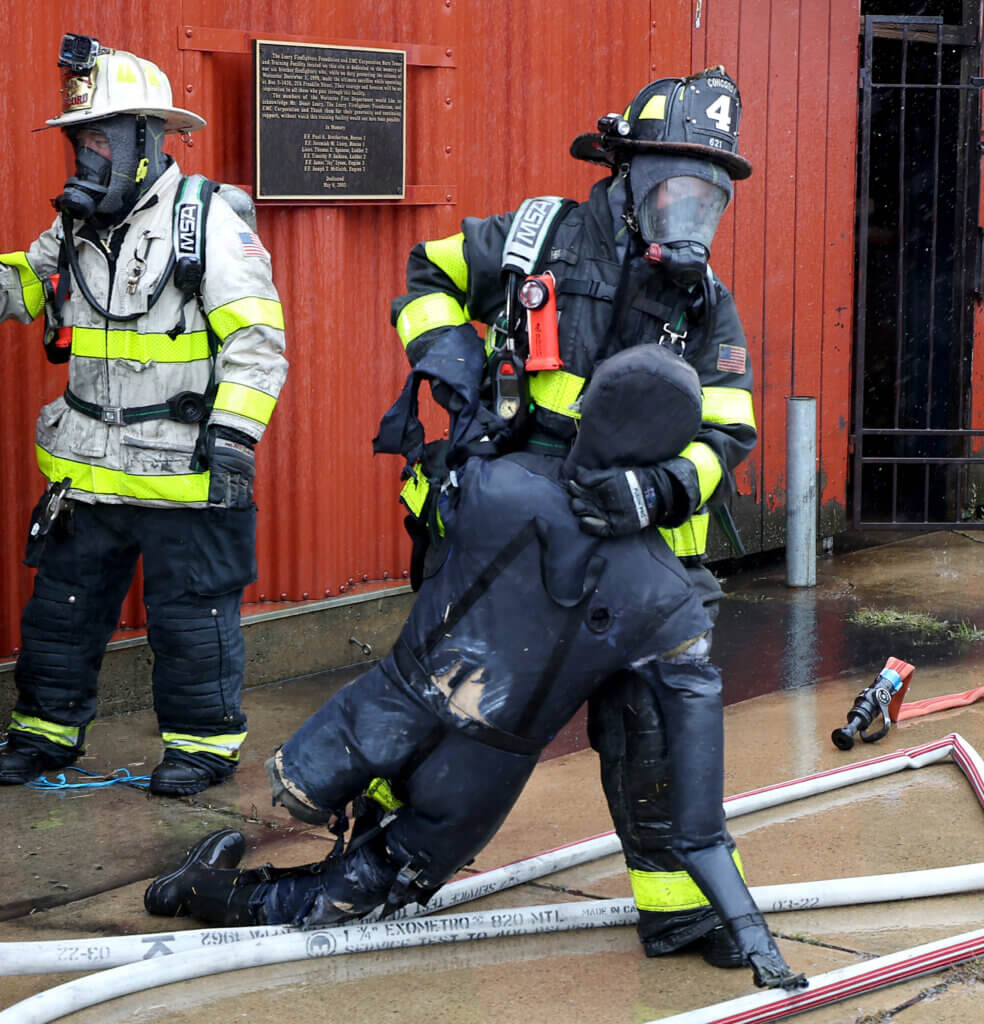
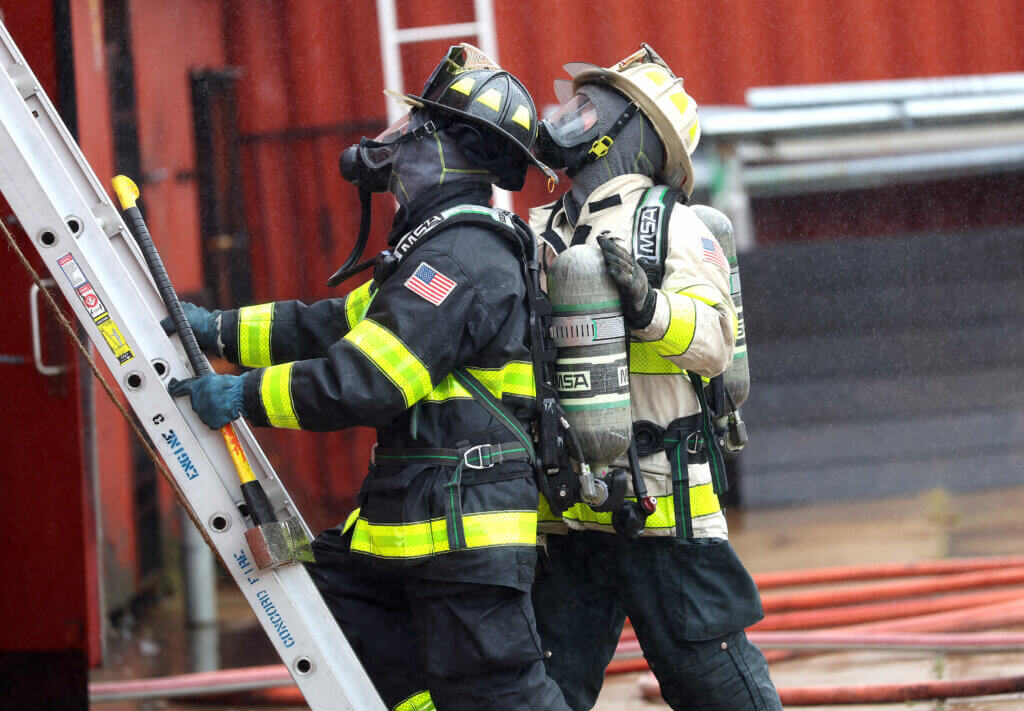
For experienced first responders, this training “refocuses our folks on the basic skills,” Assistant Fire Chief Sean Murphy said. For newcomers, “it really lines them in.”
CFD holds regular training sessions where firefighters run hoses and navigate buildings with simulated smoke or face shields to limit visibility. It’s not the same as the real thing, when crews can feel the heat of a fire and see how it reacts when they flood it with water.
Facing actual flames, Whitney said, is “extremely beneficial.”