Acton hate data: A spike in incidents, or better reporting?
Middlesex District Attorney Marian Ryan revealed that every single report over the past six months has come from Acton.
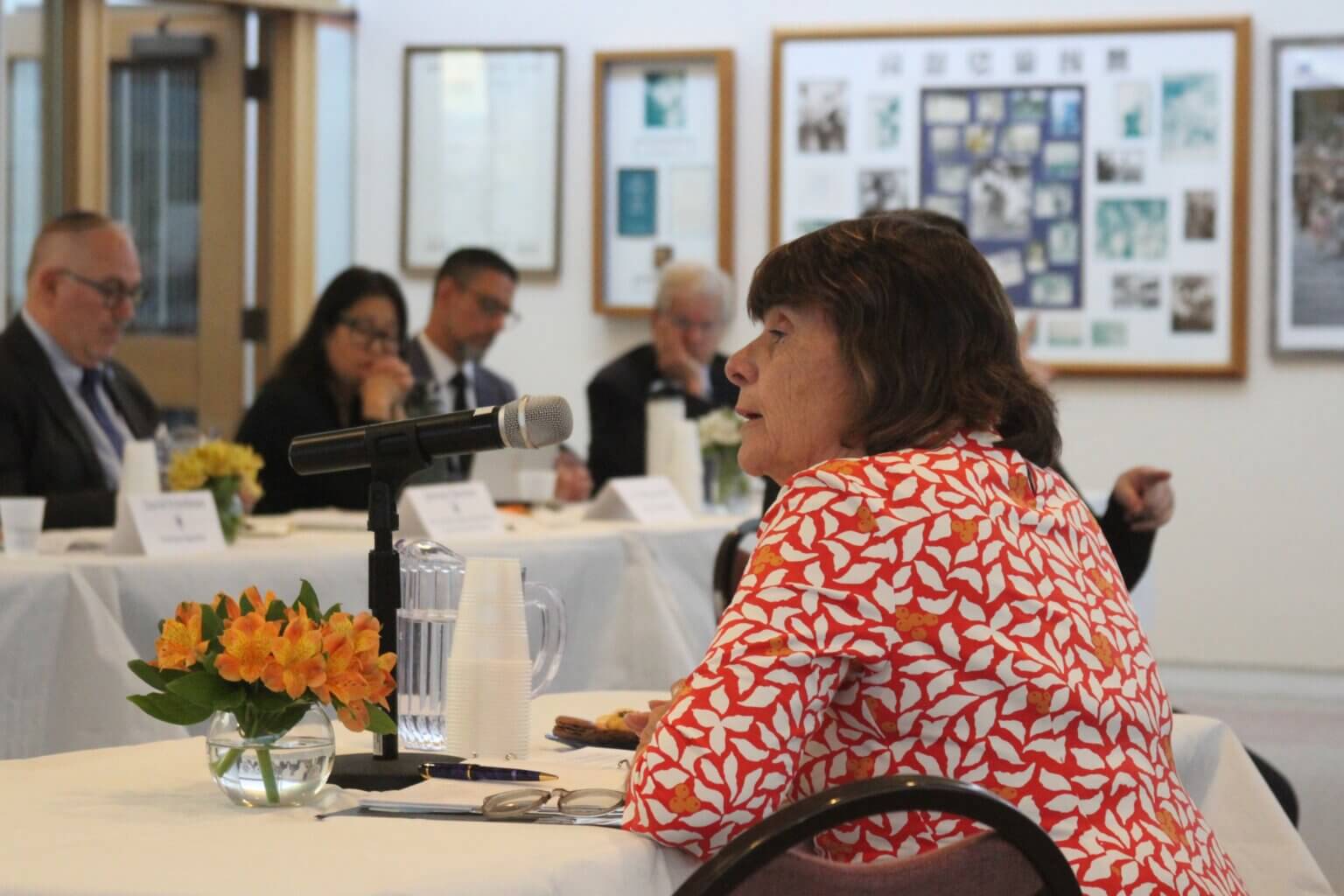
The Middlesex District Attorney’s office tracks bias and hate incidents across its 54 municipalities.
Over the past six months, DA Marian Ryan told the town’s Bias and Hate Incident Reporting Work Group, every single report has come from Acton.
The statistic sent shockwaves through town advocacy circles in recent weeks and came as Acton leaders were already facing questions about how they’ve handled hate incidents.
Ryan said the type of problems being reported in town aren’t new, and officials must ensure they follow up on the data they collect.
“I’ve been in this office a long time, and I would say I see a lot of the same complaints coming from Acton that I saw 20 years ago,” Ryan said during the January 15 work group meeting.
District attorney data
The DA’s office takes reports through an online portal and receives notifications from police departments. Ryan’s team also documents complaints she receives at events.
The office fielded 33 reports in 2025, according to Communications Manager Sarah Lamson. Fourteen were from Acton, she told The Acton Bridge.
All the reports came from the Acton police, Lamson said. Eight were “school-based.” None resulted in prosecutions.
Ryan said the DA’s office strives to address cases, even if there’s no crime committed.
Acton’s public schools don’t report incidents directly to the DA, Ryan said. They notify police, and CPD Lt. Tim Landers said the department relays information.
Ryan said the office has historically seen clusters of reports after high-profile national or local incidents. Hate has been a much-discussed topic in town, especially since a federal filing alleged widespread antisemitism in the public schools this past June.
Select Board member and work group representative Paul Boehm told The Bridge “There may or may not be more incidents, but there’s certainly a heightened awareness to report.”
Underreporting has been a problem in Acton and beyond, he said, so “Maybe we’re just the tip of a bigger iceberg.”
School leaders react
School Committee member Michael Williams brought up the DA’s data during a January 21 panel meeting. K-8 committee Chair Andrew Herchek quickly interjected.
“What you’re about to talk about is not on the agenda,” he said. “So you’re violating open meeting law, and that’s up to you.”
Williams said he felt the topic’s absence from the agenda didn’t preclude him from discussing “something that occurred in the interim,” and that he was trying to raise an issue relevant to the community.
Schools Superintendent Laurie Hunter said she spoke with Ryan after hearing about the work group presentation. “She was very supportive of the schools,” Hunter said, adding that Ryan “feels like she knows what’s happening.”
Seeking ‘follow-through’
When dealing with hate, Ryan said, the most successful communities are those with “actual follow-through.”
Diversity, equity, and inclusion consultant Carlos Hoyt met with the bias and hate panel in early January — before Ryan’s presentation — and questioned in a memo why officials determined “that the best way for the [Select Board] to address social bias incidents was to establish a working group charged with developing a reporting system.”
He said the group should reconsider its focus to prioritize recommendations from a 2023 town DEI survey.
The top suggestion was to hire a town “diversity officer.” Town Meeting also urged officials to add a DEI director that same year. So far, Acton hasn’t budgeted for the job.
Without a full-time director, the DEI Commission has pushed for “DEI office hours” with a consultant. There’s some money available from the federal American Rescue Plan Act, Town Manager Kerry Lafleur told The Bridge, and “that’s where that would be funded.”
ARPA money must be spent by the end of 2026, though, and couldn’t be a long-term funding source.
‘Down a rabbit hole?’
The effort to fix incident reporting blind spots “should continue,” Select Board Chair Mark Howell told colleagues during a January 12 session, after Hoyt’s sit-down but three days before Ryan’s.
Hoyt’s comments still made him wonder, “Have we possibly gone down a rabbit hole and lost track of the main thread here?”
Reporting, “wasn’t the only thing we suggested” after the June 2025 federal antisemitism brief, Boehm said in response. “Of course there has to be a more general response to [the 2023] survey,” he said in a Bridge interview.
The DEI has already sent proposals and plans to town leadership, panel co-Chair Rose Cratsley said, but those “are still pending.”
It will take money, Cratsley said, “to make all of these things happen.”
She highlighted community coffees, in the meantime, as a place to “engage in humane dialogue.”
The Select Board approved a new DEI charge on January 27. The next DEI coffee will be March 4 from 1:30 to 3:30 p.m. at the Acton Free Public Library, Cratsley said.