Acton’s ‘unofficial town naturalist,’ Peter Alden, still traveling the world
Alden wears many hats — lecturer, author, ecotourism guide, and lifelong naturalist. At 80, he’s still on the road.
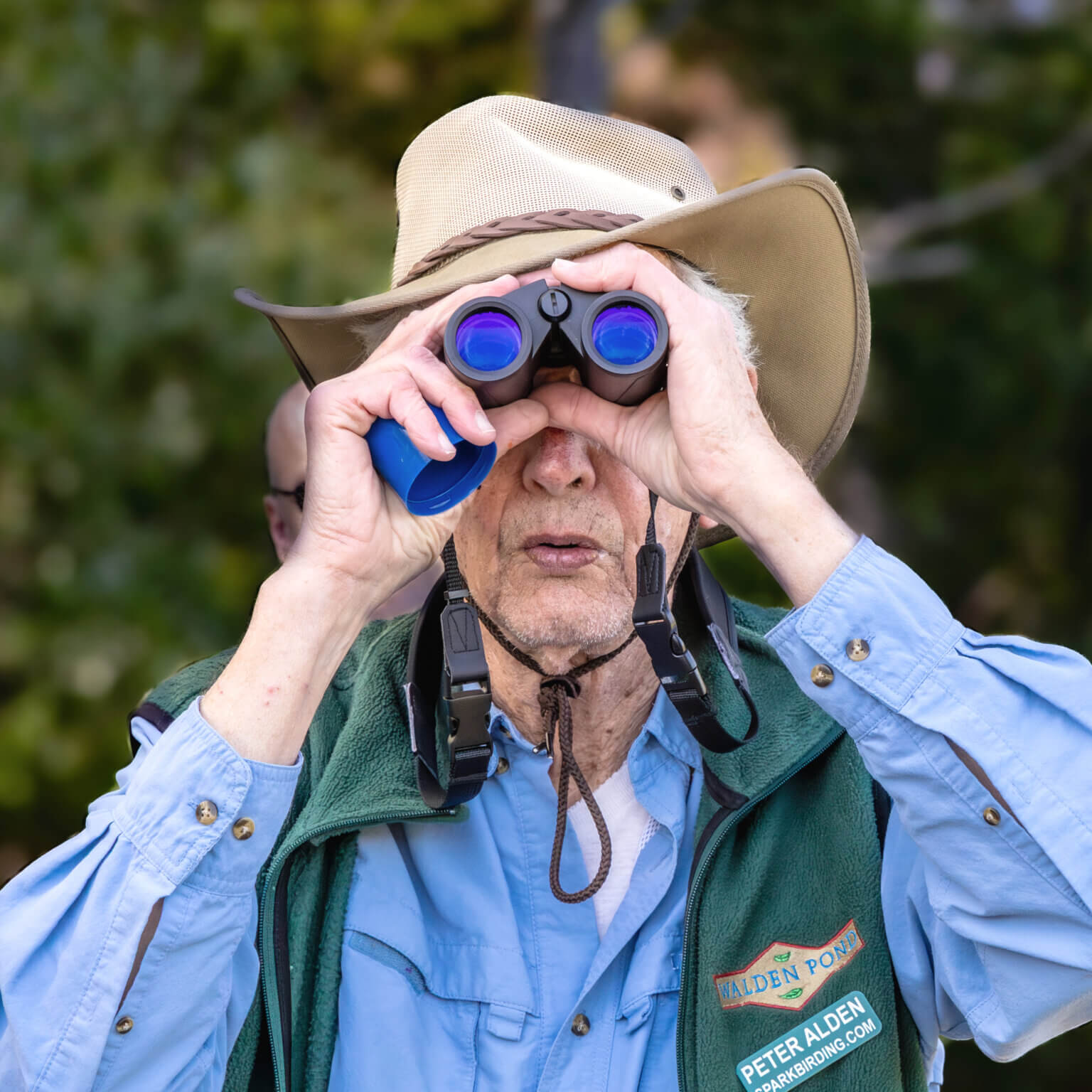
There’s a secret library in West Acton that you won’t find on any map or guidebook. There’s no sign and no card catalog. It’s found at the bottom of a narrow stairway in the basement of Peter Alden, Acton’s “unofficial town naturalist,” as he calls himself.
Alden wears many hats — lecturer, author, ecotourism guide, and lifelong naturalist. He’s traveled to all seven continents, led tours in dozens of countries, and written 15 books. In his basement, shelves are packed with books sorted by region, and rows of filing cabinets are filled with hundreds of wildlife images — mostly birds — documenting a life spent chasing the natural world.
“Whenever I need to put together a lecture, I come down here and grab my best images,” he says, thumbing through one of the many cabinets he had meticulously organized.
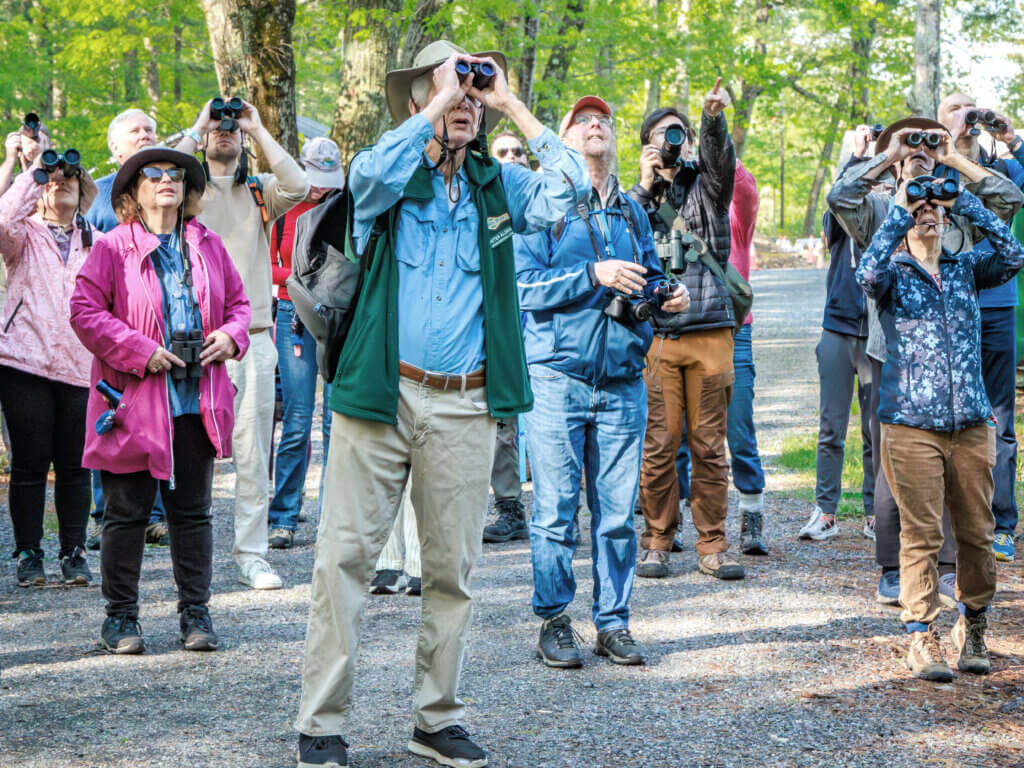
Alden is a Acton original. Born here in 1944, he attended school in town. A young Alden found a love for birds through his father.
“Whenever we went mountain climbing or canoeing or walking somewhere and we saw some bird,” Alden says, “[my father] would pass binoculars to me so I could see that bird.”
But he was a reserved kid. After a hockey accident in his youth left him with a silver front tooth, Alden became self-conscious and avoided speaking to keep it hidden.
Instead, he often disappeared to places like Block Island in Rhode Island to watch birds.
College in Tucson
During his sophomore year of high school, Alden journeyed to the Arizona-Mexico border, where members of the National Audubon Society hosted him. He enjoyed the experience so much that he decided to return for college at the University of Arizona in Tucson.
But instead of studying ornithology, Alden majored in geography. To his mind, the biology classes focused too much on the micro scale.
“I wanted the thundering herds of the Serengeti. I wanted flocks of macaws and parrots flying over the Amazon,” Alden says. “I was not going to sit in a white coat looking into a microscope the rest of my life.”
While at college, he discovered he could cheaply travel to Mexico from Tucson. It would spark his lifelong obsession with travel. After college, he received a small inheritance and spent a year exploring India, Nepal, Thailand, and other countries.
He then returned to the Bay State for a job with the Massachusetts Audubon Society, leading world tours.
A published author
Alden published his first book, “Finding Birds Around the World,” in 1981. It was a collection of birding spots from his travels.
His next book was published in 1995 — the “National Audubon Society Field Guide to African Wildlife,” a volume still in print today.
Between writing and traveling, Alden began working for Lindblad Expeditions. There, he regularly traveled to Antarctica — among other places — and gave lectures on cruise ships.
Alden said that one night while having a drink in New York with Andy Stewart — the ex-husband of Martha Stewart who helped publish Alden’s African field guide — Stewart asked what Alden’s next book would be.
“I told him I want to do regional field guides because every other book is about the whole country,” Alden says.
This conversation would spur Alden’s creation of eight regional field guides.
The bioblitz
His life would continue at a breakneck pace. Alden traveled to more countries, led more tours, and started lecturing at Harvard with E.O. Wilson, a renowned biologist and conservationist.
The two created the first “bioblitz” around Walden Pond in 1998. It pulled community members together to identify and catalog species found in the area. They would host it again in 2009 and 2019.
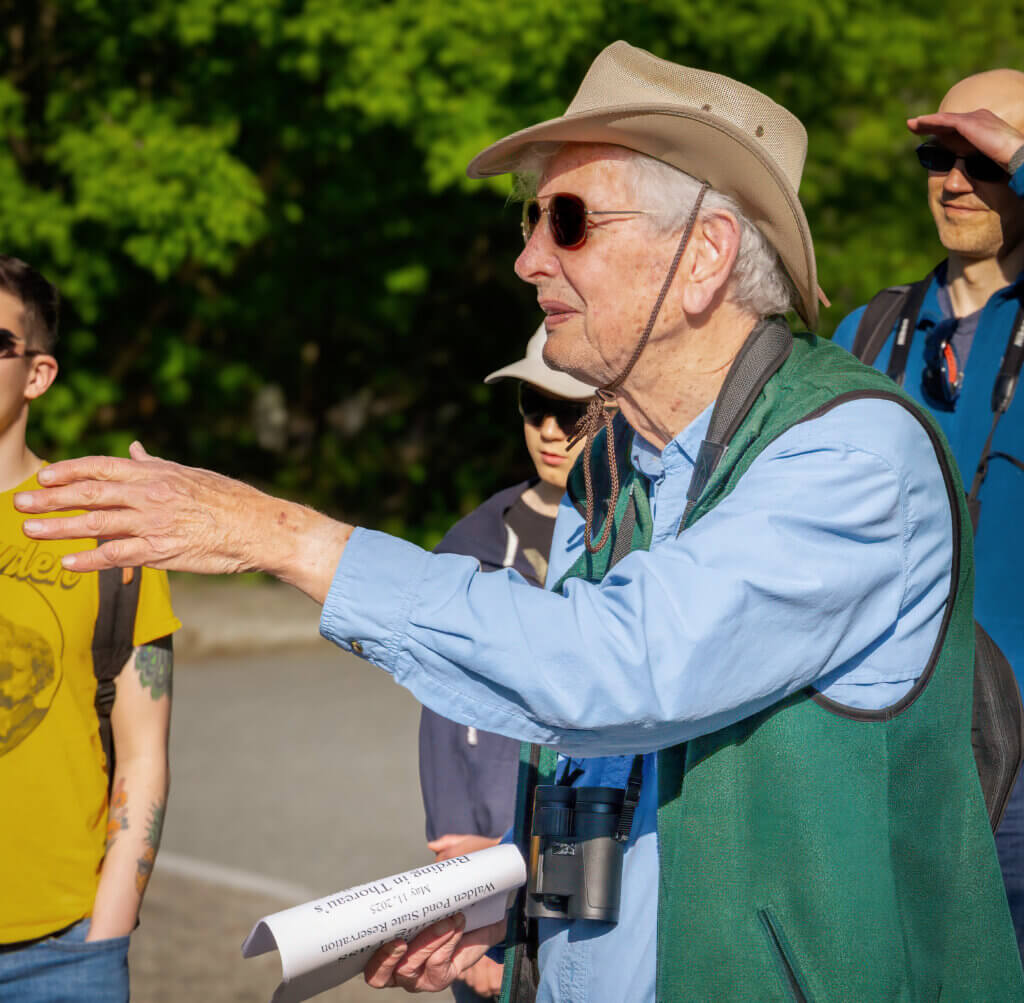
At 80, he’s still on the road. Alden is working on his memoir, hosting walks with The Walden Woods Project, and planning his next tour to Tanzania.
“When people ask me what I accomplished in my life, I often say, ‘Well, I am probably the only person who has taken people to over 100 countries and brought them back safely and alive,’” he says.


