Cultural handiwork: Author unravels Latvian mittens’ artistry, symbolism
What started as a mother-in-law sharing her culture turned into a lifelong passion for Lizbeth Upitis.
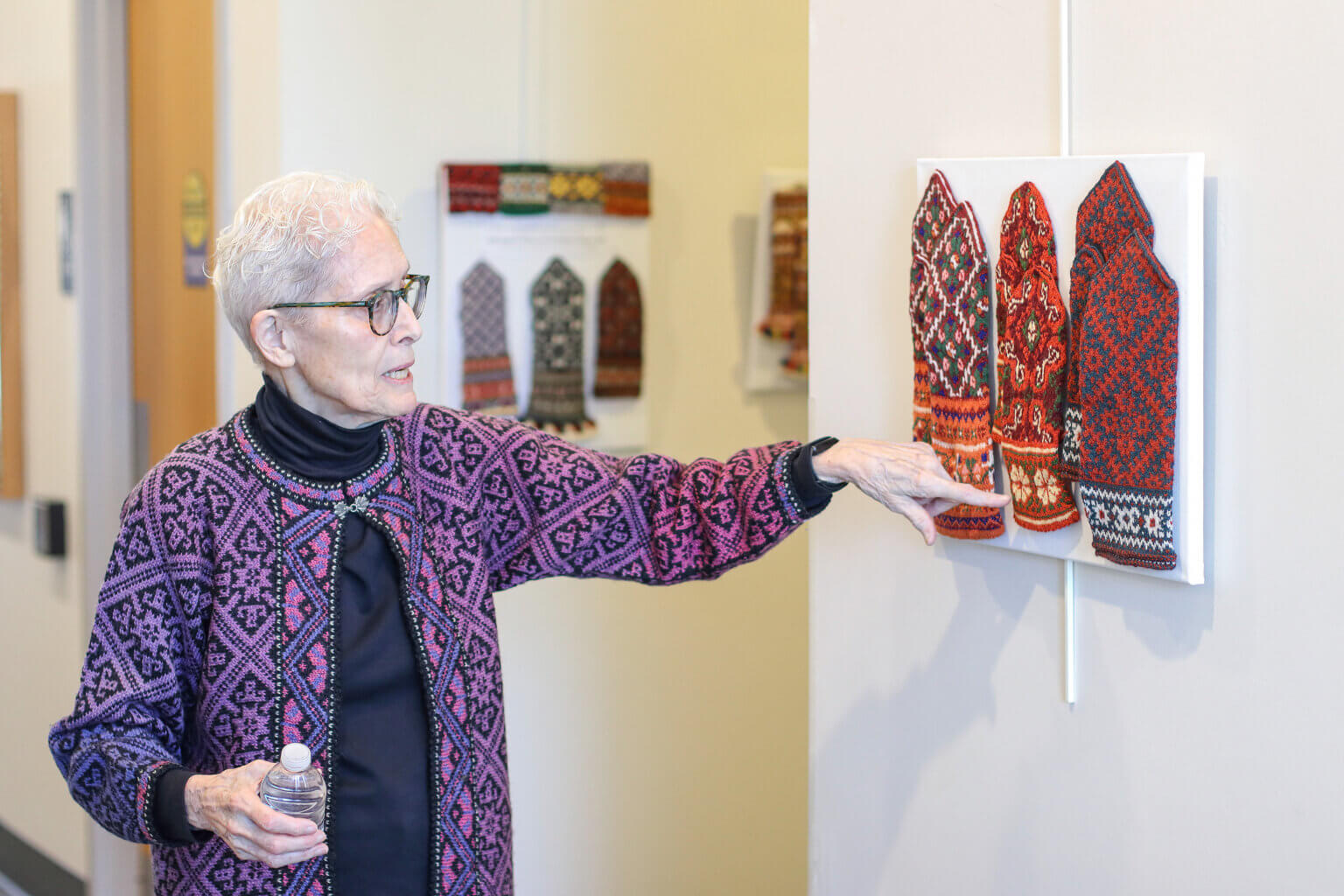
Lizbeth Upitis first learned about the artistry of Latvian mittens when her mother-in-law showed her a chest full of intricately knitted treasures she had tucked beneath a bed. What started as a mother-in-law sharing her culture turned into a lifelong passion for Upitis.
“She wasn’t much of a crafter; she was more of a gardener,” Upitis said, showing a display of mittens to a Acton Bridge reporter in the final days of an exhibit at the Harvey Wheeler Community Center. “But she had made two to keep up the tradition, the memory.”
The exhibit will reappear at the Fowler Branch Library in April, bringing with it centuries of symbolism and marriage ritual.
‘Like a wedding cake’
Upitis was always drawn to textiles and the culture around them. Originally, she planned to study Native American traditions, but her focus shifted after she saw the mittens. Later, she would write a book on the subject, “Latvian Mittens: Traditional Designs and Techniques.”
Upitis said the mittens became more ornate due to their significance in marriage ceremonies.
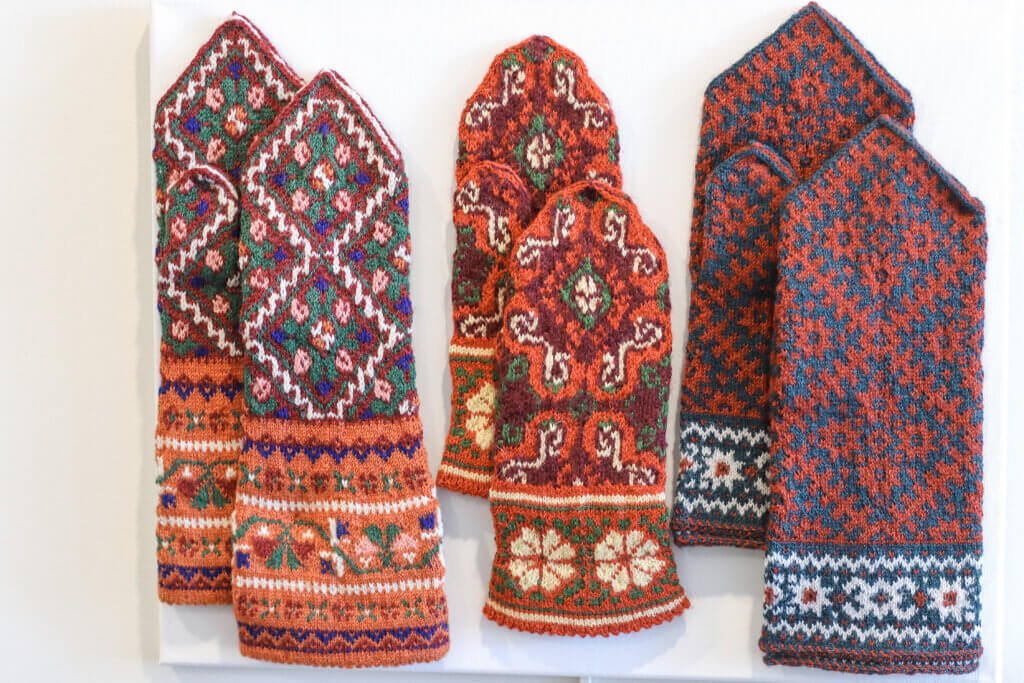
“Think of them like a wedding cake. Over here, how absurd can wedding cakes be? And there is not an actual reason for it,” she said. “It’s the same for the embellishments — fringes and braids and scallops and multiple colors in a row.”
Latvian brides could be expected to knit dozens of pairs as part of a dowry. During multi-day wedding ceremonies, the brides would present their handiwork to all relatives and farm helpers, as well as symbolically to livestock and crops. Mittens hung from hearths and were worn while exchanging vows.
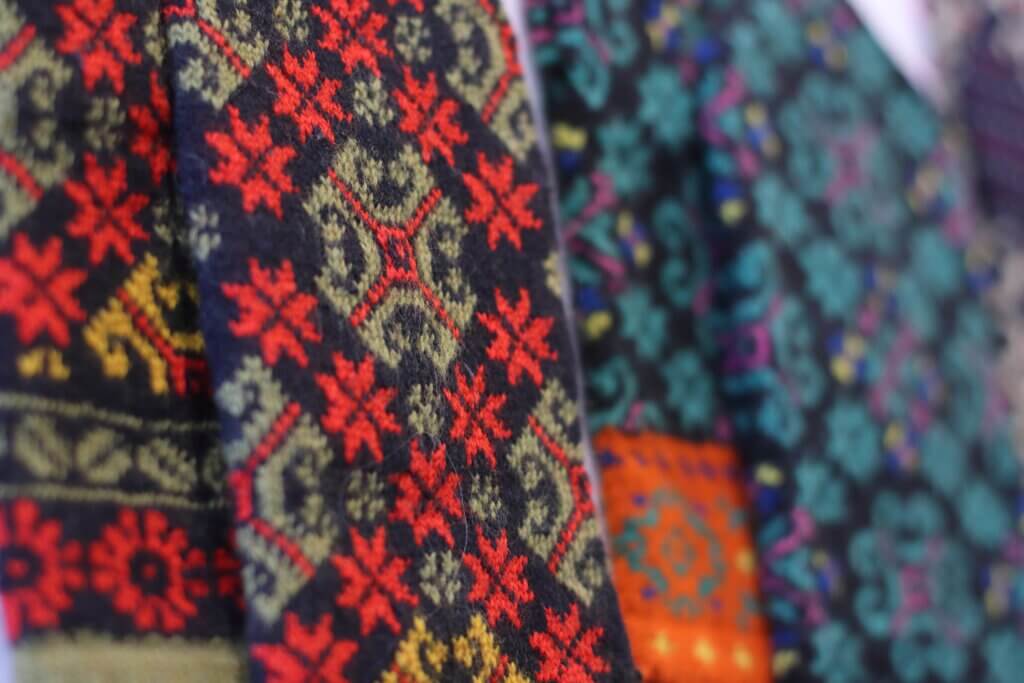
Upitis explained that many of the shapes knitted into the mittens were specific and had names. Some of those symbols: the sun, the moon cross, the morning star, and Austras koks — the “tree from which the sun leaps every morning.” Many designs layer them within each other, contrasted by subtle color shifts.
“If there’s a symbol, it has a deep meaning if they’re going to put it into a textile,” she said. “The Latvians love to play with colors and embed designs, because they’re all geometric designs that fit into one another.”
Deeper meaning
But for her, the significance behind the mittens is more personal. Upitis still remembers the group of women who helped show her how to make them.
“I joined their craft group, and they used to do all kinds of crafts, but pretty soon it just became mittens because I was so excited about mittens, and they all knew mittens, and they were happy to be able to show me,” she said. “I learned each stitch is just one stitch after the other, but it carries generations of tradition.”
Upitis’ mitten collection will be on display at the Fowler Branch Library during April, and she will give a presentation on April 18.