Early drafts offer peek at housing-heavy MCI makeover
A public planning marathon opened with gasps from meeting attendees about the state’s request for housing units.
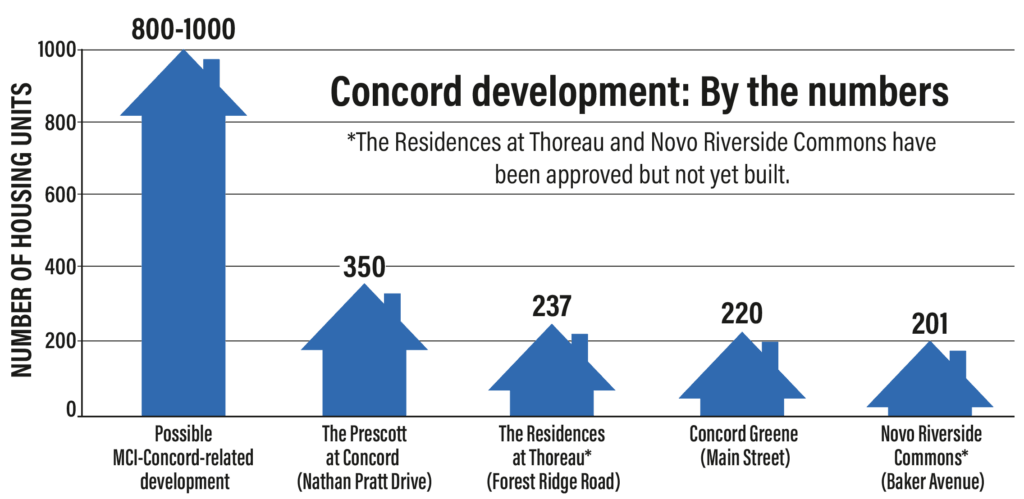
State officials think land on and around the shuttered MCI-Acton prison site could support up to 1,000 housing units.
Future drivers might also navigate a new roundabout.
Leaders from Beacon Hill to Monument Square have long agreed that housing should be part of the equation, but town officials have been pushing for specifics.
Acton finally got a number, and last week Select Board Chair Wendy Rovelli relayed what she described as the state’s “request” for 800 to 1,000 units.
A public planning marathon opened with gasps from meeting attendees about the numbers.
Housing backer Keith Bergman applauded as others recoiled. It’s a high mark, he said, but that’s “probably a negotiating point.”
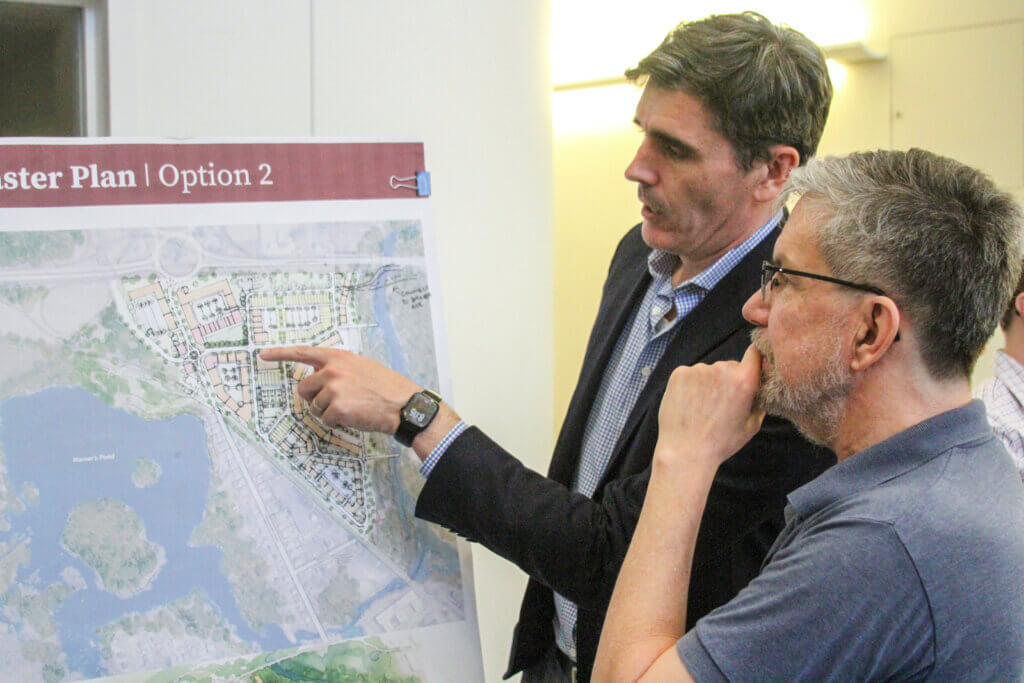
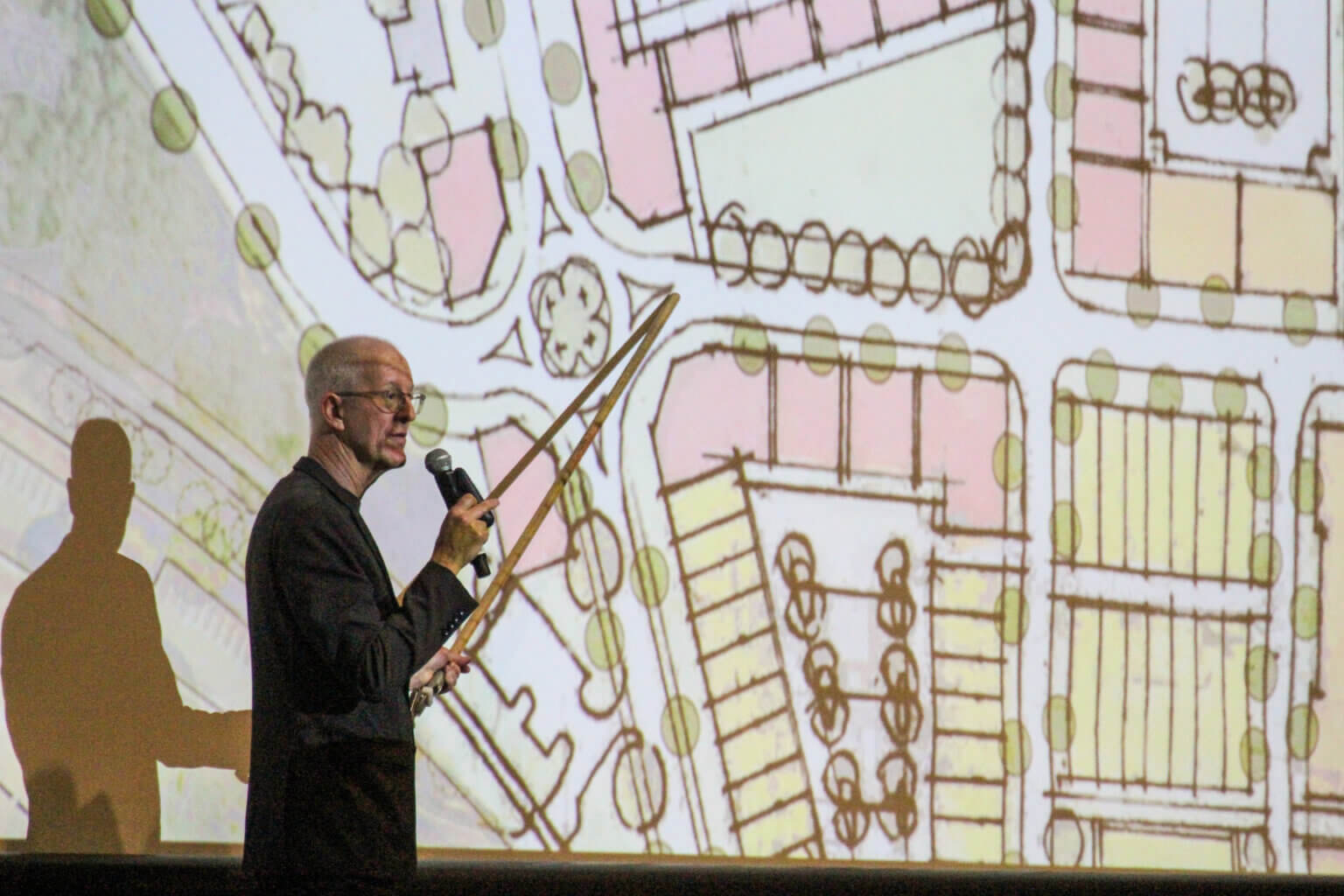
The week closed with a first look at a draft redevelopment plan. “We hope you like it,” consultant Jeff Speck said.
Speck told The Acton Bridge the housing threshold is “physically achievable.”
Politically, “we’ll see,” he said.
Acton will use zoning to shape what developers can potentially do with the prison. Plans will evolve over the coming months.
“This is a big deal, and this is our shot,” resident Jay Copeland said.
Town Manager Kerry Lafleur said last week’s design “charrette” — a four-day explanation and brainstorming program — would yield “the beginnings of a plan.” Officials expect to bring zoning issues to Town Meeting next year.
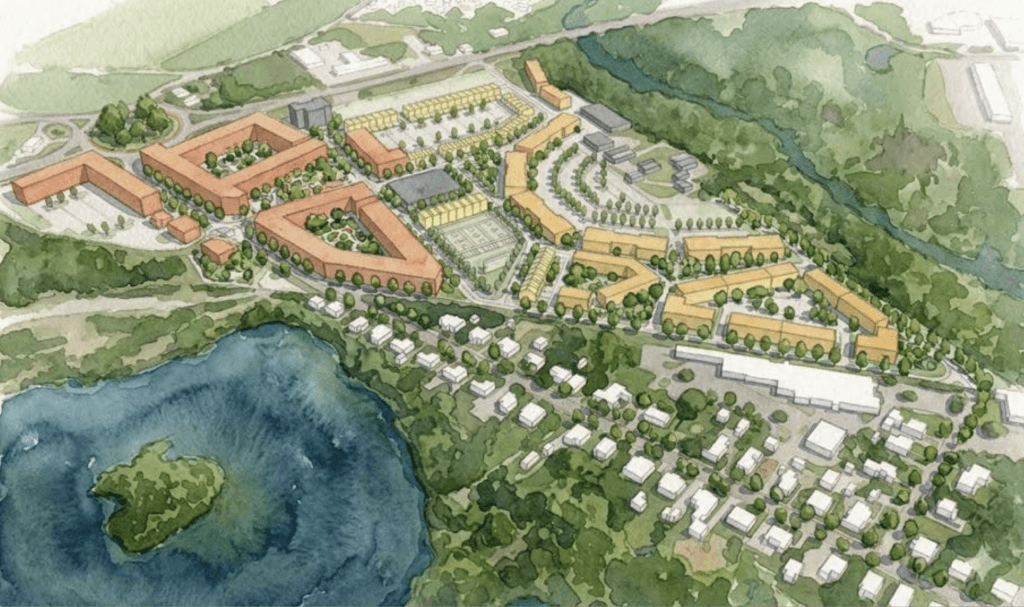
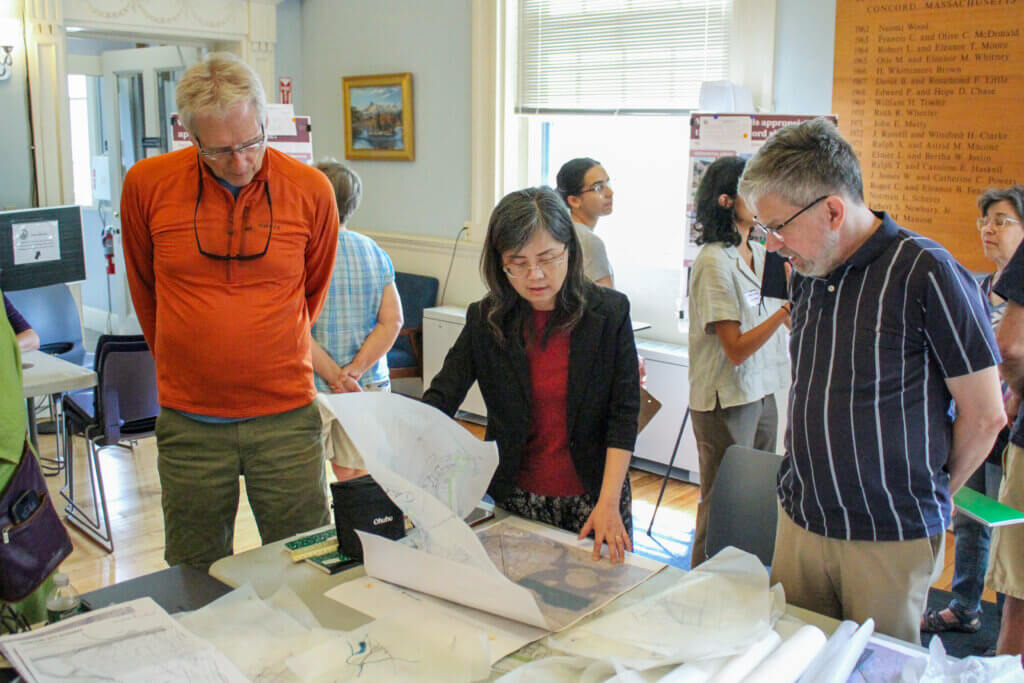
Designers developed ideas for what the site could look like with and without a new public works headquarters near the Assabet River. They revealed illustrations last Thursday at Acton-Carlisle High School.
Officials are interested in acquiring a state wastewater treatment plant on the campus and want to keep housing outside a 300-foot “stink zone.” Consultants suggested using the space for parking.
‘Pedestrian streets’
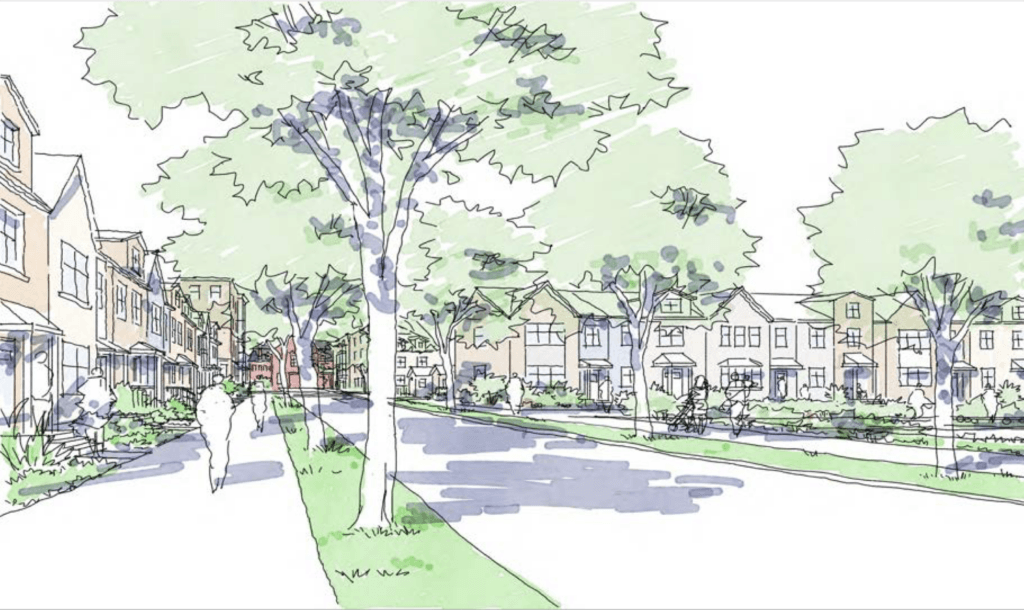
Speck displayed a mix of row houses, higher-density apartment buildings, and mixed-use buildings with retail and residential space.
He suggested “pedestrian streets” where some buildings open onto walkways rather than roads. Designers proposed ideas that they said would work with or without a planned state Route 2 rotary replacement.
Whatever the state does, consultants are suggesting a smaller new roundabout on Commonwealth Avenue to manage traffic coming into the redeveloped area.
A spokesperson for the state Executive Office of Housing and Livable Communities said the 800- to 1,000-unit figure was an estimate of what the prison campus and related land “could support.”

Local architect Ann Sussman said that in Acton, “we need housing.”
She told of her parents buying a home in Lexington in 1961 for $16,000. These days, most Acton homes go for well over $1 million. “We’ve just squished the American Dream,” Sussman told The Bridge. “We need to rebuild it.”
Resident Victor Grigas is originally from Chicago and said, “If you’re going to build something, build up, build big,” and “build dense.”
Others have sounded alarms about increased traffic or a surge of new students.
Andy Puchrik said he already sees backups from his Acton Greene balcony and “it’s going to be a cluster” once a planned Baker Avenue housing development called Novo Riverside Commons adds more drivers to the mix.
Novo will bring 201 units. Even the low end of the state’s MCI estimate could net roughly four times that many new apartments.
Not all housing development is happening on the prison site. Officials hope to count units at other open properties toward the state’s goals.
The former Peabody School is one candidate. Moving Acton Public Works could open the door to housing on the land now occupied by that department’s HQ.
A ‘historic opportunity’
Monument Street resident Tom Tremblay sees a “historic opportunity” to connect the Bruce Freeman Rail Trail to the Reformatory Branch Trail.
Zoning Board of Appeals associate member Stephen Newbold warned that the current Bruce Freeman trail might need widening. Acton must “pedestrianize” the trail for more traffic, he said, or new walkers are “going to get killed by all the bikers.”
The historic prison superintendent’s house facing Route 2 “needs to stay,” Speck said. He also suggested retaining at least one guard tower from the prison’s perimeter.
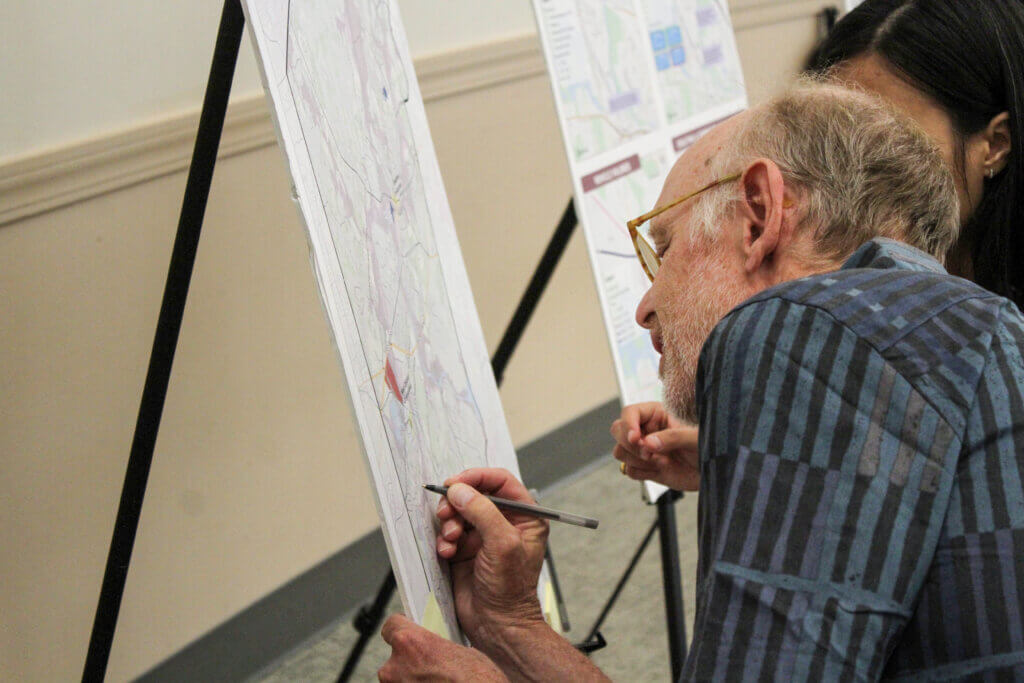
Officials plan to collect feedback via a survey posted at mci-Acton.org. They expect to have more developed plans and draft zoning this fall.
West Concordian Mark Lo said the first look offered a “good mix” of housing types.
“I don’t want to [have] Acton being on the news as one of those towns that is saying, ‘No, we’re not going to build housing,’” he told The Bridge, “because it is so important.”
Acton Housing Foundation President Frank Feeley wants to boost options throughout town, including at MCI-Acton.
He’s bracing for a long wait.
“I’ll be in the state home for the bewildered before anything gets built,” he said.


