Farmers hail community support after USDA cuts
After a loss of federal funding, the owners of Barrett’s Mill Farm were grateful for a burst of community support.
Lise Holdorf watched her kale crop emerge into an uncertain spring.
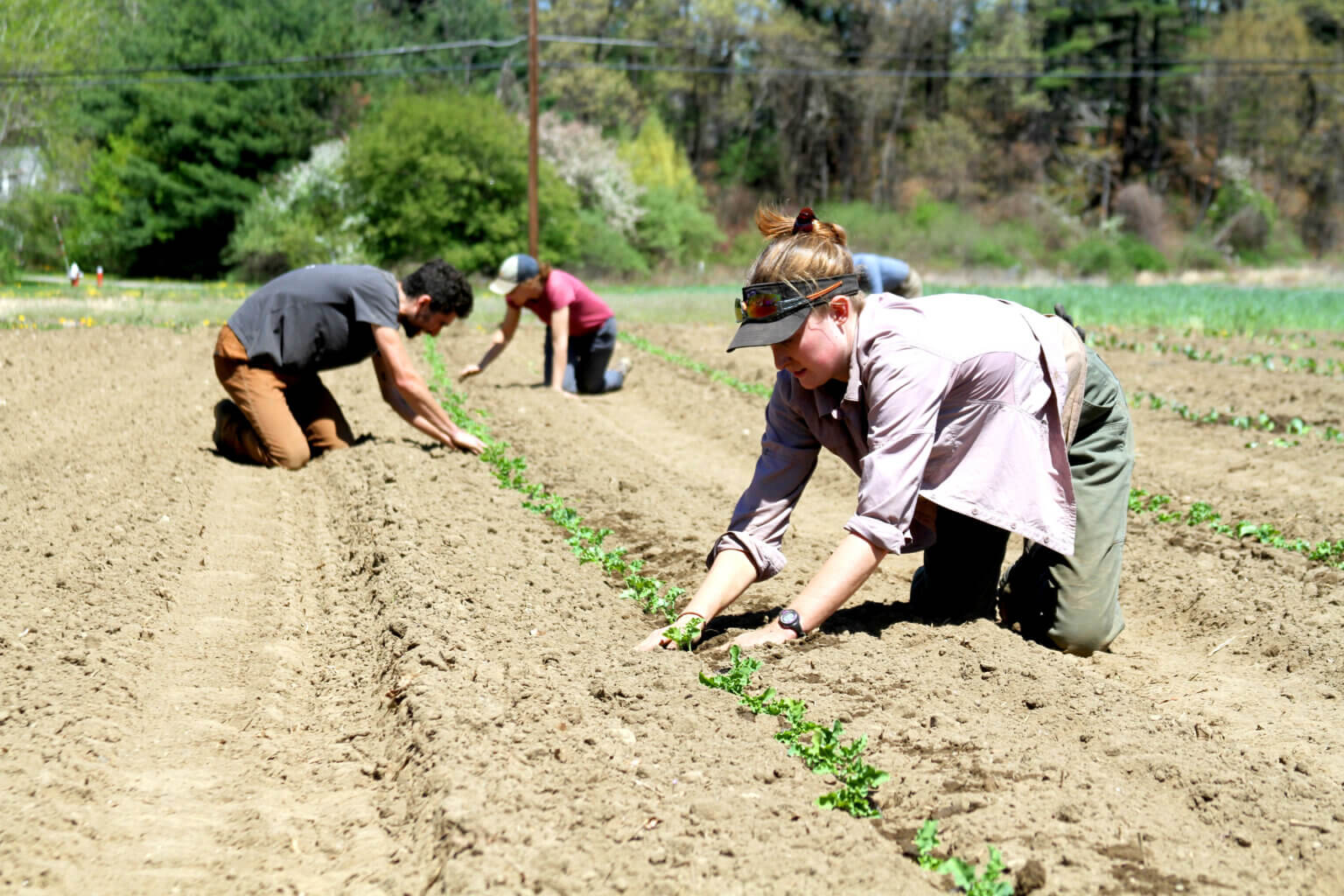
Six weeks later, she and her team transplanted sprouts from a greenhouse to an open field with the wind of local supporters at their backs.
Acton farmers still face challenges after President Donald Trump’s administration slashed support for some programs, paused others, and cut Agriculture Department staff. Tariffs also raised questions.
But after sharing her story, Holdorf said she and Barrett’s Mill Farm co-owner Melissa Maxwell were grateful for a burst of community support.
“[We’re] floored by how generous people have been,” Holdorf said.
Reader response
Holdorf previously spoke with The Acton Bridge in mid-March after the USDA axed funding for its Local Food for Schools and Local Food Purchase Assistance programs. The programs helped nonprofits such as the Acton-based Boston Food Hub buy food and distribute it to schools, food banks, and other organizations.
[Learn more: Farmers push to restore state program for SNAP users]
Holdorf said Barrett’s Mill Farm got $15,000 in LFPA money through the Food Hub in 2024. Financial pressure from the cut compounded fears about taxes on imported goods, rising costs, and a sales slump.
Holdorf acknowledged questions about whether Barrett’s Mill could stay in business. Others warned Massachusetts farms would fold.
Her comments ran in the March 21 edition of The Bridge. In response, readers offered to open their checkbooks.
Holdorf coordinated with the Food Hub’s parent organization, Boston Area Gleaners, and directed supporters to a new Gleaners “procurement fund.” Backers made enough earmarked donations for the Gleaners to match last year’s $15,000 purchase of Barrett’s Mill community-supported agriculture shares.
Other farms are also benefiting from Gleaners efforts to replace USDA help. Late last month, Gleaners executive director Usha Thakrar said fundraising was “not coming close” to supplementing the loss for those farms. But she said the money could still “make a hell of a difference.”
‘Something we can do’
Holdorf said she and Maxwell don’t often go public with financial difficulties. As such, she said, some didn’t realize the challenges facing eastern Massachusetts farms.
Acton resident Kathleen Bailey has bought Barrett’s Mill CSA shares for several years and said she realized the farm could be facing a “financial emergency” after reading Holdorf’s March comments. As she considered donating, she thought, “This is something we can do.”
Fellow resident and donor Jean Husson said the March article “made me vaguely nauseous.” A volunteer at the Open Table food pantry in Maynard, she sees the work groups like the Gleaners do to help people get locally grown produce.
Husson also praised Barrett’s Mill and said the farm closing would have “broken my heart,” so “I figured this is a wonderful, hyperlocal way of responding.”
‘Support your local farmer’
Thakrar said she wore a T-shirt with the barely legible words “Support your local farmer” while speaking by phone with The Bridge.
“Everybody feels like a storm is brewing,” with the changing political atmosphere, she said. “It’s like chasing a tornado, a little bit.”
She said her work is “extremely impactful and rewarding,” and her organization won’t cease its efforts.
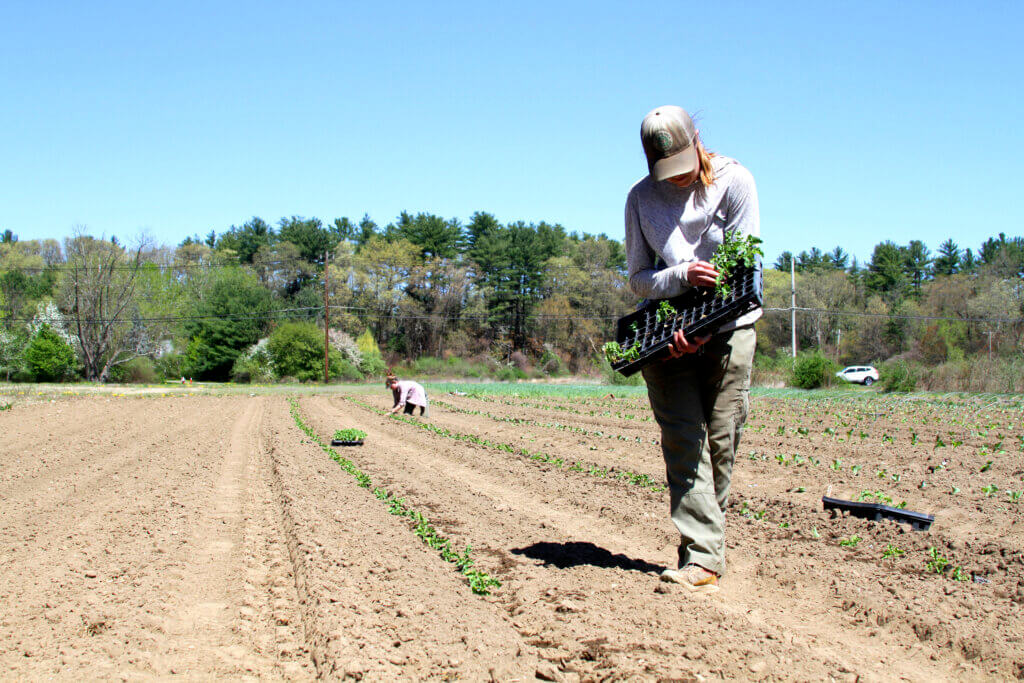
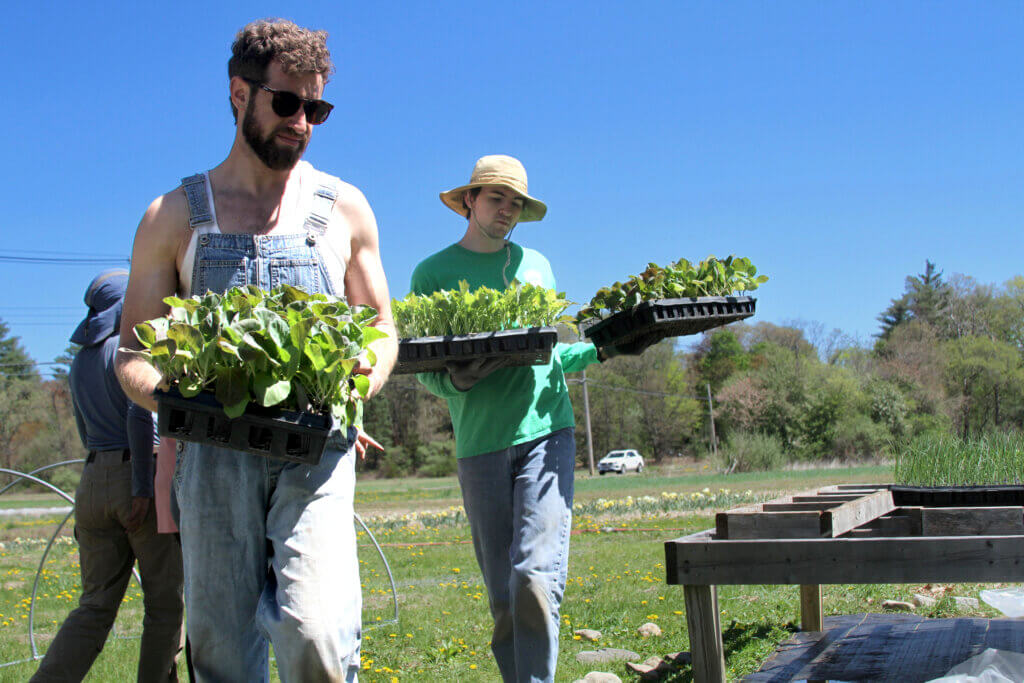
Holdorf methodically dropped palm-sized kale plantings from a tray one recent afternoon. Staff nestled the greens in freshly tilled soil. The day before, she said she was optimistic as this year’s CSA sales outpaced 2024 figures. But she said she and Maxwell were still bracing for possible sticker shock when current supplies run out and they make more bulk purchases over the winter.
Under sunny skies on the edge of Thakrar’s proverbial storm, Holdorf thanked people who jumped into action. She said people who value farms should keep visiting those businesses.
“If people want their local farms to be around,” she said, “then they need to buy from their local farms.”


