Finder of lost pets averts many a cat-astrophe
When Nadja Young reunites a cat with its owners or rescues a stray, life is just about purr-fect.
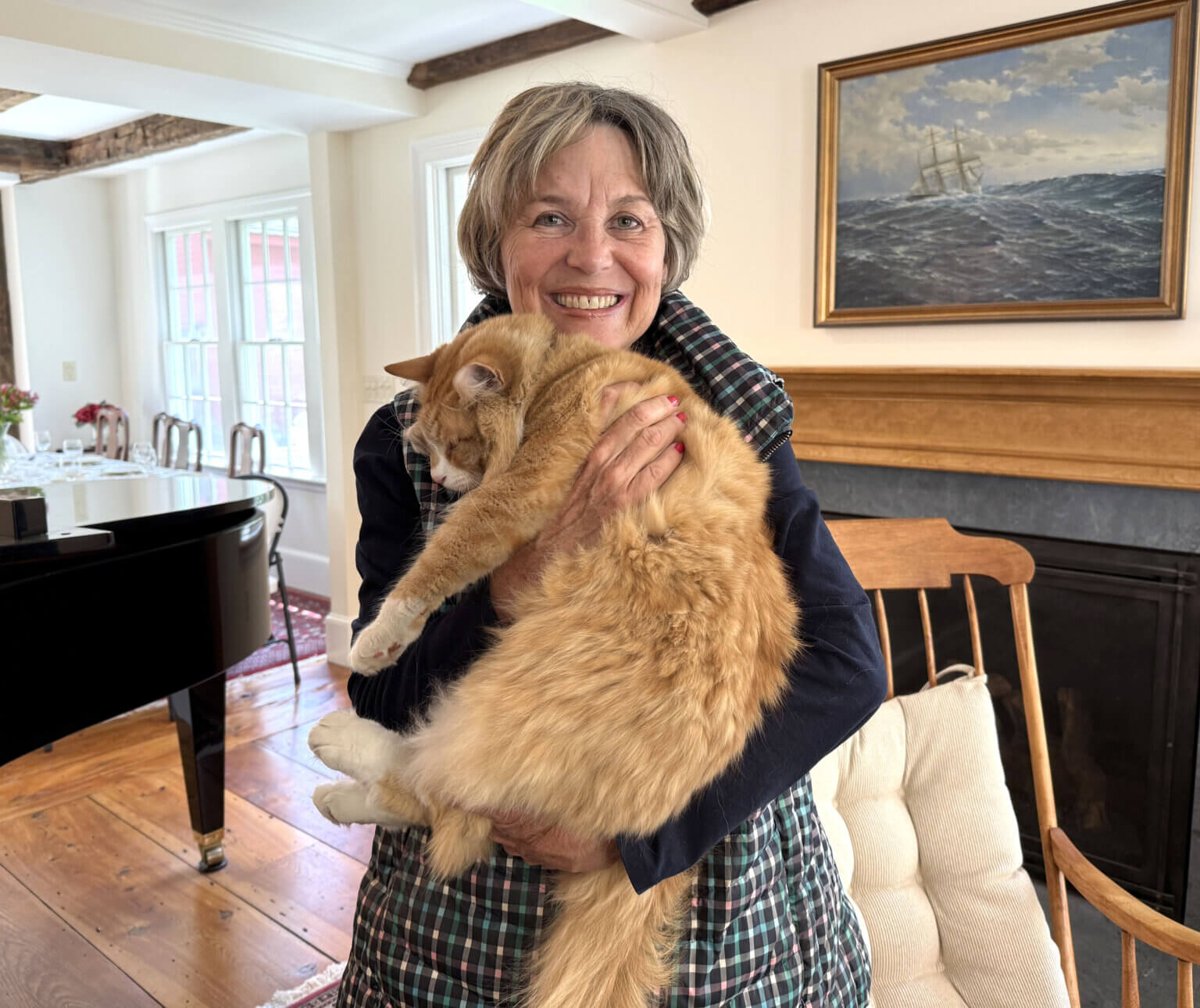
“I love happy endings,” says Nadja Young.
When Young reunites a cat with its grateful owners or rescues a stray that later finds a home, life is just about, well, purr-fect.
Young volunteers for Cat Connection, a non-profit no-kill organization whose mission is to rescue abandoned, abused, unwanted, stray, neglected, and injured cats and arrange for fostering and adoption into responsible homes.
She responds to reports of lost or stray cats about five times a week, “even if it’s in the middle of the night,” which is when cats come out of hiding, Young says. Going into abandoned houses and dark, dingy basements is often part of the process, which involves setting up a humane trap and a motion sensor field camera.
Afterward, she comes back home to wait. And hope.
Born in Colombia to German parents, Young works for her husband, Robert, a general contractor, out of their 1742 Acton home. Over the last several years, she has found scores of cats that have been missing for days, weeks, or months, as well as strays or feral felines, which she takes to a shelter.
Finding felines
Lost cats typically won’t respond to their owners’ calls, says Young, but most stay within three to five blocks for at least a few days after their escapes.
“The key to my success is knowing about a missing cat as soon as possible,” she says, especially in the winter, and because predators — coyotes, fisher cats, and foxes — pose a threat.
Volunteers largely rely on emergency 24-hour veterinarian practices for injured or sick cats. Cat Connection pays for medical care, raising money to support its work.
When she learns about a lost cat, usually through an online posting or a flier, Young contacts the owner to ask if they would like her help, which is free. The “hard part” is getting people to trust her, she says: “I want people to know I’m legitimate.” If someone tells you they will find your pet but charges a fee and asks for a deposit, “that’s a red flag,” she warns.
Lights out
Sometimes, all Young has to do is provide a few tips. She recommends that owners don’t set out a litter box or wet cat food, which can draw predators, but instead try putting out a garment carrying the owner’s scent.
And although it may seem like a good idea, “Don’t leave lights on at night,” she says, because “frightened cats don’t want to be seen.”
Milo, whose owners are Carlos Alvarez and Phedra Jeanty of Everett, is one of Young’s success stories. An indoor cat, Milo escaped right before Alvarez, who frantically posted a “lost cat” message on Facebook, left for a trip.
The couple worried constantly about the cat’s whereabouts while away, but Milo was caught on camera 12 days later in a humane trap Young had set.
“We cried with joy, we felt so blessed and relieved,” Alvarez says.
Chipping in
Young likes to spread the word about responsible cat ownership. Have your pet spayed or neutered and microchipped, she says. And if your cat goes missing, visit www.petfbi.org, a free database and information center for lost and found pets. GPS collars can also help when a cat has to be outdoors or is an escape artist.
Though “it doesn’t sit well with everyone,” Young urges people to keep their cats inside, even if the pets “insist” on going out, as indoor cats tend to live longer, are healthier, and don’t threaten the songbird population.
“This is a ministry for me,” Young says of her volunteering. “My reward is finding the cat.”
If you’ve lost a cat, are concerned about a stray, or are interested in volunteering for Cat Connection, call Young at (617) 529-3362.


