For Captain Davis’ descendants, a day steeped in lore and pride
“My grandmother Harriet Parker Vanderhoof said to me, ‘Scott, your middle name is Davis, and Davis for a reason.’”
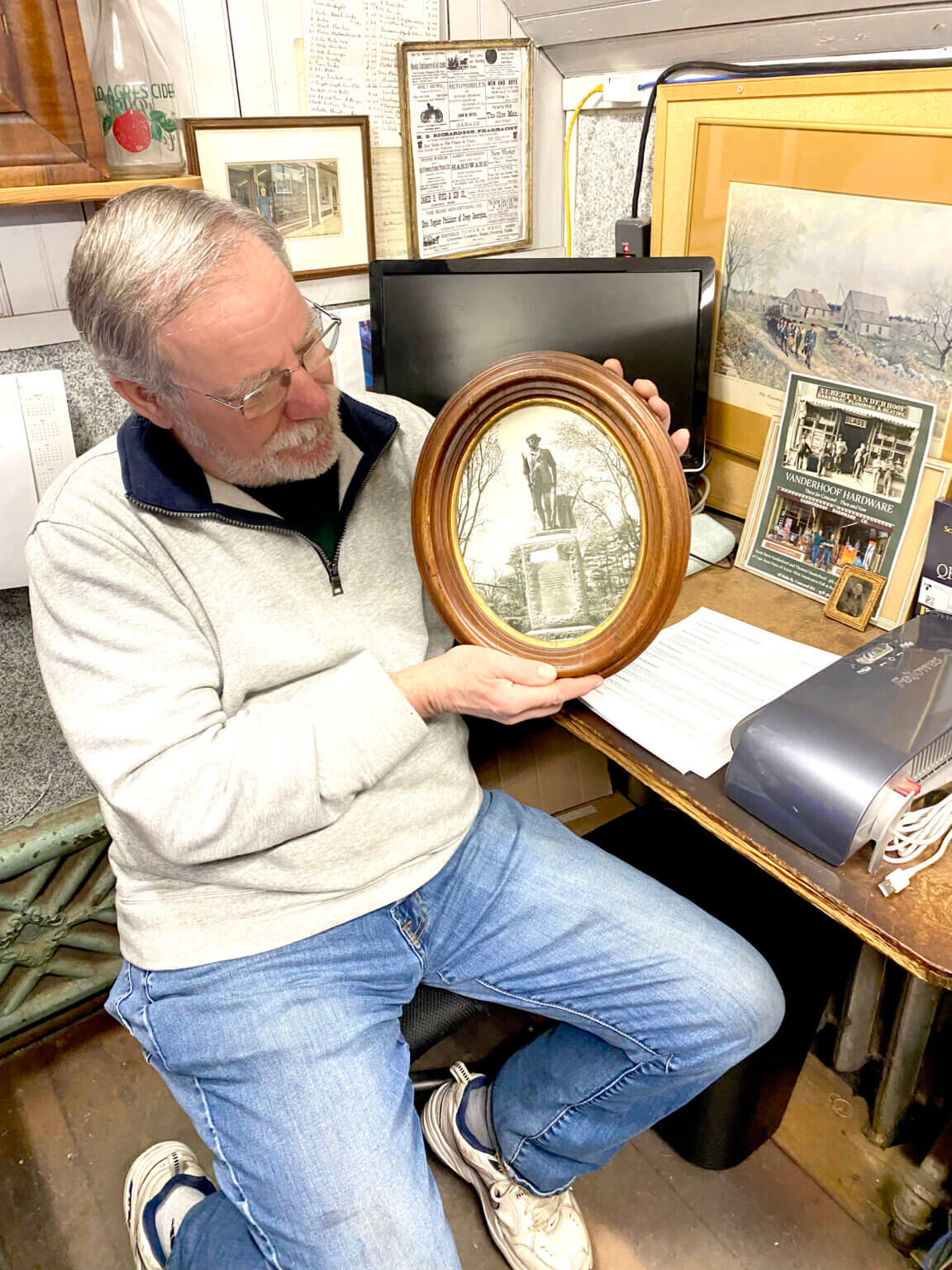
“When I was 10 years old, my grandmother Harriet Parker Vanderhoof said to me, ‘Scott, your middle name is Davis, and Davis for a reason,’” says Scott Vanderhoof, proprietor of Vanderhoof Hardware in Acton Center. “My grandmother was the third great-granddaughter of Capt. Isaac Davis, the first [Colonial] officer to die on North Bridge during the American Revolution.”

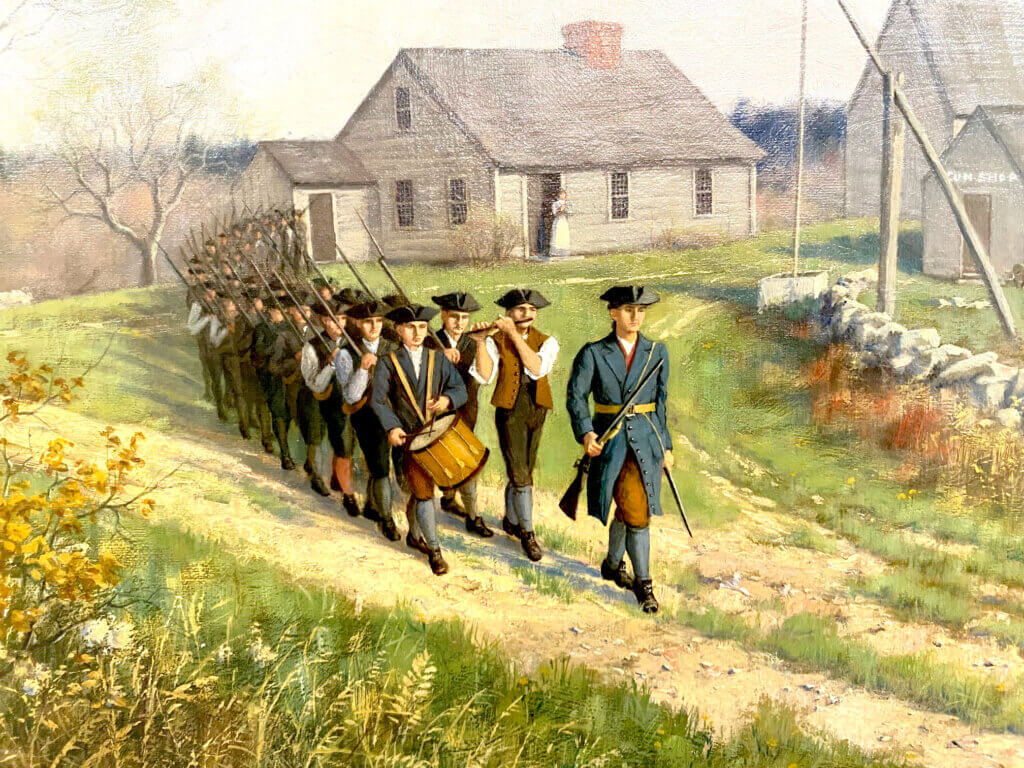
Vanderhoof points to a framed print above his office desk. It depicts Davis and his men leaving his home in Acton for Acton on April 19, 1775. The oil painting hangs in the Acton Memorial Library.
“After Captain Robbins was alerted early in the morning that the British were advancing to Acton, he sent his 13-year-old son to Captain Davis’ house to warn him. Once Captain Davis had mustered 30 men in his yard, they prepared to leave for Acton,” Vanderhoof says. “He stopped momentarily at the road and turned to his wife standing in the doorway with four sick children, and his last words were, ‘Take good care of the children.’”
Davis was shot in the chest at the North Bridge — the site of the Revolutionary War’s beginnings. Moments before the 30-year-old captain died, company fifer Luther Blanchard was wounded when a bullet grazed his head.
Primed for independence
According to Vanderhoof, Davis was a farmer, gunsmith, and blacksmith. He outfitted his men with bayonets and cartridge boxes and made his own rifle. His men trained twice a week at the Davis homestead and were thought to be the best-prepared company.
“My grandmother told me, before Davis headed up to Acton, he returned home one day to find an owl perched upon his musket — a bad omen, a sign of death,” Vanderhoof says.
Vanderhoof grew up 300 yards from the Davis Monument, a 75-foot stone structure located in the Acton town common. The remains of Captain Davis and Privates James Hayward and Abner Hosmer were exhumed from Woodlawn Cemetery and buried in the base of the monument in 1871.
Vanderhoof pauses before considering a black-and-white photograph of the Acton minute man. He removes it from the wall and cradles it.
“My grandmother told me Daniel Chester French [who designed the monument] wanted to find a portrait of Isaac Davis, but couldn’t, so he used a descendent of Isaac Davis for a likeness,” says Vanderhoof.
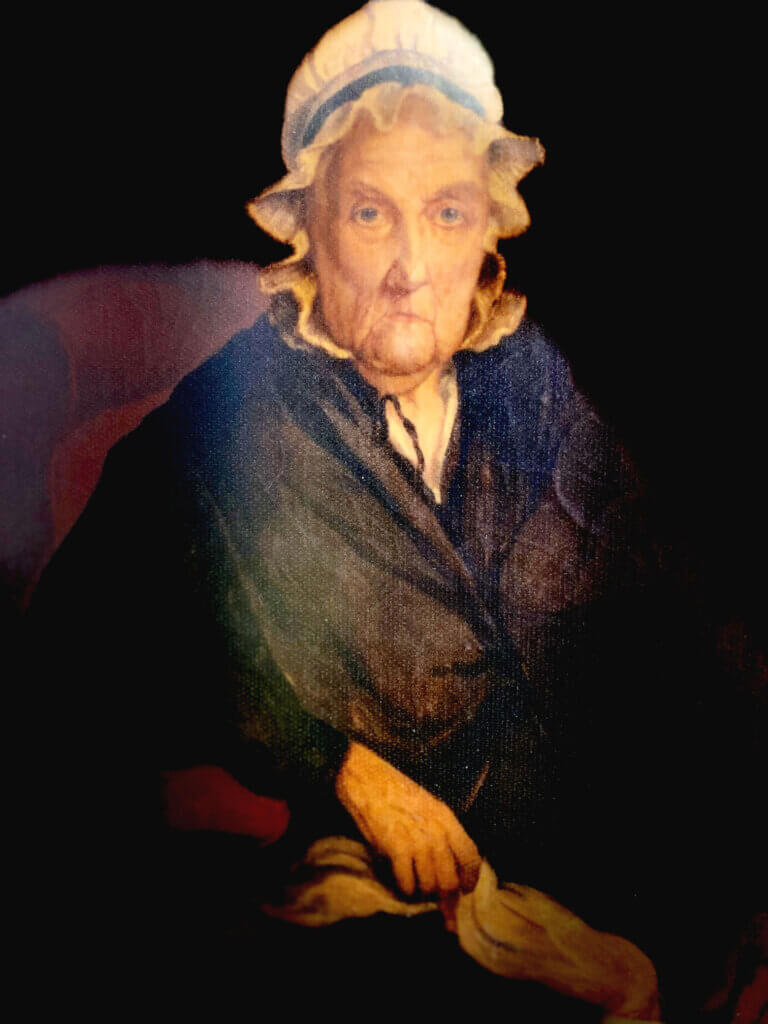
Davis’ widow, Hannah, lived to age 95.
“She was compensated very late as a war widow,” he says. “She did not receive a widow’s pension until 1838.”
Family traditions and tributes
Vanderhoof’s father was for many years a member of the Acton Minutemen and a Revolutionary War reenactor. Vanderhoof’s mother sewed uniforms so he and his brother could march alongside their father from Acton to Acton with the Acton Minutemen during the Patriots Day reenactment.
“I have very strong feelings for this,” Vanderhoof says of Patriots Day. “It’s fun to share with people that we have this connection, and my grandmother felt so strongly to keep it going. Even in grade school, when I was told to do a report, I always loved to do a report on Capt. Isaac Davis.”
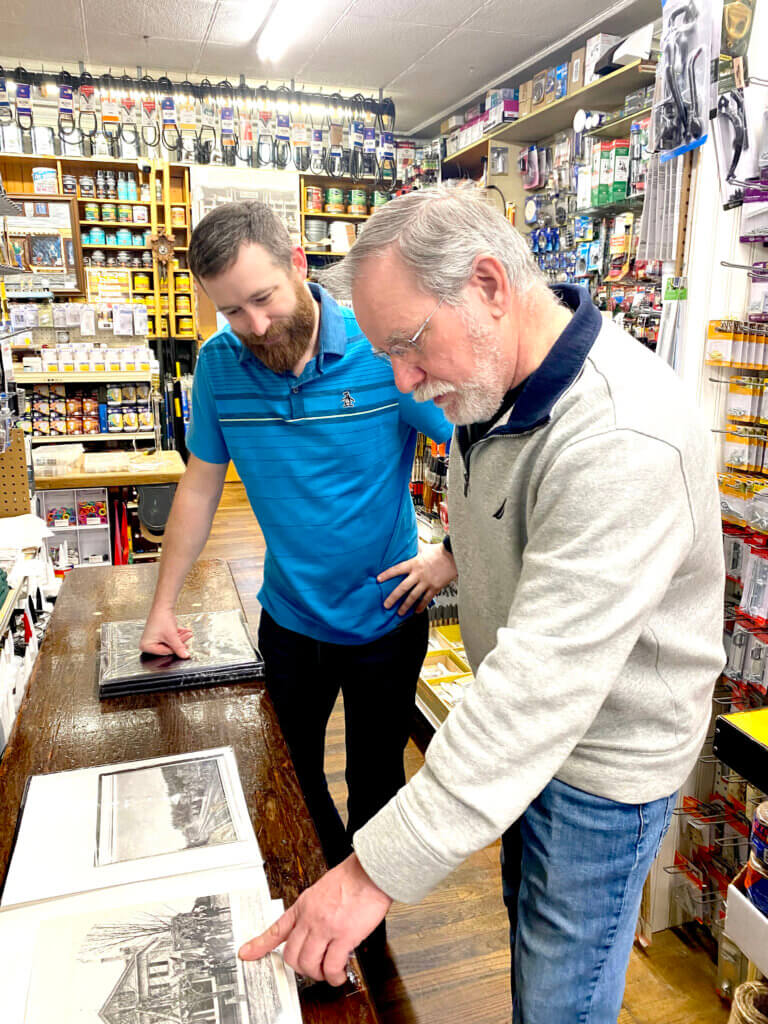
A high school senior in 1975, Vanderhoof didn’t make it to the North Bridge during the bicentennial of the shot heard round the world” — which was also the 200th anniversary of the bullet that pierced his Colonial ancestor’s heart.
“I decided to stay here,” he says, meaning Vanderhoof Hardware. “Still don’t know why I didn’t get to the bridge that year. President Ford was there. It was so long ago. There was quite a crowd.”
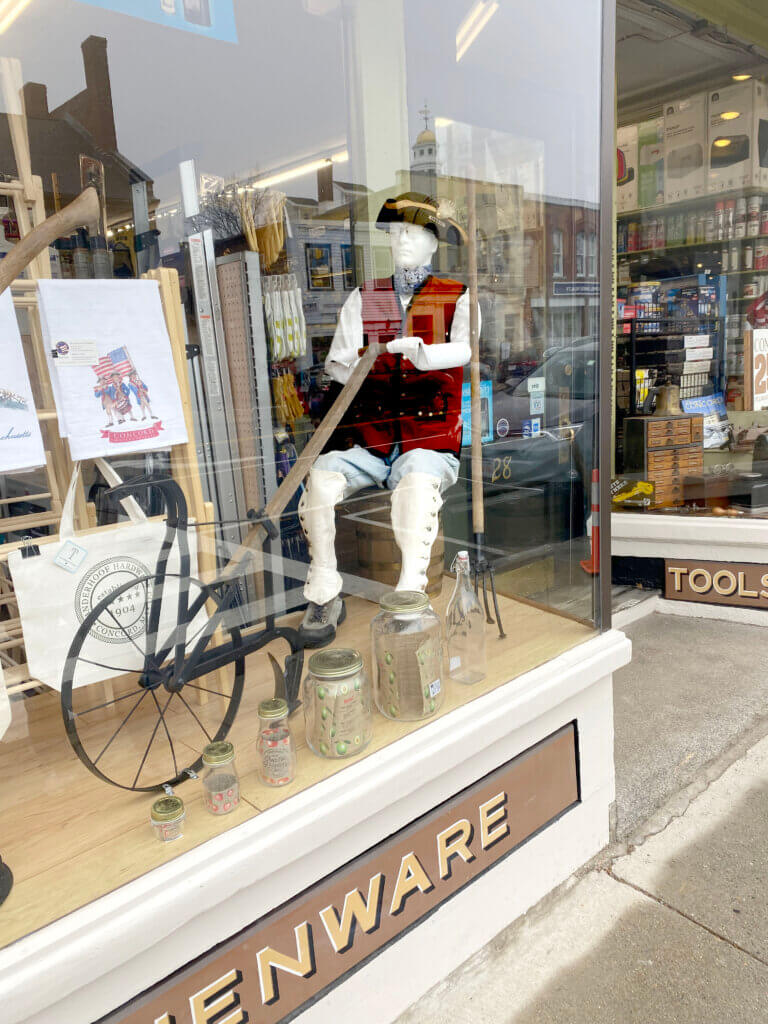
Vanderhoof married his high school sweetheart, Jane, who also grew up near the Davis Monument. The couple have two daughters, Jennifer and Joanne, and four grandchildren.
One of his grandsons is named Jackson Davis Foster.
“The Davis name carries on in our family,” Vanderhoof says.


