Gauging bigotry: Panel’s early steps toward an incident-tracking system
Acton officials fear they’re still in the dark on many hate incidents in town.
More than a year after a federal antisemitism probe went public, Acton officials fear they’re still in the dark on many hate incidents in town.
A proposed incident-reporting system aims to shine more light.
“It’s a good start,” Bias and Hate Incident Reporting Work Group member Daniel Hart told The Acton Bridge.
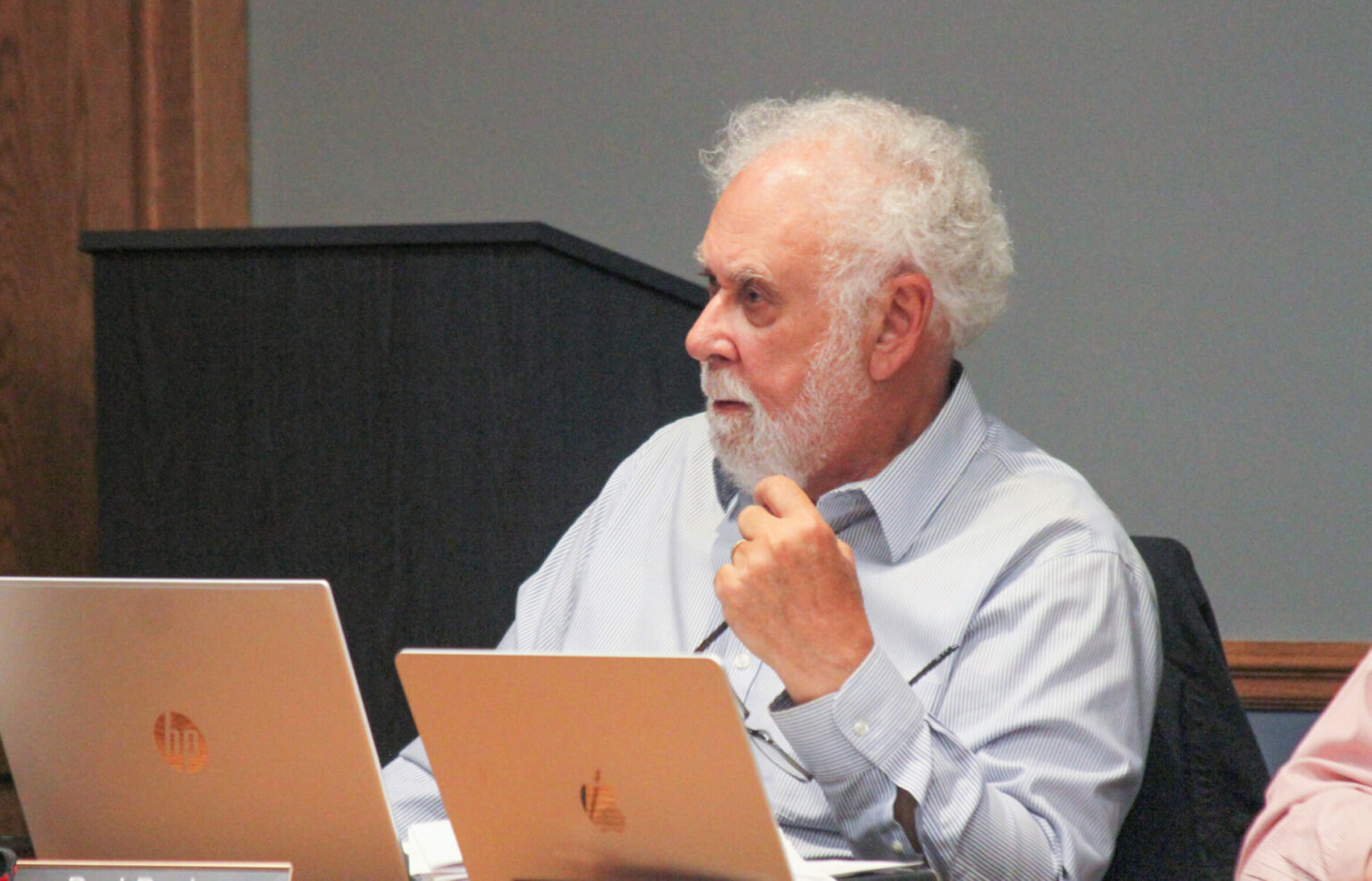
The group formed last fall amid a reckoning over anti-Jewish targeting and other forms of hate. Select Board member and work group Chair Paul Boehm presented recommendations this summer for a town-run tracking program.
Supporters say it won’t be an investigative process and the town won’t assign guilt or impose punishment on the accused.
Select Board colleagues backed the concept after Boehm’s presentation but raised privacy concerns. Boehm acknowledged to The Bridge that “there are a few loose ends.”
Police, the school district, and the Middlesex District Attorney’s Office already track bias incidents.
Boehm said underreporting is a problem, especially for non-criminal hate incidents, and people aren’t going to speak up if they don’t trust the system.
Advocates have called for a centralized program to better inform the town’s responses. “You can’t correct something you can’t measure, so let’s start by measuring,” Select Board Chair Wendy Rovelli said.
Per Boehm’s presentation, work group members want reporting options including an online form, a telephone hotline, email, and walk-in office hours.
The town should have a trained staffer who could present resources to people who report an incident, log their allegations, and refer reports to police or other town bodies if needed, Boehm said.
A dashboard could make the collected data available to the public, including the number of reported incidents and the speed with which officials respond.
Acton would have to allocate up to 140 hours of staff time to set up a program and train staff, officials estimate. Once the initiative launches, they hope to handle reports with 10 hours of weekly staff time.
Boehm said town leaders want to start testing a system by year-end.
Incidents over the past year have included racist graffiti in West Acton and swastikas drawn in school bathrooms. In one case, a high school student described to The Bridge how a classmate called her “Zionist scum” after she wouldn’t let him use her phone.
School hate/bias reviews proposed for 3x per year
The Regional School Committee’s Climate and Culture Working Group is proposing three climate-and-culture reviews each year.
The new working group was created to recommend how the Regional School Committee monitors school cultural climate and the district’s efforts to address bias and hate.
At a July 30 meeting, members outlined a draft plan that would bring climate and culture data before the School Committee in the fall, winter, and spring. The reviews would draw on Panorama surveys, Youth Risk Behavior Survey results, METCO family surveys, and bias-reporting data.
Members also discussed bringing in outside facilitators to help guide discussions. School Committee member Michael Williams said he had contacted several professionals with experience in conflict management and organizational culture. Superintendent Laurie Hunter suggested the committee consider working with consultant Darnisa Amante-Jackson, who has worked with the district previously.
The working group plans to finish the draft framework over the summer and present it to the full School Committee in September.
— Trace Salzbrenner
A high-profile catalyst
A June 2025 filing from the Anti-Defamation League and other groups brought to light earlier allegations of antisemitic bullying in schools and an ongoing federal probe by the U.S. Department of Education’s Office for Civil Rights.
This spring, school officials signed a deal to end the review, agreeing to a slate of required reforms.
Select Board member Mary Hartman wanted to ensure the town can redact the names of people accused of perpetrating hate incidents from any releases in response to public records requests.
When someone files a report under the proposed system, “there’s been no due process,” she said at the panel’s June 22 session. (Hartman has since taken an unrelated leave of absence.)
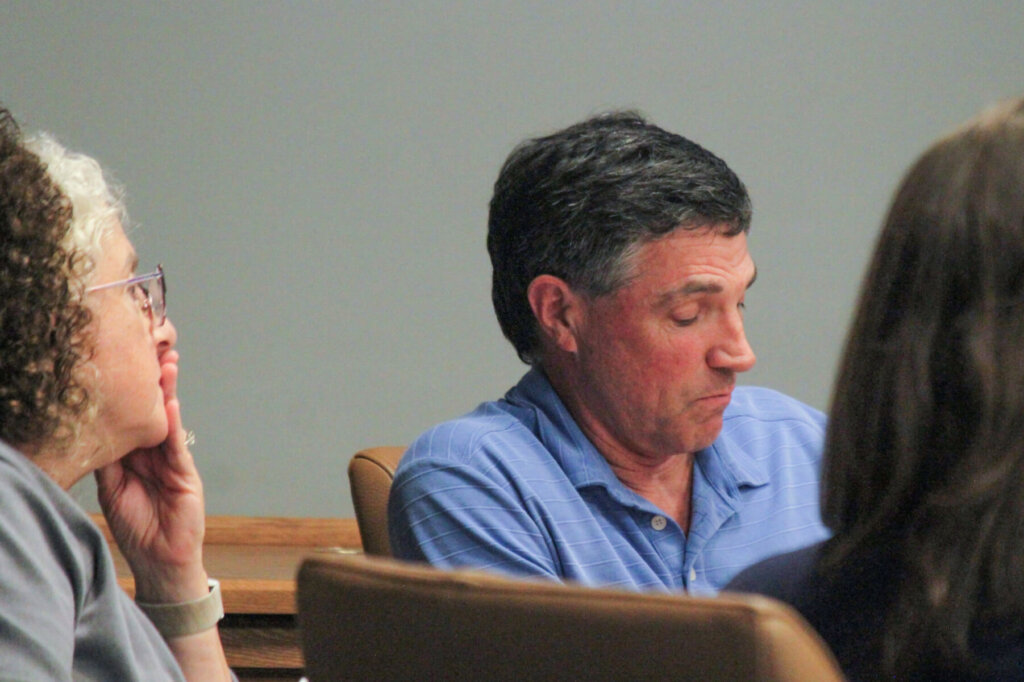
Board Clerk Cameron McKennitt said he’s worried “about the fact that we’re kind of reporting on people’s behavior.”
“This is America,” he said. “It’s a free country.”
Resident Helen Brady recalled a town diversity, equity, and inclusion survey with questions about incident reporting. She told The Bridge that it gave her the sense of being “a snitch line.”
“It just feels so wrong,” she said.
Privacy fears previously surfaced as the hate and bias work group formed.
Boehm said anyone accused shouldn’t be named in public releases, “but I think they should feel that we’re tracking this and that there’s some personal stigma for doing harm.”
Legal questions
Hart, from the reporting work group, said last fall that any system would need a verification process to weed out false claims. The group went a different route and Hart said last month his initial perspective was “probably based on other experience” in his career.
He says he feels good about what the team delivered, but it’s not a finished product. Among the loose ends, he told The Bridge, public records redactions are “the big one.”
Boehm told colleagues on July 27 that he was scheduled to meet with town counsel on August 4 to review legal questions. Officials are planning an early-September forum on the incident reporting program.
“More on those to come,” he said.