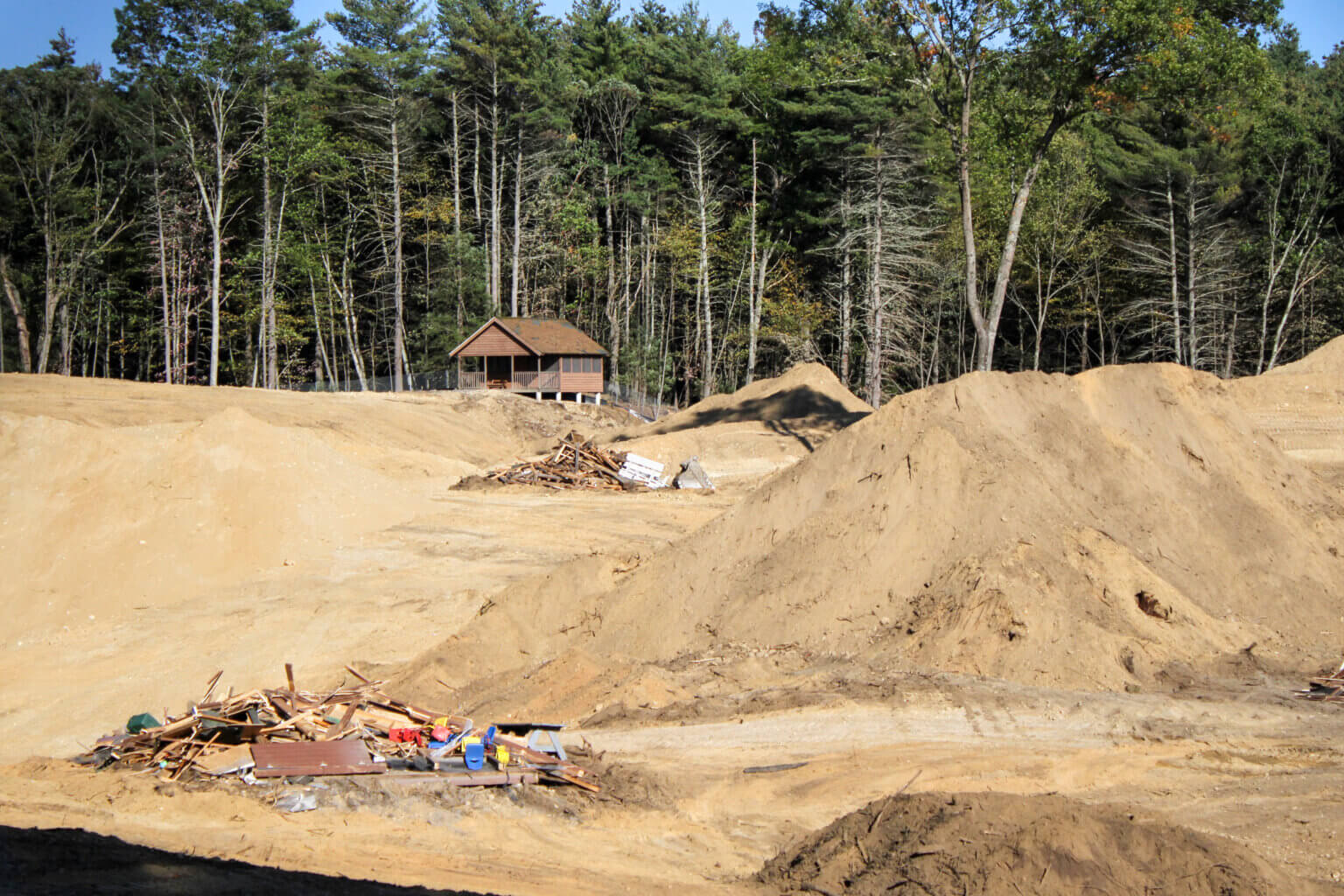
Growing concern: Acton farmers fight renewed drought
Groundwater measurements peaked in March — but have since dipped to levels often not seen until midsummer.
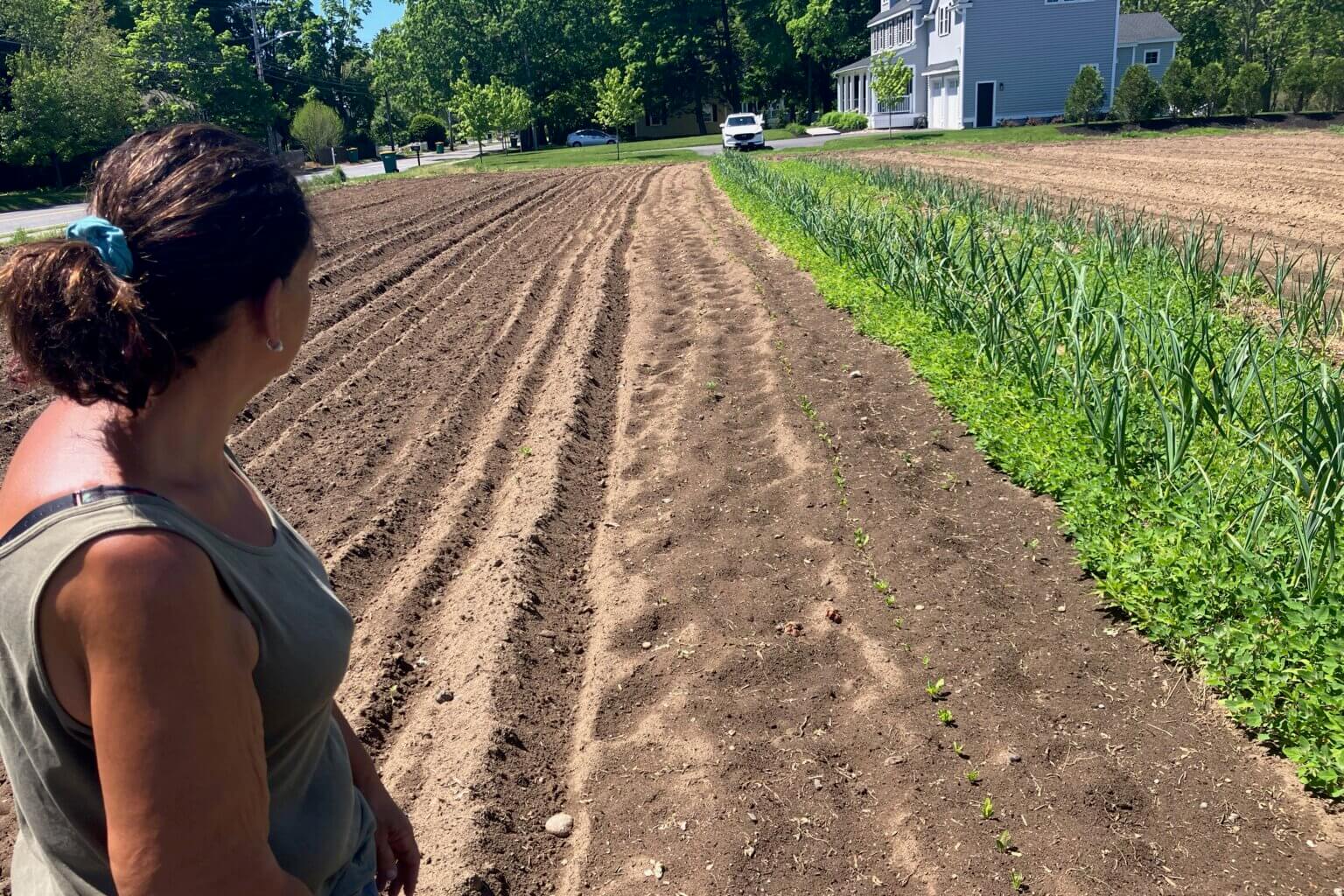
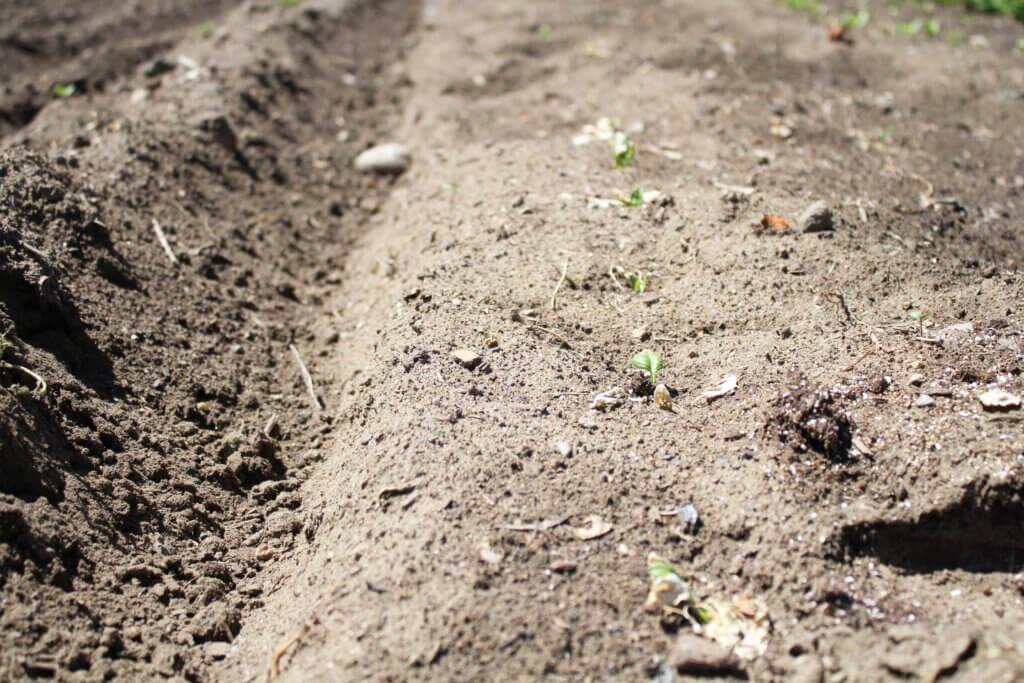
Grace Scimone has watched spinach leaves shrivel as dust billows off her fields.
This spring’s drought “really is crippling” for her family farm, she told The Acton Bridge.
A few miles away, Gaining Ground Director of Agriculture Mark Congdon worked with staff and volunteers last Friday to seed crops ahead of what was forecast to be some of the most significant rain in weeks.
The soil at that field doesn’t yet hold moisture as well as the land at the non-profit farm’s main location off Virginia Road, and staff say they’re at Mother Nature’s whim.
While some Acton growers say they’re doing OK, the current dry spell stands out, and Scimone said a multiyear trend of droughts has gone “from bad to worse.”
Town staff were excited about snowmelt from this winter’s storms, Water and Sewer Superintendent Darin LaFalam told The Bridge.
They were in for disappointment.
Groundwater measurements peaked in March — but have since dipped to levels often not seen until midsummer.
Nagog Pond, which serves as a part-time public water source, missed overtopping its dam for the first time in well over a decade, town Senior Environmental and Regulatory Coordinator Melissa Simoncini said.
Droughts can have consequences far beyond farms. As water levels drop, utilities can enact increasingly restrictive rules to keep water available for everything from drinking to firefighting.
Officials relayed a message to state regulators as they mulled the drought’s severity. “We do have concerns about our water supply going into the summer,” LaFalam told The Bridge.
The state issued a “critical” designation for Middlesex County on May 22.
Irrigation and extra stress
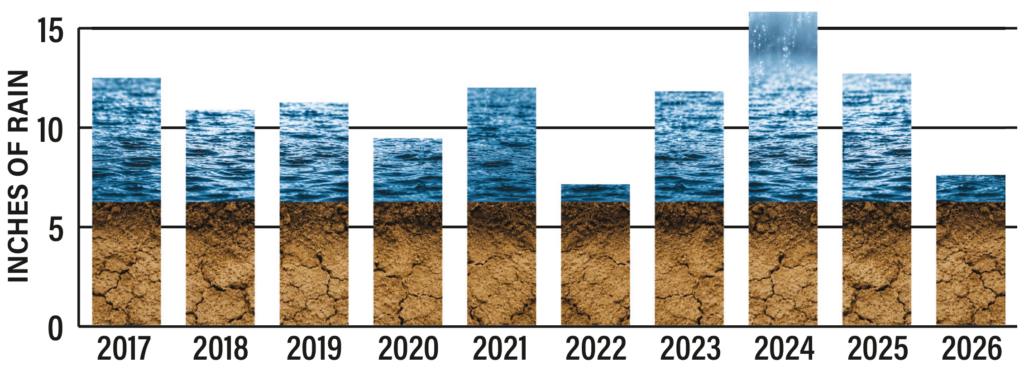
In 2024 and 2025, local fields got rain during the spring before more arid weather arrived (see graph). This year has been different, and as spring wound down, Brian Cramer at Hutchins Farm on Monument Street said he couldn’t remember a drier start.
Total rainfall from March 1 – May 31*
Workers have spent extra time irrigating fields, he told The Bridge. This can make it hard to keep up with plantings as staff focus on watering rather than seeding new crops.
If the drought worsens, Cramer said, Hutchins could face the “catastrophic” prospect of its well and irrigation pond drying up. The irrigation system also pulls from the Acton and Assabet Rivers, and Cramer said “it isn’t inconceivable” that the rivers could fall so low that those waterlines won’t work.
Even a short loss of water in a season this dry, Hutchins Farm colleague Liza Bemis said, could kill the crops.
‘Bite the bullet’
Less than 24 hours after rain doused Acton’s Memorial Day observances, the topsoil was already drying out in Grace Scimone’s field.
Scimone said her team has historically used town water to save cash crops like tomatoes and beans. That water isn’t free, however, and Scimone said she can’t make the investment for all her plants. So far, she’s already had to delay planting several kinds of vegetables this year, including carrots and beets.
The team is going to “bite the bullet,” she said, and pay for a well. The last quote they got was for roughly $4,000. Scimone has also been trying to generate compost to hold moisture in the dirt, but a tractor she uses recently broke.
Droughts also complicate weed management. Farmers can ordinarily plow their fields to uproot unwanted plants. But in weather like this, plowing can dry out the soil, Scimone said.
Too much rain?
While some farmers hope for rain, others fear too much of a good thing.
Susan Macone tends Macone Farm near Nine Acre Corner, where the Sudbury River can easily flood fields. “We have been very fortunate for ‘dry’ years,” she said in an email.
A wet season, like one Acton saw in 2023, can also spread plant diseases, make weeds harder to kill, or wash out farm roads, said Cramer of Hutchins Farm.
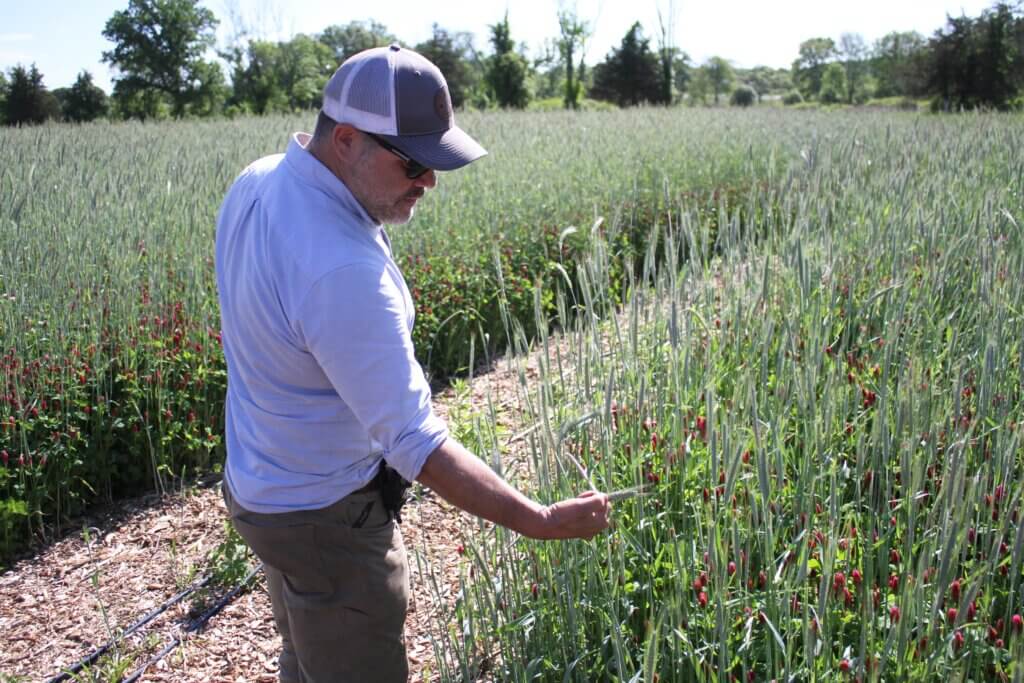
Gaining Ground’s practice of “no-till” farming can help the earth hold moisture while preserving soil structure during heavy rain. But it takes roughly five years to reap those benefits, the farm’s Congdon said.
Seeds need at least a quarter inch of rain to germinate, Congdon said.
Sufficient rain arrived this past weekend but it was less than some forecasts, and it wasn’t expected to ease the larger drought.
The Acton area would need roughly 10 inches of rain over the next month to resolve the drought, according to a National Oceanic and Atmospheric Administration model.
Many experts point to climate change as a factor in both droughts and flooding rains. Farmers “are already feeling the pressures of a changing climate,” the U.S. Department of Agriculture warns on its website.
‘Old-timey’ farming
A fan whirled while Grace Scimone worked last Tuesday on the Old Bedford Road land that her family has tended for more than a century.
The farm gets a “huge bump” in the tourist busy season, Scimone said, when people visit for its “old-timey” feel.
Now, she is trying to preserve that appeal while grappling with climate pressures and the modern economy.
“We’re trying to grind it out,” she said.

With May temps rising, pump failure KO’d a town well
A “catastrophic failure” knocked one of Acton’s public drinking water wells offline amid a state-recognized drought and just in time for blistering spring heat.
A shaft in the Hugh Cargill Well’s pump broke May 12, Water and Sewer Superintendent Darin LaFalam told The Acton Bridge.
Staffers revved up five other public wells to compensate.
Officials could also have tapped their Nagog Pond drinking water reserve to keep water flowing, if needed. They don’t usually take that step until later in the season, if at all, and using Nagog can be an expensive prospect, Senior Environmental and Regulatory Coordinator Melissa Simoncini told The Bridge.
Staff urged Concordians to help conserve water while a contractor made repairs and forecasters predicted unseasonably hot temperatures.
Officials also kept an eye out for early-morning violators of outdoor watering rules.
As of press time, residents were limited to using lawn sprinklers once per week, on their trash day. On one morning while Hugh Cargill was down, Simoncini said, officials doled out 18 warnings.
Water use can spike during hot weather as people deploy sprinklers and other systems. The mercury topped out last month at 96 degrees on May 19, according to a measurement taken at Hanscom Field.
Public messages and water-use policing seem to have had the desired effect, and officials avoided needing Nagog. The disabled well came back online on May 26, LaFalam said.
This wasn’t an issue of deferred maintenance, he said. The bill came in at $26,650, LaFalam told The Bridge.
Simoncini said she doesn’t remember a similar case during her more than 16 years working here.
Planned long-term filtration upgrades at Nagog Pond should eventually make it easier to use that reserve, she said.
— Dakota Antelman