His days in the sun: Painter George Nick ‘danced with time’
“The sun was his joy and his tormenter, changing the world as quickly as he had created it.”
“My father was awake with the sun,” says Katya Nick Sternberg.
A plein air painter, George Nick sought always to capture “the fleeting effects of natural light, color, and movement,” she says.
“The sun was his joy and his tormenter, changing the world as quickly as he had created it,” Sternberg says. For her father, “the process of painting in the sunlight meant that your subject is always changing. You’re dancing with time, always on your back foot.”
He “didn’t paint for posterity or legacy,” she says. “He painted for the act of painting.”
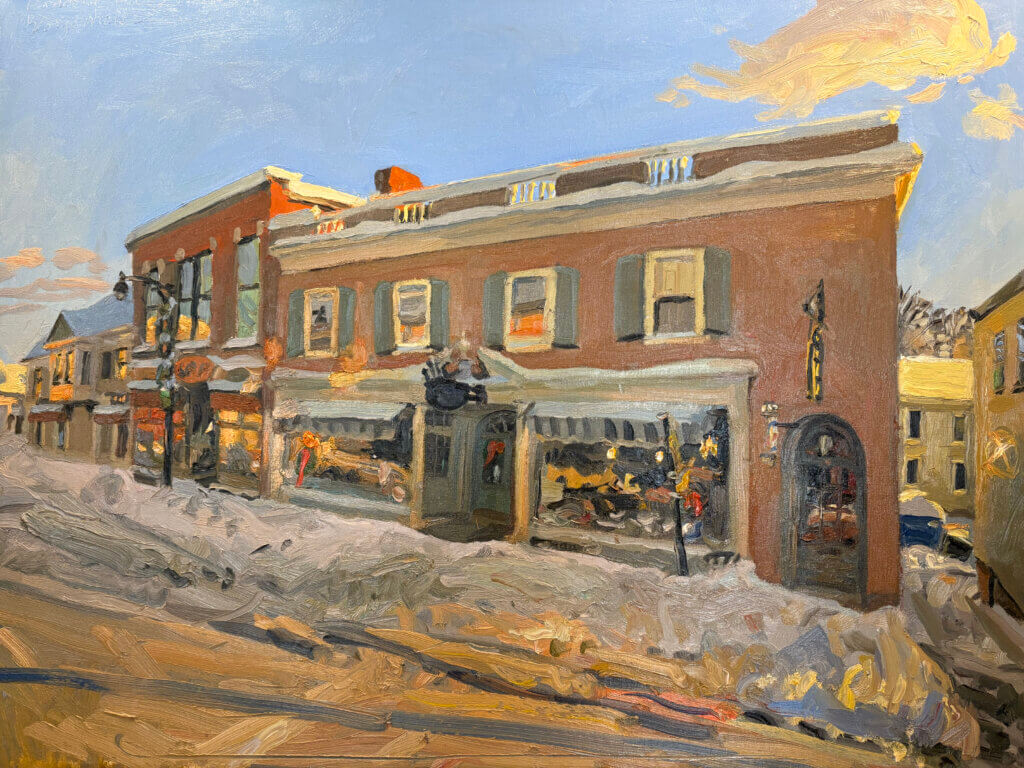
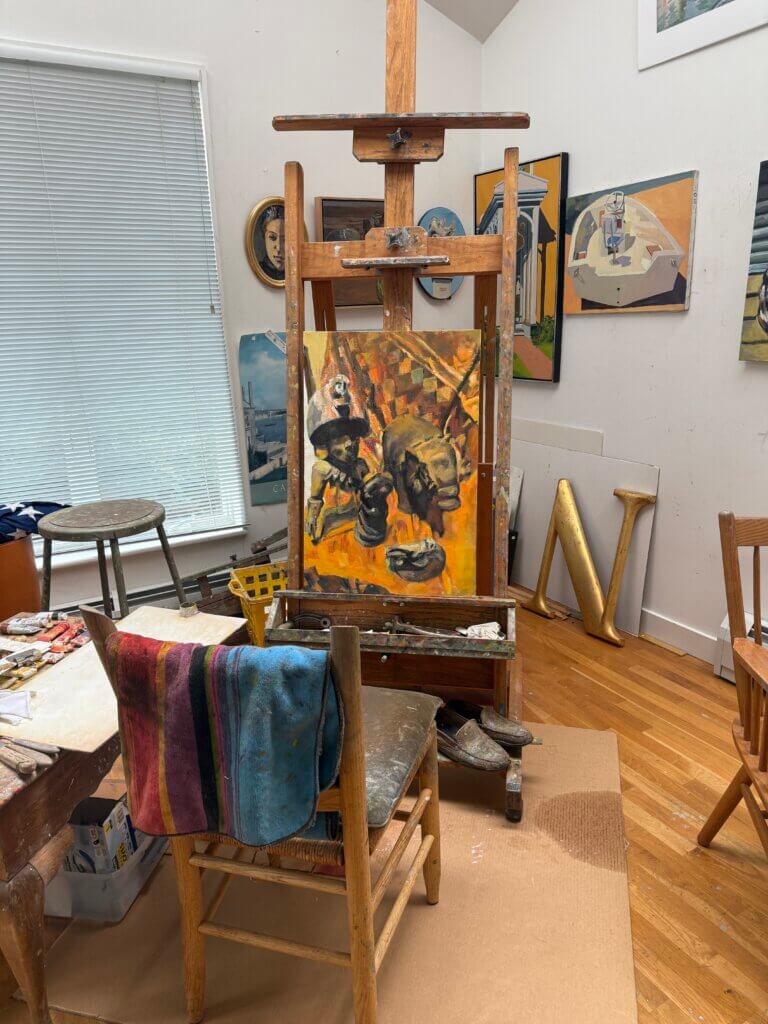
Nick had begun painting as a child and continued doing so until a few days before his passing in September, at 98. Despite significant physical challenges, his family says, he continued to work in his light-flooded home studio, surrounded by his canvases, brushes, and paints.
“He was meticulous about order and cleanliness until the last day he painted,” Sternberg says.
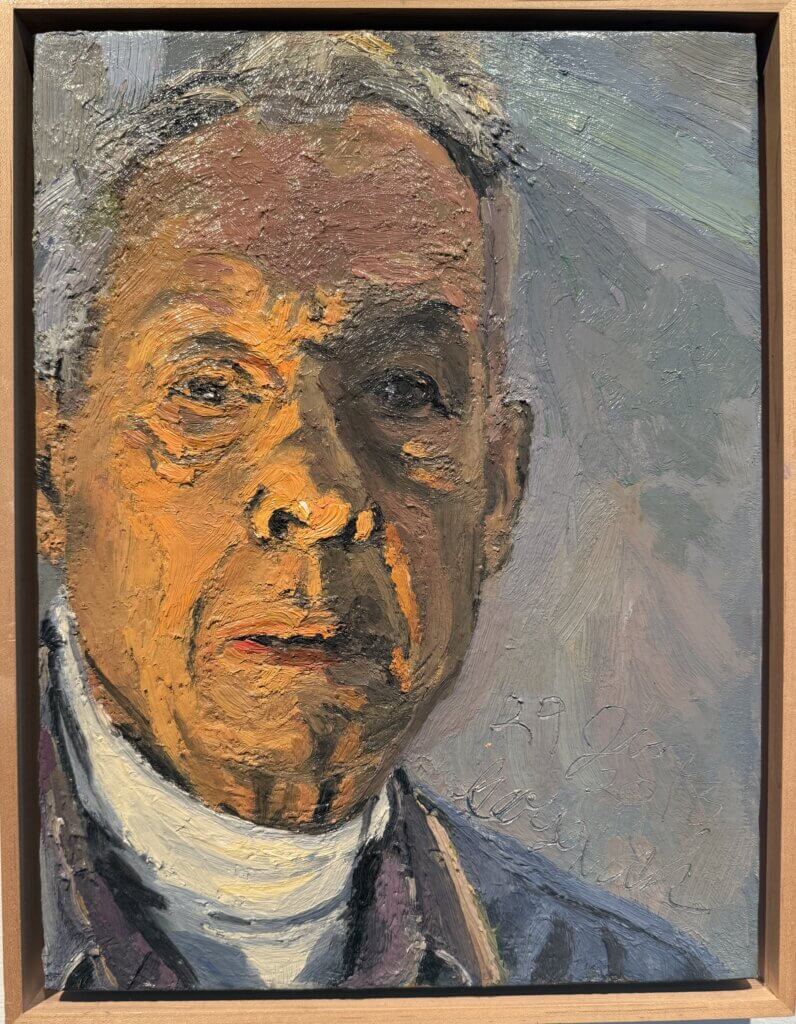
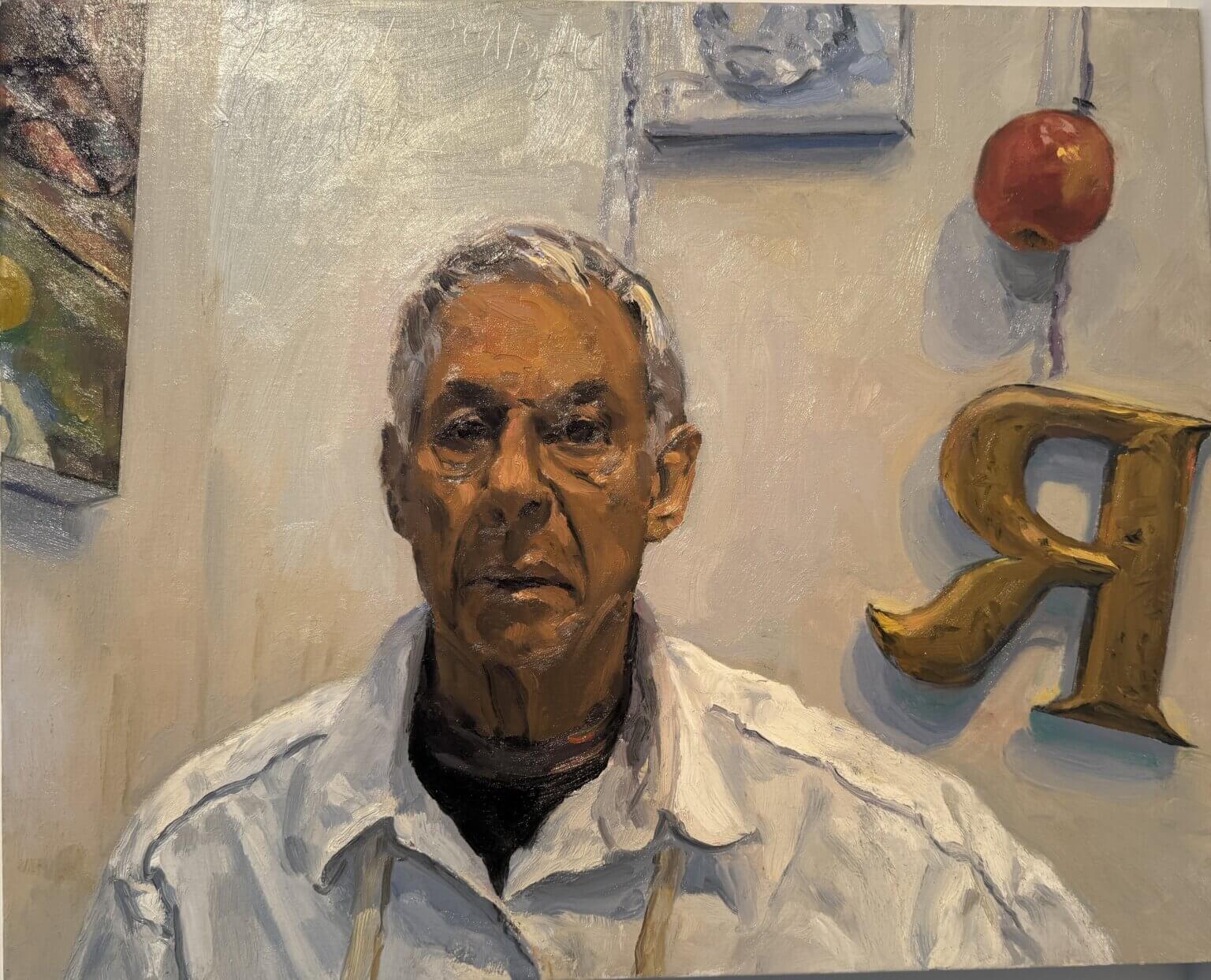
Nick’s subjects ranged from Acton and Back Bay street scenes to the rugged, rocky Maine coast, Victorian architecture, and Venetian canals. He had an affinity for machines, capturing in oils a vintage Bentley automobile, utility trucks, and a rusting tractor resting in a field. Though he rarely painted human figures, an admirer, Massachusetts Sen. Thomas Birmingham, commissioned him to paint his portrait in 2018.
His work is in many private and public collections, including the Museum of Fine Arts and the Institute of Contemporary Art in Boston; the Corcoran Gallery of Art, the Smithsonian American Art Museum, and the Hirshhorn Museum in Washington, D.C.; and the Metropolitan Museum of Art in New York.
‘Casing the joint’
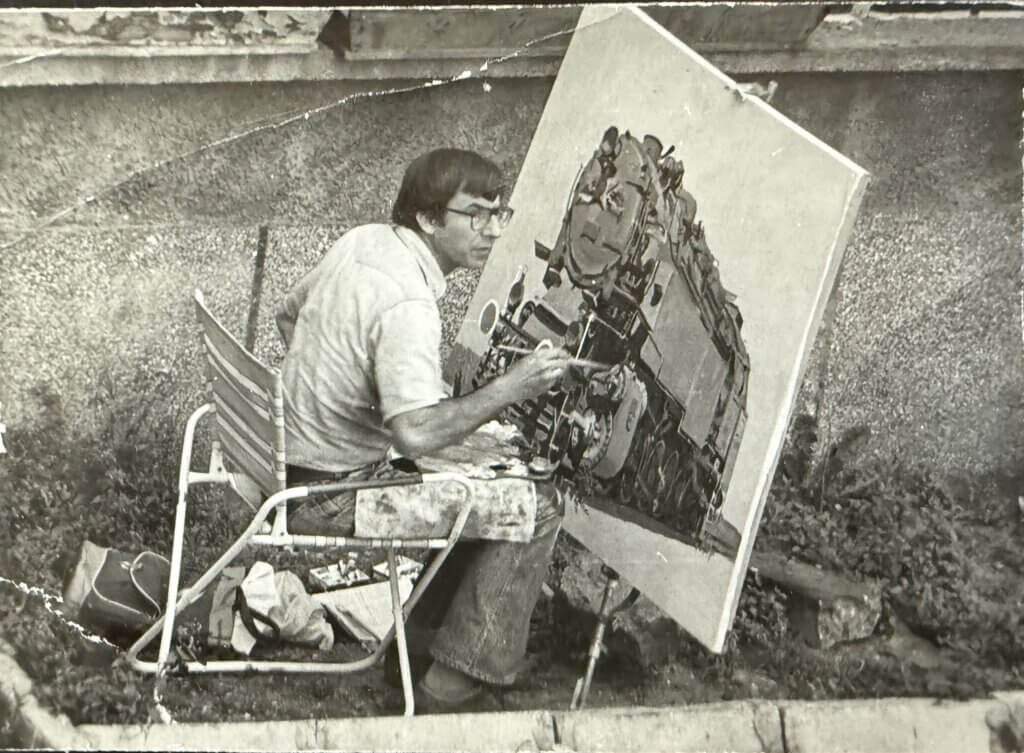
For many years, Nick had a mobile studio, working out of a VW camper van, then a green Ford truck, then a red one, his paintings protruding from the back. Driving around Boston, he would peer out the window, seize upon a subject, and get to work, enjoying some privacy from passersby.
“He was like a private investigator conducting a stakeout, and he would call his search for subjects ‘casing the joint,’” Sternberg says. A wreath of parking tickets decorated his rearview mirror.
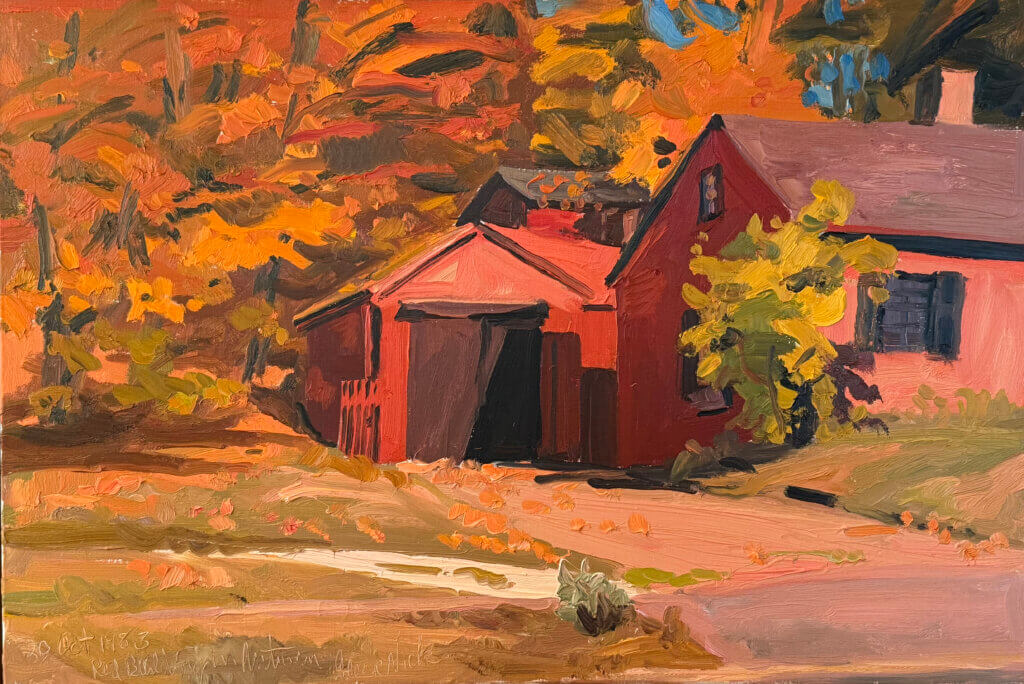
Nick’s work, which has been described as blending realism and expressionism, is characterized by creamy, thickly-layered oils rendered in broad strokes. A critic once called his handling of paint “lively and luscious.” Nick insisted on painting only from observation and not from images, and preferred to finish a work in one sitting.
Born in Rochester, New York, in 1927, Nick grew up as a child of the Great Depression. He worked in the local Kodak factory and as an assistant to his father, a carpenter. Nick credited Franklin D. Roosevelt’s New Deal for helping to save his family from extreme poverty and starvation, his daughter says.
He served in Korea with the U.S. Army, and though he considered careers in music and physics, he studied at the Cleveland Institute of Art, the Brooklyn Museum Art School, and the Art Students League of New York. He earned a bachelor’s and master’s degree in Fine Arts from Yale University, where he met renowned artists who would become friends, among them Fairfield Porter and Neil Welliver.
Traveling extensively, Nick painted all over the world but maintained that his favorite settings were the Greater Boston area, New York, and Italy. He met his wife, Assya, in Bulgaria. They moved to Boston after they married, and then to Georgetown. Assya was “my father’s partner in art and life … modeling for me and my children care, integrity, and respect,” says Sternberg, who, with her husband, Zach, has three young children and lives in New York City.
‘Nature’s acolyte’
By 1964, Nick was gaining fame as an artist and as a sought-after, well-liked teacher, she says. He would exhort his students to take risks and be their authentic selves when they painted. Kim Alemian, who curated a tribute exhibit for Nick in 2012 in Duxbury, said at the time that Nick “expected the same level of hard work and integrity from his students as he did for himself. … He was insistent on your seeing and feeling color. My eyes were opened.”
In Georgetown, the Nicks became close friends with their neighbors, John Updike and his wife, Martha. Updike later composed a catalog essay for a retrospective of the painter’s work at the Massachusetts College of Art and Design (MassArt), where Nick taught for 25 years.
“Those of us lucky to know George in the flesh must sometimes shield our eyes against his core of blazing dedication,” Updike wrote. “Rising at dawn to arrive miles distant as a certain slant of morning light befalls a chosen railroad bridge or storefront, he is Nature’s acolyte; no mere coincidence has brought him to dwell in Emerson’s and Thoreau’s town of Acton.”
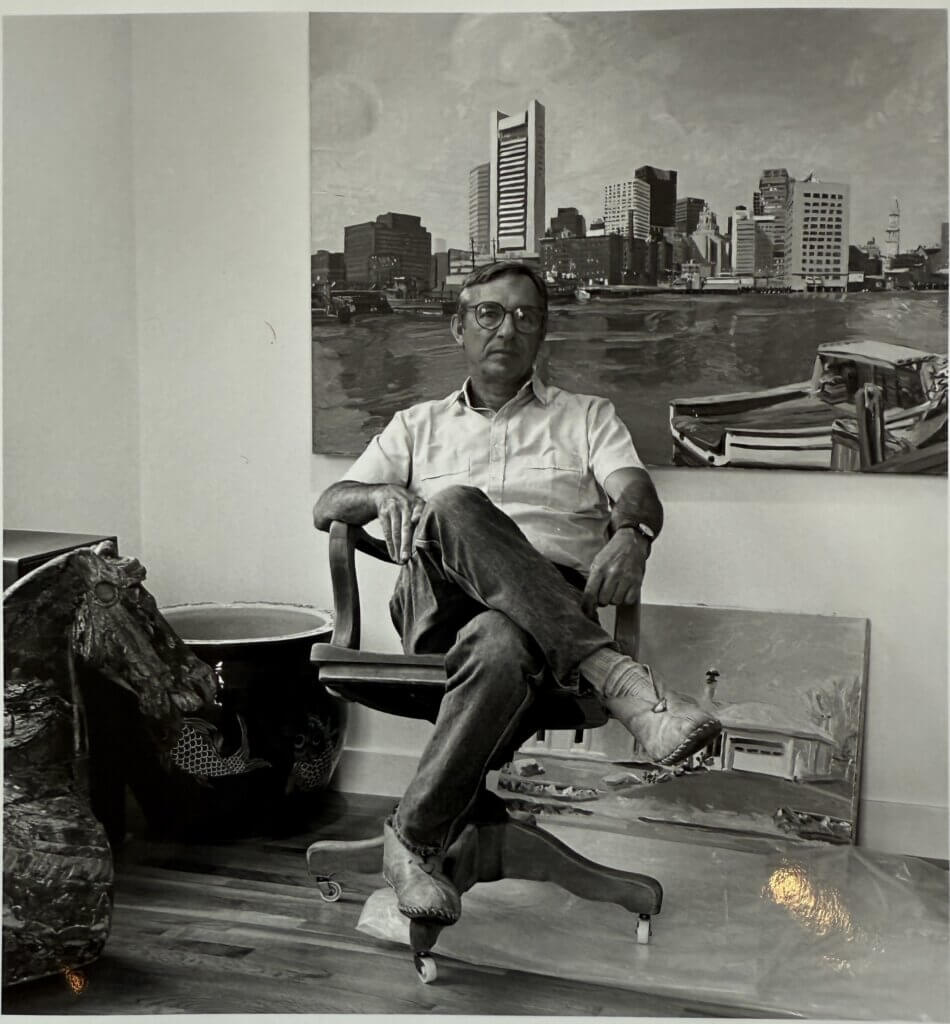
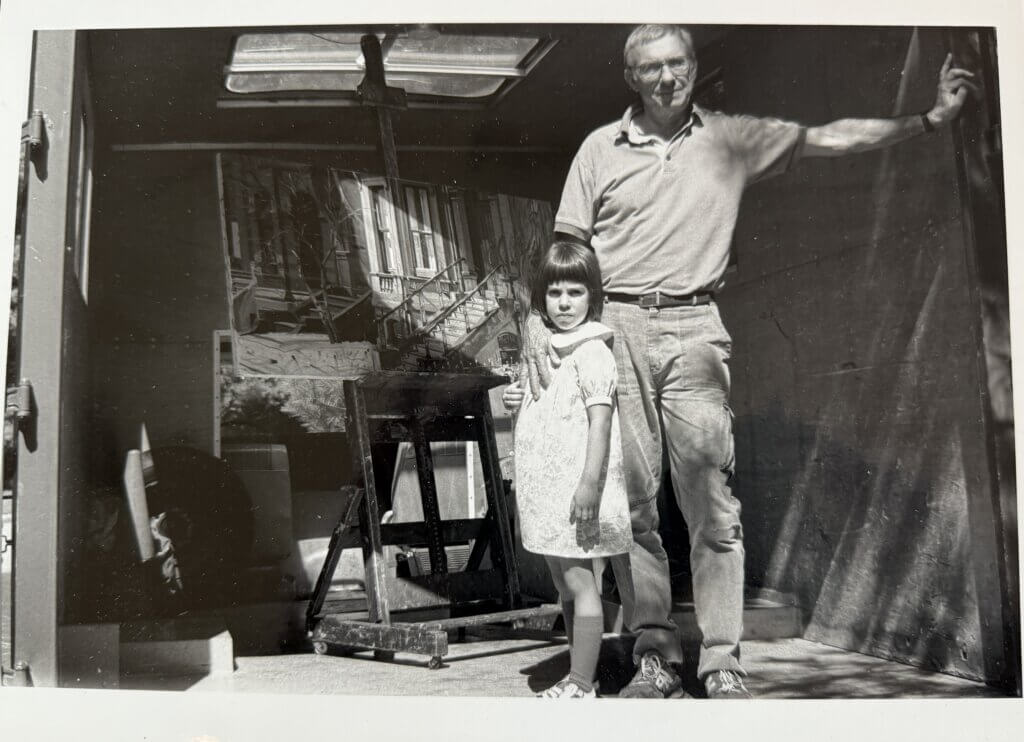
In 1980, while teaching at MassArt, Nick wanted to live closer to Boston, and Updike suggested Acton. The Nicks “immediately felt drawn to the town with its history, culture, good schools, and landscape,” Sternberg says.
Born when Nick was 58, Sternberg says her father “was a huge presence in my life.” He would call Sternberg when she was in college “to tell me about the clouds he had seen that day,” and asked for her help titling his paintings.
Six-year-old Sasha Sternberg says her grandpa “loved to read me books, and he let me tease him and put things on his head when he wasn’t looking.”
“He painted me building a sandcastle,” she adds proudly.
Among her father’s “most remarkable qualities,” Sternberg says, were his sense of humor, his “plainspoken honesty,” and his “indomitable, independent spirit and endless, optimistic perseverance.”
His daily painting, she says, “was a means for him to process the loss of his independence, and his ability to paint kept him going, right up to the end.”
Sternberg recalls her father telling her, “When I paint, I’m powerful.” To which she says, “And he was.”