In bid for clarity, Acton weighs IHRA’s definition of antisemitism
Supporters of the definition says it’s a framework for identifying hate. Objectors say it could limit protected political speech.

The Select Board could adopt a controversial definition of antisemitism at its Tuesday meeting following months of debate and conversation.
Supporters say the International Holocaust Remembrance Alliance (IHRA) definition would give the town a clear, widely used framework for recognizing and responding to anti-Jewish speech and actions. Objectors argue that it could chill legitimate political expression, including or especially when it comes to criticisms of Israel’s military action in Gaza.
A draft of the Select Board proclamation notes that if adopted, the definition “does not create new legal standards, enforcement authority, or limitations on constitutionally protected speech.”
The board’s review of the IHRA definition follows an explosive federal civil rights brief filed last summer by the Anti-Defamation League and other organizations, which alleged that Jewish students faced persistent harassment and that Acton school officials failed to respond adequately.
The filing, which drew national attention and spurred packed local meetings, accused the district of allowing a hostile environment marked by Nazi imagery and repeated bias, prompting renewed scrutiny of how the town defines and confronts antisemitism.
The IHRA definition of antisemitism reads:
“Antisemitism is a certain perception of Jews, which may be expressed as hatred toward Jews. Rhetorical and physical manifestations of antisemitism are directed toward Jewish or non-Jewish individuals and/or their property, toward Jewish community institutions and religious facilities.”
Examples are given following that language.
Beyond the definition
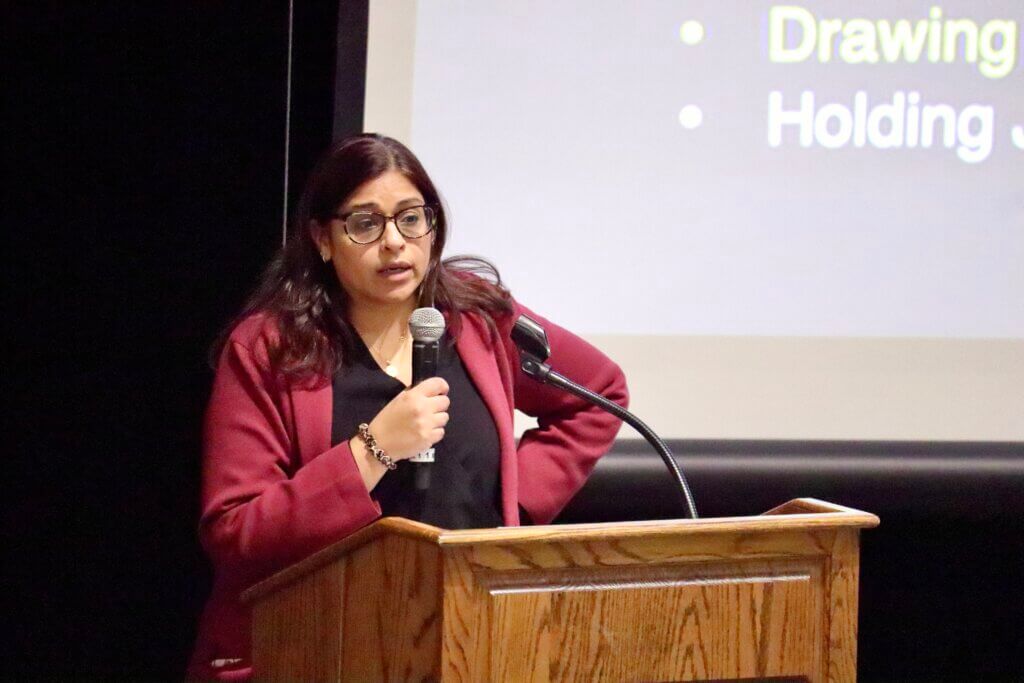
Ece Turnator is the Muslim parent of a sophomore at Acton-Carlisle High School. She and Mahreen Hoda, a Muslim parent from Carlisle with a child entering CCHS next year, started the group Acton-Carlisle for Informed Dialogue.
They say their concerns lie less with the core definition itself, but instead with the examples the IHRA provides to illustrate what is covered.
Using the definition “deprives this community of accessing the truth,” Turnator said, “and being able to debate the truth.”
Examples provided by IHRA that Turnator and Hoda have cited include:
- “Denying the Jewish people their right to self-determination, e.g., by claiming that the existence of a State of Israel is a racist endeavor.”
- “Applying double standards by requiring of it a behavior not expected or demanded of any other democratic nation.”
- “Drawing comparisons of contemporary Israeli policy to that of the Nazis.”
“The examples are not focused on protecting Jewish people, or a Jewish person, or in the case of a school, a Jewish child,” Hoda said. “They’re aimed at protecting the state of Israel from very specific criticism.”
‘What consequences will fall’
The two worry about how IHRA’s definition will be applied in schools, with Hoda adding and Turnator agreeing, “We have to worry about what our kids will say and what consequences will fall on our kids if they dare to break the rules and talk about what’s happening in the news.”
Schools Superintendent Laurie Hunter did not respond to questions about the IHRA definition’s potential use in Acton schools.

When CCID hosted a screening of “No Other Land,” an award-winning documentary about the Israeli occupation of the West Bank, at the Fowler Branch Library, Turnator and Hoda said they experienced backlash for expressing their views on Israel and Palestine.
“Someone called the police and said that this makes Jewish people unsafe,” Turnator said.
After speaking with representatives of the library and law enforcement, the organizers elected to pay for a security detail during the screening.
Support for IHRA
Adeline Weinstock, a CCHS junior who says she’s been the target of antisemitism cloaked in anti-Israel language, supports using IHRA’s definition.
Recalling one instance, Weinstock said she was on the phone with a friend when another student asked to speak to that friend using Weinstock’s phone. When she said no, the other student called her “Zionist scum.”
Though Weinstock does describe herself as a Zionist, she said that moment wasn’t a criticism of Israel or her beliefs. “Using ‘Zionist’ instead of ‘Jew’ is a socially acceptable way to hide the fact that he was saying ‘Jew,’” she told The Acton Bridge.
Weinstock said cases like this explain why the examples provided by IHRA mention Israel — because it is used as a proxy for Jewish identity.
“He called me ‘Zionist scum’ not because he understood anything about me politically,” she said. “It was because he was angry at me and he knew I was Jewish.”
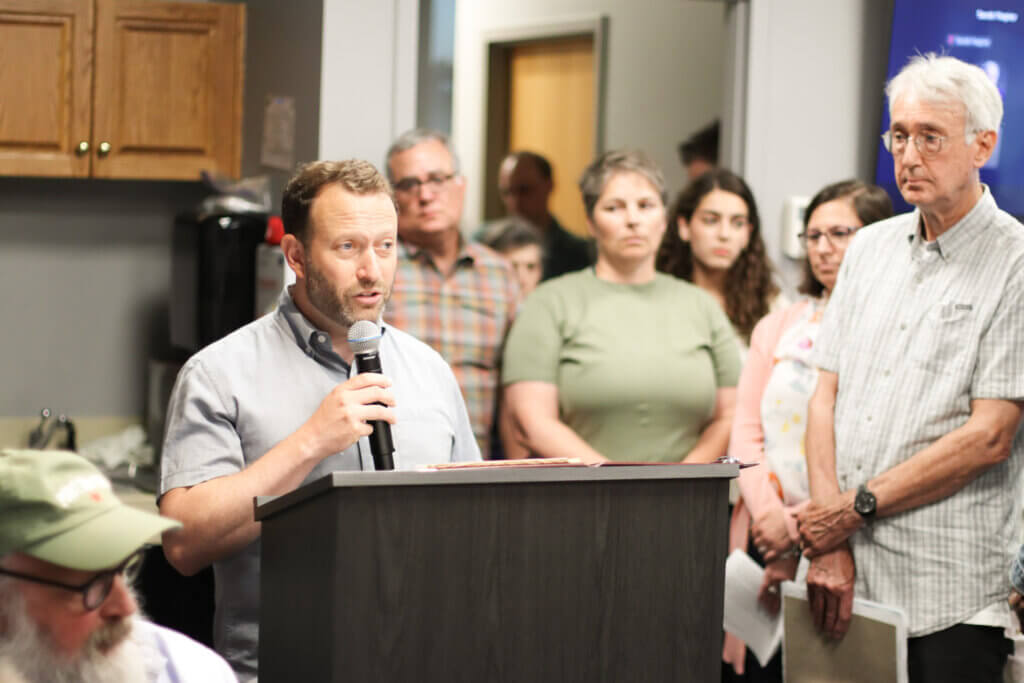
Acton parent David Yoken, who is Jewish, agrees.
“Criticism of a foreign country, including Israel, is fine,” he said, “but when Israel or Zionism is used as a stand-in for Jews, or when Jews in the U.S. are made generally responsible for what the Israeli government does, that’s where IHRA really shines.”
Yoken helped create Acton Carlisle Against Antisemitism, a group dedicated to combating antisemitism in the area, but he is no longer involved in its day-to-day management.
‘Nuance will play a role’
Rabbi Darby Leigh of Kerem Shalom also supports adoption of the definition — not because he thinks it is a perfect one, but because, in his view, it lays the groundwork for combating antisemitism in town.
“It’s a tool that can be used for good, or it’s a tool that can be used for not good, depending on who is wielding it and who is using it,” he said.
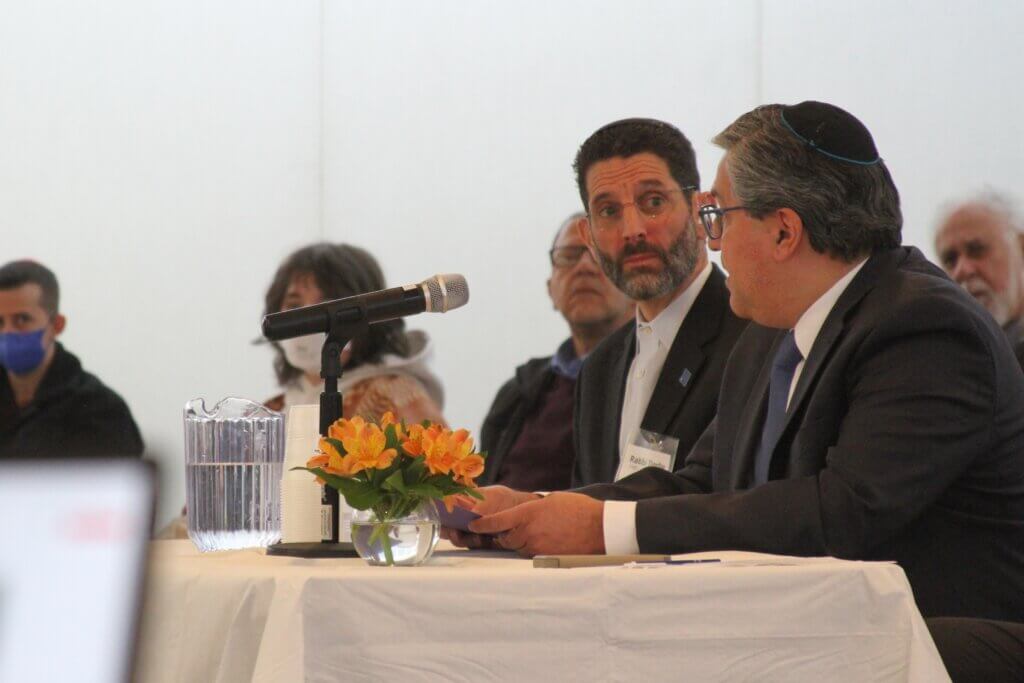
He said that without defining what hate against Jewish people looks like, “it becomes possible” to “downplay the anti-Jewish sentiment expressed in either graffiti or speech.”
Leigh agrees that some of the examples could blur the line between criticizing Israel and being antisemitic.
“None of those examples use definitive language,” he said, “and hopefully people understand nuance will play a role.”
Tuesday’s Select Board meeting is scheduled to start at 5 p.m. at the Town House.
Dakota Antelman contributed reporting.


