‘It’s their voice’: Technology helps Thoreau students communicate
“For a lot of these kids, control is hard … giving them as much autonomy and independence as possible is really huge.”
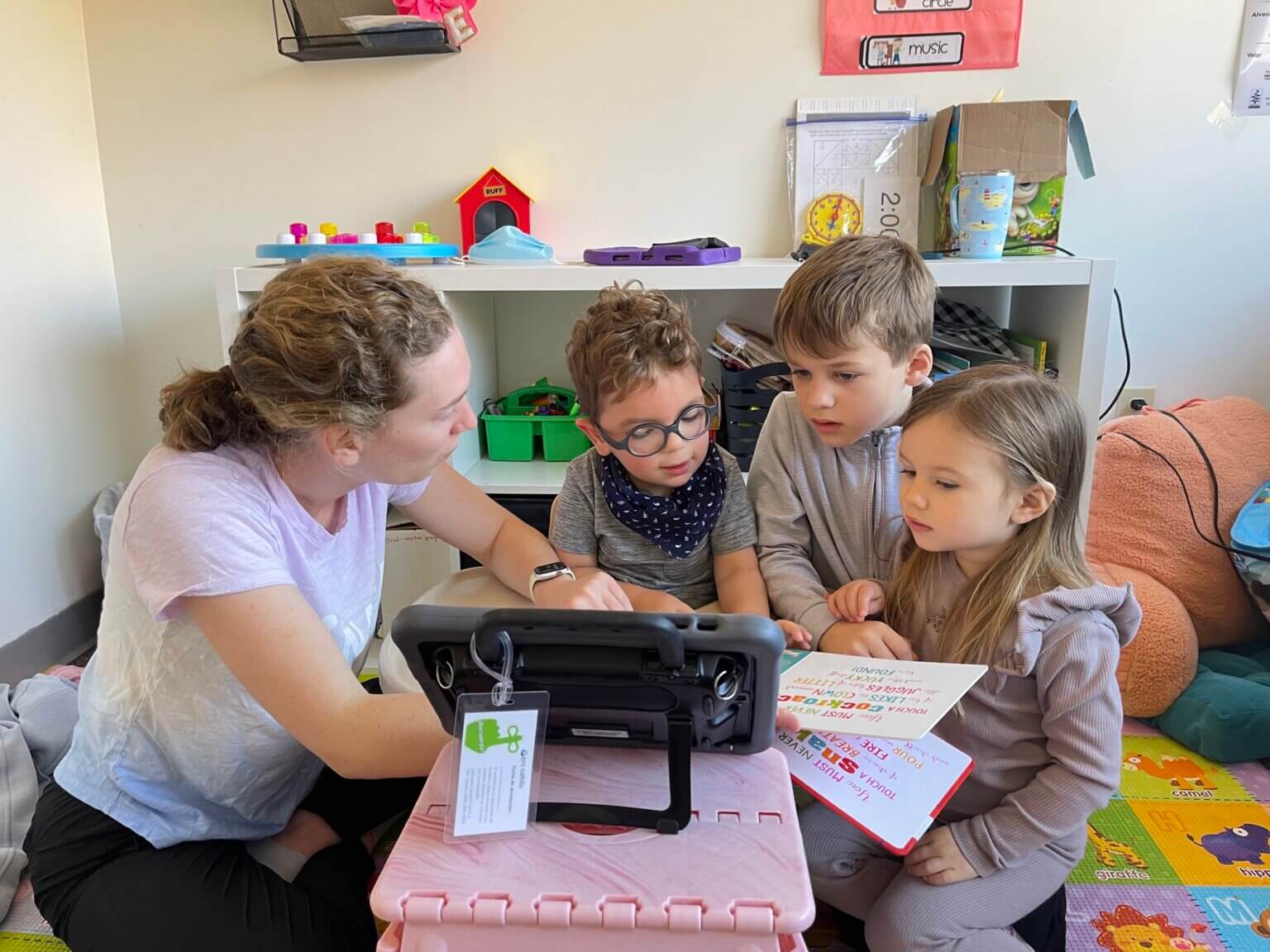
At a summer birthday party, Justine Martinelli realized she’d forgotten something important in the car — the tablet her son Ethan uses to communicate.
One of his classmates noticed.
“Excuse me, Ethan’s mom. Where is Ethan’s talker?” she remembered the girl asking.
When Martinelli explained the tablet had been left behind, the girl told her she “really should remember” because that’s how she and the other kids “talk to Ethan.”
“I just started laughing, because I got scolded by a 6-year-old,” Martinelli said. “And she was right.”
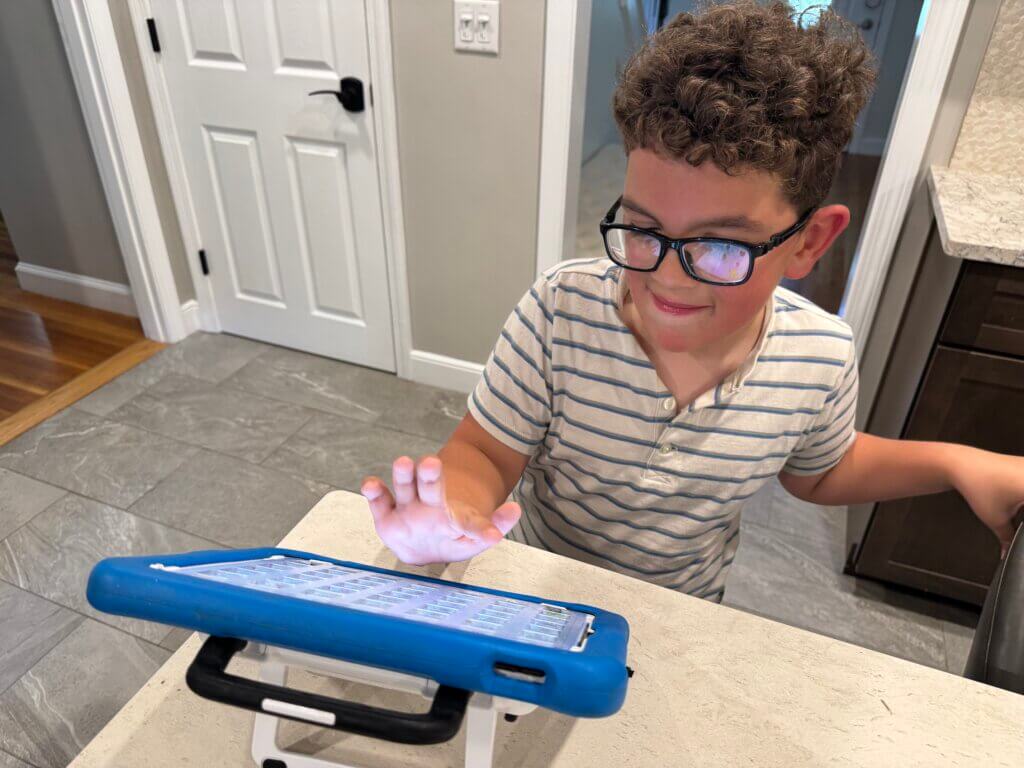
At Thoreau Elementary School, students are getting more accustomed to devices like Ethan’s. This year, the Acton Education Fund awarded the school $9,600 to support students with complex communication needs and help classmates learn to communicate with them.
The grant will help pay for iPads, software licenses, and related hardware, say speech-language pathologists Angela Suarez and Ann Bailey.
Ten Acton students from kindergarten through fifth grade currently use speech-generating tools called augmentative and alternative communication devices, the pathologists said. Two more are expected to become users soon.
Thoreau, the district school attended by most Acton students who use AAC devices, has seen an increase in AAC use over roughly the past decade, Suarez said.
“Earlier in my career, I would say, seeing kids with AAC devices in the classroom was not common, and that’s much more common now,” she said.
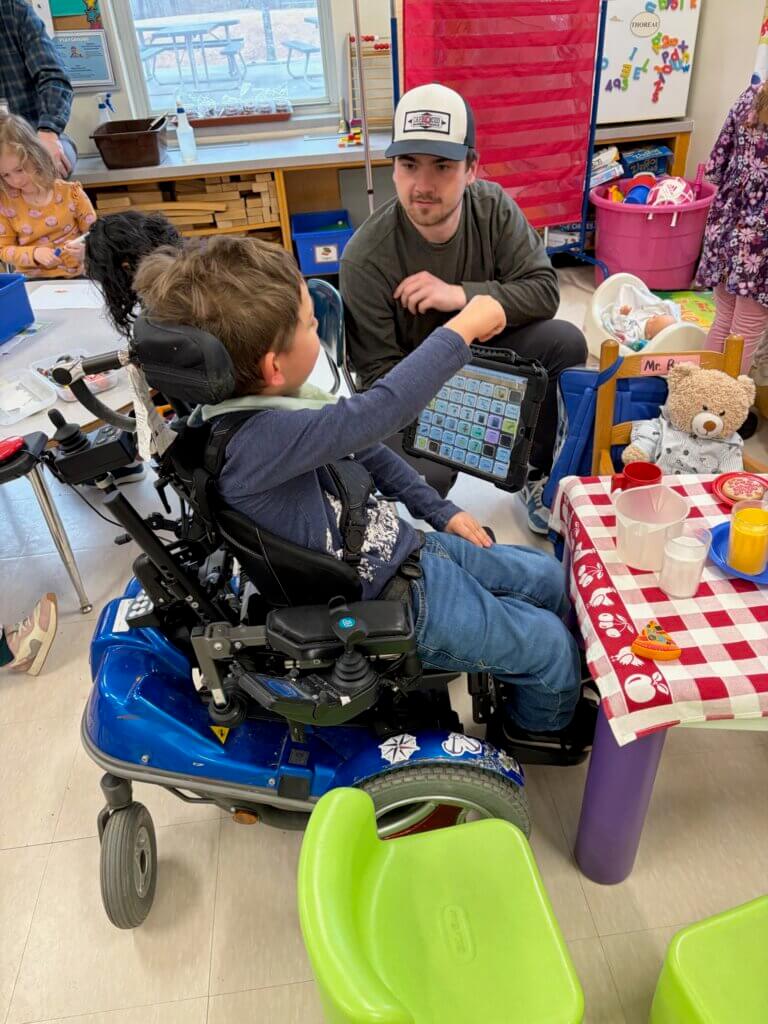
AAC can be low-tech, such as pictures and gestures, or higher-tech, such as a device that produces spoken words. The devices support a wide range of needs and can be customized for the user, including the number of buttons on the screen and how they’re accessed.
“Sometimes they don’t speak at all, so it’s their voice,” Bailey said. “Sometimes they speak, but it’s hard to understand them, so it’s a way to supplement their communication and their message.”
The grant-funded devices will be available in classrooms. Students who need AAC already receive their own devices, Bailey said.
“What we don’t have as much is ways for people to model on a device that’s not specific to one student,” Bailey said.
The grant will allow the school to “provide these devices for regular ed classrooms so that the regular ed teacher, the other students, and other staff” can learn to use them.
Learning a language
Martinelli remembers teaching Ethan, a student with developmental delays, about his device.
When Ethan was introduced to AAC, his family used the device during ordinary activities. If they were choosing food, they would ask whether he wanted a yogurt or an apple.
Ethan now uses the device for more than basic requests.
His family created a page for playtime, where he can choose toys and activities. They also added a Spotify button, because he loves music — especially Taylor Swift’s “Welcome to New York.”
Martinelli said his face lights up when someone understands what he is trying to communicate.
At school, Suarez and Bailey said they see similar moments.
One student, they recalled, was playing with other children and repeatedly pressing an icon. The others responded each time. Eventually, the student began to understand that pressing the button caused the other children to act.
“When I touch this button, whether it’s, you know, toy car, doll, there’s a meaning behind this picture and this word,” Suarez said. “When they get that — that conversations go back and forth — [there’s] this volley of engagement.”
AAC in adulthood
AAC is not something students will stop using when they finish school.
Kensington Roy, 27, has used AAC for more than a decade. She now lives in an adult home in Waltham run by The Guild of Human Services, a non-profit special education school and human services organization in Acton. She also graduated from The Guild’s school in Acton.
Roy was featured in the 2026 Guild short documentary “We Need to Talk,” which follows people who use AAC and varying levels of spoken language to express their needs, ideas, emotions, preferences, and identities.
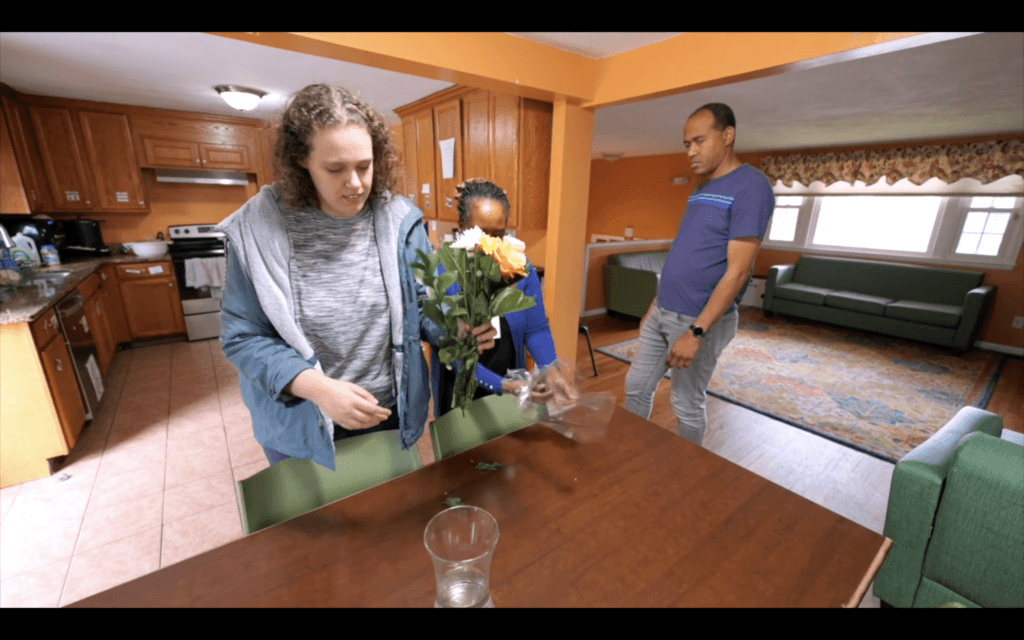
When The Acton Bridge spoke with Kensington, her mother, Beth Roy, said Kensington was having a bad day. She was not especially interested in talking, but her tablet still gave her a way to communicate.
Roy talked about picking flowers at Verrill Farm for the documentary. She told her mother she wanted to go to the 99 Restaurant that weekend for a hamburger, even though pasta was normally her favorite.
Giving a voice
Beth Roy says AAC has significantly improved her daughter’s life.
“It gives her more independence,” she said. “It gives her a choice to be able to communicate effectively, choose how she wants to communicate, and prevents people from assuming what she wants.”
And it’s helped foster Roy’s curiosity.
“She’s starting to use the word why, which we have been teaching since she was 3 years old, and she never used it,” Beth Roy said. “Now I think she’s starting to understand, because she can articulate and see the pictures on her tablet.”
Suarez and Bailey said those types of moments are the goal for the kids they work with at Thoreau.
“For a lot of these kids, control is hard, and so giving them as much autonomy and independence as possible is really huge,” Suarez said.
Martinelli hopes the growing familiarity with AAC will continue, because it’s how her son interacts with the world.
“The tablet isn’t a toy,” Martinelli said. “It’s really an extension of Ethan’s voice.”


