Lag in reporting swastika graffiti spurs calls for better schools response
“This is a long slog. You have to be committed to it, and we have to feel like you’re committed to it.”
Marc Girolimetti wishes district leaders had spoken up sooner about a spray-painted swastika found at the high school’s skate park.
After police said they were also left in the dark for weeks about the hate symbol’s appearance, Girolimetti is among those calling for more transparent responses to any future incidents.
“[T]his pattern of running out the clock is not new, and it’s profoundly disappointing,” he wrote in an email to schools Superintendent Laurie Hunter that he shared with The Acton Bridge.
Though he’s not Jewish, Girolimetti married into a Jewish family, belongs to the Kerem Shalom synagogue, and is deeply involved in fighting antisemitism in Acton.
He heard about the graffiti before administrators went public. He emailed Hunter to urge “timely transparency” about the incident.
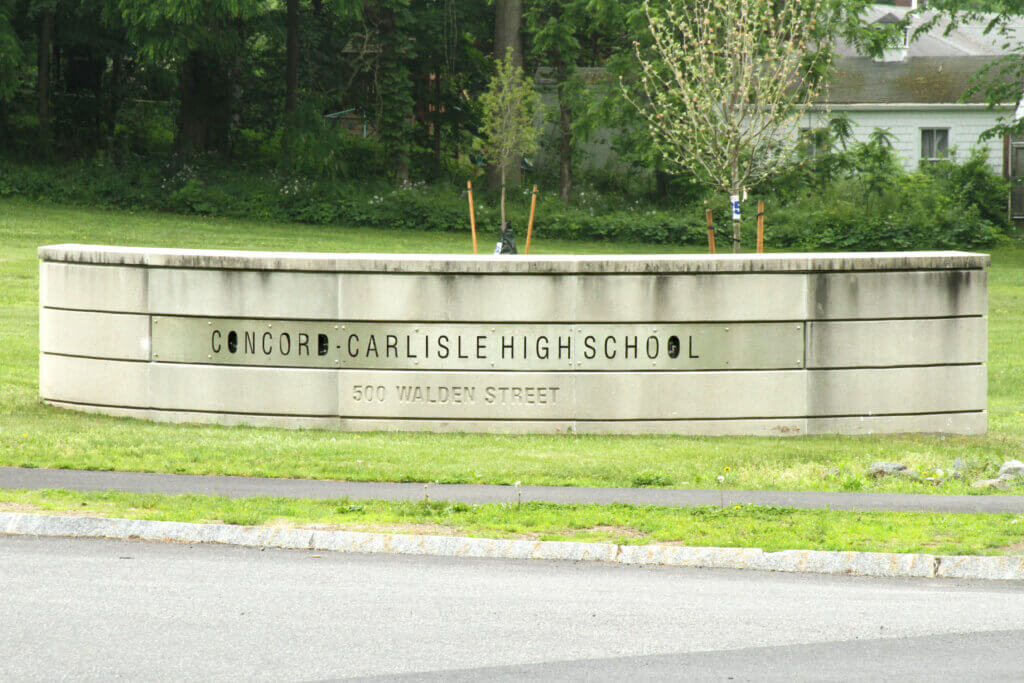
Acton-Carlisle High School co-Principals Katie Stahl and Brian Miller sent a mass email on June 4 — more than three weeks after they learned about the swastika.
Girolimetti and others bristled at the delay and said it followed lackluster responses to other incidents involving the high school.
“This is a long slog,” Girolimetti told The Bridge, relaying his message to administrators. “You have to be committed to it, and we have to feel like you’re committed to it.”
A weeks-long delay
Although the vandalism was discovered over April break, Hunter said it wasn’t reported to administrators until May 12.
In a June 4 online article, The Bridge quoted Acton Police brass saying they hadn’t been notified of the graffiti. The next day, Hunter said the delay was “not acceptable” and that the schools would “ensure our reporting is timely going forward.”
Hunter said officials were focusing on the deaths of three CCHS seniors in an April 21 car crash but “immediately recognized” the swastika’s significance after receiving the May 12 report. School leaders shifted focus to “investigating and removing the symbol.”
But contrary to school protocol, Hunter said, they didn’t notify the police right away because they were “drawn back into the needs of the grieving school community.”
In a written statement to The Bridge, School Committee member Carrie Rankin said that “while the focus at the time was on supporting students and families during an unimaginable tragedy, the police should have been contacted sooner.”
‘So close to home’
As administrators and police said they planned to step up surveillance, Acton DEI Commission co-Chair Nancy Brown said, “Incidents of this sort must never be swept under the rug.”
The town must band together to fight antisemitism and all forms of hate, and “this requires us to confront, publicize, and address such incidents quickly and publicly if and when they occur,” Brown wrote in an email.
Incoming Select Board member Paul Boehm noted previous incidences of bigoted graffiti at CCHS during his campaign. Last week, he echoed calls for transparency and said he expects the Select Board and the School Committee to discuss the matter.
State Rep. Simon Cataldo (D-Acton), co-chair of the commonwealth’s Special Commission on Combating Antisemitism, said the issue “hits differently when it’s so close to home.”
He said he appreciated “that the school district expressed contrition for how this unfolded,” and that he had shared his thoughts with Hunter “on how this could have been handled differently.”
Cataldo said his commission will soon make formal recommendations to help local leaders respond to hate crimes.
‘Boilerplate’ language
Previous incidents at the high school included what administrators described as “antisemitic, transphobic, and racist” graffiti in bathrooms late last year. The CCHS principals said they hadn’t identified the person behind the skate park vandalism and asked anyone with information to come forward.
In these cases, Girolimetti said he sees a “pattern of not communicating” with the public.
He said he doesn’t expect the schools to solve hate and bigotry, but leaders should be forthcoming when hateful incidents do take place. “If the truth isn’t out there, then none of us know how to respond accurately and professionally,” he said.
In the past, he said, he’s been frustrated by “boilerplate” language and a focus on finding those responsible rather than confronting deeper issues.
After he spoke with The Acton Bridge, Girolimetti appeared at Tuesday’s School Committee meeting, where he voiced similar concerns about antisemitism and the CCHS response.
“Our community is capable of holding space for multiple concerns without diminishing any of them,” he said.
‘Increasingly dangerous’
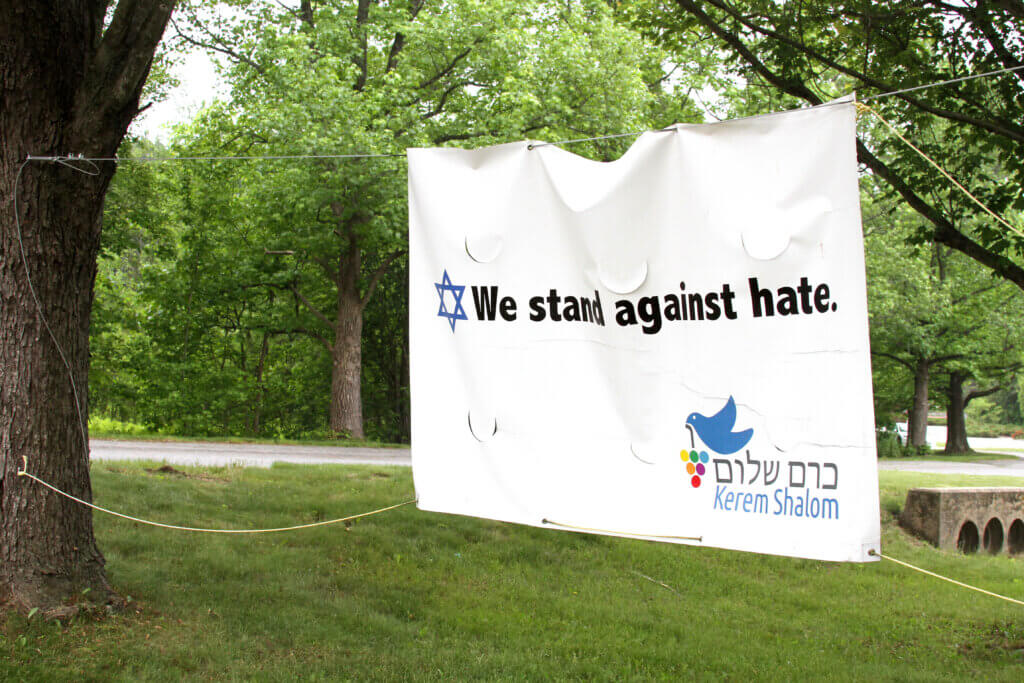
Rabbi Darby Leigh of Kerem Shalom said he heard from school leaders the day after last week’s public announcement and planned to meet with them this week.
Leigh said his reaction to incidents like the recent swastika has changed in recent years amid an uptick in antisemitic attacks.
“It is becoming increasingly dangerous to be visibly Jewish in American society right now,” he said.
In Acton, he said, people “are growing increasingly fearful about at what point language and rhetoric will translate into some numbnut saying, ‘Let’s do something about this and actually enact violence on the Jewish community.’”
Leigh said Kerem Shalom is considering increasing its security budget.
He declined to speak directly about the CCHS response, deferring until after he meets with administrators. But he said he would love to see an official response from the town on what he called a “distressing” incident.
Town Manager Kerry Lafleur said the vandalism was “deeply troubling.”
While she said the response was “being led by the appropriate authorities,” she said she shares the community’s concerns and supports “continued efforts to ensure that Acton remains a respectful, inclusive, and safe place for all.”
As communities try to stay safe, Leigh said, it’s “crucially important” that schools, police, and organizations like the Anti-Defamation League “take incidents like this very seriously.”
“That link from symbol to action or rhetoric to action or speech to action,” Leigh said, “is getting shorter and shorter and smaller and smaller.”
Trace Salzbrenner contributed reporting.