Local outrage lingers after ICE exits Hanscom
Advocates say they are still angry about ICE’s tactics and are on guard for the agency’s possible return.

Julie Hirschler was part of a Acton Center protest crowd that cheered last week when they heard that Immigration and Customs Enforcement had halted flights from Hanscom Field.
Two days later, demonstrators forged ahead with another protest at the airport. “It’s [a] bigger picture than just Hanscom,” said Hirschler, a Acton resident.
The Acton Bridge first reported online last week that ICE “recently decided to stop” routing flights through Hanscom, according to a spokesman.
Even as they celebrate, advocates say they are still angry about ICE’s tactics and are on guard for the agency’s possible return.
ICE Boston spokesman James Covington said he didn’t know why higher-ups opted to leave Hanscom. Asked whether it’s a temporary change, Covington said it “does not seem like it.”
Agency’s local footprint
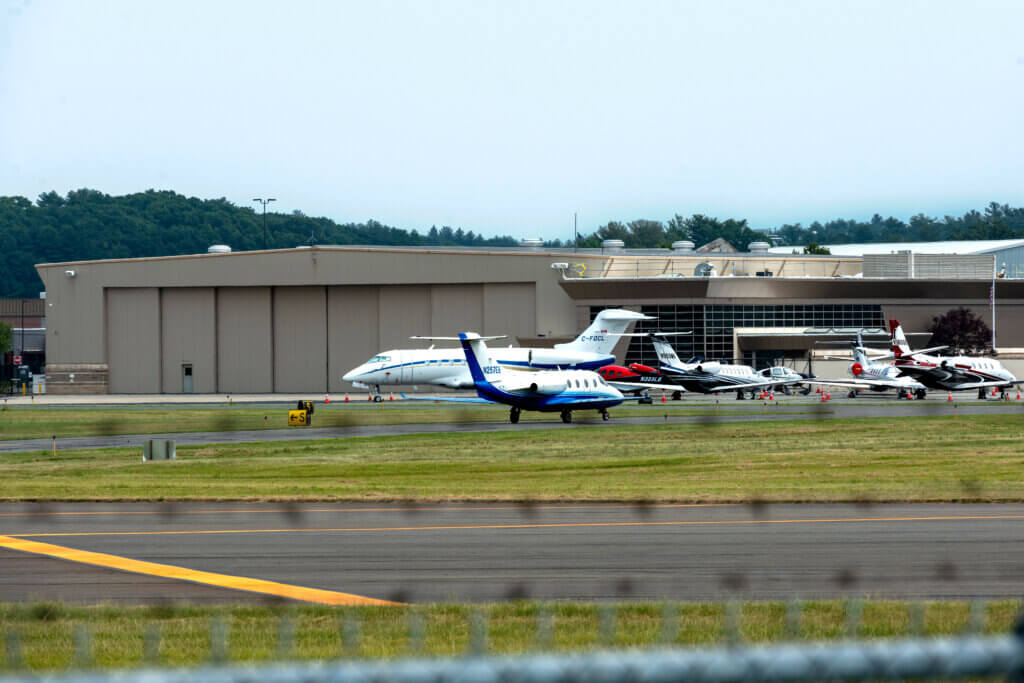
Covington said ICE’s Boston field office has a contract to send detainees to the Plymouth County jail. Because space there is limited, ICE sometimes used Hanscom to fly detainees to other states.
It isn’t the whole picture, but public records confirm the Plymouth County Sheriff’s Office brought 545 detainees to the airport across 19 days between mid-February and May 24.
Transports spiked after President Donald Trump took office.
Hanscom flights, first reported by WBUR, raised concerns from residents and public officials alike. Many objectors said shuffling people among detention centers makes it hard for those in the ICE system to stay in touch with family and get legal help.
Covington said ICE didn’t deport people directly from Hanscom. If someone were getting deported from the area, he said, they would be flown first to a processing center and then put on a flight overseas.
ICE reported nearly 1,500 arrests in Massachusetts during a May enforcement surge. PSCO counts are the only public data about Hanscom activity, and that office said it shuttled 131 detainees across three trips to the airport in May.
Transparency complaints
Covington said ICE ran all its flights through Hanscom’s civilian section using chartered planes. He said ICE has been using Hanscom for many years, but he couldn’t confirm which companies the agency works with or say how many flights ICE was operating out of the airport.
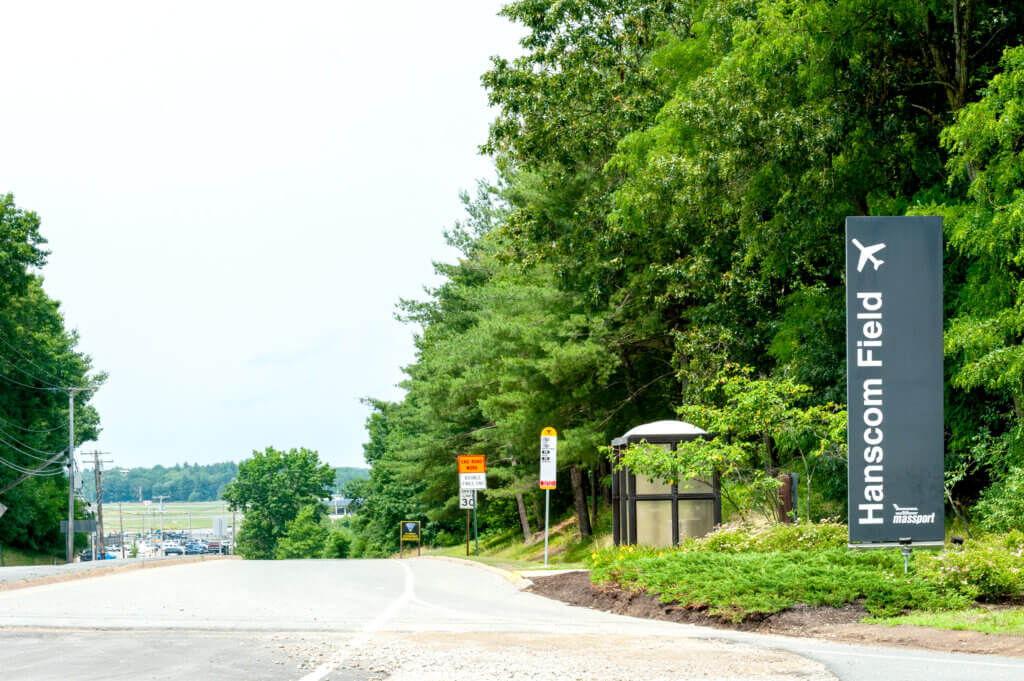
Acton’s representative on the Hanscom Field Advisory Commission, Terri Ackerman, flagged the opacity during a recent HFAC meeting and said the panel had an obligation to seek answers.
She said she still plans to draft a statement for HFAC’s next meeting to consider sending to the feds.
Ackerman said she’s opposed to ICE flights anywhere. As she pens her letter, she wants to avoid encouraging ICE to simply shift its Hanscom operations to another airport.
‘Good trouble’
Organizers estimated more than 250 attended the July 17 Acton Center gathering, which was part of a nationwide flood of “Good Trouble” demonstrations.
Protesters came for many reasons, but several said they were there to criticize ICE. Ackerman said ICE detentions in Acton and surrounding towns made the agency’s actions feel “more real.” She also said she wants to tell ICE that it should notify HFAC if it ever plans to start using Hanscom again.
Hirschler helped organize the event. If Hanscom flights switch to another airport, she said she expects Acton advocates will be in touch with counterparts in surrounding communities, “so they can carry on.”
Acton’s Stephan Bader estimated 40 people turned up for a Saturday standout at Hanscom. This was the second protest at the airfield since organizers learned about ICE’s local footprint. With ICE gone, demonstrators are focused on a company they believe helped refuel local flights.
Environmental advocates also have their eyes on a proposed jet hangar expansion project which they say could bring more air traffic — and noise, and pollution — to Hanscom.