‘Minute Man’ marks 150th birthday where ‘embattled farmers stood’
Details about the sculptor and his statue make for a sometimes surprising account.
A town eager for a monument to the farmer-soldiers who routed the British.
A reluctant young sculptor.

And a dedication that drew tens of thousands — but not the sculptor himself.
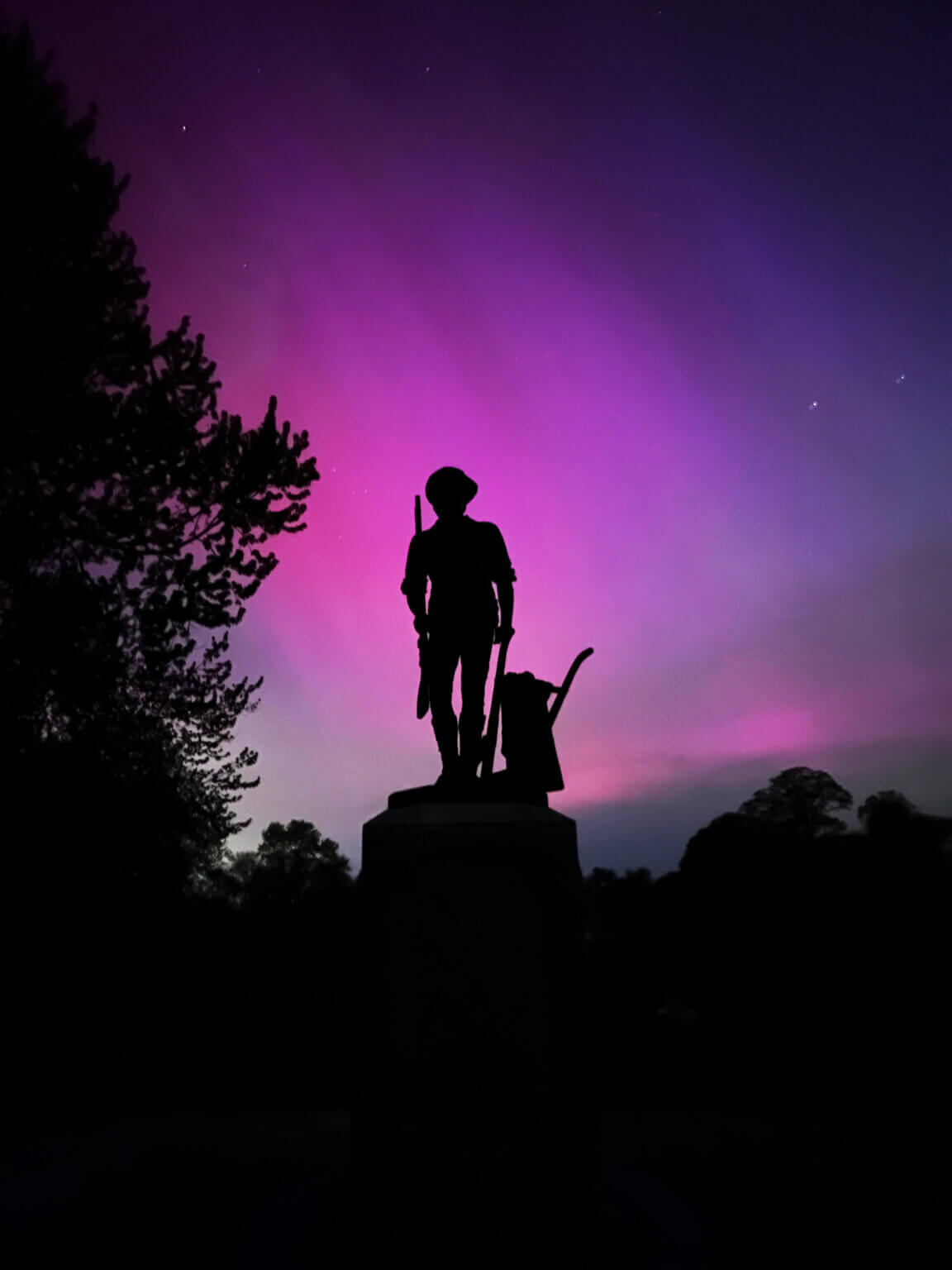
All are part of the story of “The Minute Man,” the bronze figure created by Daniel Chester French that has stood on the west side of the Old North Bridge since the Revolutionary War centennial in 1875.
Details about the sculptor and his statue — adopted in 1878 as Acton’s official seal and used by the suffragettes and the U.S. National Guard — make for a sometimes surprising account.
Ralph Waldo Emerson was among the Concordians complaining that the site of the skirmish was marked only by an obelisk installed in 1836 on the side of the bridge where the enemy stood and not on the other side, where Americans fought and fell.
Farmer Ebenezer Hubbard owned the land around the bridge and left $1,000 in his will for a new monument and another $600 to repair the bridge, money that helped launch the quest for a monument. In 1872, a committee formed at Town Meeting was tasked with deciding on an appropriate statue.
Whittling turnips
French was a largely unknown Acton sculptor in his early 20s who created small pieces, mostly animal figures, medallions, and busts of his siblings and friends.
He had been living here since 1867 when his family — his father, Judge Henry Flagg French, stepmother Pamela, and three siblings — moved from Exeter, New Hampshire. Like his parents, he became friends with Concordians including Emerson and the Alcotts.
Enrolled at Massachusetts Institute of Technology, French proved not to be destined for academia. He failed three courses and came home to work on the family farm.
He had been demonstrating artistic talent since boyhood. “I had been whittling and carving things from wood and gypsum, or even from turnips,” French writes in the prelude for a 1928 biography of artist May Alcott, Louisa’s youngest sister. May encouraged French and gave him clay and modeling tools.
‘Rookie’s mistake’
After reviewing proposals by several sculptors, the group commissioned French to create a larger-than-life figure that would honor the minutemen. [Though French called his piece “The Minute Man,” historians use the one-word spelling of the term.] Despite his being relatively unknown in the art world, the committee liked that French was a hometown boy who appreciated Acton’s history.
Though Emerson and others in town had faith in him, the sculptor was reluctant to take on the project, according to biographer Harold Holzer. For one thing, he had never created a life-size figure, and this one was to be 7 feet tall.
French asked the committee only for the cost of materials, rent for the Boston studio, and the casting of the figure in plaster. The cost, he added, was “not to exceed $350 along with any compensation for my skill and labor,” which he left up to the town.
Holzer suggests this might have been a “rookie’s mistake.”
The sculptor wrote to his sister in 1875, “I think I felt more the loss of faith in the righteousness of the Acton people than the actual loss of the money expected.” While waiting for the hoped-for stipend, French supported himself by making and selling statuettes of the figure.
A ‘brawny yeoman soldier’
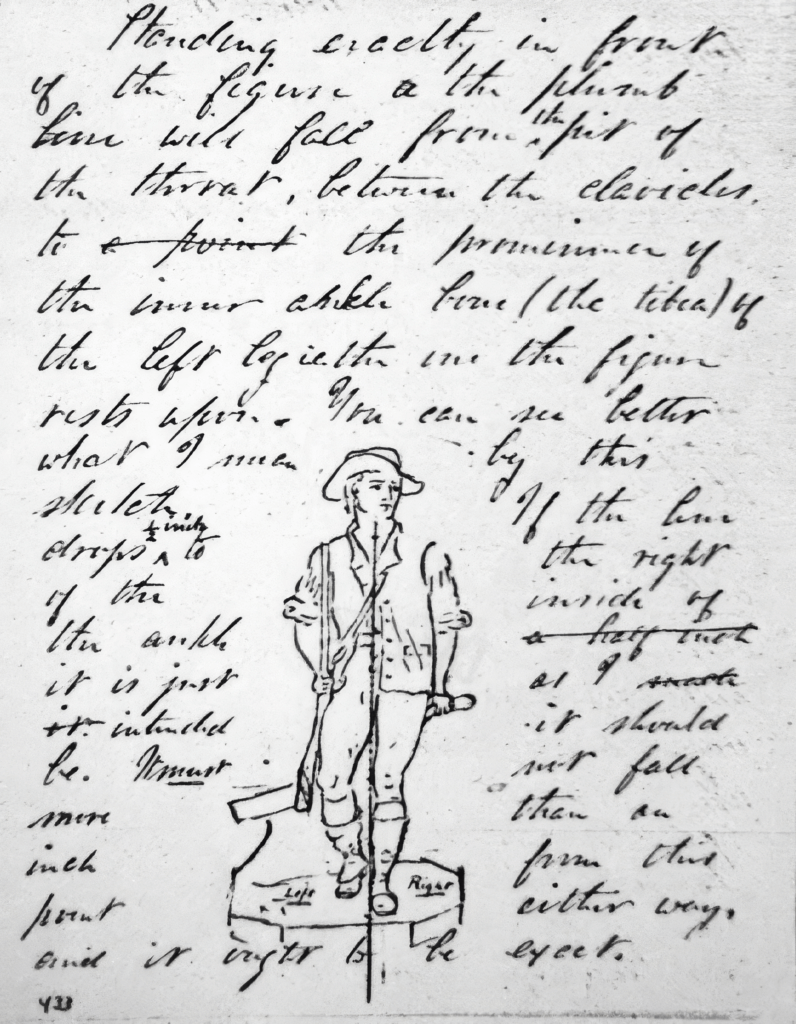
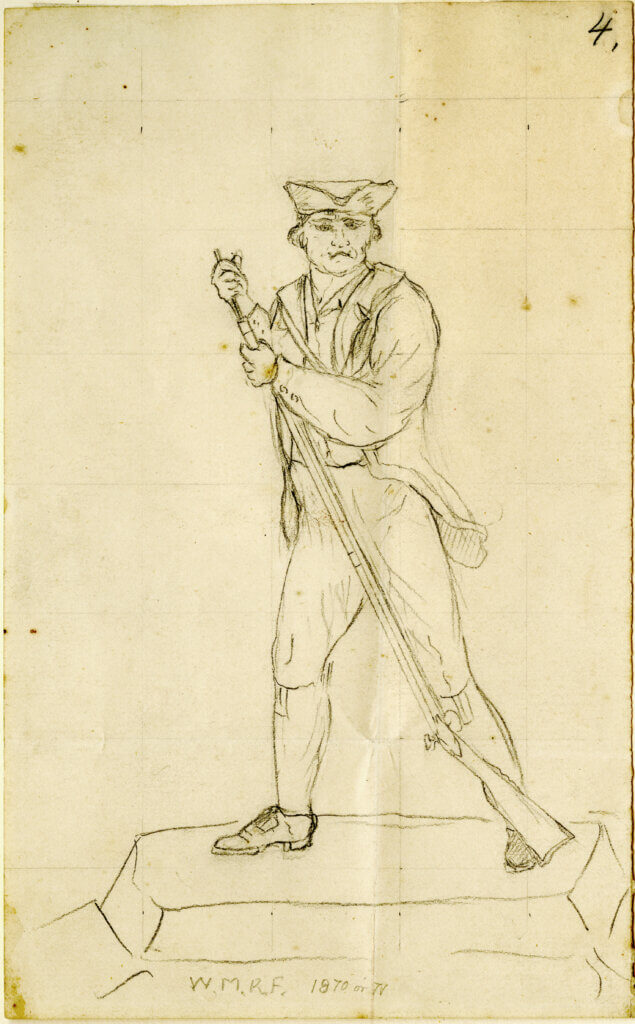
French filled his bedroom in his Sudbury Road home with models for the statue before moving them into the barn. The committee rejected his first one, saying it was “too fierce looking.” Member John S. Keyes pronounced it “pretty bad,” according to Holzer, and French was inclined to agree.
He labored in his small studio on the property before renting space in Boston with ceilings high enough to accommodate the figure.
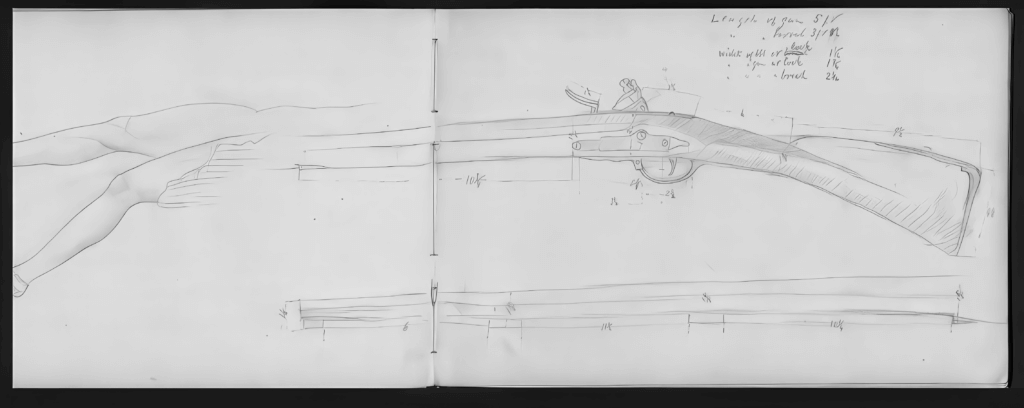
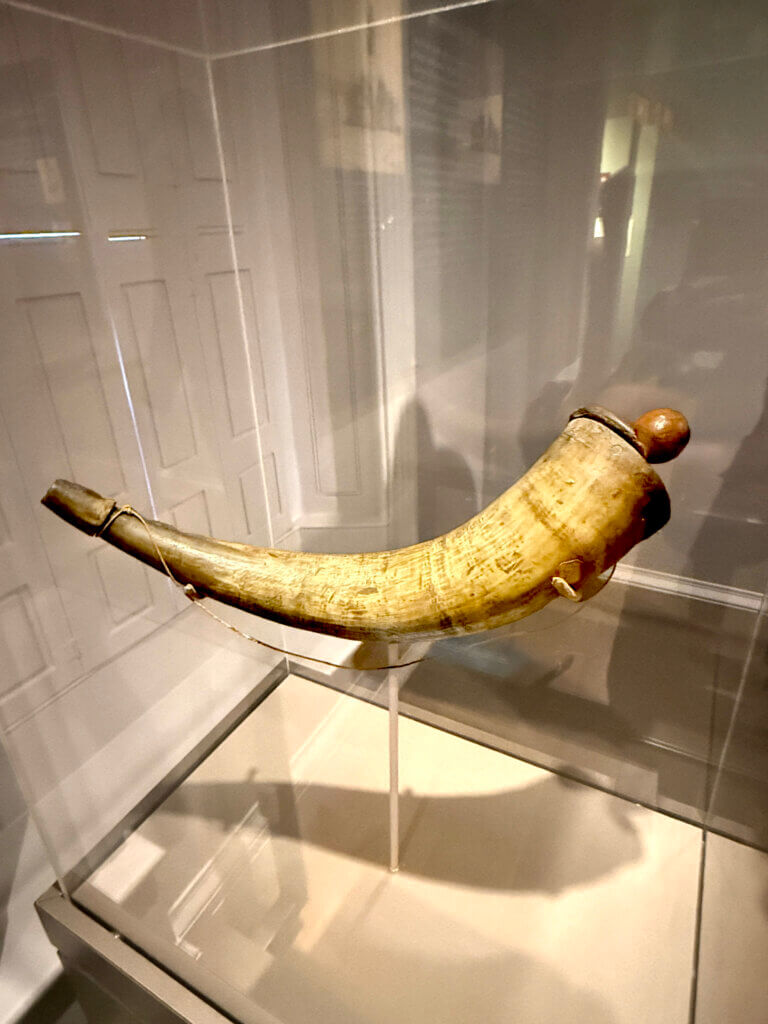
French was particularly inspired by copies of Greek sculptures he saw at the Boston Athenaeum, particularly one of the “Apollo Belvedere,” which would influence the pose of “The Minute Man.” He studied and sketched antique buttons and tricorn hats, and a musket, plow, and powder horn.
The sculptor used live models — including himself. One Revolutionary figure the statue is said to be based on is Capt. Isaac Davis of Acton, who was killed in 1775 after he led his company into the conflict at the Old North Bridge. Davis is the fifth great-grandfather of Acton hardware store proprietor Scott Vanderhoof (see page TK).
In 1873, the committee approved a new model, a “brawny yeoman soldier in shirtsleeves, clutching a musket, his discarded coat thrown casually over the nearby plow,” writes Holzer. French used Davis’ plow, which is displayed in the Acton Town Hall, as a model for the one in the sculpture.
The plaster cast of “The Minute Man” went to a Chicopee foundry six months before the April 19 dedication. Due to the high cost of bronze, Concordian and former U.S. Attorney General Ebenezer Rockwood Hoar helped push through legislation to provide 10 decommissioned Civil War-era cannons to be melted down for the project.

Where’s Daniel?
“The Minute Man,” set on a granite pedestal, was unveiled at the bridge in 1875 on a frigid, blustery day. Among the estimated 30,000 to 50,000 attendees — a “monumental traffic jam” was reported on the rail lines running to Lexington and Acton — were governors, generals, and Supreme Court judges.
Speakers included President Ulysses S. Grant, Henry Wadsworth Longfellow, and Emerson, who had penned the “Acton Hymn,” the first stanza of which appears on the statue’s base. The program went on for hours, prompting a journalist to quip that it was likely more people died from exposure at the celebration than in the battle being commemorated.
But where was French? Did he fear the figure would be panned, as some historians say, or was it simply too expensive for him to travel from Italy, where he was working? The sculptor finally saw his statue a year later when Emerson hosted a party for him in the Old Manse that also celebrated the sculptor’s April 20 birthday.
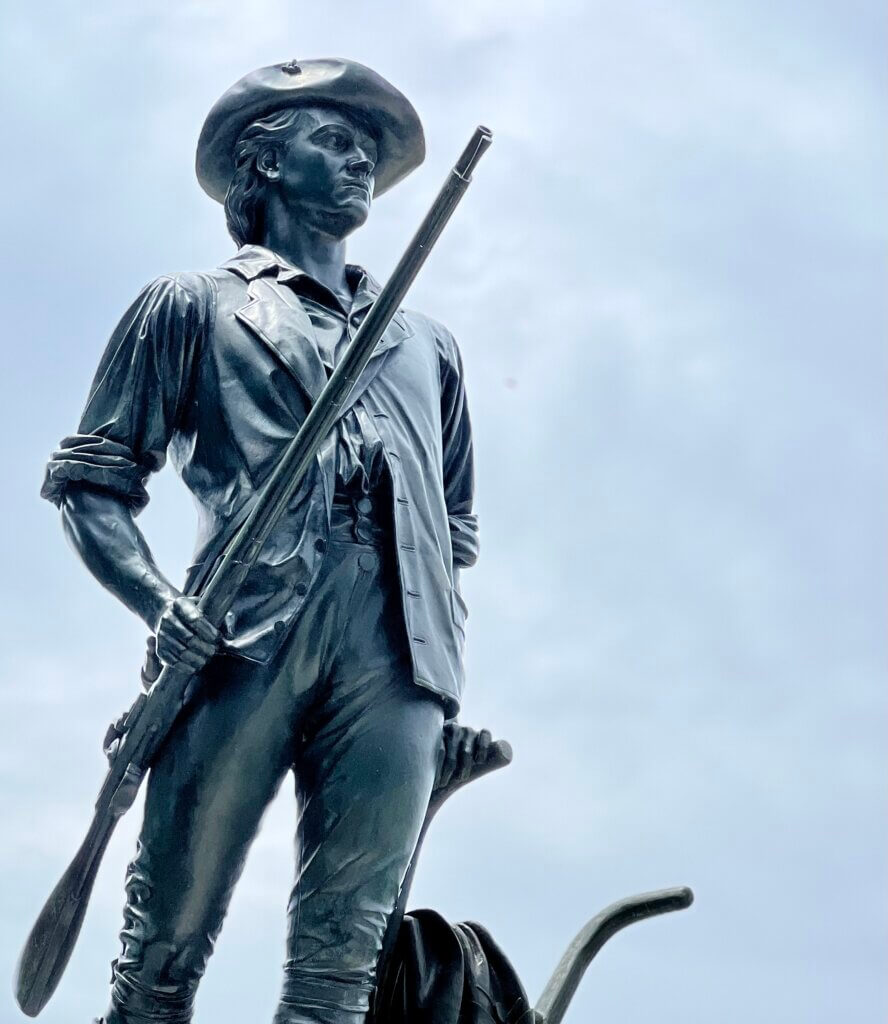
“The Minute Man” propelled French into national prominence. He would create nearly 100 celebrated public sculptures, including his magnum opus: the seated Lincoln in Washington, D.C.
French ultimately expressed his gratitude to the people of Acton for trusting an inexperienced sculptor, adding, “This action resulted in a statue that I think I can say without blushing is better than the citizens had a right to expect.”
In 1876, the town finally awarded French $1,000. Though he was grateful for the opportunity and the fame that followed, French vowed he would never again let a client set his fee.
In 1888, the sculptor married his first cousin, Mary Adams French. He died in 1931 at his Stockbridge home and studio, Chesterwood, and was interred in Sleepy Hollow Cemetery, his gravestone inscribed with the words, “A Heritage of Beauty.”