‘Minutemen’ at 50: Historian reflects on its enduring acclaim
“It astounds me that even now, lots of people line up to have me sign their books when I speak, reacting as if it’s a new publication.”

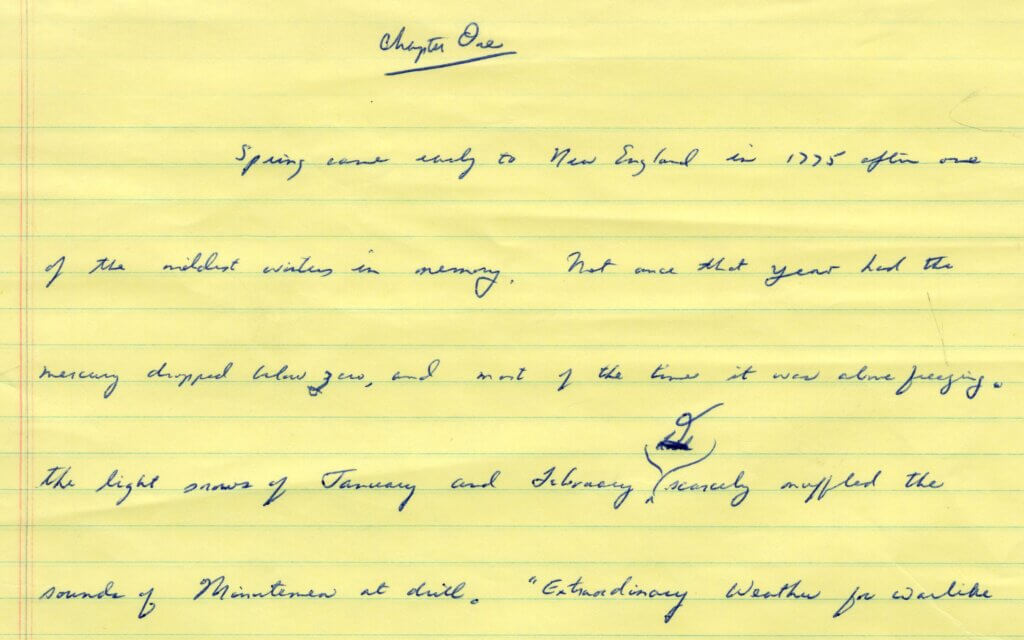
“Spring came early to New England in 1775, after the mildest winter in memory.”
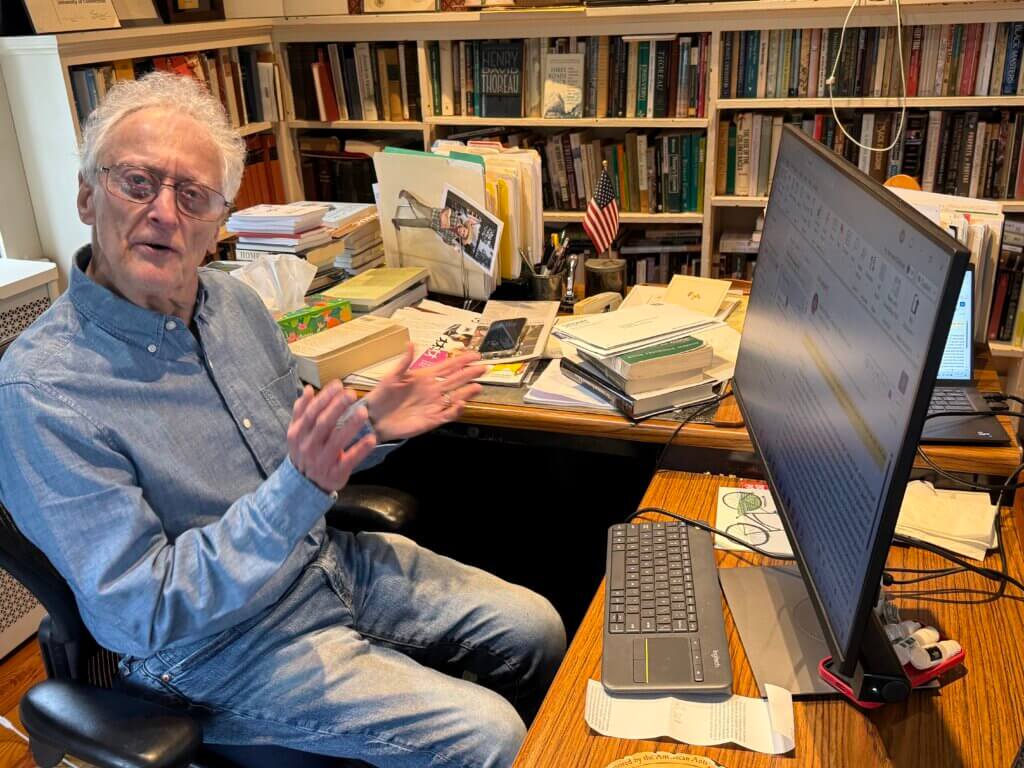
Robert A. Gross, historian and professor emeritus at the University of Connecticut, penned that opening line of a manuscript in the late summer of 1974. He wrote at a desk in the front room of his and wife Ann’s rented house on Thoreau Street. Their infant son, Matthew, lay cradled in one arm.
Gross was 29 and working on his doctorate at Columbia University while teaching part-time at Worcester Polytechnic Institute. He envisioned the project as a slim, “quirky” volume about the Acton community between 1750 and 1850, thinking it might appeal to tourists and help support his doctoral work.
It evolved into an exhaustively researched reconstruction of the lives and community of Acton before and after the American Revolution and took two years to write. Gross never expected that “The Minutemen and Their World,” published in 1976 and 50 years old this month, would win the prestigious Bancroft Prize in 1977.
Nor did he foresee that it would be so well received by critics — “a gem of a book,” declared the New York Times — and draw an audience well beyond Acton. “Minutemen” is still used in college classes and read by historians. It has been expanded and reissued twice, most recently in 2022.
Gross attributes the book’s longevity in part to his efforts to periodically rethink the material, add new information, and address questions that historians have raised. His editor, Alexander Star, calls Gross “a master scholar-writer” and a “national treasure” who “demonstrated Acton’s centrality to America’s history and the world’s thought in new and surprising ways.”
“It astounds me,” Gross says, “that even now, lots of people line up to have me sign their books when I speak, reacting as if it’s a new publication.”
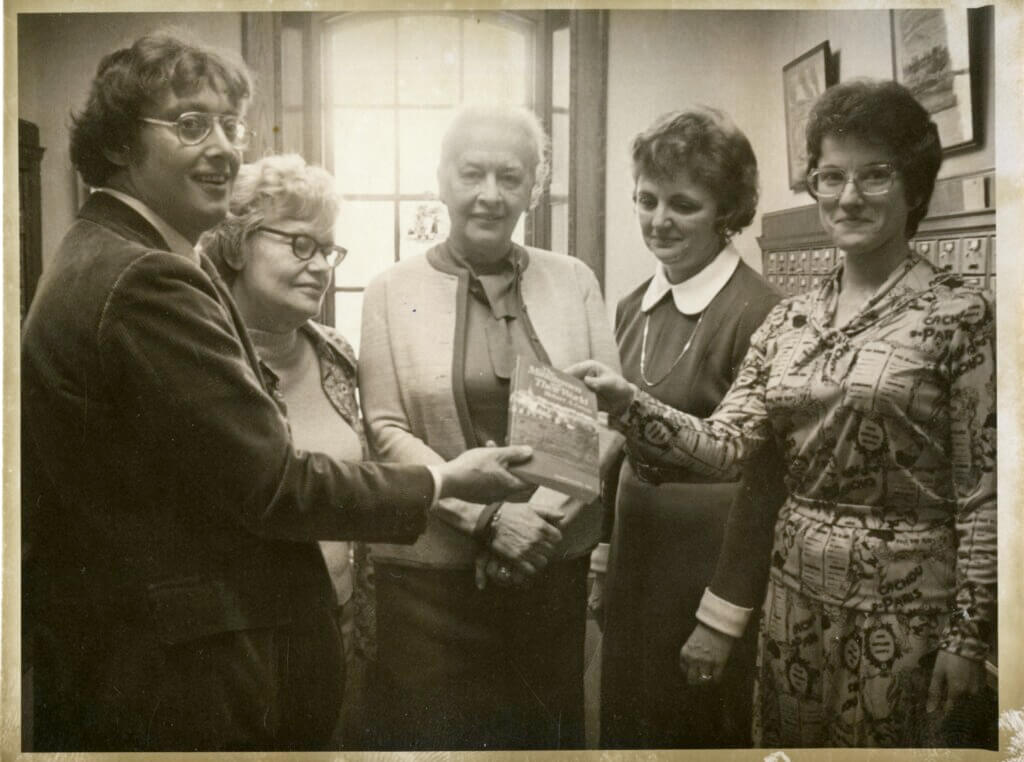
One fan is Acton attorney Rob Meltzer, who says reading “Minutemen” as a sixth grader inspired him to research his Worcester neighborhood during the Revolution. “Bob exploded 100 years of American mytho-history with one book that was brilliantly written, meticulously researched, and so much fun to read.”
Recovering their voices
Inspiration for the project came from experiences he had in town, Gross says, including studying a diorama at the National Park Service visitor center at the North Bridge that depicted the scene on the morning of April 19, 1775. It pressed him to ponder “how anybody 200 years later could feel a connection to these stereotypes of American myth.”
Gross wanted to write about “men, women, free and slave, native and newcomer, patriot, neutral, and loyalist” — all of those who had been excluded from conventional accounts — recovering their voices. His approach would reflect his interest in social history, a method that was growing in popularity. It involved tapping overlooked sources such as tax lists, censuses, vital records, genealogies, and town meeting minutes, from which patterns of everyday life and social change would emerge, he says.
Among those who people “Minutemen” is John Jack, an enslaved man who worked for a cobbler, bought his freedom, built a cabin in Great Meadows, and paid his taxes, but was never allowed to vote. At the time of Jack’s death, he owned eight acres, a pair of oxen, and seven barrels of cider. “His was a marginal place in the community, but it was nonetheless a real place,” Gross writes.
And there is Lucy Barnes Hosmer, daughter of a prosperous farmer and town clerk. When Joseph Hosmer, a cabinet maker, asked for permission to marry 16-year-old Lucy, her father refused, wanting her to wed someone wealthy and important.
Though a father could not dictate his daughter’s choice of spouse, he could try to arrange unions and pressure her to agree, Gross says. Lucy rebelled, denying her father’s choice of a cousin for her, and acted on her own. When she married Hosmer at 19, she was two months pregnant.
Slow to rebel
Gross conducted much of his research at the Acton Free Public Library. He searched archives at the Massachusetts Historical Society and the American Antiquarian Society among other organizations. Along the way, there were surprises. Acton, he learned, was “far slower than other towns to rebel against British rule.”
Ann, a former editor, “listened to nearly every word of the manuscript, and most of the time she even did so cheerfully,” Gross says, exhibiting his characteristic wry wit. The couple has three adult children. Matthew, the infant Gross held as he wrote, became a writer.
A former assistant editor at Newsweek, Gross, 81, is the author of “The Transcendentalists and Their World” (2021) and has been published in several periodicals. Last fall, his piece, written with fellow UConn professor Robert Thorson and titled “Why Acton? The Geological Origins of the American Revolution,” ran in The Atlantic.
Gross says he intends to “keep writing as long as I can be relevant.” He is grateful for “the Acton people who were so welcoming, open, and helpful to this stranger who was asking all of these questions and doing all of this research.”
Acton, he says, “was my passport to the world.”