School Committee debates speaking up on bias incidents
The panel said it will view requests to make such statements if multiple members ask to do so.
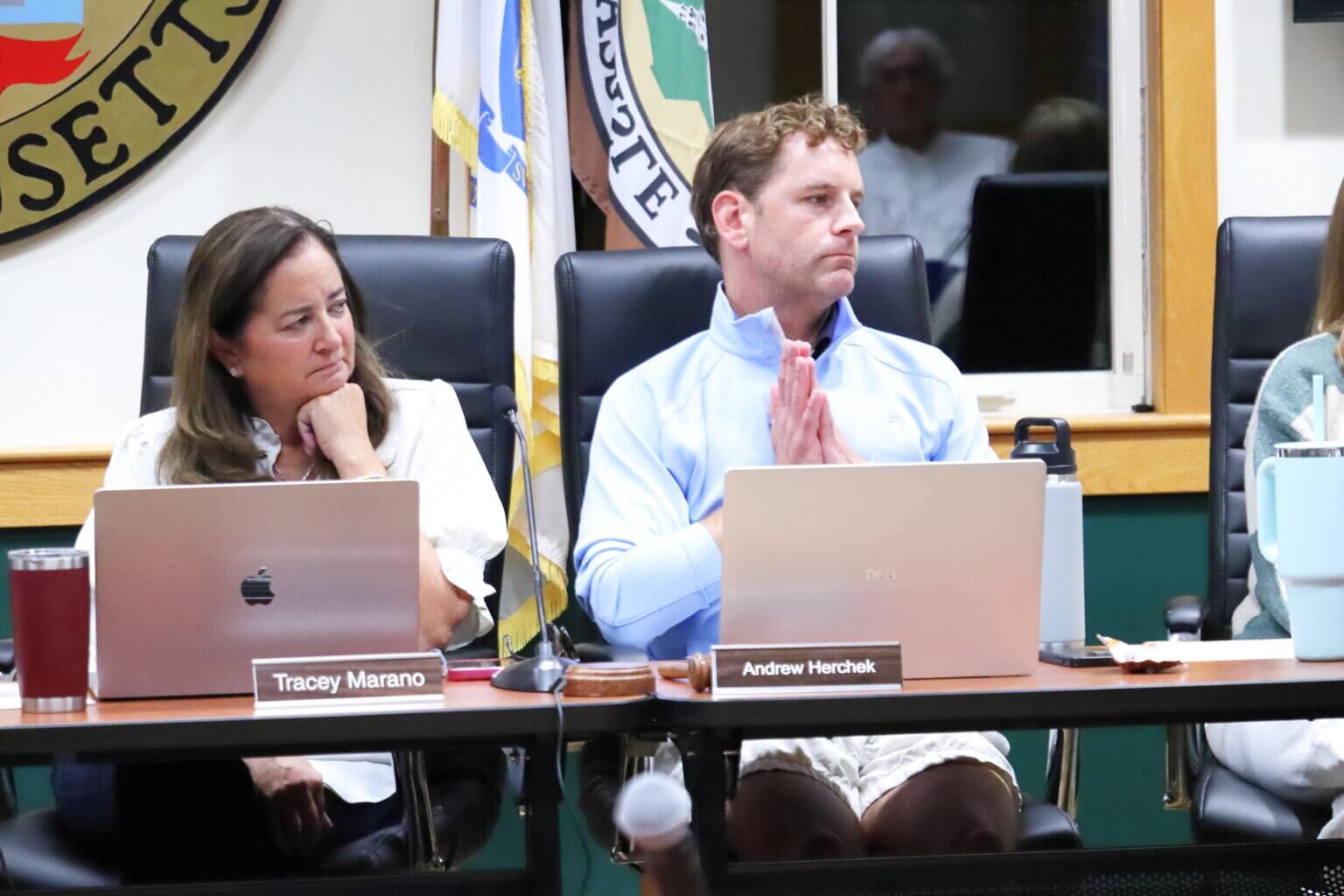
School Committee members have indicated support for not issuing formal statements on individual bias incidents absent multiple requests for the chairs to consider it.
The public and regional committees discussed their current practices after member Michael Williams asked the chairs to respond to recent incidents. Those included a report of a racial slur on a notebook thrown into the crowd during Kicks for Cancer and a Acton-Carlisle High School Parents Association social media post about parking that some critics said echoed segregation-era language.
“We speak to our community, and we can use our voice to help to heal, help to educate,” Williams told The Acton Bridge. “Our silence can be deafening at times.”
His request prompted regional Chair Tracey Marano and public schools Chair Andrew Herchek to ask colleagues for thoughts on issuing statements.
Marano said the current general policy is to let principals and Superintendent Laurie Hunter make statements, which the committee can then choose to amplify.
Late last month, she and Herchek, as chairs, issued a joint statement denouncing a message posted in Monument Square with what they called “demeaning language” directed at Hunter.
The chairs said the message was conveyed via a “scarecrow,” but a police spokesman called it “a sign.”
In an October 9 email sent through John Guilfoil Public Relations in response to follow-up questions from The Bridge, the chairs said their “goal is to support the Districts’ existing communication process, which ensures that there is one clear, consistent voice responding to these situations.”
But Williams argued during the meeting that “when events happen in our physical space, in our community, that impact members of our community,” the committee has “a responsibility to make a comment.”
The chairs’ email said the committees “take every reported incident of bias or discrimination very seriously,” but “the districts already have a process in place to communicate about these matters.”
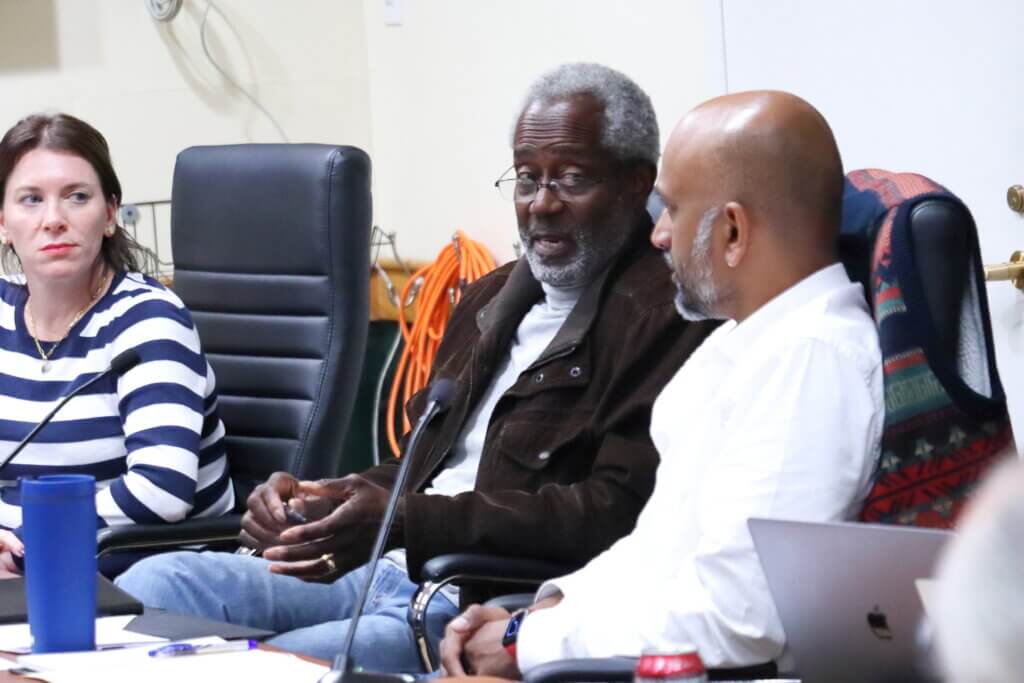
‘Feeling unheard’
METCO representative Michelle MacDougall spoke in favor of the committee issuing more public statements.
“My experience interacting with the families that I represent is a history of feeling unheard,” she said at the meeting. “If you have things like that happening, and people looking to feel heard, then something [new] occurs and a statement is made, [and] then people start feeling heard.”
Herchek said there are barriers to that approach. For one, he said, because the regional committee now meets monthly, most statements wouldn’t be timely.
Member Carrie Rankin said that if a statement from a principal or Hunter is out there, that’s what the committees should focus on disseminating.
“When something happens, our job is to make sure that it is communicated,” she said. “I don’t know if it’s our job to do the communicating.”
‘Feasible or appropriate’
Similarly, in their email response to The Bridge, Marano and Herchek wrote that it’s “not feasible or appropriate for the Committees to issue statements on every individual incident, especially those that are not fully vetted or remain under investigation. That is not the responsibility of the School Committees.”
The chairs’ statement about the Monument Square incident came while police were still investigating.
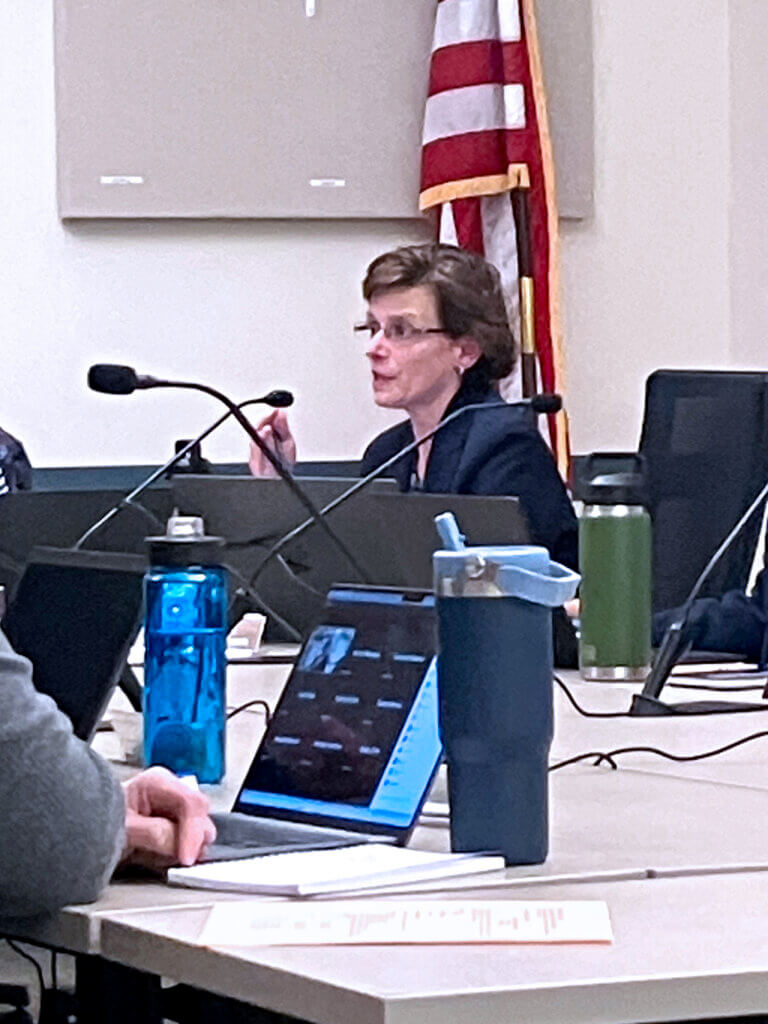
Asked about that, Marano and Herchek, again responding through the PR firm, called that case “unique in both its nature and the impact on the broader community. It was a public act that targeted a district leader in a deeply personal and disturbing way, and it required a clear message condemning that behavior.”
When the chairs initially issued their statement on the Hunter incident, Williams praised them — and asked that they continue with that energy.
“I would like us to pay the same type of attention when incidents occur to and directed against all people,” Williams said at the September 25 committee meeting, asking that “the same vehemence” be used to address incidents targeting Jewish students or students of color.
After further discussion, toward the end of the meeting, Herchek told Williams, “I’m not hearing a lot of call for change. You have been the only one emailing me to make statements. I’ve not heard it from anyone else on the committee.”
Herchek said he would conclude with a proposal, if not a formal vote: “If we receive multiple requests to address a specific incident of bias, of hate, make a statement prior to a meeting, from multiple people, I think we can definitely talk about it. But if it’s one incident, from one person, [I] think that is up to the chairs.”
October 11: This story has been updated.