Newfound ledger of Sleepy Hollow locates 4 Robbins family members
“To be able to know where their final resting spot is just incredibly moving for me.”
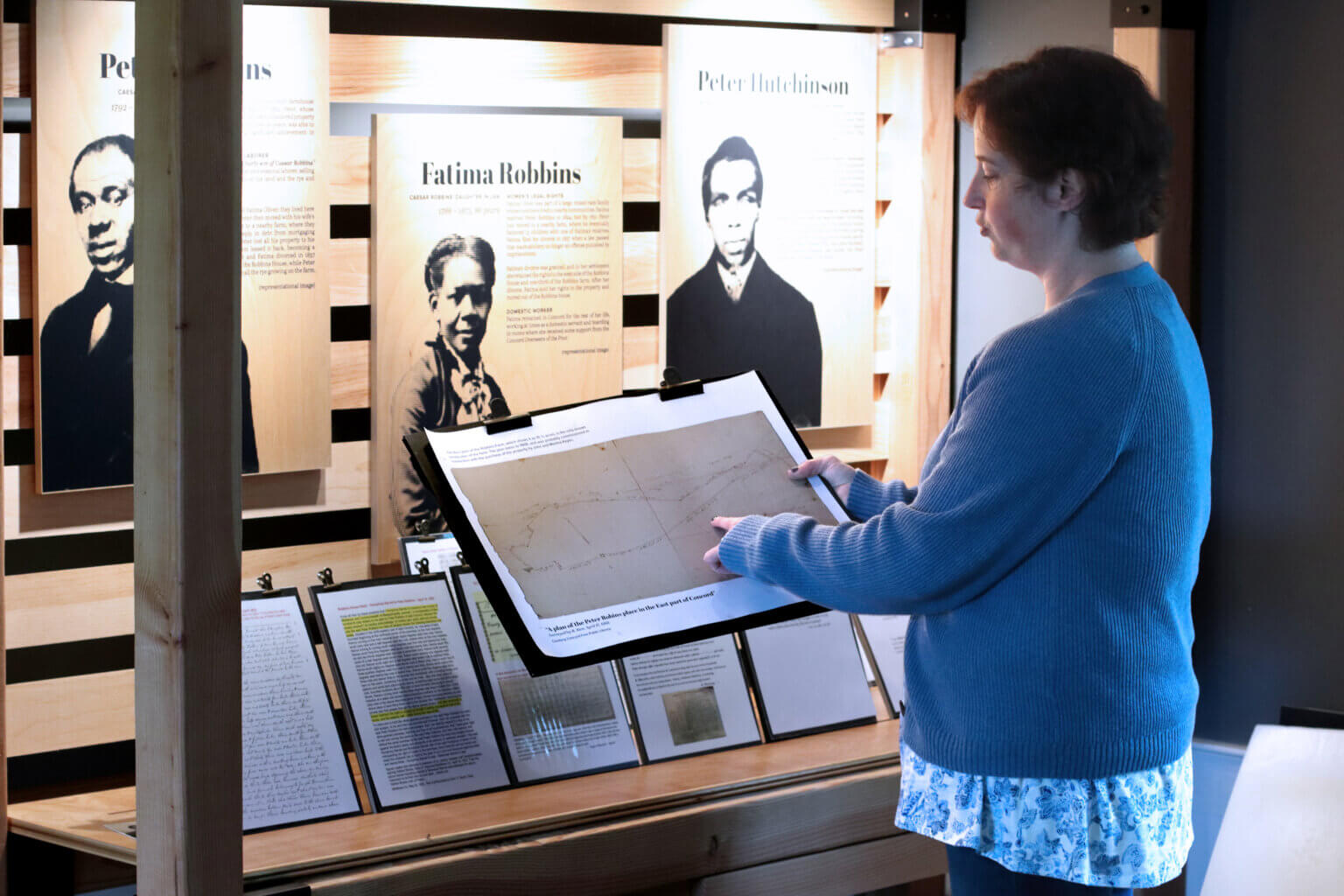
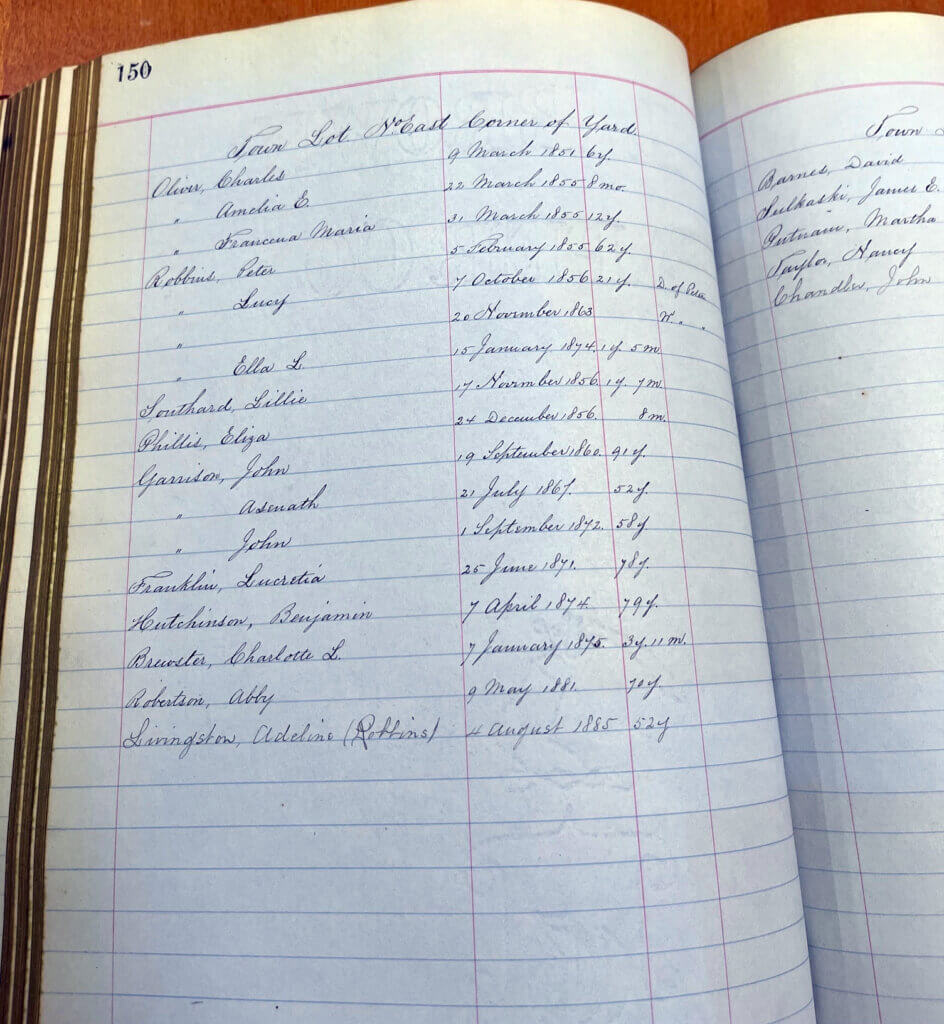
When a dusty ledger first surfaced in the town archives, no one expected it might solve a long-time mystery. But tucked among yellowed pages inscribed with fading ink are names that anyone who’s visited The Robbins House would recognize.
The ledger is full of burial records, including those of an old public plot in Sleepy Hollow Cemetery where lie the remains of four members of the Robbins family tree.
When Jen Turner, executive director of The Robbins House, first heard the news, she tried not to cry.
“I stood on the lot, and I was so emotional because I spent so much of the last three years really trying to reclaim the stories of the Robbins and Garrison families and talk about their importance in Acton history,” Turner said. “To be able to know where their final resting spot is just incredibly moving for me.”
In the wake of the discovery, Turner is pushing to use ground-penetrating radar and LiDAR to see what lies beneath the town plot.
LiDAR, or light detection and ranging, is often used in conjunction with ground-penetrating radar to uncover buried structures without disturbing the ground. The technology will enable Turner, the town, and the Acton Cemetery Committee to detect soil disturbances and estimate the number of people buried in the plot.
Boston has used ground-penetrating technology to find long-buried locales such as the 1775 redoubt used in the Battle of Bunker Hill, and LiDAR to create highly detailed maps of excavation sites.
Turner hopes eventually to erect a monument listing everyone buried in the town plot, giving unmarked graves the recognition they’ve lacked for decades.
The truth uncovered
The burial ledger listed Jack and John Garrison, Ellen Garrison’s father and brother, and Peter and Almira Robbins, her aunt and uncle. It also confirmed that Fatima Hutchinson, Peter Robbins’ first wife, was laid to rest in the Hutchinson family plot at Sleepy Hollow Cemetery alongside her second husband, Peter Hutchinson, the last Black owner of The Robbins House.
Town Archivist Nathanial Smith found the ledger in the repository while working on another project. He contacted Beth van Duzer, a local historian and a member of the Acton Cemetery Committee.
“When I flipped through the book, it opened to a page that listed Garrisons and other people of the Black community. Their last names just popped out,” she said. “It was really exciting to be like, ‘Oh, the information exists. We’ve been looking for it for how many years, and here it is.’”
The family members were listed under a public, or “town,” lot — a section of the cemetery set aside for people who could not afford private burial.
Van Duzer explained that over the years, the town lot became the final resting place for many residents, including members of the Black community, children, and unclaimed bodies from local hospitals.
Because the plot includes more than just members of the Robbins and Garrison families, Turner hopes to use ground-penetrating radar to learn even more about the town lot.
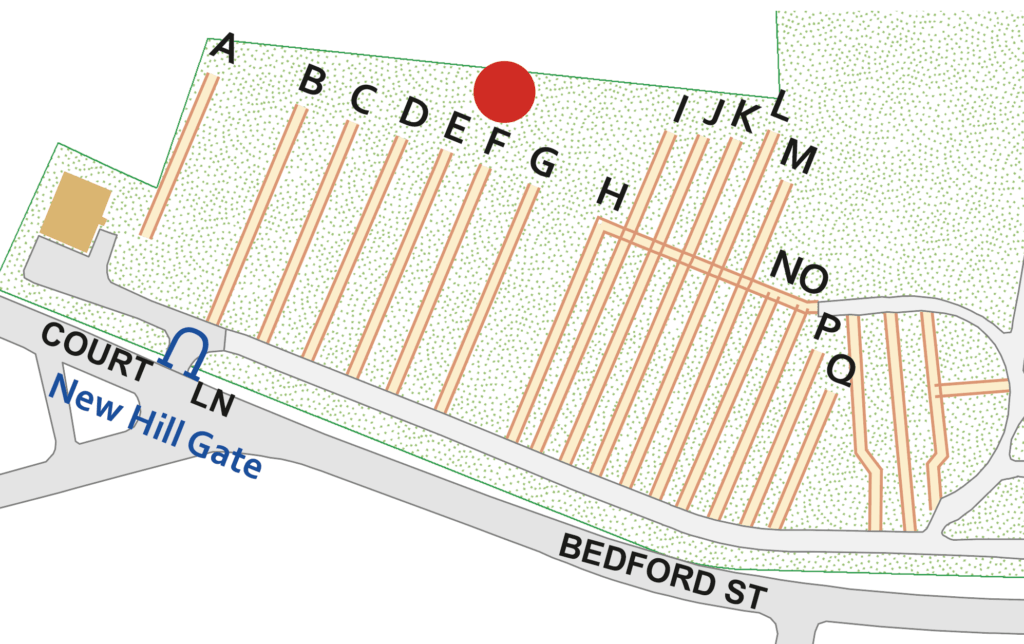
“It basically allows us to see what’s under the ground without digging anything up,” she said. “We’ll never know exactly which plot belongs to who, but it will give us a sense of how many people were buried in the town lot.”
Van Duzer said that the survey will provide clues, not full information.
“These lots have been used for a very long time, and not just by Black residents,” she said. “There’s going to be a lot of information, but it will be difficult to pinpoint specifics.”
They agree that honoring Acton’s Black community is the primary goal.
“It’s not just one family,” van Duzer said. “It’s multiple Black residents that have been buried here, and it would be wonderful to have all of them remembered.”


