Posies and pollinators thriving thanks to busy-bee Girl Scouts
The troop transformed an overgrown and largely unused area beside the Acton Scout House into a pollinator garden.
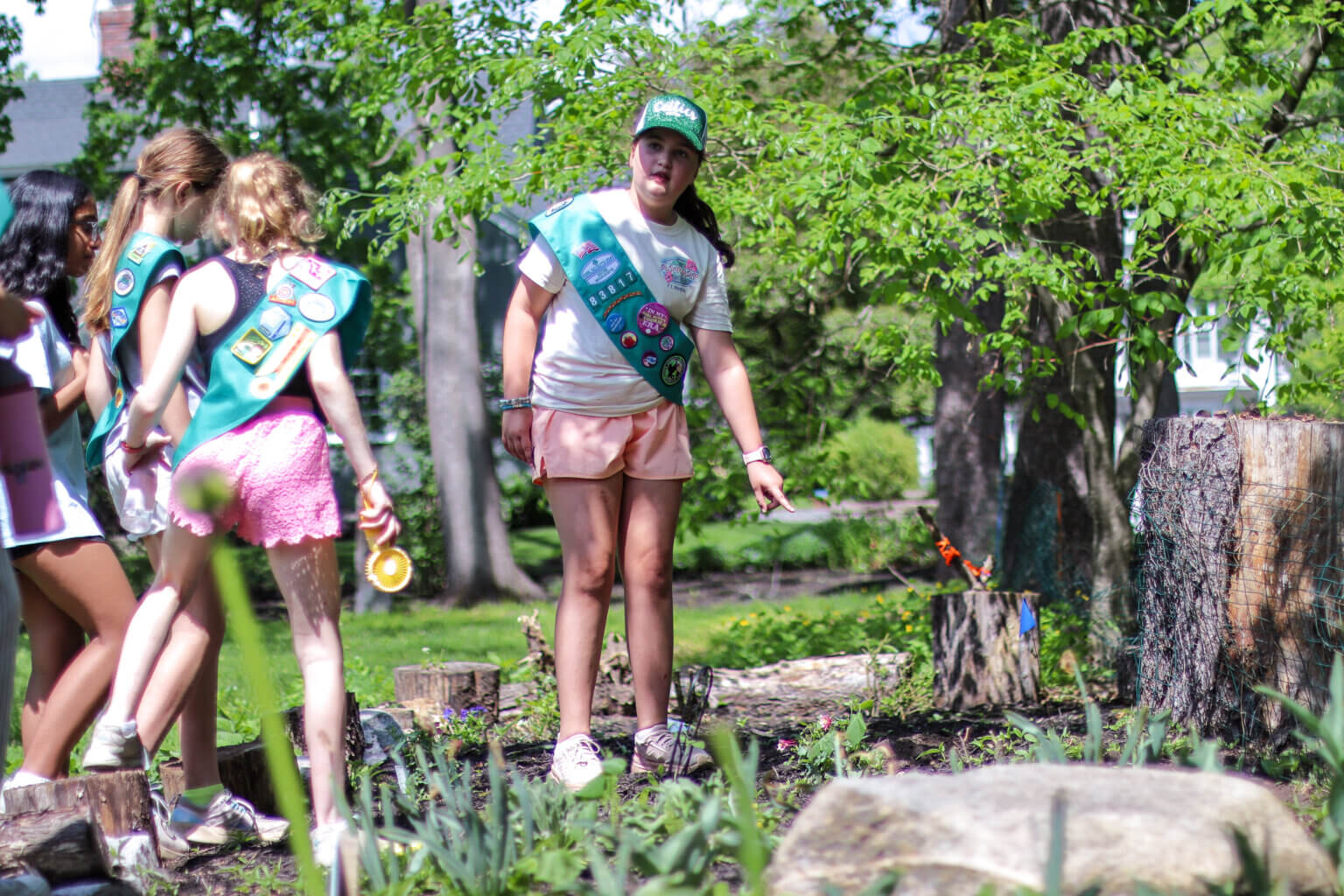
On a warm afternoon beside the Acton Scout House, Girl Scouts walked through a newly planted garden, pointing out tulips, ferns, and white roses growing in spaces once overrun by weeds.
The area, previously overgrown and largely unused, has been transformed into a pollinator garden designed to support bees and butterflies and serve as a welcoming space for the community.
The project also earned the troop its Bronze Award, which recognizes leadership and service.
Nina Beaulac, one of the Girl Scouts involved in the project, said the idea sprouted when they looked at the space.
“We thought of planting a garden back here because it used to be all weeds,” Nina said.
“Now it’s just a place for people to come; they can see the pretty flowers,” she said. “It’s just a happy place to enjoy, because before it was just leaves and overgrown, and we wanted it to make it nice.”
Nine Girl Scout juniors led the project: Nina Beaulac, Marina DiPetrillo, Thea Fawcett, Violette Maalouf, Maya Molloy, Cassidy Morabito, Tegan Newton, Norah Phillips, and Ava Scarchilli.

‘Harder than it looks’
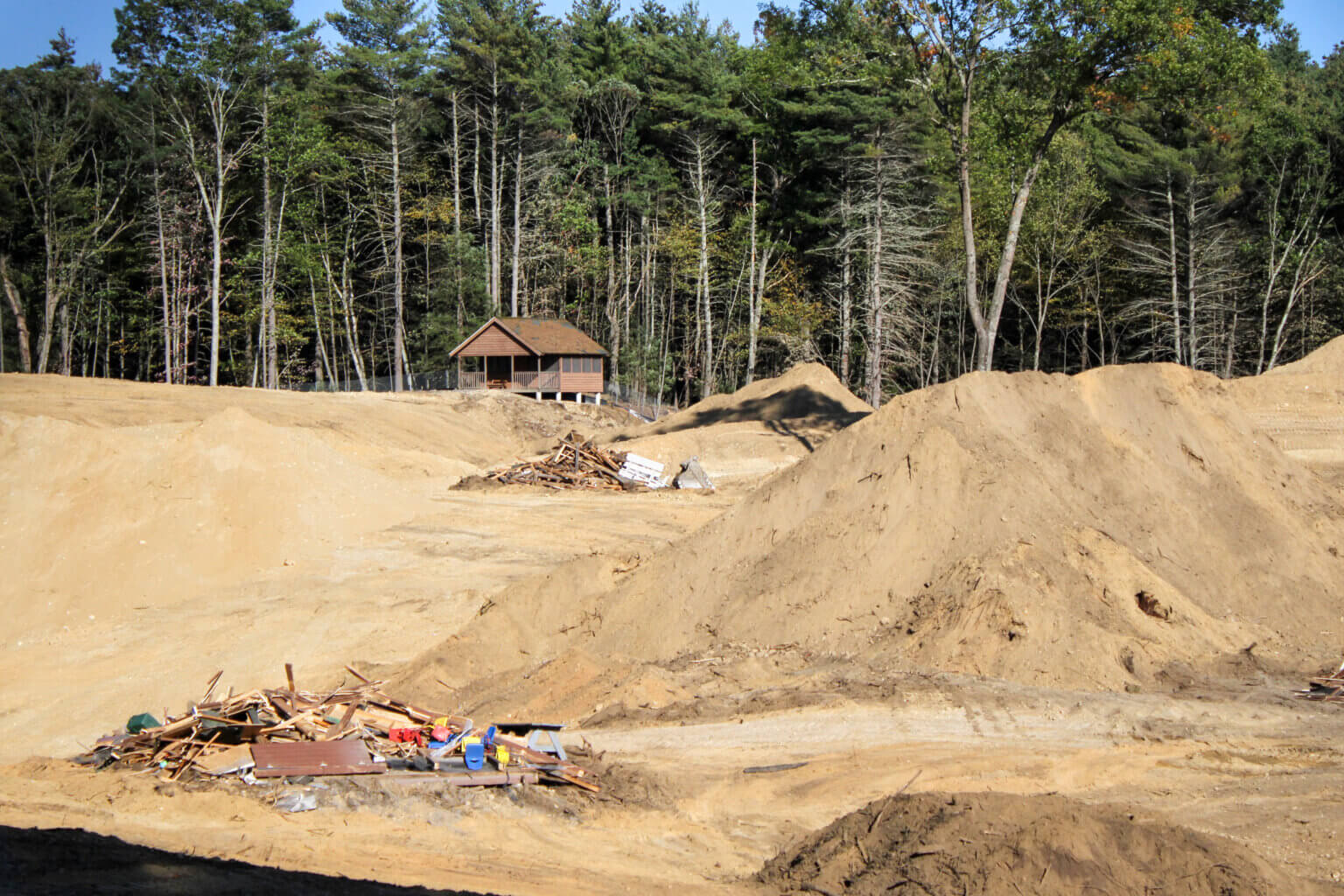
Before planting could begin, the scouts had to clear the site by pulling weeds, digging out roots, and removing debris from the soil. As work continued, they unearthed buried trash.
One hurdle was a giant root that had to be dug up. The root now sits at the edge of the garden as a decoration.
“It’s harder than it looks to make a garden,” Cassidy said.
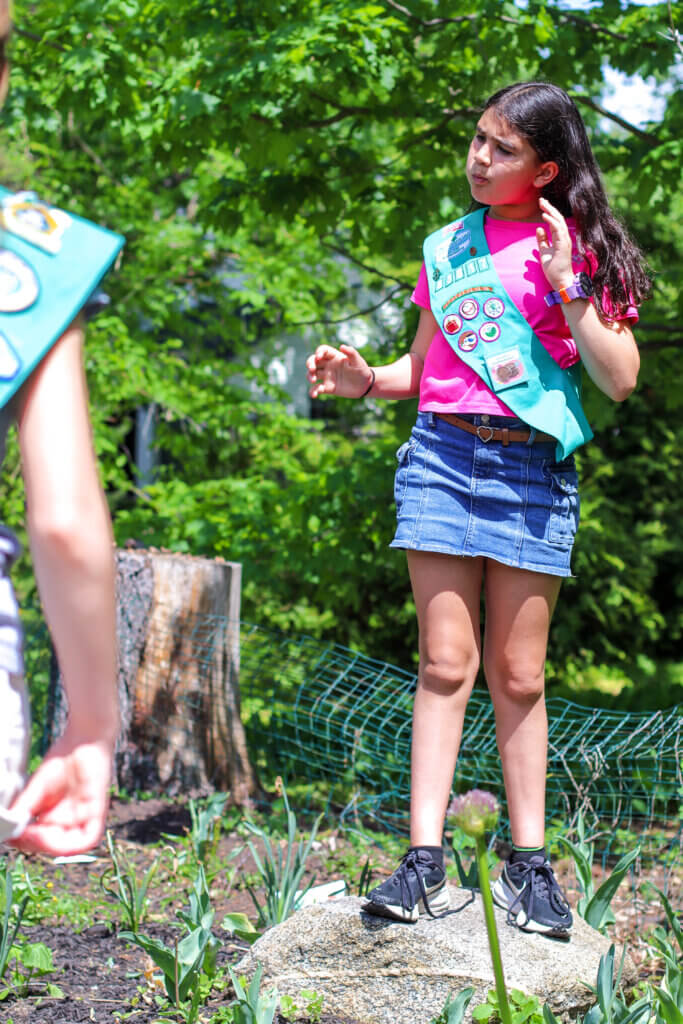
The troop then researched native perennials that would survive in Massachusetts, selecting flowers intended to support pollinators and seasonal growth. They met after school over several months to design the layout and combine individual ideas into a shared plan.
“We all made a map with how we wanted it to look,” Tegan said.
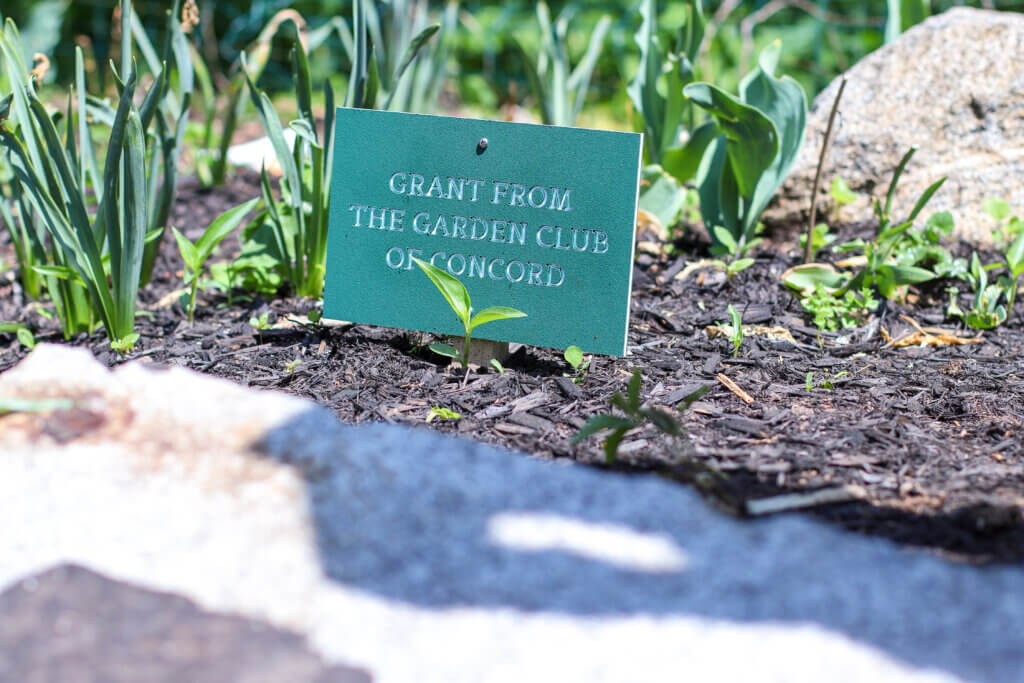
Funding came from a $500 grant from the Acton Garden Club, along with money the troop raised through Girl Scout cookie sales, which enabled them to begin buying bulbs before the grant arrived.
Stacia Stornetta-Morabito, one of the troop leaders, said the work stretched over months of planning, presenting, and hands-on effort in changing conditions — from hot days to cleanup after storms.
The finished garden is now open to the public, with bees already moving among the blooms and plants beginning to take hold.
“It’s for everybody to enjoy,” Cassidy said. “People should take care of it and not mistreat it.”