Public works chief stresses safety benefits ahead of $27.5M bond vote
The vote comes as some residents and public officials note flaws in the town’s current system for handling safety complaints.
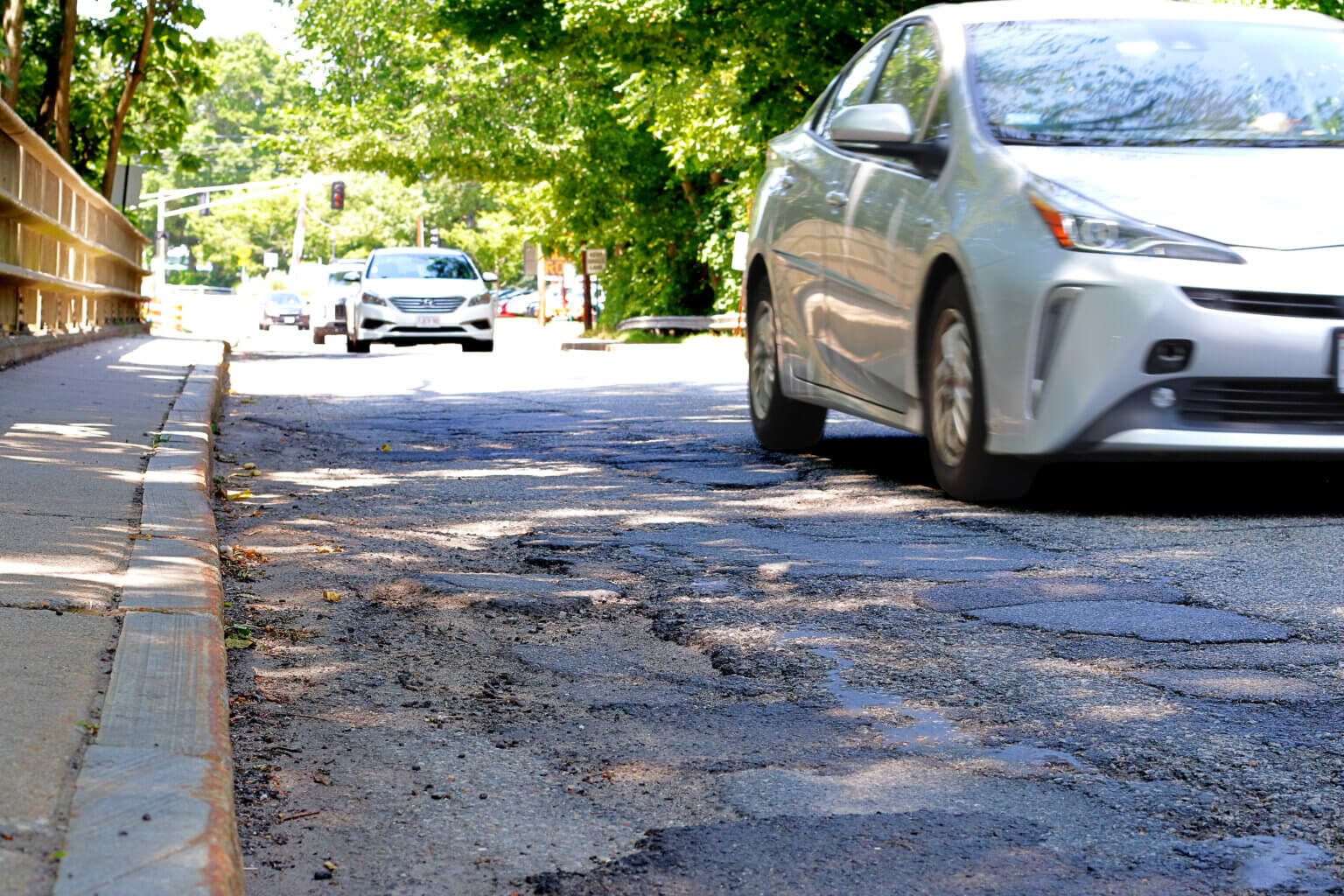
Alan Cathcart, Acton’s director of public works, hopes a proposed $27.5 million bond will help make the town’s streets safer — if voters approve it August 19.
Cathcart says Acton has spent years maintaining roads but not improving them. While occasional projects have moved forward with help from state grants, he says, the town has struggled to fund larger upgrades on its own.
“We found over the past 10 years, we’ve been significantly underfunding those investments,” Cathcart said in an interview with The Acton Bridge.
The vote comes as some residents and public officials are voicing concerns about how Acton identifies and responds to traffic safety issues.
Paul Boehm, the Select Board’s liaison to the Transportation Advisory Committee, noted flaws in the town’s current system for handling safety complaints.
“There are gaps, and there is public confusion on reporting of incidents and lack of transparency in tracking of ‘the life cycle’ of complaints regarding transportation-related unsafe conditions,” Boehm told The Bridge via email.
Residents’ ongoing efforts
The concerns about the town’s process are shared by residents like Gina Stark, who has been trying for months to get the town to address safety issues on Thoreau Street, which she says is a heavily used route for children walking and biking to school.
Her repeated attempts to get a resolution have left her feeling ignored.
“It’s been a whole school year, and now we’re going into another school year with no solution,” she said. “Why isn’t there a solution?”
If approved, the proposed $27.5 million debt exclusion, also known as Article 8, would significantly enhance road safety in Acton, Cathcart said. He explained that maintaining roads is directly linked to safety.
“When the road is in better condition, it’s for everybody’s benefit,” he said.
Cathcart emphasized that with the extra money from the bond, Public Works could plan for projects two or three years down the line. He said this could allow the town to look at projects like better crosswalks, traffic management measures, and the realignment of intersections.
Cathcart acknowledged that requires a better system by which residents can report unsafe conditions.
‘A black hole’
Stark says she knows how frustrating the current process can be. In October 2024, she reported Thoreau Street, where she lives, in an official Traffic Calming Policy complaint.
“The speed limit is too fast. Cars fly through there,” she told The Bridge. “I walk my 6-year-old down a section of the road to get to a crosswalk, and there’s no sidewalk.”
The town responded in November, suggesting she wait for the Comprehensive Transportation and Mobility Study, resuming this fall. So she tried again to get her complaint heard, but was still getting no meaningful response, she said.
“It was really hard to figure out who to talk to,” Stark said. “It just felt like my emails went into a black hole for months.”
She’s not sure that more money is the solution to the problem.
“I’ve lived in other places where I paid lower taxes and got more in return,” she said. “We’re a very affluent town. We have high property taxes. But when it comes to basic things like sidewalks and traffic calming near a school, it feels like we’re not getting the basics.”
At Town Meeting, Sven Weber of the Public Works Commission said that, according to the PWC’s projections, passing Article 8 would save the average Acton taxpayer $1,482 over 10 years because the upfront costs of repair are cheaper than continued maintenance.
After speaking with The Bridge, Stark received an email saying the police department had agreed to set up traffic cones during the school year, providing a temporary solution for children walking to school on Thoreau Street.
Boehm and Cathcart say conversations have started in TAC and the Traffic Management Group, spurred by the Article 8 vote. Both attended a meeting where “a lack of clarity and gaps in the current process” were acknowledged.
“There’s a desire for the Select Board, Public Works, TAC, and police to sort of define this,” Cathcart said. “If funding’s established, then we have a legitimate responsibility to talk about the process so people can understand how we’re moving ahead.”


