Reported campaign spending tops $60K as late filings trickle in
School Committee candidate Michael Williams accounted for more than a third of the spending.
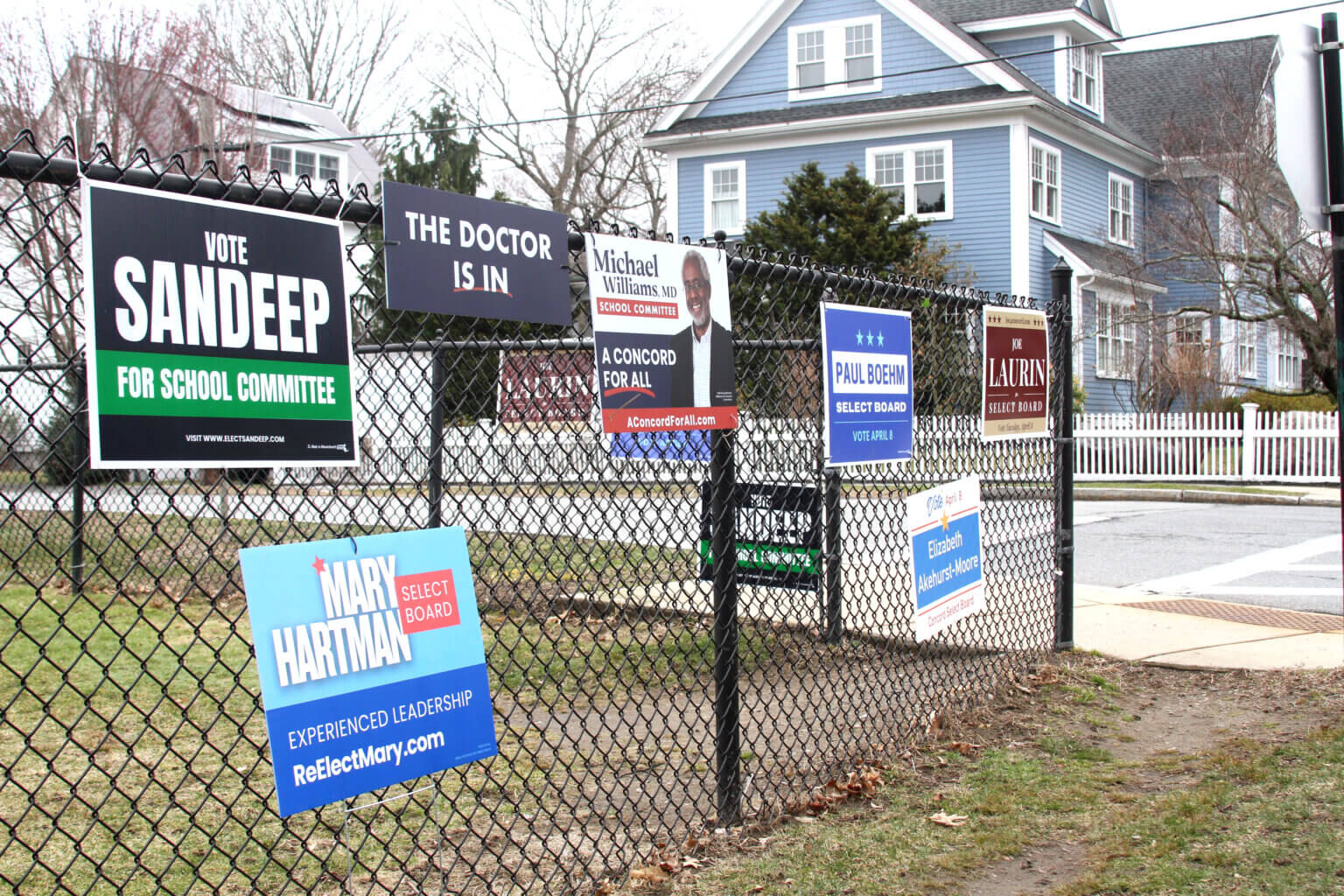
New filings are in, and reported spending across this year’s Select Board and School Committee campaigns is up to $62,255.21.
School Committee candidate Michael Williams accounted for more than a third of the spending and was one of four office-seekers who missed the deadline for post-election filings. After also missing the pre-election deadline, he said he has “room for improvement.”
“If and when I run for anything else, I really have to get better at this!” Williams said in an email to The Acton Bridge.
Williams and Sandeep Pisharody won two available School Committee seats, edging out incumbent Alexa Anderson.
Mary Hartman and Paul Boehm won Select Board seats over Elizabeth Akehurst-Moore and Joe Laurin.
Candidate spending
Pisharody, Boehm, and Akehurst-Moore met their post-election deadlines. The others were late. Anderson still hadn’t updated her financial disclosures as of Tuesday.
Of the new submissions:
- Hartman reported donations totaling $1,075 from March 21 to May 8. She spent $2,029.88 and finished with $99.12 in her account. Late spending covered printing, a volunteer appreciation event, and an election night program. She also paid $219.36 for advertising through Meta, the parent company of Facebook and Instagram. Hartman’s fundraising since the beginning of the campaign jumped to $7,595. She spent $7,495.61.
- Laurin showed no new financial activity in the campaign’s final days. He finished with $4,955 in donations, $5,783.77 in spending, and $9.49 in hand. (Laurin started the campaign with $838.26 left over from his unsuccessful 2024 Select Board bid.)
- Williams collected $4,975 from March 23 to April 30. He spent $11,344.71.
Williams launched ads on YouTube and streaming services in the campaign’s final week. He paid $5,000 to Apollo Messaging & Media, a D.C. political communications firm, and still owed $7,500 as of his latest disclosure. Williams had $971.75 on hand and said he would cover the difference out of his own pocket.
One late-campaign $1,950 payment went to a Providence design firm for website design, graphics, and “campaign support.” (Williams made an identical payment on March 15.)
Like Hartman, he had some social media advertising, spending $39.93 on targeted Instagram posts.
Williams raised $21,691 during his entire campaign, making him the race’s runaway top fundraiser. He loaned his campaign $1,000 and spent $21,719.25. He did not repay himself for his loan.
Breaking norms
Candidates and election observers agreed local political social media advertising reached new heights this spring. Williams’ YouTube and streaming ads were also a first.
While stumping on election day, his campaign manager, Joe Palumbo, said he felt video spending earned a “better bang for your buck” than traditional paper mailers.
Boehm, who sent two mailers, said he thought expensive videos had “as many positives as negatives.”
In an email shortly after the election, he said he thought Williams “was a worthy and deserving candidate and probably didn’t need” his streaming ads.
“I think the video is more about vanity than about getting votes,” he said.
Tactics aside, candidates split on whether the spike in spending portends trouble.
Pisharody said potential candidates might avoid running if they think the cost of campaigning is higher.
Other winning candidates said they weren’t concerned and cited reasons for the increase, including rising supply costs due to inflation.


