Residents push back on School Committee after chair elections
Some say the process discounted a board member’s voice and undermined the committees’ commitment to inclusion.
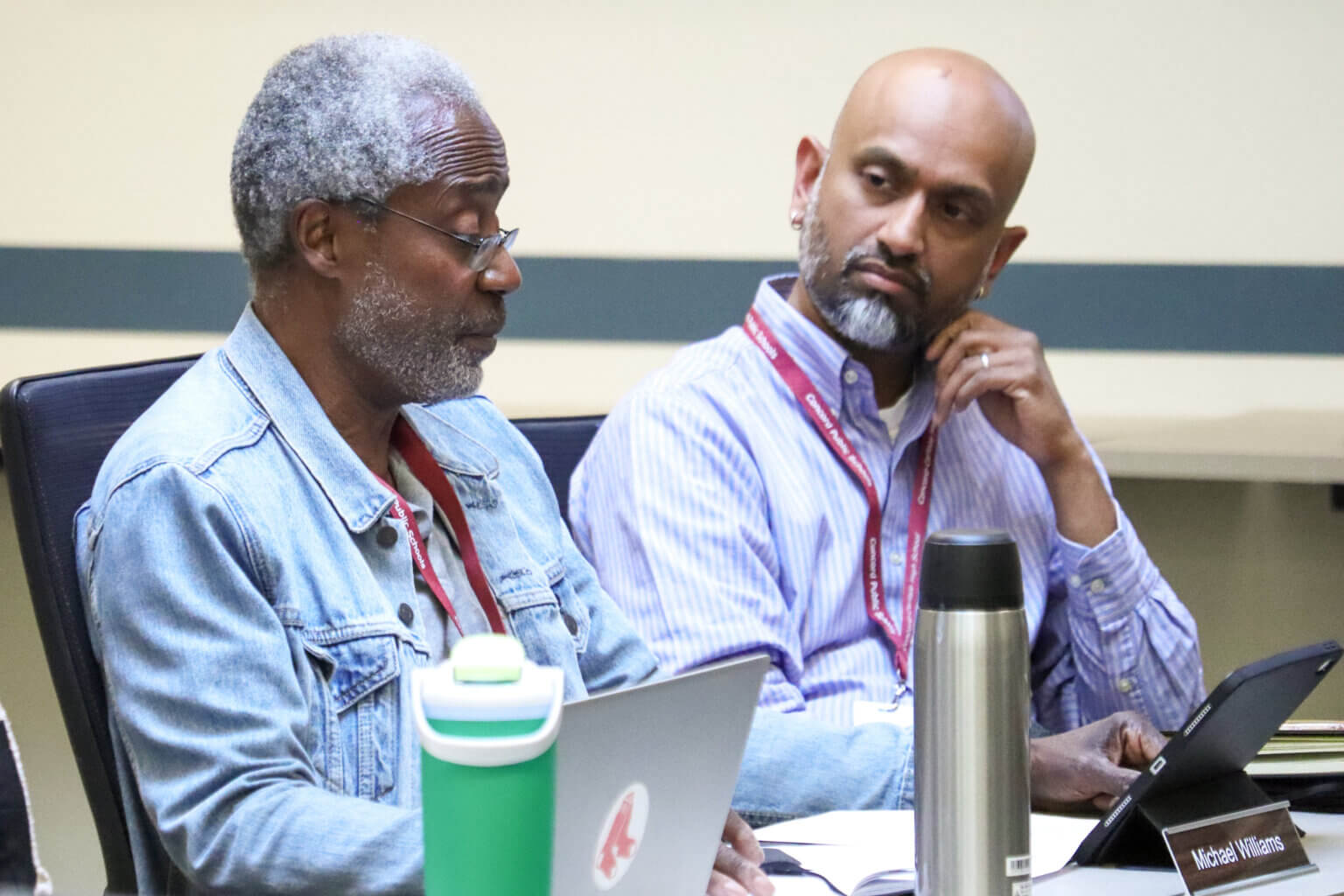
After contentious regional and K-8 School Committees leadership elections, some residents say the process discounted a board member’s voice and undermined the committees’ commitment to inclusion.
Newly named Acton School Committee Chair Sandeep Pisharody said the votes were part of a “public process” that allowed multiple nominations. But he approves of the passion.
“I understand people feel strongly,” Pisharody told The Acton Bridge. “I respect that.”
The criticism stems from the June 3 meeting, when member Michael Williams was nominated for chair and vice chair of both the Acton School Committee and the Acton-Carlisle Regional District School Committee but was unsuccessful in all four votes.
Instead, members Tracey Marano and Andrew Herchek, who had just served as committee chairs, were elected vice chairs. Brian Waterson of Carlisle became regional chair.
“Winning or losing isn’t really the end of everything,” Williams told The Acton Bridge in an interview last week.
He said he plans to “work just as I have all my first year to try and do the best I can for all the voices — both those heard and those unheard and unseen — so that all of the needs are addressed.”
Others are expressing concerns about the vote and what they say it may signify.
During public comment last week, Acton resident Deborah Wengrovitz said watching the June 3 meeting prompted her to act.
“I don’t ever come before the School Committee for anything,” she said, but described the proceedings as having been “very painful to watch.”
Wengrovitz said the committee’s actions appeared at odds with its stated values of inclusion and respect, adding that she felt “it was a foregone conclusion before the vote was even taken” and that the nomination process was “confusing and awkward.”
‘Not democracy’
Acton resident Ellen Quackenbush echoed those sentiments, telling committee members, “This is not democracy.”
Quackenbush questioned whether there was background influence in the nominations and argued that repeatedly denying Williams a leadership position ignored the will of voters because he was the top vote-getter in his election.
Williams led the School Committee race in 2025 with 2,769 votes. Pisharody won that year’s other open slot with 2,708 votes, while incumbent Alexa Anderson was unseated after receiving 2,456.
“I don’t know what behind-the-scenes coordination occurred,” Quackenbush said, “but to me, these events were pre-planned and were not at all spontaneous.”
Pisharody disputed suggestions that the process was orchestrated, saying he personally did not know who would be nominated.
“Our process is to make sure every vote is heard, and that’s what happened that day,” he said.
Resident Tooey Rogers also criticized the outcome, arguing that it prevents Williams, the School Committee’s only Black voting member, from serving in a leadership role. He said the move suppressed voices advocating for Black students.
“When this committee demonstrates cruelty and a mean-spirited suppression of those specific voices, that cruelty is given a name: racism,” Rogers said.
It is “no wonder that there is bullying, racism, even antisemitism in our schools when this committee is sending such a strong signal of approval for that behavior to the school superintendent,” he said.
Moving on?
Committee member Drew Magliozzi, who nominated Williams for the chair and vice chair positions, was not at the June 16 meeting but told The Bridge in an email, “I nominated Michael four times because I believe he has the skills, temperament, and time to lead this committee at the highest level. That hasn’t changed and isn’t going to.”
But Magliozzi added that now that the election is past, his focus has shifted to the policy work ahead.
Pisharody said he thinks that “literally everybody” on the committee could serve well in a leadership position in the future, but that this year’s outcome just “didn’t shake out” the way some people wanted — and that was OK.
“If all of us agreed on everything, we don’t need five or seven committee members; we just need one, right?” he said. “I think that’s what makes our committee really strong. We are united in being dedicated to our students, [and] part of that is advocating for differing aspects of it.”


