Schools examining tech use across multiple cohorts
Parents say their concerns go beyond cellphones to other ed tech and “edutainment tools.”

For parent Nick Bullard, concerns about technology in Acton schools grew with time.
“It’s been a kind of creeping realization that there’s a lot more ed tech being used or edutainment tools being used than I was ever made aware of in any structured way,” he told the School Committee on September 9.
Bullard is among those pressing the district for more information about technology use. He and other parents say their concerns go beyond cellphones, encompassing the use of ebooks, video games as rewards, and programs like XtraMath that teach lessons online.
Acton is preparing to launch two technology committees in October.
One group, the Instructional Technology Review Committee, will include district educators. The other, called the District Community Technology Committee, will include parents and students and provide feedback on the instructional group’s work.
Initial steps
Schools Superintendent Laurie Hunter said the first step will be to establish a common understanding of how technology is used across the district.
“I’m going to stress the data gathering, because I think right now there’s a baseline of information that needs to get created,” Hunter said.
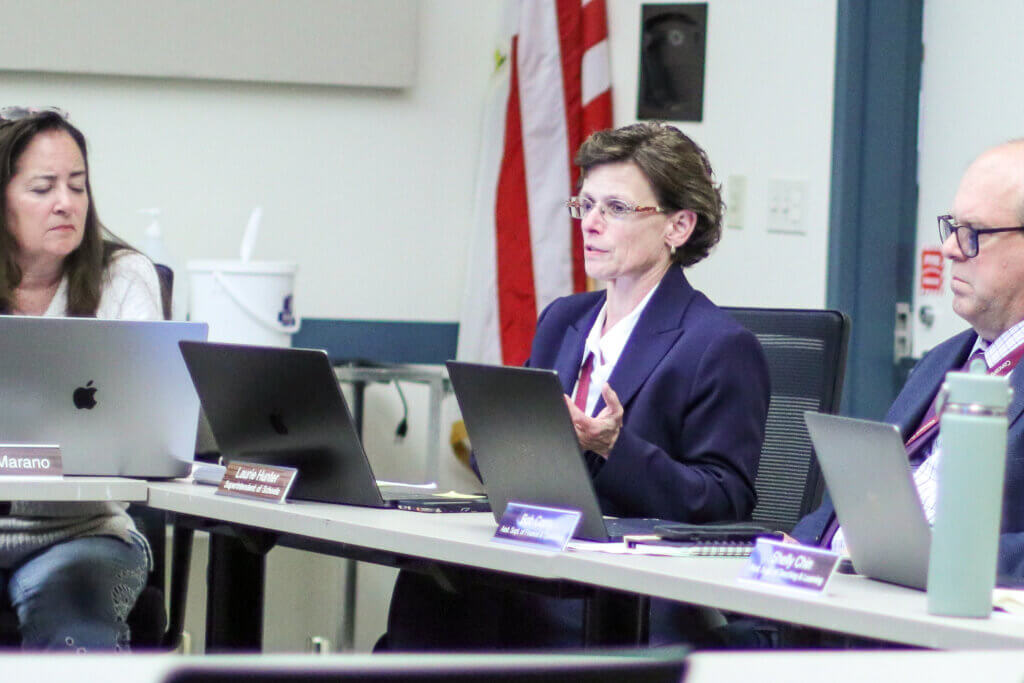
The committee idea grew out of concerns that multiple parents raised late last school year about technology after the School Committee paused conversations about a new high school cellphone policy.
Phone use in schools remains a hot topic at School Committee meetings. Concordian Gale Hire said at the September 9 meeting that she was “embarrassed that Acton’s not a leader on this issue.”
Getting feedback
More than 150 educators responded to a district survey in June about their technology use and concerns. Hunter said that data will help the district develop a broader vision.
“We’ve been thinking about this since the spring, and how do we best get feedback?” Hunter said.
Bullard asked the committee how the district determines which educational tools are adopted, what evidence shows they improve learning, and how parents can learn more about the technology their children use.
Hunter later said the district already vets technology and has worked to streamline its list of software. But she said officials still need a clearer picture of how technology is being used throughout the district.
“There’s the instructional side, there’s the executive organizational side, and then there’s the assessment side,” Hunter said. “You have to parse all those out.”
The district also plans to include students and potentially outside technology experts in the process.
The committees are expected to begin meeting in October, with membership for the community committee still being finalized.
Hunter said the goal isn’t to eliminate technology from classrooms. Students need computers for state assessments, while teachers use technology for lessons, assignments, and other purposes, she said.
School Committee member Michael Williams agreed.
“I don’t think that anything that I’ve heard coming from our community or discussed [suggests] that they want to get rid of the devices, but to intentionally figure out how to use [them],” he said.