Select Board admits missteps in lead-up to IHRA adoption
In a formal response to the complaint, the board promised a “renewed focus” on Open Meeting Law compliance.
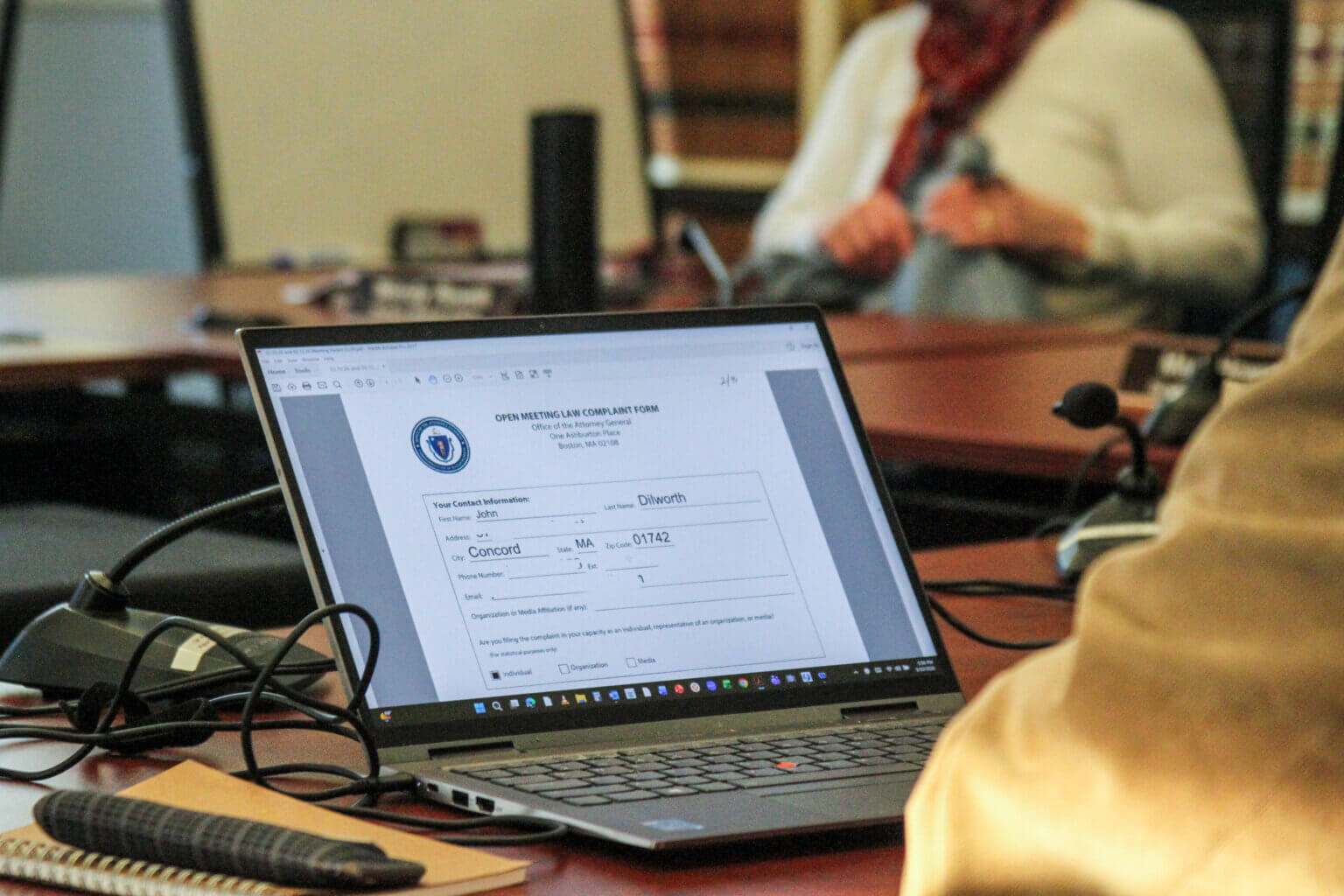
Select Board members admit they broke the state’s Open Meeting Law as they drafted a proclamation denouncing anti-Jewish hate.
It wasn’t intentional, Chair Mark Howell said March 10, but the panel should “be more careful.”
The board’s late-January proclamation included adopting the International Holocaust Remembrance Alliance’s working definition of antisemitism.
Members specified that this wasn’t a law and there was no way to penalize behavior that flouts the definition, but critics argue the IHRA framework could chill political criticism of Israel.
In his Open Meeting Law complaints, Concordian John Dilworth alleged that emails about the definition constituted illegal closed-door deliberation.
The Select Board followed “routine practice” by having member Cameron McKennitt work with Town Manager Kerry Lafleur to draft a document for the group’s review, Howell said as the board discussed the complaints.
Rather than discuss wording changes in an open session and formally adopt the proclamation at a later date, Howell said, the board “put ourselves under a time constraint” to vote on January 27, International Holocaust Remembrance Day.
“Rushing does sometimes lead to mistakes,” he said.
Dilworth obtained officials’ emails via a public records request.
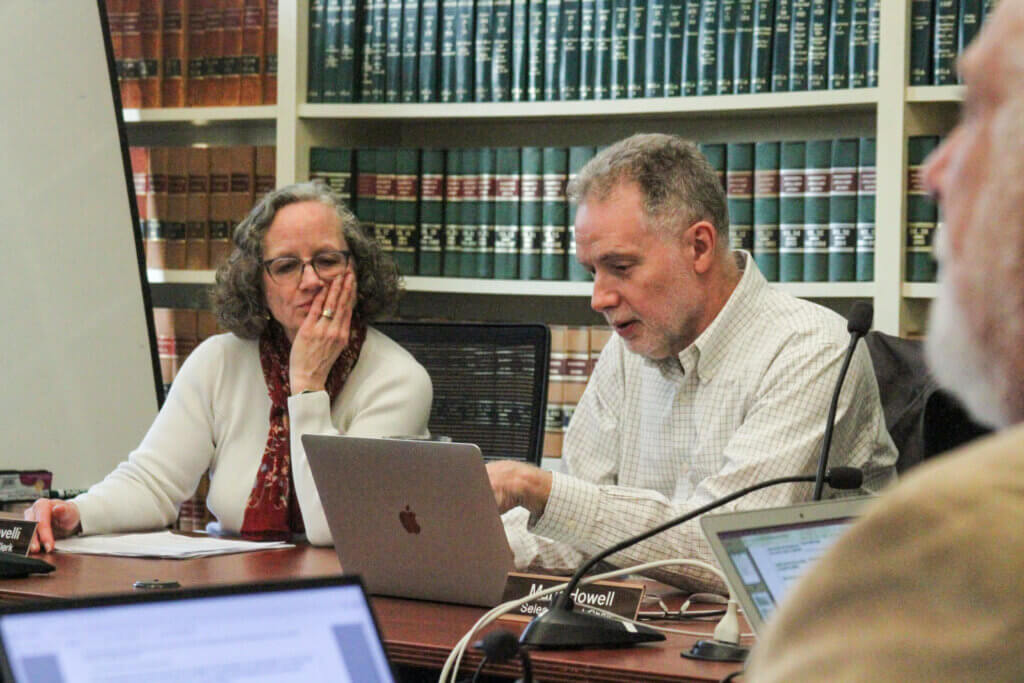
Acton’s town counsel said members acted appropriately when they relayed input from a resident and a Harvard University professor, Howell told Select Board colleagues, but they should have avoided giving their own opinions.
In a formal response to Dilworth, the board promised a “renewed focus” on Open Meeting Law compliance. Officials plan to publish their emails about IHRA with amended January 27 meeting minutes.
Dilworth could appeal to the state Attorney General’s office for further sanctions, but told The Acton Bridge immediately after the Select Board approved its letter that he hadn’t yet “looked at the response that deeply.”
The right decision’
The response promises an additional discussion on the IHRA adoption.
Much of the debate centers on IHRA’s examples of antisemitism. Boehm and Howell have told The Bridge they adopted the definition but not the examples, and Boehm has pushed to “clarify” what they voted on.
Dilworth previously said that he welcomed an apparent “willingness to open further discussion.”
Brian Farber, a Acton-Carlisle Against Antisemitism Steering Committee member, said IHRA came up during monthslong discourse about updating the town Diversity, Equity and Inclusion Commission’s charge.
“This wasn’t a quick process,” he said.
Farber, who is also on the DEI panel, thinks the Select Board “made the right decision” with its January IHRA vote. Disavowing the framework now, he told The Bridge, “could be extraordinarily harmful.”
He’s also against explicitly rejecting the examples, saying that would make it harder to identify and fight hate.
The Select Board plans to pick up the IHRA issue on April 13. As debate continues, Select Board member Mary Hartman said she’s found the process “frustrating.”
“We’re trying to do the right thing, and we’re getting all tied up in a lot of administration,” she said. “I hope people remember that.”