Select Board renews RTE as property tax bills climb
Supporters maintain that, while imperfect, the RTE helps people hit hardest by Acton’s tax levies.
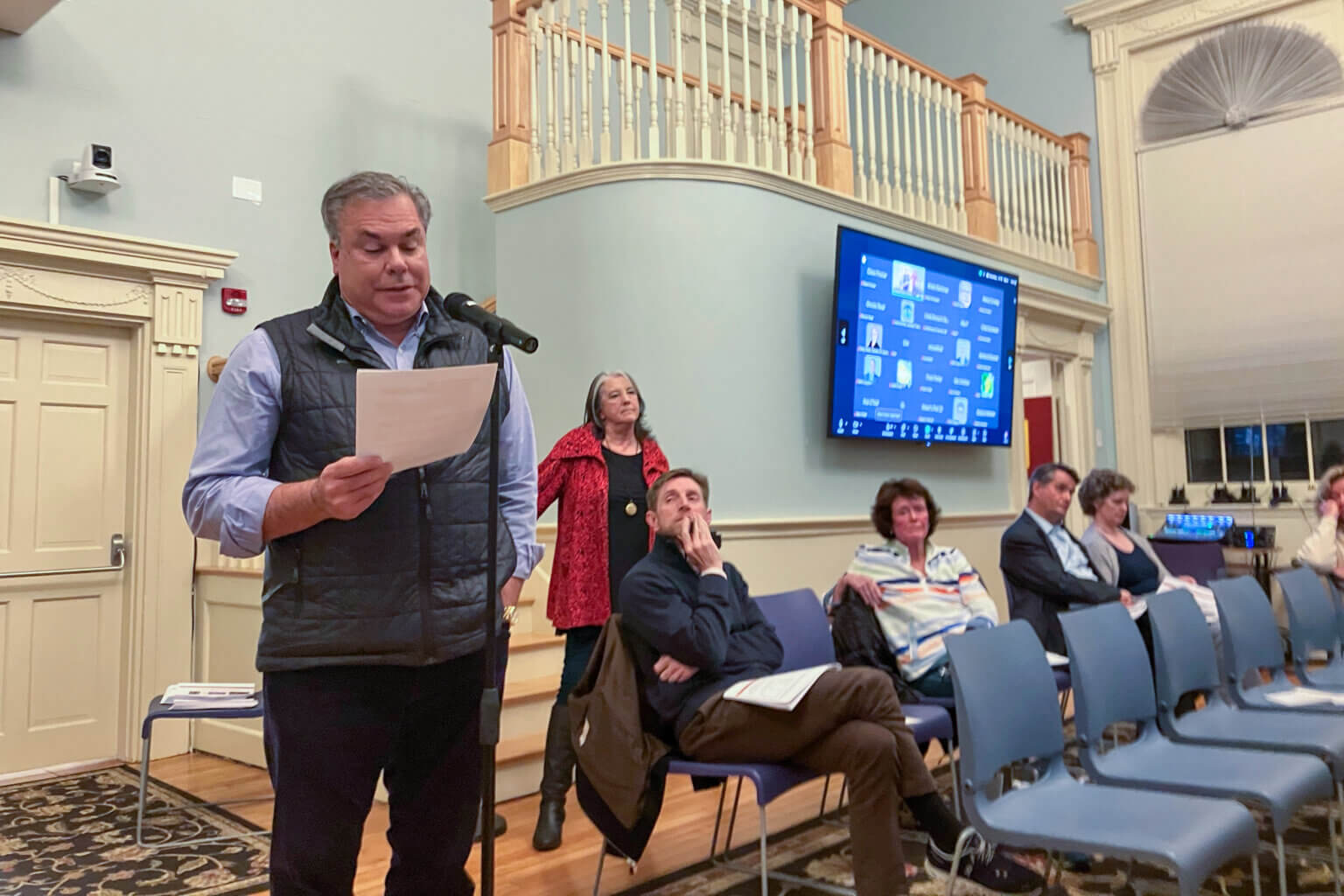
Acton will keep its controversial residential tax exemption for at least one more year following a Select Board vote last week.
Supporters maintain that, while imperfect, the RTE helps people hit hardest by Acton’s tax levies.
Board member Cameron McKennitt cast the lone “no” vote and was among those saying the RTE isn’t serving its purpose.
“There were good intentions,” he said, “but let’s admit that the RTE doesn’t work for Acton.”
The Select Board’s vote came during the town’s annual tax classification hearing. It means people who count their Acton home as their primary house can deduct $155,056 from their property value for tax purposes.
This year’s RTE delivers a net discount for Concordians with homes with an assessed value of less than $2.41 million.
Even with the exemption, owners of houses valued at more than the so-called “break-even point” will see a tax hike over what they would have paid if the town didn’t extend the RTE.
This year’s effective residential tax rate of $13.05 per $1,000 is a slight dip from last year’s rate of $13.24. Rising property valuations mean the tax bill for the average homeowner will still jump roughly $1,000, based on Monday’s presentation from Town Assessor Meredith Stone.
The RTE doesn’t affect taxes for commercial, industrial, and personal property. The rate for those categories will fall to $12.21 from $12.39, although valuations have also increased.
Majority support
The Select Board first enacted the RTE in 2023. The program shifts the tax burden from lower-valued homes onto more expensive residential properties.
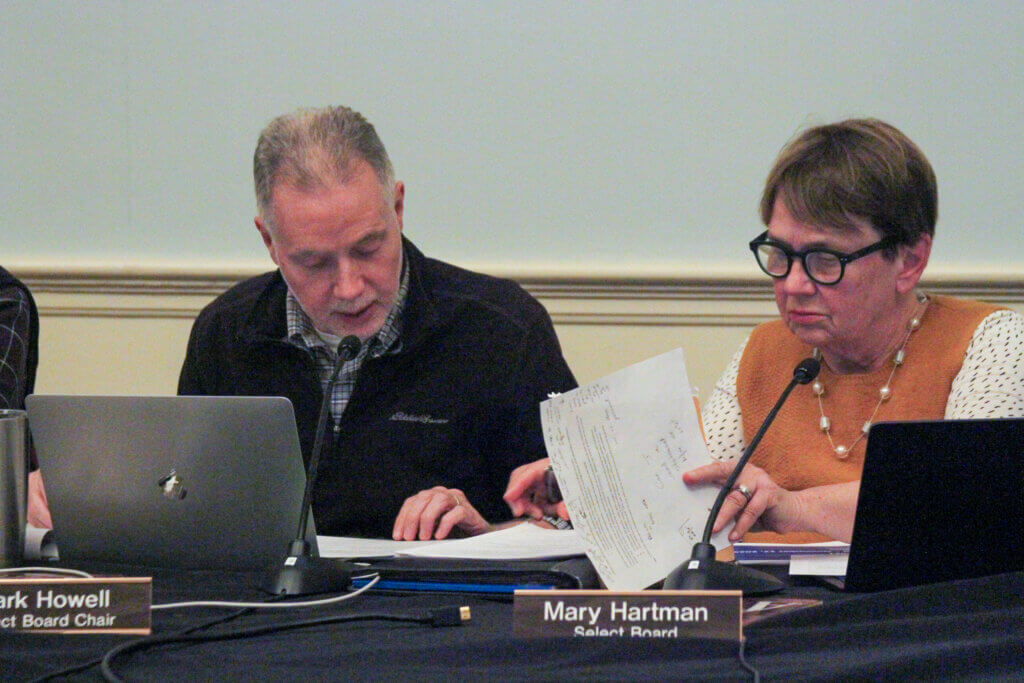
In supporting the exemption for another year, Select Board member Mary Hartman said she still sees it as a way to promote housing affordability.
The Select Board has convened a task force to study the exemption’s effectiveness. While the panel continues its work, board member Wendy Rovelli recalled that the board adopted the RTE to keep seniors in their homes and help with economic diversity.
“I absolutely still believe that we should continue,” she said.
Colleague Paul Boehm conceded that “this is not a perfect tool” but said Acton shouldn’t abandon the exemption.
The town has calculated its RTE deduction by taking the equivalent 10% of each year’s average home valuation. Chair Mark Howell said the Select Board chose this number, because it would help people in less expensive homes “without creating exceptionally high impacts at the highest levels.”
The board kept the 10% rate unchanged with this year’s vote.
‘Salt on the wound’
For all the RTE’s Select Board backers, opponents abounded at the hearing.
Realtor K.C. Winslow noted “huge increases” in assessed valuations that lead to higher tax bills. She said the RTE is “salt on the wound.”
McKennitt framed the RTE as an inefficient way of supporting people in need, with many Concordians in homes assessed above $2 million getting help. He said renters get hurt because landlords pass on costs from their ineligible properties.
Concordian Mark Martines zeroed in on municipal spending and suggested tax breaks on individual Select Board members’ homes have let them “ignore the fiscal crisis facing our town.”
“Our residents deserve better,” he said.
Estimated tax bills with RTE
Assessed value | Estimated bill
$500,000 | $4,502
$1 million | $11,027
$1.5 million | $17,552
$2 million | $24,077
$2.41 million* | $29,479
$3 million | $37,127
$3.5 million | $43,652
$4 million | $50,177
$4.5 million | $56,702
$5 million | $63,227
*Break-even point. Source: Town Assessor’s FY26 tax classification hearing presentation
How to apply
The Tax Relief Evaluation Task Force recently launched a townwide survey and is still collecting data through December 19 to inform its final report.
Officials are urging people to apply for the RTE, in the interim, regardless of their property value. Taxpayers are still eligible if they’re above the break-even point, and someone who doesn’t claim the RTE will pay roughly $2,000 in additional taxes.
“We think everyone should apply for it,” Boehm said after resident Helen Brady asked whether board members are getting the exemption. “We’re part of everyone.” People can apply for the RTE online by visiting concordma.gov.


