‘She belongs here’: Margaret Fuller statue unveiled in library garden
Its late-May installation at the library “marks the first outdoor sculpture of a woman in Acton.”
More than 150 years after her death in a shipwreck at age 41, writer, editor, journalist, and early women’s rights activist Margaret Fuller has returned to Acton, the location most associated with her work and personal life.
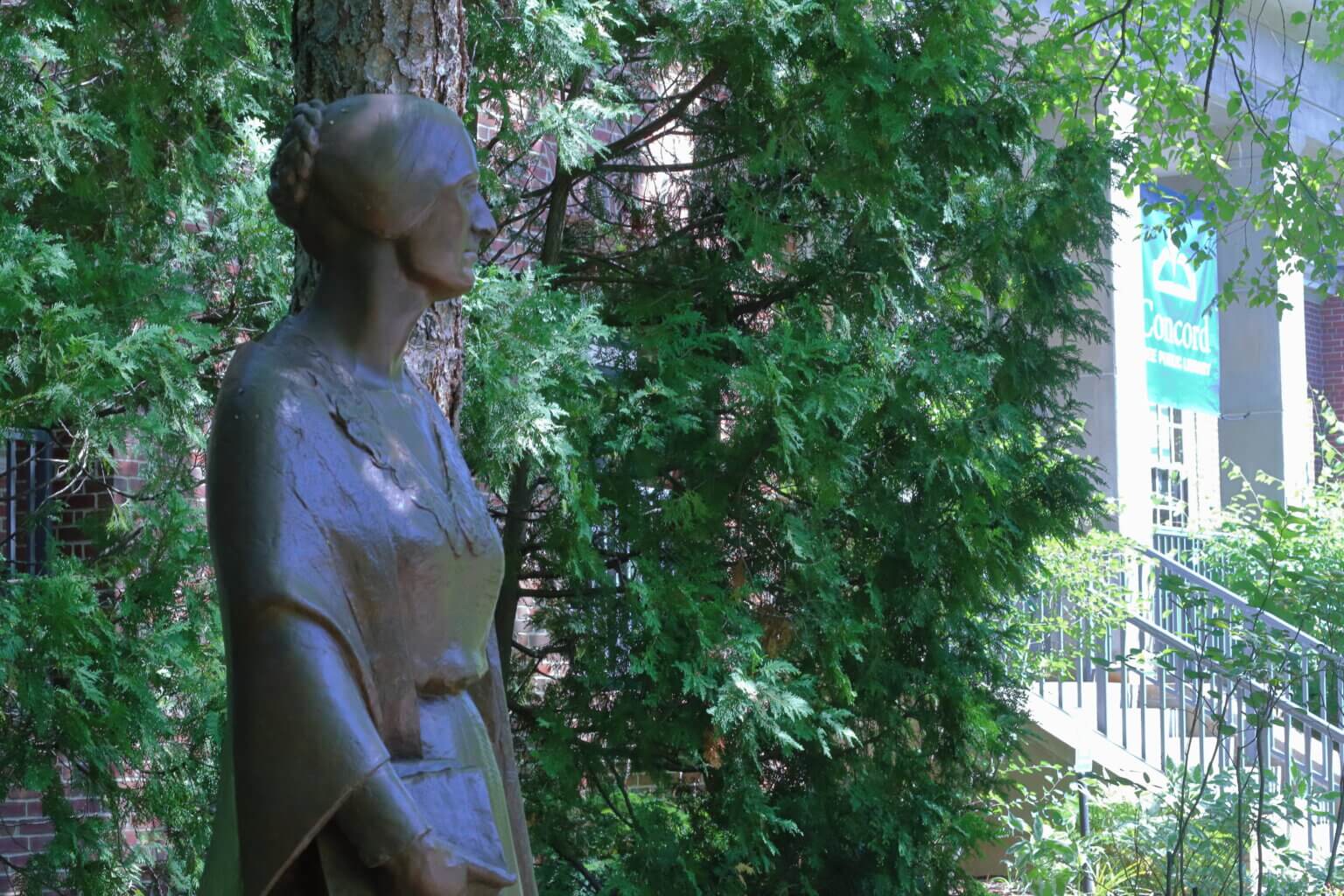
On what would have been her 216th birthday, Fuller was reunited with her circle of Transcendentalist friends, including Ralph Waldo Emerson, Henry David Thoreau, Nathaniel Hawthorne, and the Alcotts: Her life-size bronze likeness was unveiled in the Acton Free Public Library Garden Retreat.
Its late-May installation at the library “marks the first outdoor sculpture of a woman in Acton, a place where women as Transcendentalists and abolitionists, artists, and activists in various causes have gotten things done for centuries,” said Anke Voss, curator of Special Collections at the library.
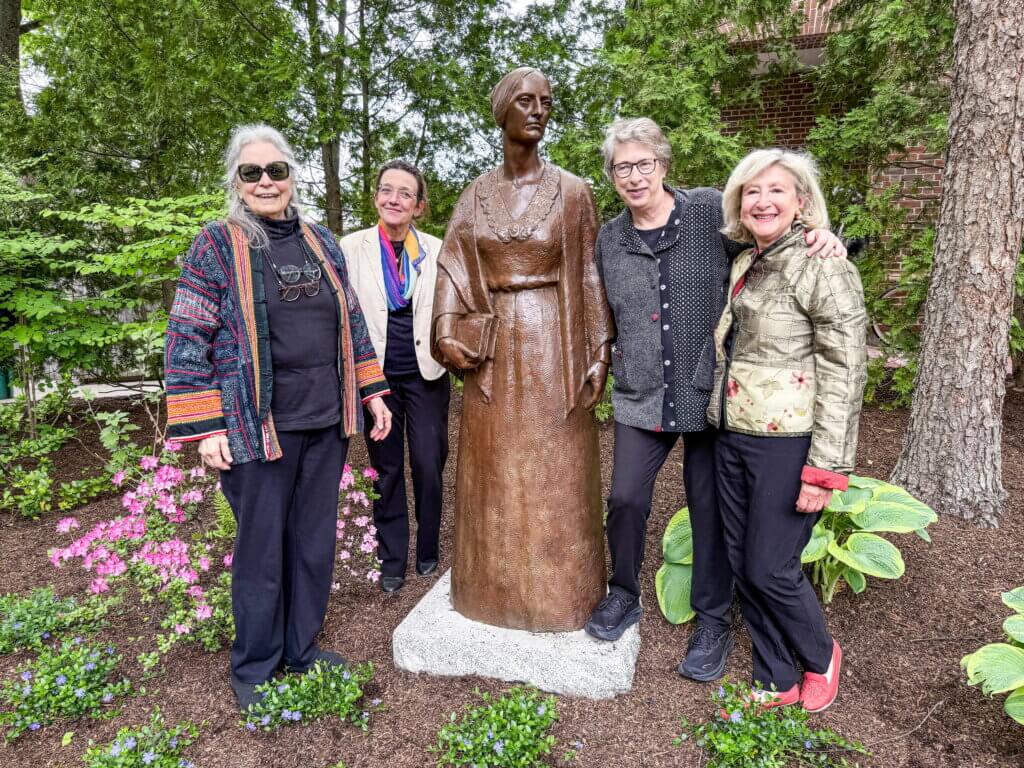
What’s more, Voss says, the piece was created by a female artist — Massachusetts sculptor Penelope Jencks, whose public works include a statue of Eleanor Roosevelt in New York City’s Riverside Park and one of Robert Frost at Amherst College.
Voss called the donation of the sculpture “a significant cultural gift, not just to the library but to the Acton community. We are deeply grateful.”
A ‘fabulous location’
Planner and preservationist Ronald Lee Fleming of Cambridge donated the Fuller bronze to the library. The Munroe Society of the library corporation funded the restoration of the piece at Skylight Studios in Woburn.
Fleming had attended a solo performance about the life of Fuller by author and reenactor Laurie James. He said he was impressed by Fuller’s accomplishments, including her being the first woman allowed to research and write in the Widener Library at Harvard. Fleming felt there should be a statue of her included in a public arts project in Cambridge, ideally in Harvard Square.
He commissioned the sculpture in 1985, and Jencks completed it quickly to meet the project’s deadline, using models, photographs, daguerreotypes, and drawings. In the end, the sculpture was not accepted, possibly because the project’s leaders wanted more modern statuary, Jencks says.
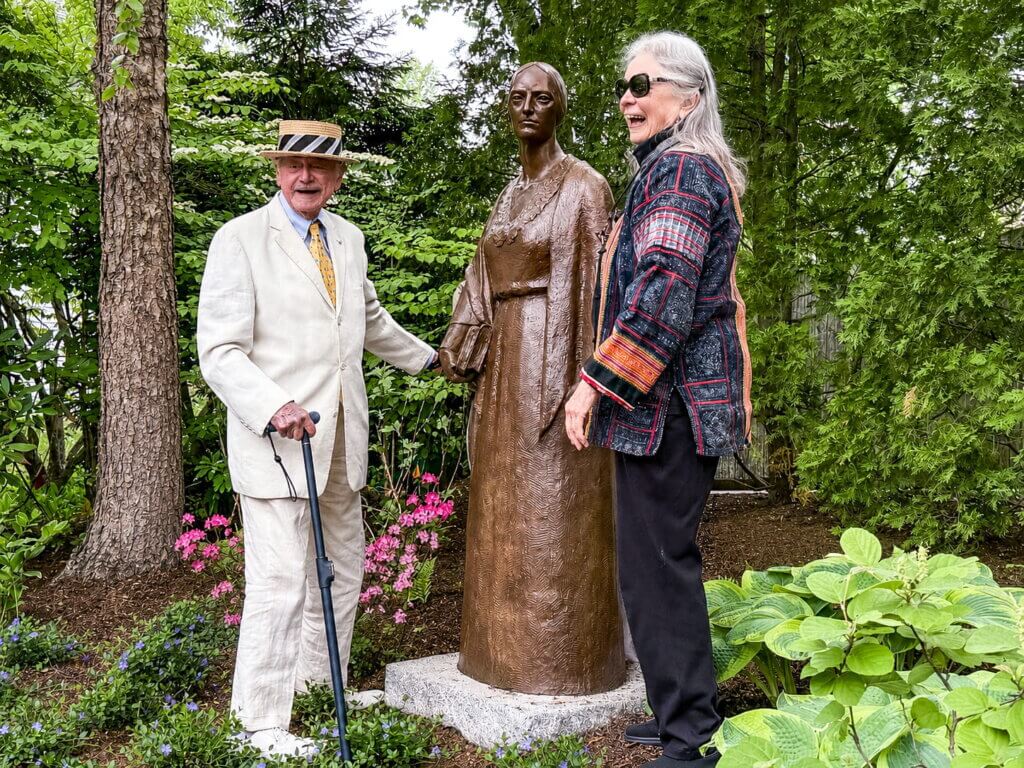
The statue remained in Fleming’s garden for decades. Over the years, he and Jencks expressed interest in having it placed in public view, a desire the sculptor had communicated to Megan Marshall, whose Fuller biography won the Pulitzer Prize in 2014. Marshall mentioned the statue to Voss, who felt the library would be a “fabulous” location for the piece. They approached Fleming, who agreed.
An ‘intellectual equal’
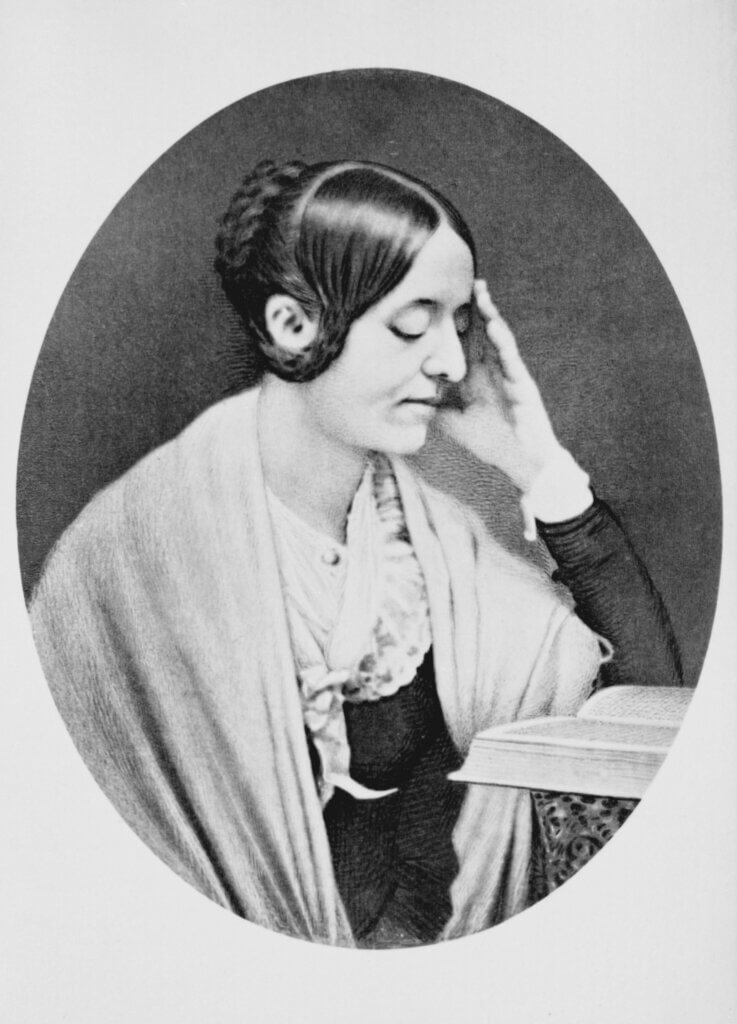
Born in Cambridge in 1810, Fuller was a prodigy who read fluently at 4 and translated Latin at 6, but she could not attend college or enter a profession due to her gender.
She moved frequently around New England and in Europe, often staying for weeks at a time with the Emersons, the Hawthornes, and with her sister Ellen, who was married to poet Ellery Channing. She was known to enjoy lying on a boulder behind the Old Manse, to “read or daydream,” Marshall says, and to listen to children splashing in the river, farmers making hay nearby, “and the fiddle of the village dancing master with its merry shriek and scrape.”
Fuller joined the group of spiritual reformers led by Emerson and known as Transcendentalists. They named her the first editor of their influential journal, The Dial. She later became the first female front-page columnist for Horace Greeley’s New-York Tribune and its first female foreign correspondent.
Though not the household name that Emerson and the others are, Fuller was “every bit their intellectual equal,” Marshall says. Her “Woman in the Nineteenth Century” (1845), considered to be a groundbreaking feminist text, became a bestseller.
A life cut short
Fuller’s final dispatch from Florence for the Tribune in 1850 represented a call for change. It read in part: “The next revolution, here and elsewhere, will be radical. … At this moment, all the worst men are in power, and the best betrayed and exiled. … The struggle that is now to begin will be fearful, but even from the first houses not doubtful.”
Six months later — before she was to preside over the first National Women’s Rights Convention in Worcester — Fuller, her husband Marchese Giovanni Angelo d’Ossoli, and their young son Nino drowned in a shipwreck off New York’s Fire Island.
A distressed Emerson sent Thoreau to the site of the wreck, and though he and others searched the shoreline, they found only some of Fuller’s personal items, letters, and a journal. Though the child’s body was found, those of his parents were not. A monument in Mount Auburn Cemetery in Cambridge memorializes them.
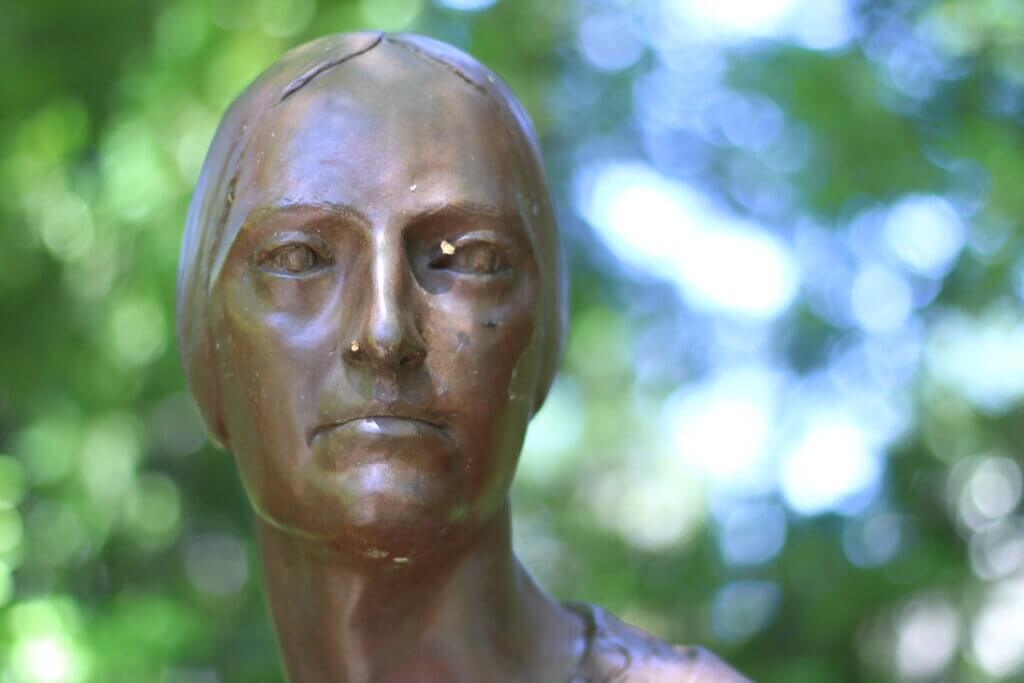
The library statue, set in a shaded garden with purple periwinkle planted at its feet and a small identifying plaque nearby, captures Fuller’s “dignity, intelligence, and personal courage,” Marshall says.
“She knew Acton well, and Concordians knew her well. She belongs here.”