Shells’ angels: Acton students help save the Blanding’s turtle
“At this point, if you’re at school in Acton, you know, ‘When I finally get to fourth grade, I’ll have turtles.’”
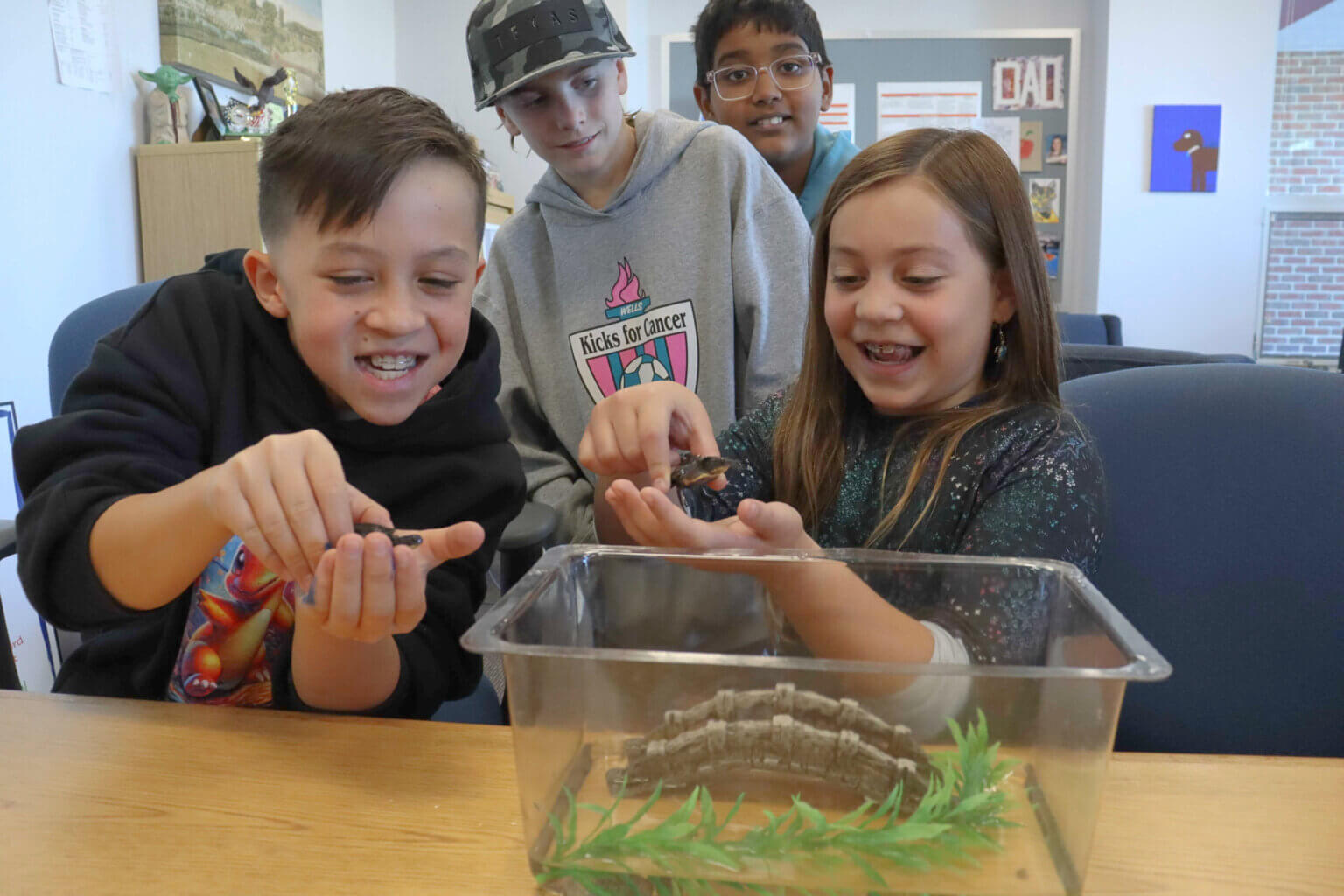
For 15 years, students in Acton have been helping rescue an animal species from endangerment.
It’s not pandas, tigers, or rhinos. It’s one that’s much closer to home: the Blanding’s turtle, a semiaquatic wetlands turtle native to New England.
The project has injected itself into the elementary experience of Acton, becoming a staple of fourth grade classes at Alcott, Willard, and Thoreau Elementary Schools.
Stepping into Thoreau, a visitor almost immediately sees pictures of turtles from years past, along with thank-you notes from Zoo New England, a program partner.
In Jonathan Smith’s fourth grade classroom, you’ll see turtle diagrams, pictures, notebooks filled with data, and Flash and Hulk, the turtles for his class this year.
“At this point, if you’re at school in Acton, you know, ‘When I finally get to fourth grade, I’ll have turtles,’” Smith told The Acton Bridge in his Willard Elementary classroom.
And this year’s clutch of student-assisted turtles is special. Their mom, Ivy, was in the very same program, called Hatchling and Turtle Conservation through Headstarting or HATCH. Ivy’s brother, Emerald, was in Smith’s classroom. It will be the first second-generation clutch raised in the schools.
For Smith and many others in the schools, the program doesn’t just save turtles. “It’s good to connect the real world way to use the stuff” kids learn in the classroom, and to impart moral lessons, too.
Associate Director of Conservation Engagement at Zoo New England Emilie Wilder said that in 2003, “there were around 55 Blanding’s turtles in Great Meadows, and now, there are well over 300 turtles at that site. So it’s really been an incredible story of success and recovery.”
As time goes on, “All these other females from HATCH are going to be gradually aging and laying their own eggs. We’re going to really see the population take off.”
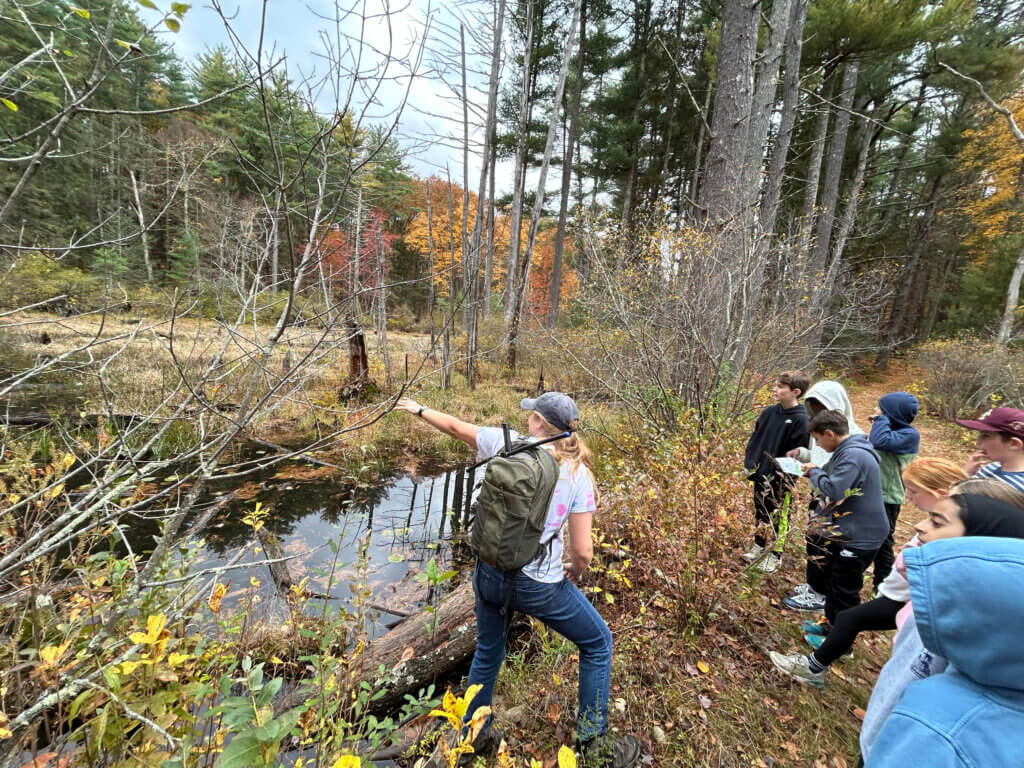
‘Project-based learning’
The program got its start after local conservation biologist Bryan Windmiller started raising Blanding’s turtles.
“He started originally working with the zoo and then quickly hit the capacity of how many turtles he can raise at his house and at the zoo,” Wilder said.
She said he got the idea in 2010 to ask his daughter’s Alcott Elementary teacher, the late Carol Birdsall, if her class could help.
Retired schoolteacher Nancy Dillon was among the first instructors to help. In her Thoreau classroom, Dillon embraced the turtles in her curriculum.
“I used them for project-based learning,” Dillon said. “It taught data collection, art, science. I found the kids learned better when you related the subject to something like the turtles. It brings science, art, and empathy together.”
The turtle-based curriculum endures. Smith said he teaches students everything from reading to decimals using the small, green animals.
“I like to dive a little more into the data and the math, because I think it’s just a great connection. We’ve got to do decimals anyway. We’ve got to do rounding anyway. We’ve got to do graphing anyway, so I might as well get a twofer on all of this stuff,” Smith said, “and relate it to something real.”
Budding scientists
Students in the program take on tremendous responsibility. Thoreau fifth graders who helped raise their classroom turtles last year, Jack Taunton-Rigby and Gautam Siva, and current fourth graders Mickey Misiaszek and Lucas Marling told The Bridge that they and their classmates monitor almost every aspect of the turtles.
They record the amount of food the turtles eat, the type of light they get, their weight, shell size, and total length. All the data collected goes to Zoo New England, where they track the progress of all the turtles across the 30-plus schools in the program.
The idea is to “headstart” the turtles and give them a better shot at survival in the wild. Blanding’s turtles normally take around 18 years to reach egg-laying age, but turtles that have been raised in HATCH, like Ivy, are typically healthy and big enough to start laying at age 14 to 15.
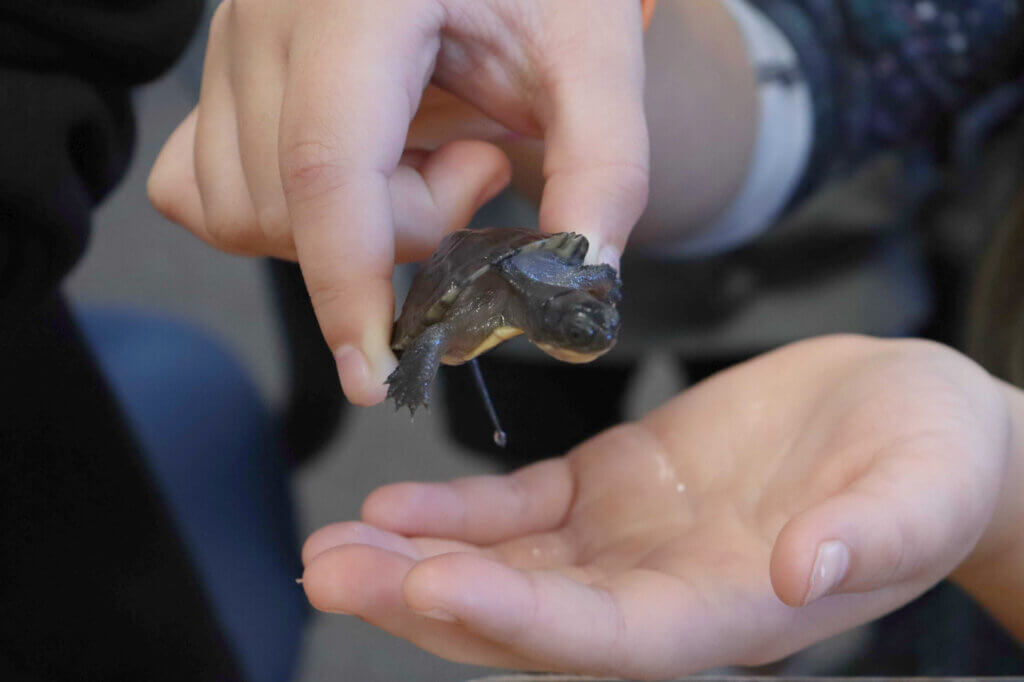
“A 1-year-old turtle leaves here about the size of a 5-year-old turtle,” said Amelia Burns, fourth grade teacher and self-described “turtle fan.”
Mickey and Lucas’s classroom turtles have yet to be named. Burns encourages the students to name their tiny charges only after they have observed them.
“On the shells, there are little notches that the scientists gave them that say 2552, 2553. So we call them 2 and 3,” Lucas said. The permanent notches enable Zoo New England to identify the turtles as they grow. “And one of them has a little dot — that’s 2.”
Wilder explained that these kids are doing scientific work, and it’s not something people should attempt at home.
“Just because you see a turtle doesn’t mean you should grab it and take it to your house and raise it in your house, right? We’re doing this very, very carefully,” she said.
Reflecting
Dillon is proud of her time with the program. One turtle she helped raise, Dribbles, is also documented as laying eggs.
“It makes me feel like I helped with something important,” she said.
Asked if she has any advice for any future students who may be raising turtles laid by either in her class, Mickey simply said, “Well, their mom is healthy, so they are going to be good turtles. Just take care of them.”
Jack said he was proud of his role as a turtle tender, and Gautam agreed, even if the parting was bittersweet.
“It was really sad after one year of taking care of them,” Gautam said, reflecting on when his class went to Great Meadows to release turtles SpongeBob and Patrick. “It was mixed feelings, because you’re releasing them into their environment, but it’s really sad to give them away.”


