Spotted salamanders, fairy shrimp, and frogs populate award-winning children’s book
Linda Booth Sweeney drew on scientific research and storytelling to “invite kids into the magical, hidden world right under our noses.”
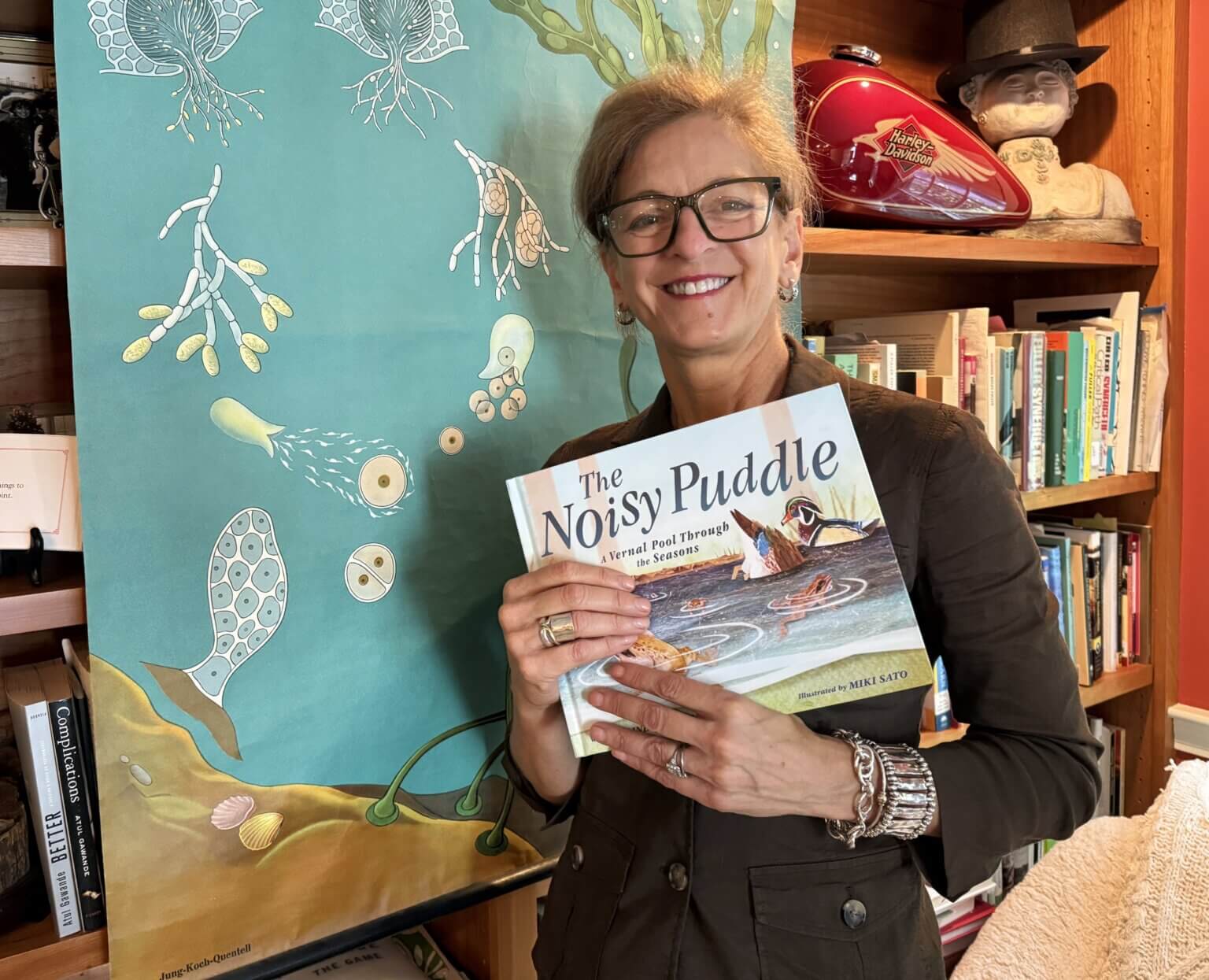
Several years ago, Linda Booth Sweeney went for a walk in the woods — Acton’s Hapgood Wright Town Forest, also known as Fairyland, to be exact.
The path she took that day led not only to the writing of a children’s story but also to a 2025 Massachusetts Book Award.
“The Noisy Puddle: A Vernal Pool Through the Seasons” (Owlkids Books, 2024) has been honored as an outstanding picture book of last year by the Massachusetts Center for the Book. It was also named a Kirkus Best Book in 2024 and has received other honors.
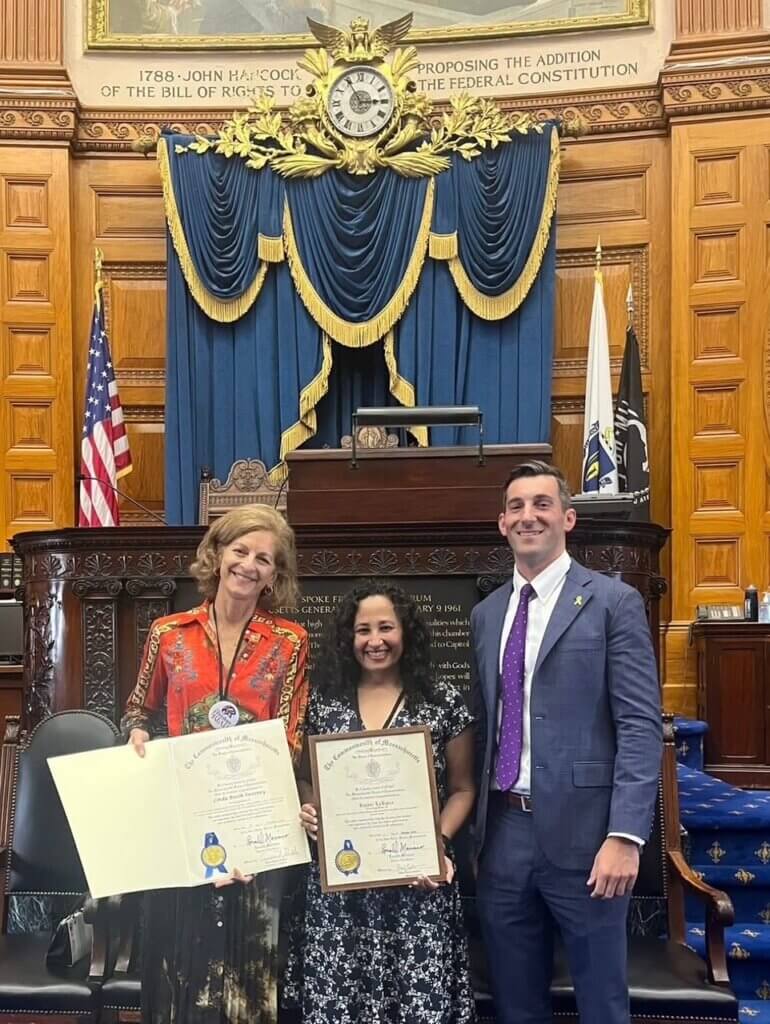
The awards ceremony at the State House on October 7 honored this year’s winners as well as authors recognized throughout the past 25 years, including Rajani LaRocca of Acton, who wrote “Sona and the Golden Beasts.”
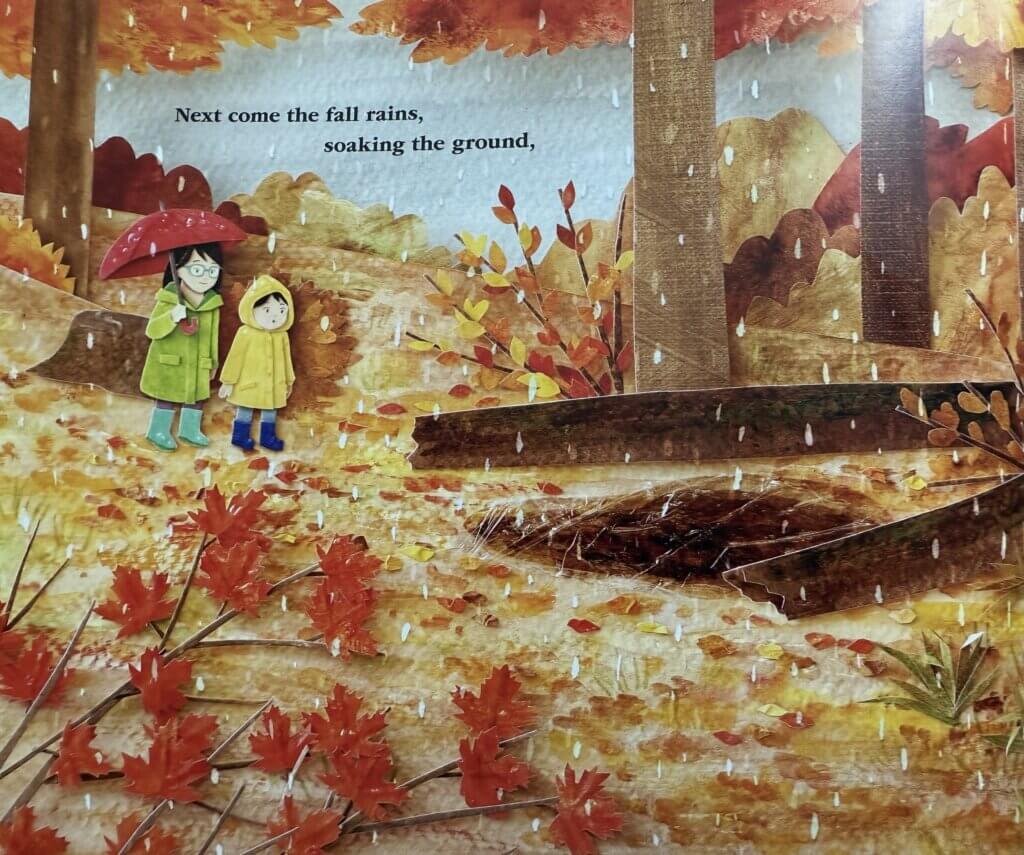
Sweeney drew on scientific research and storytelling to “invite kids into the magical, hidden world right under our noses,” she says. The story begins as a girl and a boy walk to a “noisy puddle, cold and clear” that is filled with life in the form of wood frogs, ducks, fairy shrimp, and spotted salamanders.
Critics have praised the book, with a reviewer from the School Library Journal deeming it “beautiful from tip to tail and back again.”
Before she started the project, Sweeney says she was “like most people — I didn’t even know vernal pools existed. These pop-up wetlands may be small and short-lived, but they play a big role: filtering water, preventing floods, and giving animals like wood frogs and salamanders a place to breed.”
The ephemeral nature of vernal pools makes studying — and even spotting the pools — challenging, Sweeney notes. In the summer, there may be no sign of them.
One lone goose
The day of her woodland walk, “it was around early spring,” Sweeney says, “and kind of mucky.” She had gone to the woods for solitude and quiet, but the first thing she noticed was the cacophony of creatures’ voices — frogs, crows, and geese. “It was deafening,” she says.
Spying a small pond that she would later learn was a vernal pool, she walked closer. Suddenly, the woods fell quiet, as if an orchestra conductor had silenced the musicians.
The experience “fascinated me,” Sweeney says, and like writers everywhere who encounter a muse in an unlikely place, she jotted down on scrap paper the phrases that were running through her head when she got back to her car.
The words “What happened to the forest’s hush? / Why is everything in a rush?” and “One lone goose / one lone crow / yellow daffodils all in a row” marinated for years as she conducted research, did the writing, worked with an illustrator, and got the book published.
Edie Sisson, a Acton resident who was an instructor at Drumlin Farm Audubon Center and had created a unit on vernal pools, was so helpful to Sweeney that the author dedicated “The Noisy Puddle” to her.
Miki Sato, a Japanese Canadian mixed-media illustrator, used a variety of papers, fabrics, and notions to create layered art to capture the delight of the children who explore a vernal pool in the book.
Making learning fun
Sweeney, who has written several other books, fittingly lives in the Authors Ridge area of Acton with John, her husband of 30 years. They have three children in their 20s. A book lover since childhood, she even fashioned her wedding invitations to look like books and gave each guest a specially selected book tied in a bow.
She earned a bachelor’s degree in literature at College of the Holy Cross, and a master’s degree in human development and psychology, plus a doctorate in learning and teaching, both from the Harvard School of Education.
Sweeney conducted research into systems dynamics at the Massachusetts Institute of Technology and is dedicated to helping people of all ages integrate an understanding of complex living systems into learning, decision-making, and design.
The subject is easy to understand if you think of your body as a system, she notes. “If you remove the heart, for example, the body can’t work on its own.” Her book is a “kind of under-the-radar” effort to write about systems in a fun way, she adds. “I want kids to be curious about connections, because otherwise, you are only focused on parts. It’s not just a frog or a turtle, but rather a whole ecosystem.”
Sweeney’s forthcoming book is titled “Do Bees Pee?” In describing it, she offers her visitor playful words of warning: “You have to be seated to hear this.” And then adds, “It’s about the clever things species do with their own feces.”
November 23: This story has been updated to reflect the correct spelling of the title of Sweeney’s forthcoming book.