State panel visits Kerem Shalom for antisemitism hearing
“We have pockets of love and pockets of hate. We have pockets of understanding and pockets of willful ignorance.”
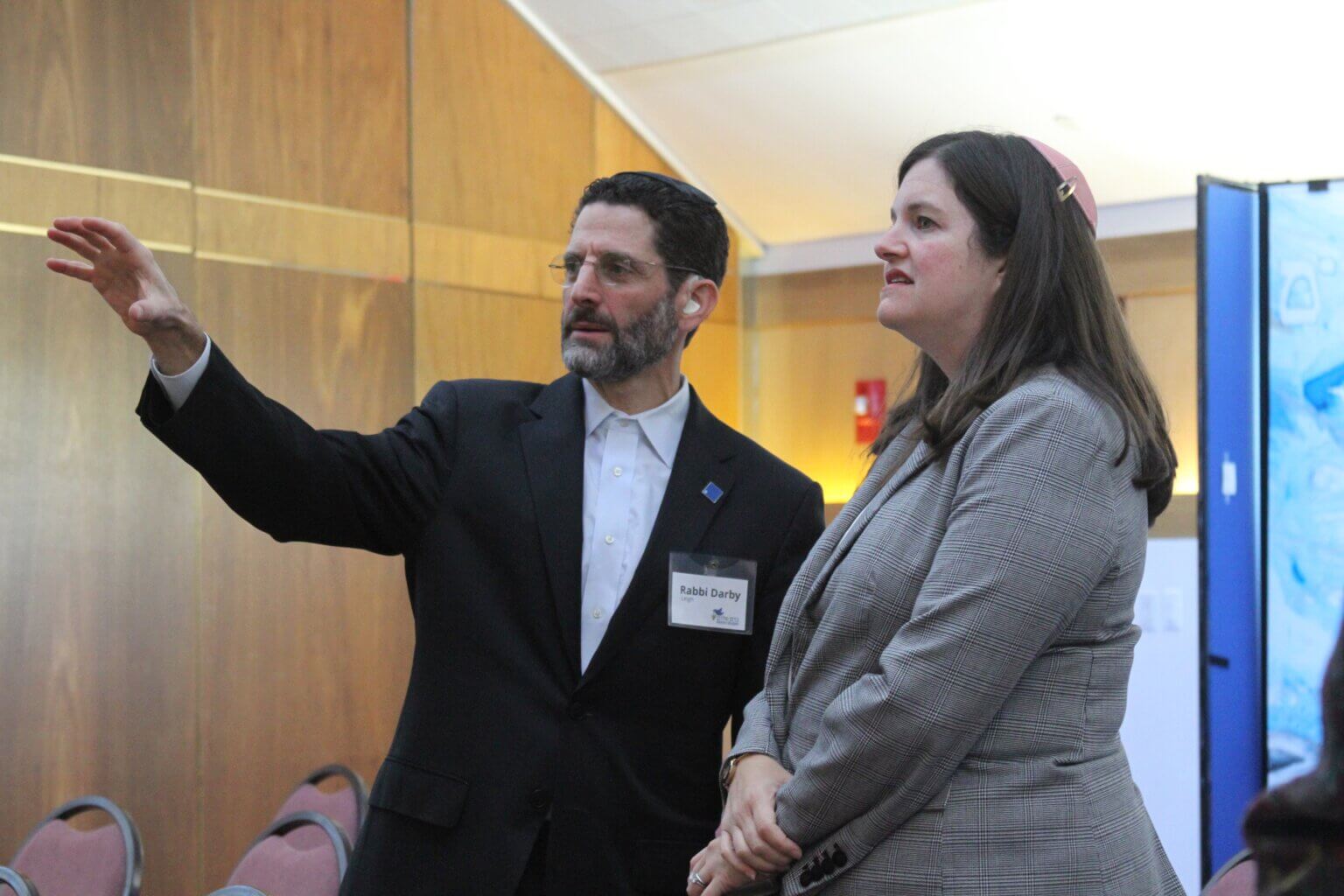
Acton’s Jodi Sperber says her work goes beyond simply fighting hate.
“We want our children to see that Jewish life isn’t only about survival,” Sperber told the state Special Commission on Combatting Antisemitism during a hearing at Kerem Shalom synagogue on October 16.
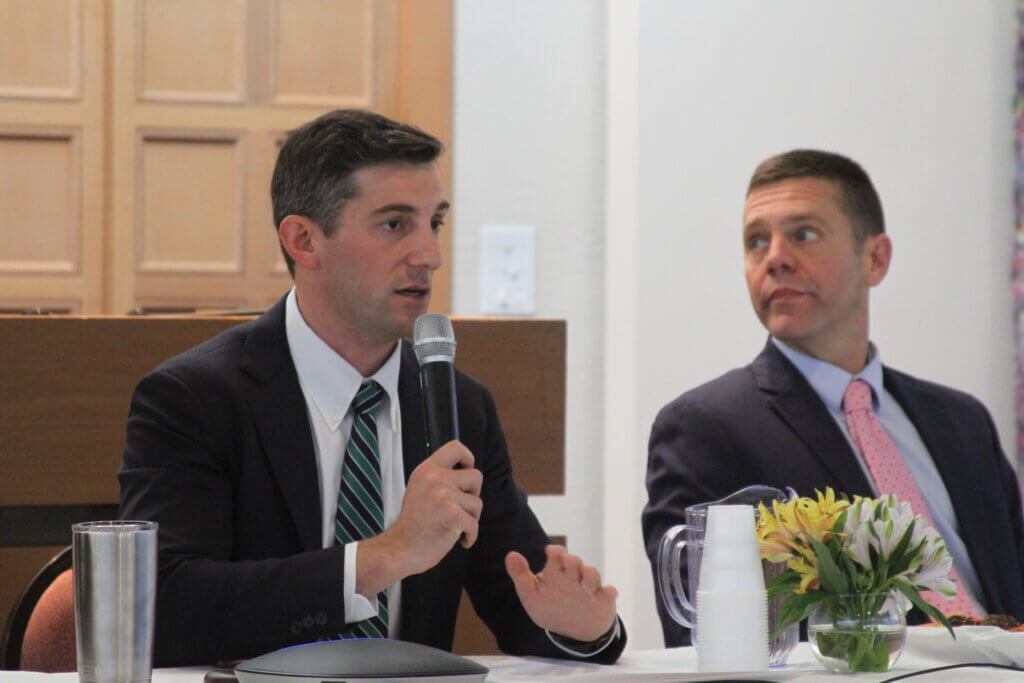
Sperber is part of the group Acton-Carlisle Against Antisemitism. The special commission is tasked with rooting out antisemitism in Massachusetts and has been holding hearings since last fall. The commission, which state Rep. Simon Cataldo (D-Acton) co-chairs, released initial findings this past summer.
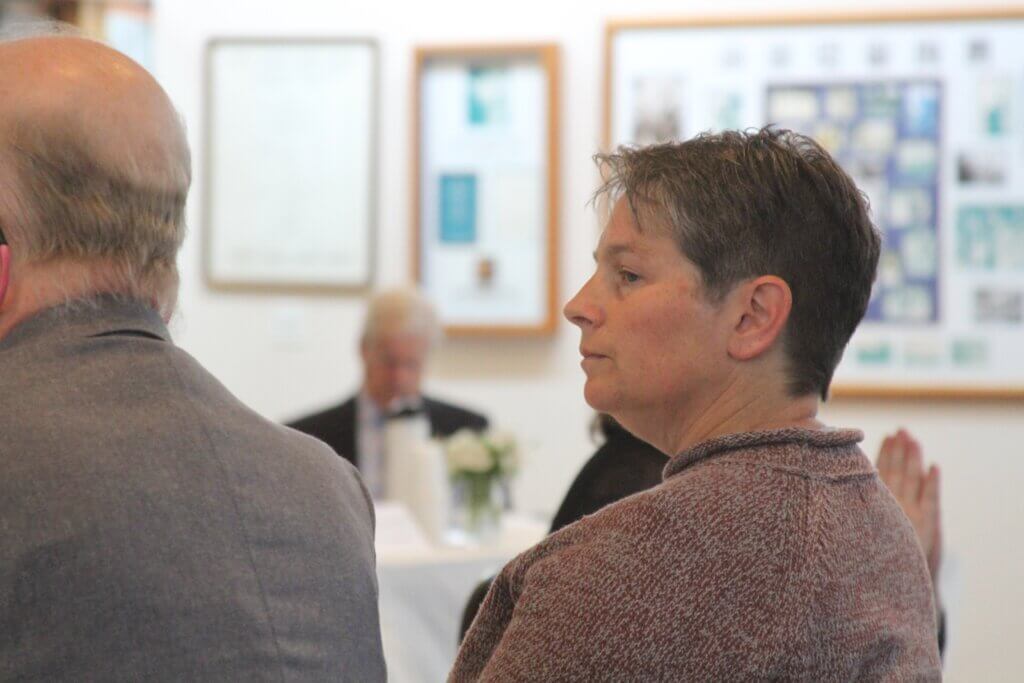
Beyond Sperber, Adeline Weinstock and Alon Heim of the new Acton-Carlisle High School Jewish Student Union recalled lackluster school responses to antisemitism in their school and spoke of their group’s value as a way to connect Jewish classmates.
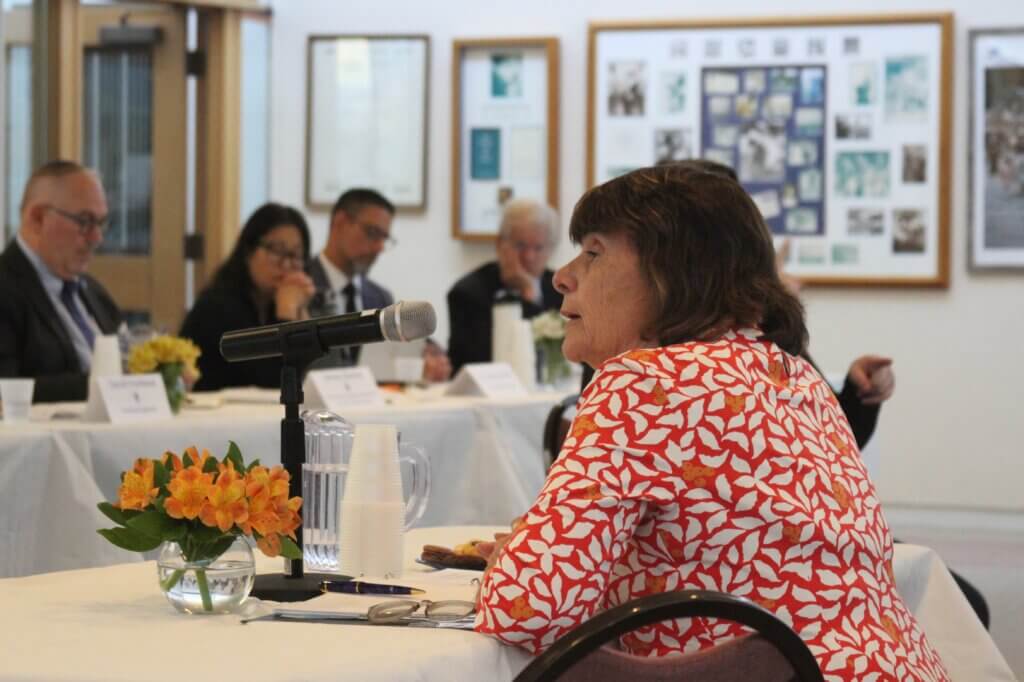
This rare offsite hearing featured testimony from speakers including District Attorney Marian Ryan, Kerem Shalom’s Rabbi Darby Leigh and other local clergy, health care workers, and educators.
The lengthy session was the commission’s 13th meeting. Alongside weighty topics, there was a bit of levity.
“Mazel tov on your bar mitzvah meeting,” Leigh told the panel, referencing the traditional Jewish ceremony for 13-year-olds.
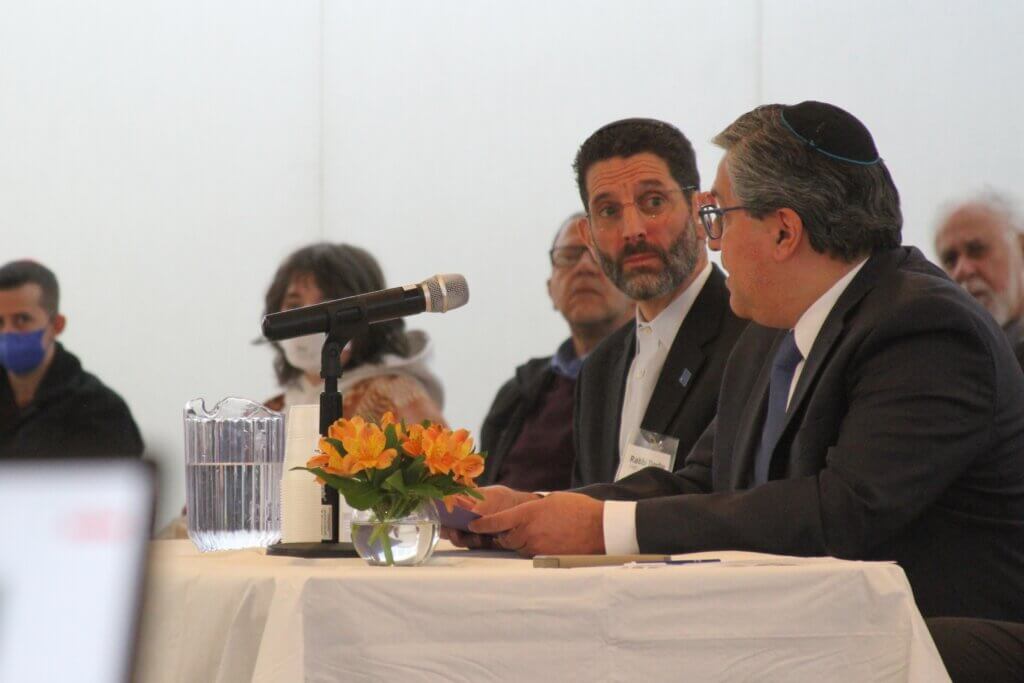
Rabbis’ testimony
The commission held previous offsite meetings in Newton and Springfield.
Kerem Shalom President David Luberoff told The Acton Bridge that “we were quite honored” when Cataldo asked to run a third such public meeting — this time at Acton’s temple, where he celebrated his own bar mitzvah and remains a member.
Leigh said antisemitism has left the Jewish community “emotionally exhausted.”
Karen Thomashow is a Acton resident who serves as senior rabbi at Temple Isaiah in Lexington and whose children attend school here. She said her interactions with teachers as a parent have been “quite decent,” but acknowledged others have had very different experiences.
“We have pockets of love and pockets of hate,” Thomashow said. “We have pockets of understanding and pockets of willful ignorance.”
Acton school administrators have touted their conversations with Thomashow and Leigh since a federal filing this summer surfaced allegations of years of unchecked antisemitic bullying.
Student perspectives
CCHS graduate Itay Heim and current student Maxim Shajenko told The Bridge in recent weeks that school officials rebuffed previous efforts to form what Heim described as a “Jewish culture and history club.” That also came up in special commission testimony from current JSU members.
The JSU began meeting at the start of the school year. Testifying alongside students, school counselor Kelli Kirshtein said administrators “misunderstood some of the requirements for allowing groups to exist, believing that religious-based groups weren’t part of a public school agenda.”
“They have since understood that is not true,” she said, and are now lending the JSU their full support.
Work ahead
The special commission has its critics. Among them, self-described Jewish educator Earnest Arky Solomon told The Bridge he fears the commission will — even if unintentionally — help “create policies that divide Jews from other minorities by saying that genuine speech in support of Palestinian rights is antisemitic.”
Cataldo’s co-chair, state Sen. John Velis (D-Westfield), said the commission frequently hears claims that they “seek to immunize Israel from any kind of criticism,” but that’s not the case.
“Criticism of Israel and anything we’re attempting to do here,” he said, “is not antisemitic.”
Part of the commission’s remaining work will include creating what Cataldo called a “playbook” for communities dealing with hate against Jews. He touted Acton school officials’ responses, including their close partnership with Jewish leaders, and called Acton’s neighboring district “a leader in this space.”
Often, in communities like Acton and Acton, Cataldo said, “the Jews don’t know who each other are.” He praised the JSU for helping connect CCHS students.
Sperber said the commission’s initial findings “acknowledge what many of us have seen locally.”
“The question before us is not whether antisemitism exists — it does,” she said. “The question is whether we choose to treat that reality as the end of the conversation or the start of one that leads to repair.”


