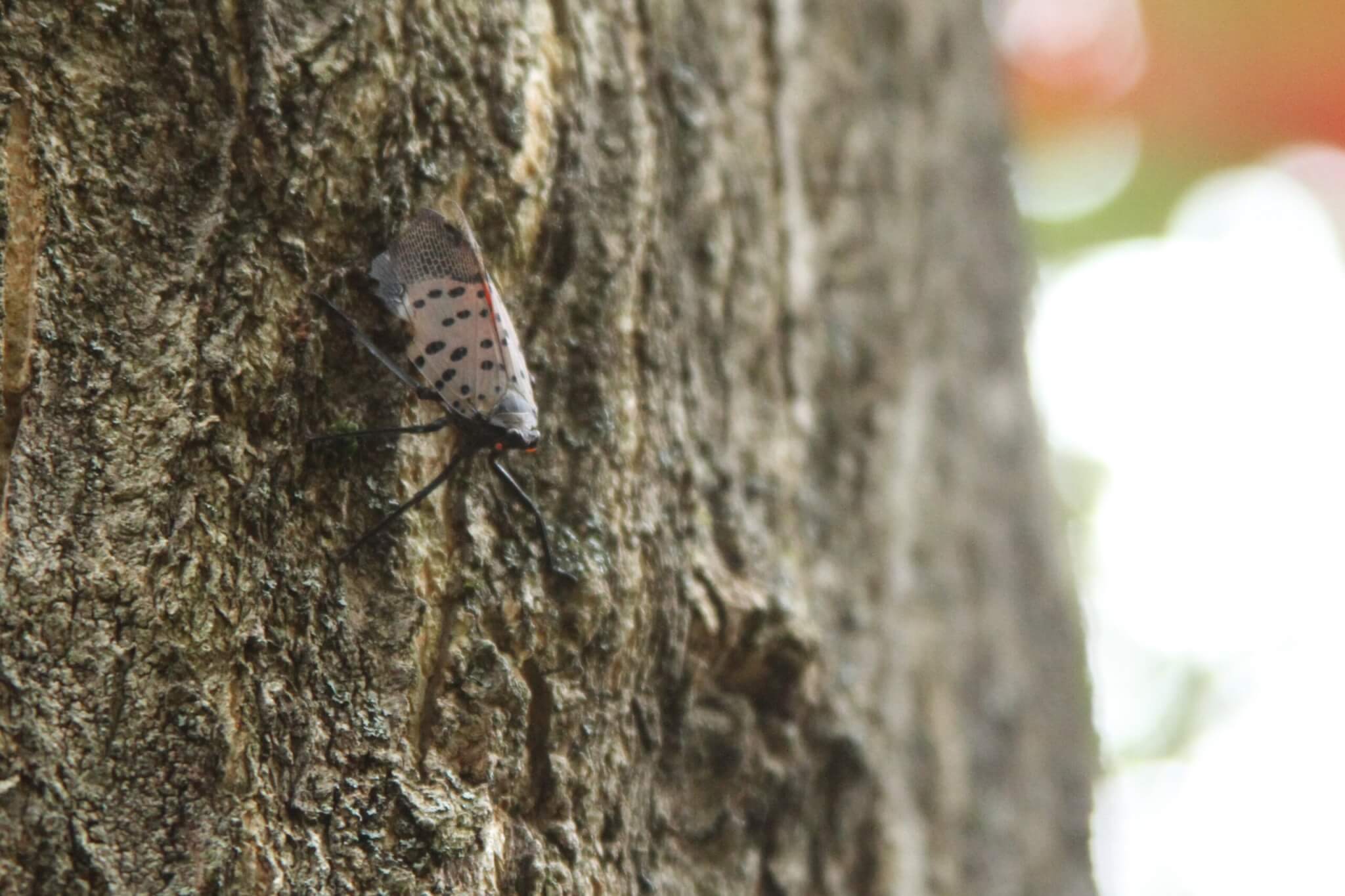
State probing spotted lanternfly infestation at Walden Pond
Town officials announced the discovery on October 20 and said surveyors are trying to determine the scope.
Red-coated invaders are again menacing Acton.
This time, they’re an inch long and on the hunt for fruit trees — not the cannon stash at Col. James Barrett’s Farm.
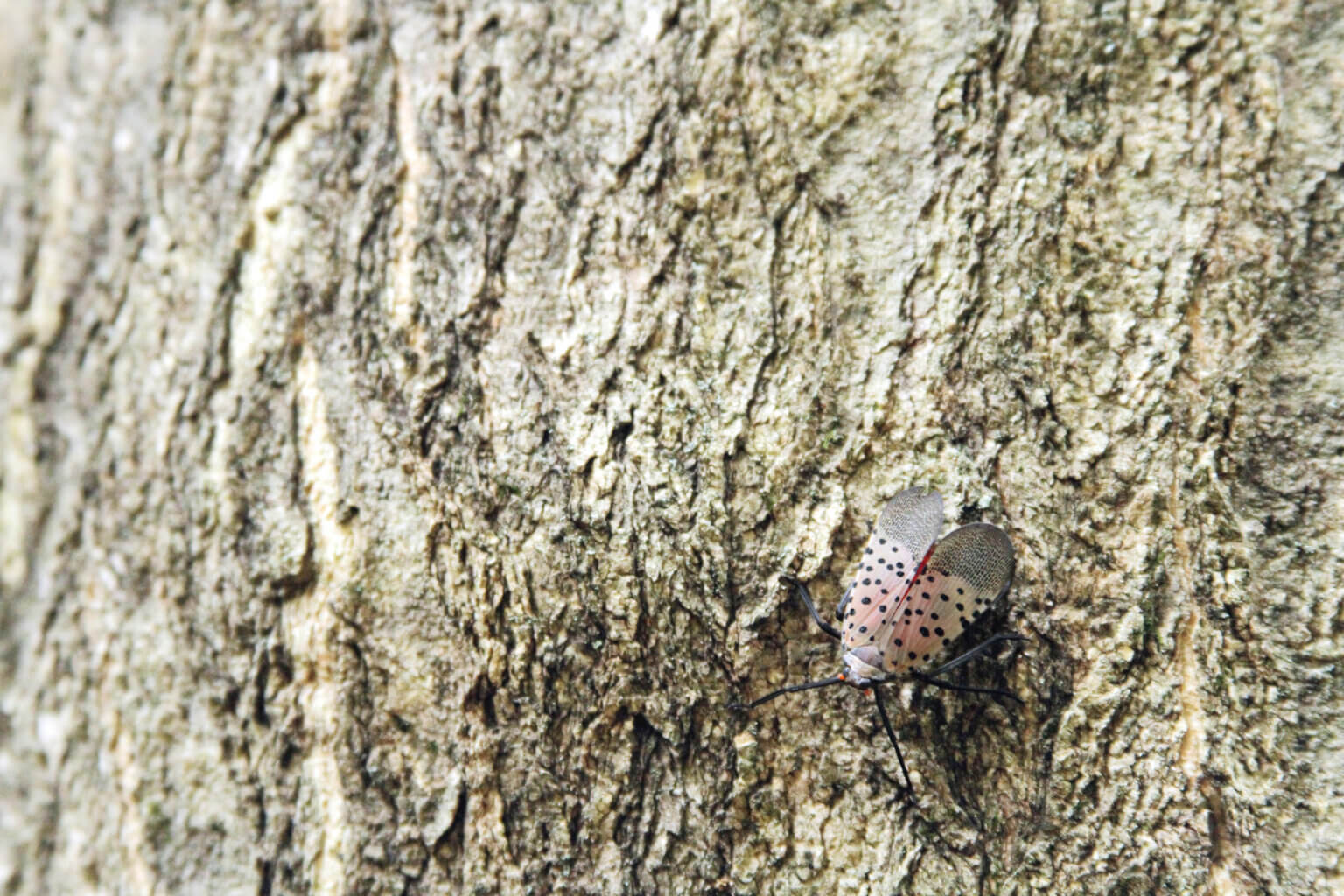
State authorities recently confirmed an infestation of invasive spotted lanternflies at Walden Pond. Town officials announced the discovery on October 20 and said surveyors are trying to determine the scope.
“We are concerned,” Agricultural Committee co-Chair Liza Bemis said in an email to The Acton Bridge.

An emerging menace
Lanternflies originated in Southeast Asia. They arrived in Pennsylvania in 2014, and they’ve been spreading throughout the United States. Lanternflies appeared in Massachusetts in 2021 and are now in dozens of communities statewide.
Lanternflies don’t bite or sting, but they can damage grapevines, fruit trees, and other plants. The bugs produce a sticky residue that can accumulate on patios and other areas and promote mold growth.
A spokesperson for the state Executive Office of Energy and Environmental Affairs said an employee from the Department of Conservation and Recreation first reported a lanternfly on the Walden beach in mid-September.
Experts from the state Department of Agricultural Resources didn’t find any of the insects on the beach but discovered an infested tree near a parking lot behind the Walden visitor center.
Town staff said state and/or federal investigators will be in town over the coming weeks as they search for more of the pests.
Spotting a spotted lanternfly
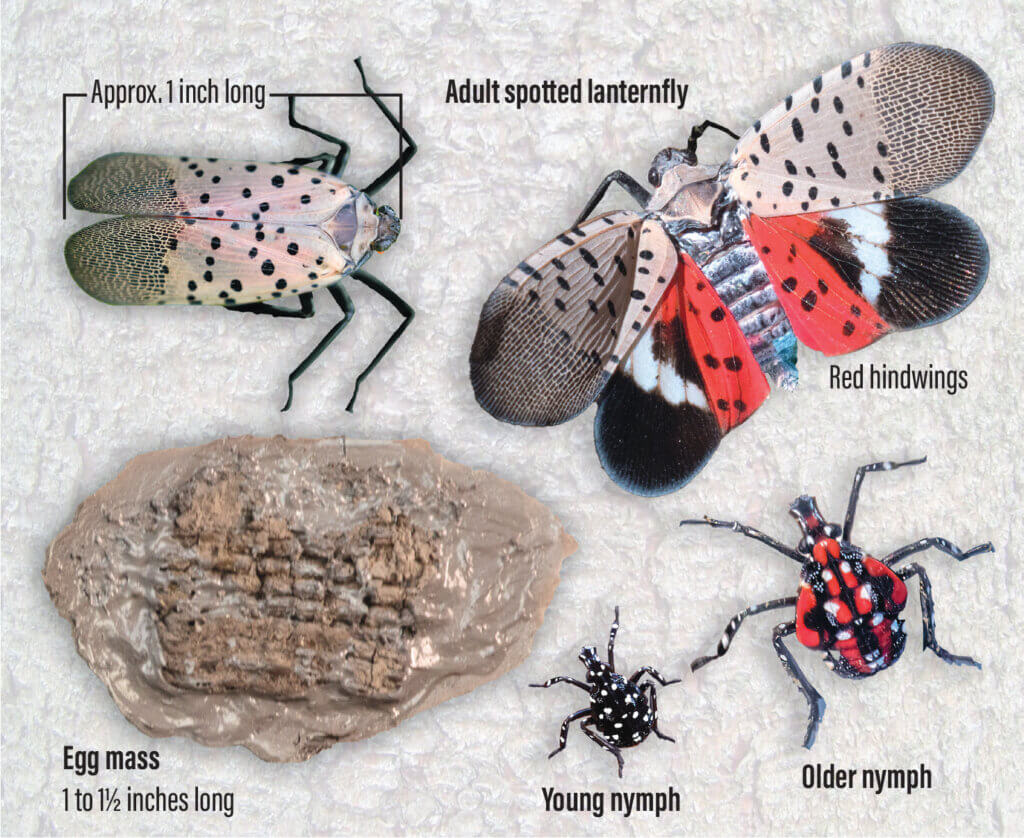
- Spotted lanternflies lay their eggs in gray masses visible from from September to June.
- They’re tiny, wingless nymphs with black and white spots between May and July.
- Older nymphs grow from July through September. They’re red and black with white spots.
- Adults live into December. They have large grayish wings with black spots and a set of red “hindwings.”
Farming fears
Bemis works at Hutchins Farm and said staff there are particularly worried about lanternflies hurting their apple trees. Growing organic apples has always been difficult in New England due to the region’s humidity, she said.
Although they haven’t seen any of the bugs yet, “We are on the lookout for them and wondering what kind of damage they will do,” Bemis said.
Initial infestation might not kill a tree, but Bemis warned that lanternflies could make plants more susceptible to other potentially lethal diseases.
“The increasing pressures from global warming and invasive species are certainly making it harder and harder,” she said.
Options to address lanternflies include removing infested trees, laying traps, and destroying the bugs’ egg masses. There’s also a mix of pesticide options. The state urges anyone who spots a lanternfly to report it at massnrc.org/pests/slfreport.aspx.
Aside from the lanternfly, Bemis said, farmers are seeing more fungal diseases and insect pests that wouldn’t have survived previous winters, “or just weren’t in this area of the country before.”
Threat to local produce
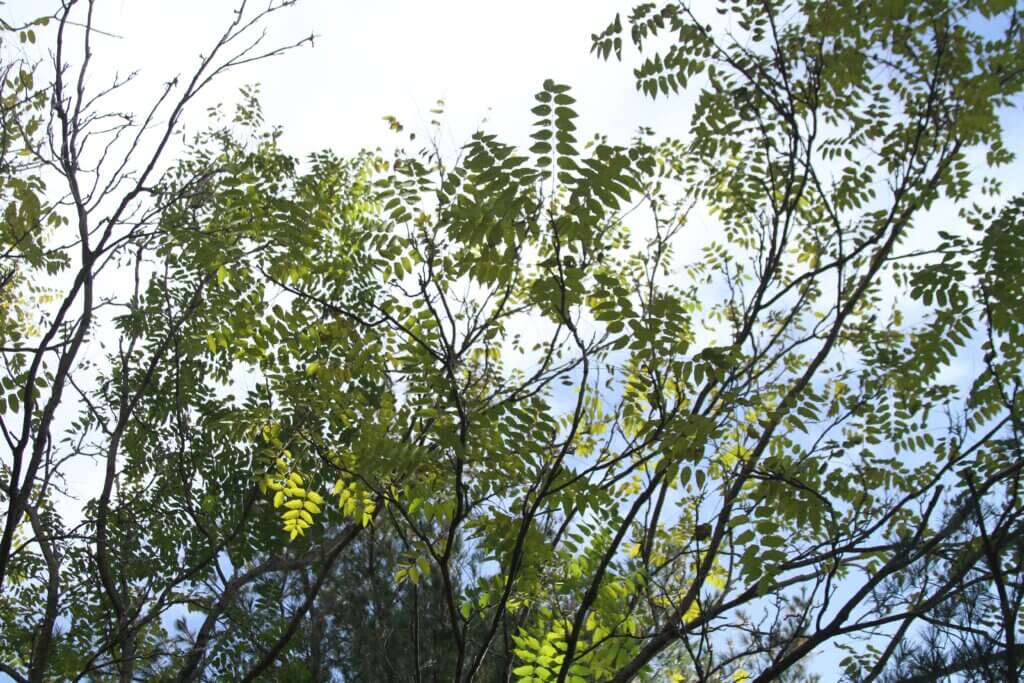
Close to the DCR-run Walden Pond State Reservation, fellow Agricultural Committee co-Chair and Walden Woods farm director Dan Schmid said the farm has wild apple and pear trees, as well as wild grapes. He said he hadn’t seen any lanternflies as of October 23.
A Bridge reporter visited the infested Walden tree and spotted several lanternflies climbing around the trunk.
On the Walden beach, visitors were broadly unaware of the town’s unwelcome guest.
Aleza Beauvais said she has several apple trees on her own farm in Athol. “I don’t want to take any of these back with me,” she said of the lanternflies.
Ben Bryant said he’d heard about the bugs. Told they’d arrived in town, his response was simple.
“That sucks,” he said.