Updated: State’s top court backs town over Estabrook Trail abutters
Estabrook Trail is a public walkway, the state’s highest court ruled Friday, marking what could be a final setback for abutters.
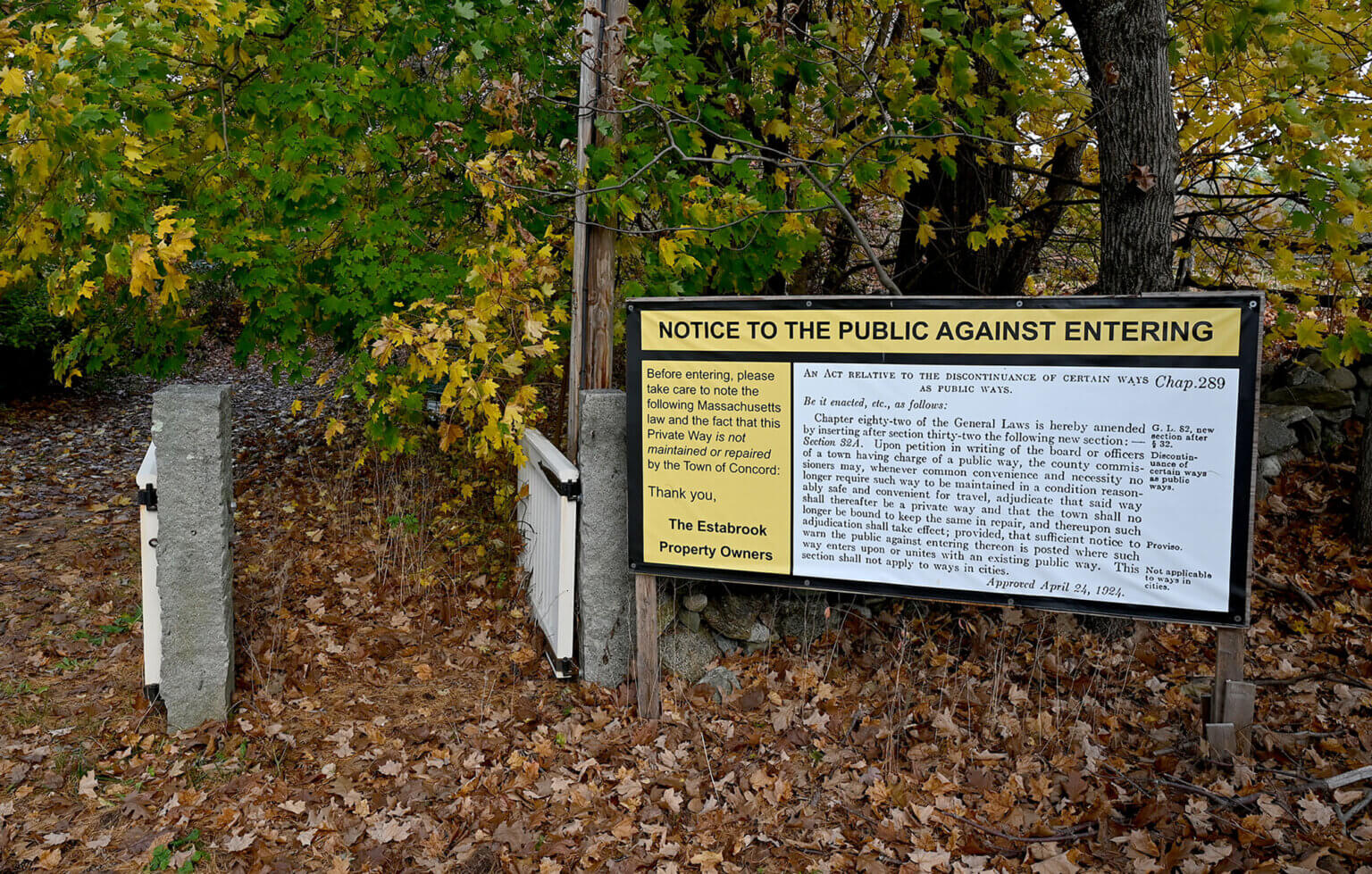
Estabrook Trail is a public walkway, the state’s highest court ruled Friday, marking a victory for town officials and what could be a final setback for abutters.
“The Town of Acton is pleased with the recent decision by the Supreme Judicial Court to uphold the prior rulings in the ongoing legal dispute with the abutters,” Town Manager Kerry A. Lafleur said in an email to The Acton Bridge. “We have maintained throughout this process that the previous decisions by both the Land Court and the Appeals Court were correct and well-founded.”
The Supreme Judicial Court cited multiple lower court findings in its 28-page ruling.
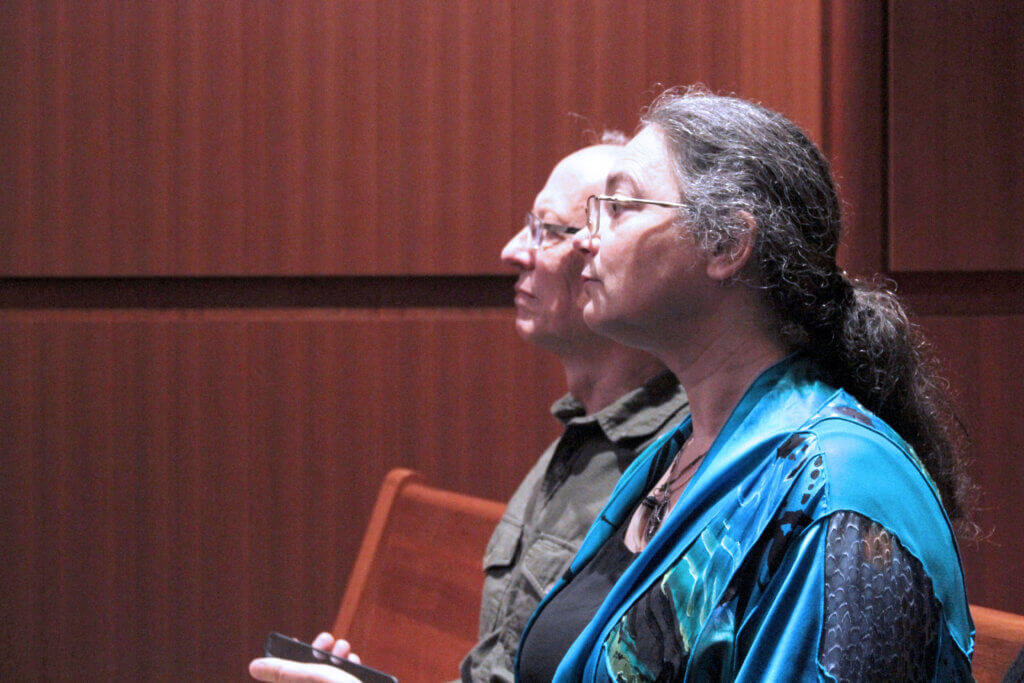
In a statement, abutters Brooks Read and Susannah Kay told The Bridge they were “disappointed but unsurprised by the SJC’s acknowledgement of, yet complete silence, with respect to the content of the amicus briefs the court solicited.”
They continued, “The amicus briefs submitted by REBA (Real Estate Bar Association), MALSCE (Massachusetts Association of Land Surveyors and Civil Engineers), five counties comprising 140 municipalities in Massachusetts, and residents on roads similarly discontinued in Acton, by the same town officials, under the same statute, by the same process as Estabrook were completely ignored. Estabrook is to be treated differently from all others. The application of the foundational tenet of equality under the law is no longer to be expected.”
Judge ‘did not err’
Abutters raised two arguments before the high court: first, that the Land Court judge erred in saying the road was a public way in the first place, and second, if it were a public way, the 1932 county commissioners’ decision to discontinue Estabrook Trail stopped public access.
The SJC, however, said the Land Court judge, who ruled in the town’s favor in November 2022, “did not err.”
“In addition, we hold that the 1932 discontinuance under § 32A, by which the road was adjudicated a ‘private way,’ terminated the town’s obligation to maintain the road in a condition reasonably safe and convenient for travel but left the public’s right to the road undisturbed,” the ruling stated.
A passage citing the Land Use judge’s finding reads: “In addition to this direct evidence, the judge also relied on various forms of circumstantial evidence — among them, town payment records, surveyor assignments, town meeting warrants, and testamentary and conveyancing instruments — in finding that the layout lawfully complied with required conditions.” That section was footnoted: “Specifically, the laying out was conditioned on the abutters granting the land needed for the road to the town.”
The ruling also affirmed an October 2024 Appeals Court modified judgement that “the disputed northern and southern sections of Estabrook Road were laid out as a public way prior to 1932 and that the 1932 order of the county commissioners did not terminate the public’s access to the disputed sections of the road.”

A rocky path
People with property along Estabrook Trail — the unpaved northern section of Estabrook Road between Acton Center and Carlisle — historically allowed public access along the 1.8-mile path. In 2017, citing concerns about off-leash dog walking and other issues, abutters tried to limit this access, and the town sued to stop them. In April 2020, with “increased usage during the coronavirus lockdown and unsafe behavior by some road users,” abutters locked two gates, barring access.
Acton racked up $1.97 million in legal fees as the case wound its way toward the Supreme Judicial Court. The town expected to add another $25,000 because of the defendants’ latest appeal.
The high court’s ruling included anecdotal references spanning centuries, from the writings of Henry David Thoreau — “It is a paradise for walkers in the fall” — to the early days of the Covid-19 pandemic, when throngs strode the trail in the open air.
‘A long process’
Oral arguments were heard in May. Each side had 15 minutes to present its case, and at that time, jurists put lawyers on the defensive. One exchange foreshadowed Friday’s ruling.
“It seems like all the law is going against you,” Justice Scott Kafker told the landowners’ attorney, Gwen Nolan King, during the May 7 court session.
Lafleur said she was hopeful this ruling marks the end of what has been “a long process.”
“The town’s priority has always been to act in the best interest of the community, and we believe this decision confirms and validates our position that the public retains its access rights,” she said.
Monday, August 18: This breaking story has been updated.
Dakota Antelman contributed reporting.


