Student creates virtual ‘waysides’ for Witness Houses
“If I can tell an interesting story that is accessible to a wide range of people, I’ve done my job.”
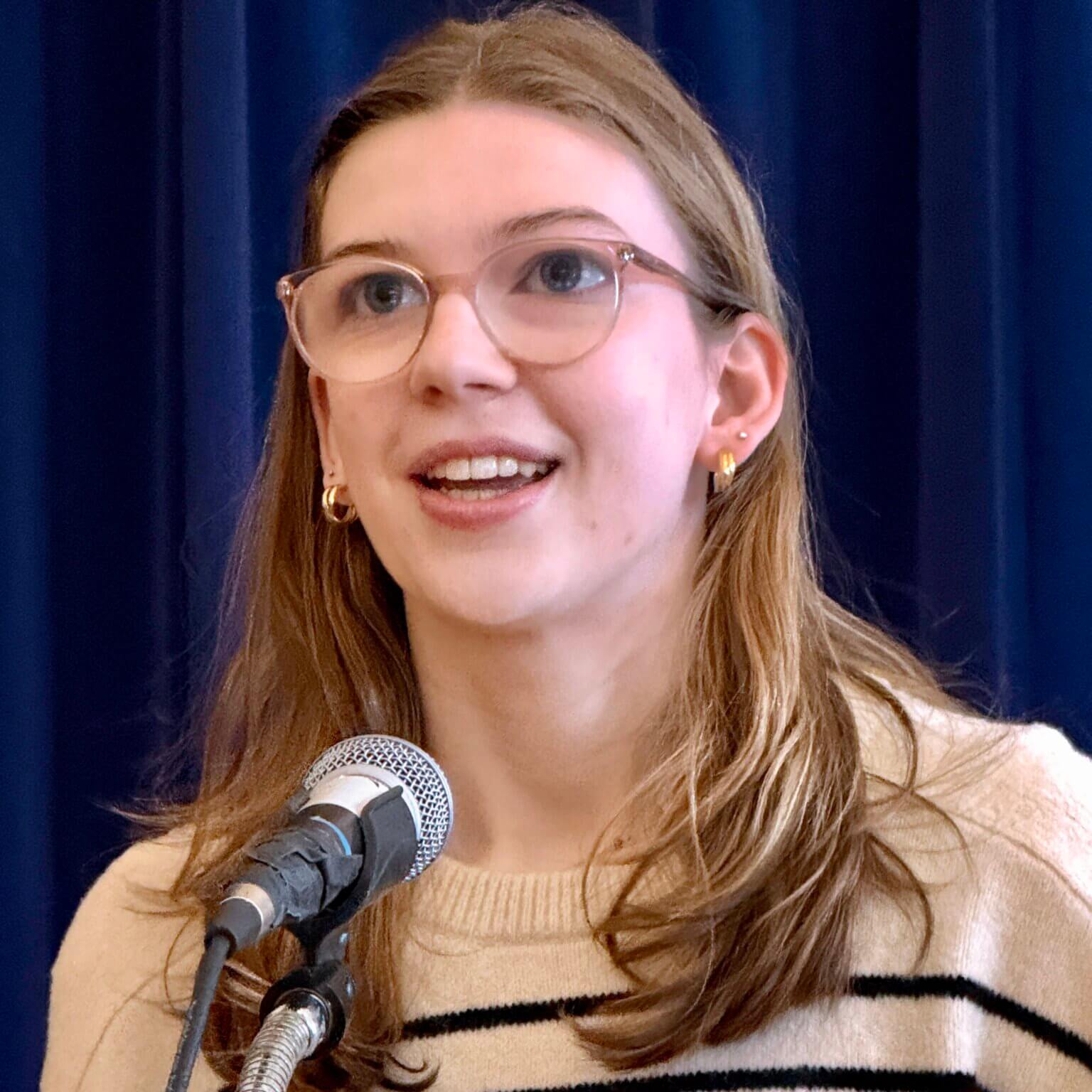
It was while taking a course called U.S. Public History at Acton Academy that senior Hannah Crozier realized “how much I love local history and all of the stories it has to offer.”

Her teacher, Kim Fredrick, had heard that Concord250 wanted to get people involved with the Witness Houses, and “we discussed my doing an individual study,” Hannah says. They decided that Hannah would create virtual signs, which they are calling “waysides,” for several of them.
A database that contains information on every home in the state became the foundation of Hannah’s research. A simple Google search often followed, but she also used sources including historical blogs, journal entries, and newspapers, and she visited Special Collections at the Acton Free Public Library. Once she collected sufficient material, she summarized it and composed the text for the signs.
Her project is a work in process, and so far Hannah has chosen seven houses. They include The Old Manse, the Bullet Hole (Elisha Jones) House, and the Colonial Inn.
Hannah, who lives in Newton, wanted the information on the waysides to be engaging — as if each was providing a story that most people wouldn’t already know.
Augmented reality
The virtual sign for the Old Manse begins with the question, “When was the time you felt the most scared?” and goes on to describe a terrifying moment for Phoebe Bliss Emerson Ripley, Ralph Waldo Emerson’s grandmother.
Late on the night of April 19, 1775, Hannah writes, Ripley was awakened by one of the enslaved men at the house who was holding an ax and “yelling” that the Redcoats were coming. Ripley “fainted on the spot.”
The virtual signs will work like this, Hannah says: “People will go to the Visitors Center on Main Street, and use the Wi-Fi there to access the free Hoverlay app, a program we used with augmented reality software that combines digital aspects with the space around you.”
Then, she adds, “They can go out into Acton and look for the houses included in the project” and there will be a symbol for the app. “If they hold their phone up to it, they can read about the house and in some cases, view a short video.”
Hannah’s goal, she says, “is to get people of all ages engaged in the history of Acton. If I can tell an interesting story that is accessible to a wide range of people, I’ve done my job.”


