Superfund site cleanup could now wrap up in 2031
Ideas still vary on what might someday occupy the long-contaminated industrial hub.
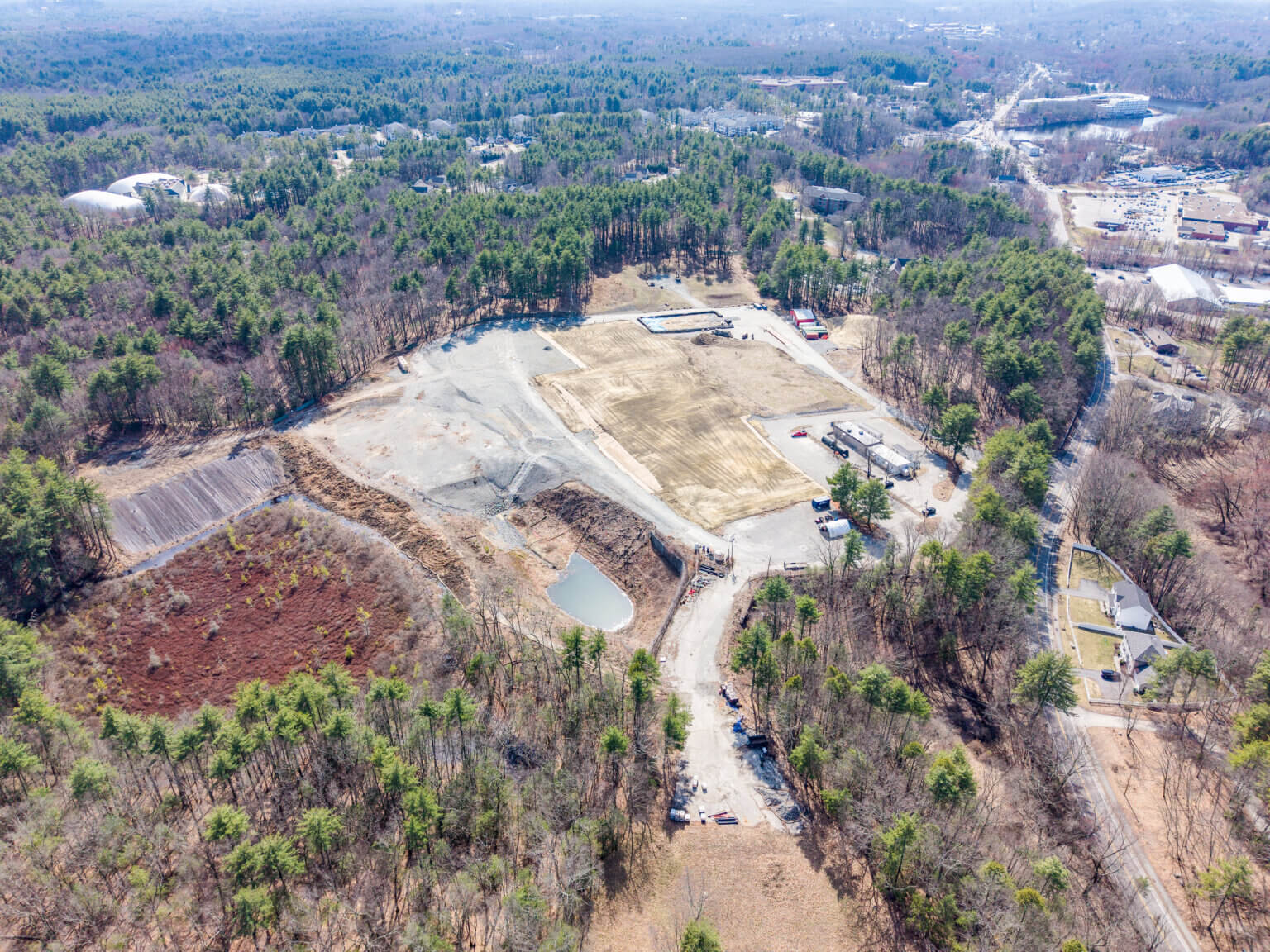
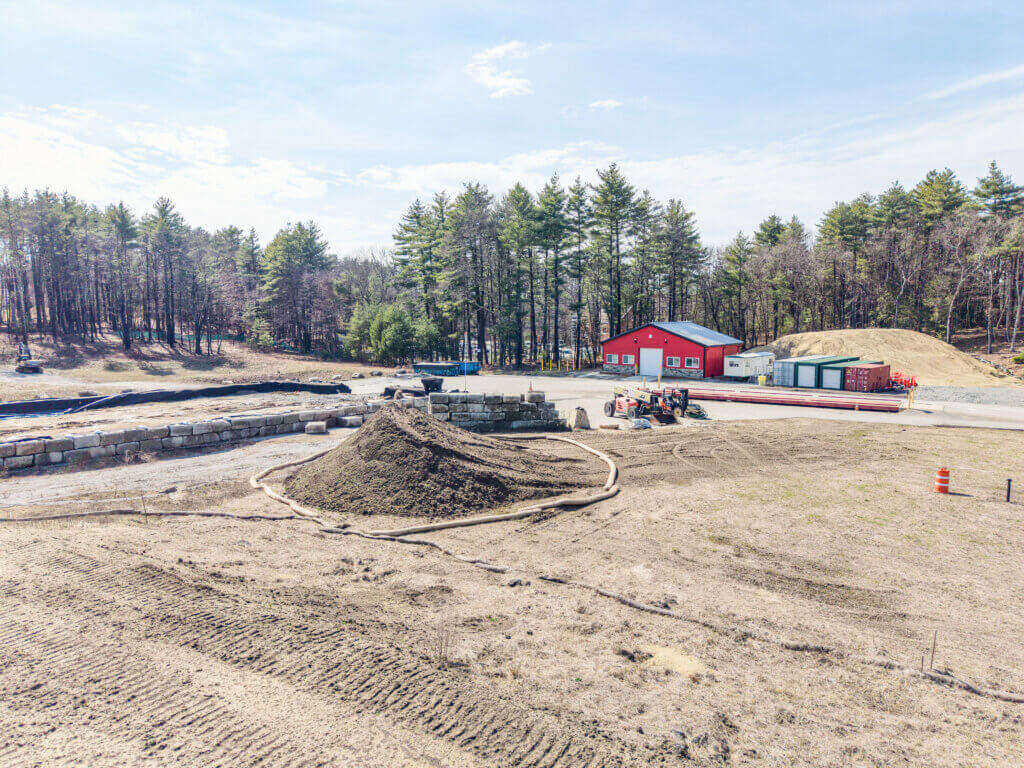
The sacks of iron filings came in on trucks. Over nine months, crews with drilling rigs injected three million pounds of the metal into uranium-tainted dirt at the 2229 Main Street Superfund site.
The process, called in-situ sequestration, aims to keep contamination from spreading through groundwater by changing the soil chemistry. It’s one of several steps in a cleanup operation that Select Board member Paul Boehm said is moving at “warp speed.”
Cleanup will now continue until 2031, officials say.
The town is in talks with the federal government to possibly acquire the 46-acre West Acton property. Ideas still vary on what might someday occupy the long-contaminated industrial hub.
“2029 was optimistic,” Boehm told The Acton Bridge of an earlier goal to finish cleanup. “These guys have been working hard.”
Uranium and groundwater
Workers at 2229 Main, home of the former Nuclear Metals Inc., spent decades making depleted uranium parts for armor-piercing bullets. The state started scrutinizing the site in the 1980s, and the federal government gave it the Superfund designation in 2001.
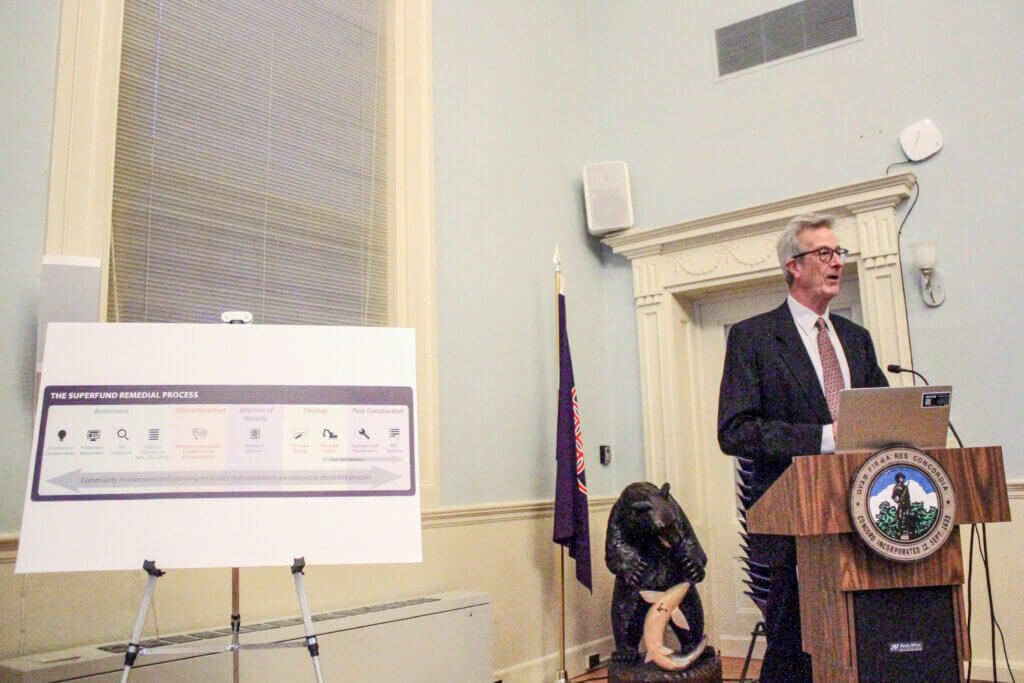
Project coordinator Bruce Thompson detailed the cleanup process during an April 2 community meeting.
One archival photo showed a holding basin turned turquoise by copper deposits. Since-demolished buildings contained thousands of barrels of toxic materials, Thompson said.
Depleted uranium is radioactive, but, Thompson said, “the radioactivity is not really what’s driving us.” Uranium is a heavy metal, and like lead it can have health effects if it gets into drinking water.
The site’s old users “kind of smeared soil contamination” around the property with bulldozers, Thompson said.
Crews have taken more than 35,000 soil and water samples since the federal government got involved in 2001, according to project manager Kara Nierenberg.
Cleanup workers were worried about a chemical plume drifting through the soil toward Acton drinking water wells. They drilled their own wells to intercept and treat tainted groundwater.
Crews plan to excavate areas including a former on-site landfill this year. They’ll dig out another tract in 2029 and have more land marked for “future investigation.”
Workers are cleaning the site to be safe for residential reuse. Trucks and trains are hauling contaminated material to a Michigan landfill.
Crews are previewing a planned “slurry wall” around the once-turquoise holding basin. This 90-foot barrier will go down to bedrock and permanently entomb toxic materials.
Slurry wall construction could start in 2027.
Other planned work includes more iron injections to trap uranium. The project cost has increased, but representatives at this month’s public forum assured attendees that the federal Justice Department has money set aside for settlements against the government.
Planners can tap those funds to keep their cleanup running.
Future functions
Boehm chaired Acton’s 2229 Main Street Advisory Task Force, which studied whether the town should acquire the parcel.
The current team will finish cleanup either way. Boehm told The Bridge that he predicts the town will get the land and told colleagues on Monday that the cleanup delay is due to “staff overload.”
Select Board colleague Mary Hartman said that because it feels like the cleanup is “continually being pushed off,” redeveloping the land is “not part of our conversations.”
Among possible uses, some favor a solar panel field. Sustainability advocate Ted Scott said he’d love to see an industrial composting location.
“Businesses aren’t knocking themselves over to go to 2229 Main,” Economic Vitality Committee member Mark Martines said during a town election forum hosted by the Acton Business Partnership.
Boehm said he’s “not sitting back and waiting for this” and has been personally talking with developers to gauge their interest. He’s floated an indoor recreation facility that could include turf fields and more.
“It’s just a question of getting those companies interested,” he said.
Finance Committee member and local developer John Garofalo backed a similar idea, saying it “would be a great use.”
Acton’s Land Use Working Group considered 2229 Main for things like a new public works headquarters but avoided including it in an initial suite of recommendations.
Boehm predicts “very few” of his ideas for 2229 Main will come to fruition during his tenure on the Select Board. “I view it as my obligation to kind of set these in motion,” he said.


