These old houses: Adding green tech to historic homes
The Acton Municipal Light Plant’s first Mid-Winter Home Tour showcased local examples of modern tech adapted to older structures.
Wendy Rovelli’s Acton Center home was built back when most people heated their houses with wood or coal stoves.
Today, the Select Board clerk has an electric vehicle parked outside and a heat pump on her wall.
The Acton Municipal Light Plant organized its first Mid-Winter Home Tour event last month. Residents signed up to tour three houses, including Rovelli’s 1871 home.
Running 21st-century tech in a 19th-century structure requires workarounds. As Concordians eye more sustainable systems, the Rovellis showcased how they’re figuring it out.
“We didn’t really think it was going to work,” Rovelli told The Acton Bridge, “but it has.”
‘The stakes are high’
Ethan Herberman, one of the CMLP heating and cooling coaches who work with homeowners considering green tech, underscored a town goal of cutting greenhouse gas emissions by 80% by 2050. He said 65% of Acton’s emissions come from buildings.
“The stakes are high,” he wrote in an email.
Heat pumps generally consume less energy than other forms of climate control, but CMLP staff say they often field questions about how well they stand up to New England winters.
“It’s not as simple as just having a furnace,” said another home tour host, Brad Hubbard-Nelson, “but, designed right and maintained right, I think it’s a great solution.”
What’s a heat pump?
Heat pumps come in different varieties, but they all use the same general process to warm or cool a home efficiently.
In winter, systems collect energy from the air or ground outside a house, concentrate it, and release warm air inside the house. In the summer, they work in reverse, gathering indoor warm air and dumping it outside.
Rovelli said her family had to go with a ductless heat pump — their horsehair plaster walls prevented installing conduit.
Her home has “funky, small little rooms,” she said, so there are spots the heat pump doesn’t reach. She and her husband have learned to keep doors open to let heat move through the house.
The Rovellis added insulation. They considered upgrading their windows, but found a full replacement too expensive. Modern off-the-shelf options wouldn’t fit, Rovelli said, and they would have had to buy custom versions.
Instead of replacing their windows, the Rovellis restored them to keep heat from escaping.
1950s preservation
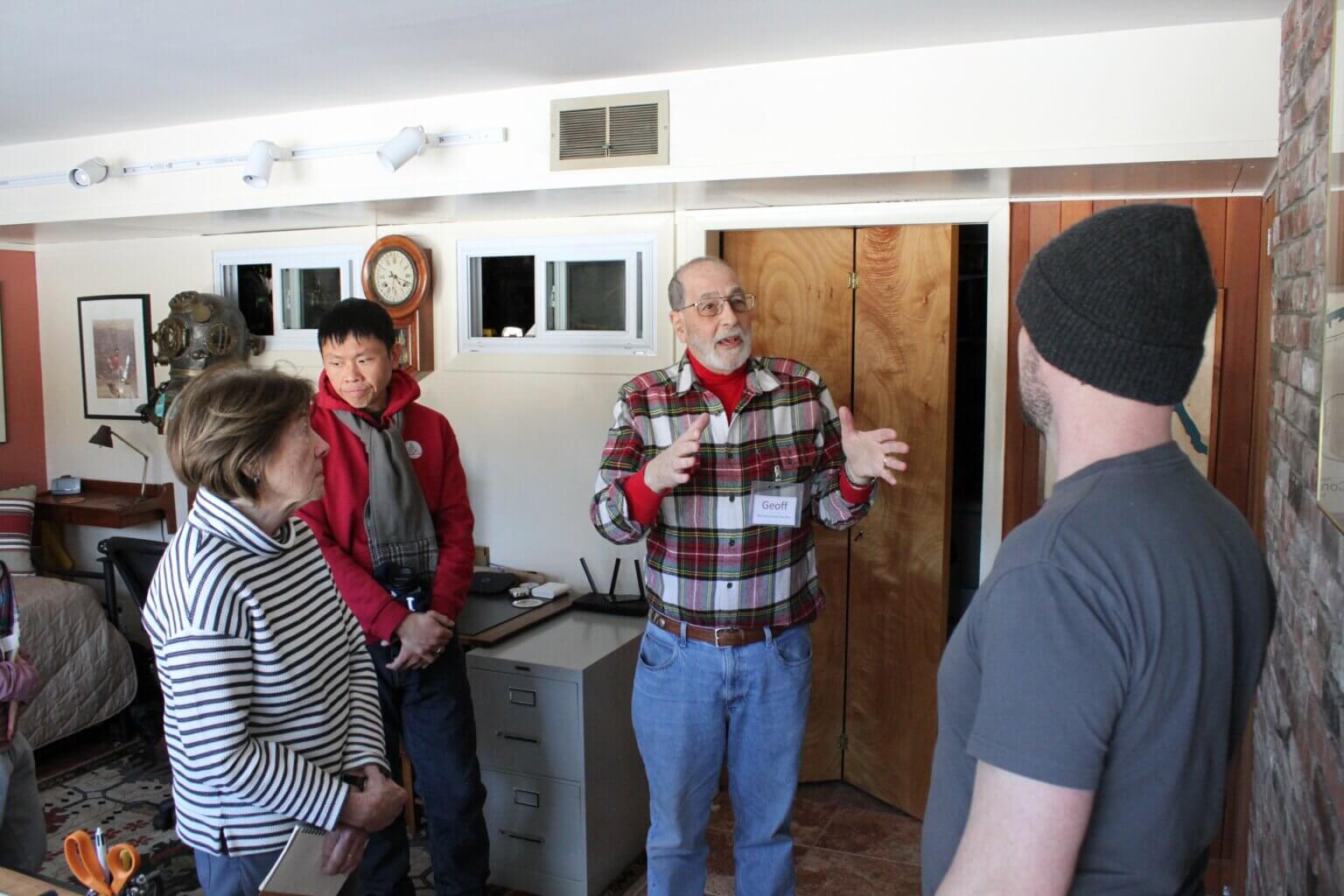
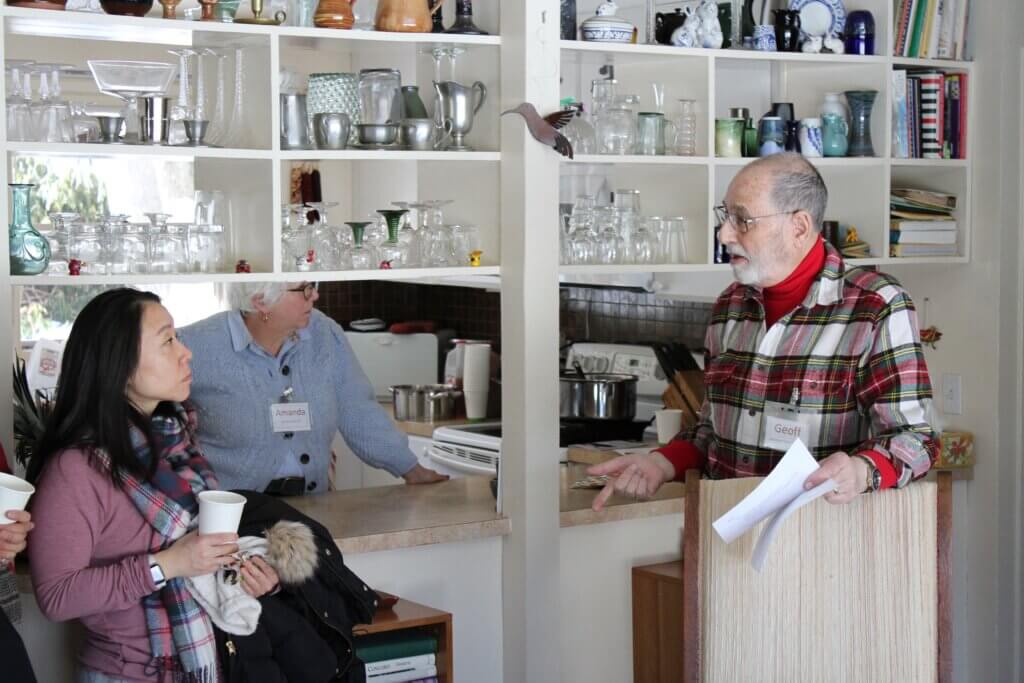
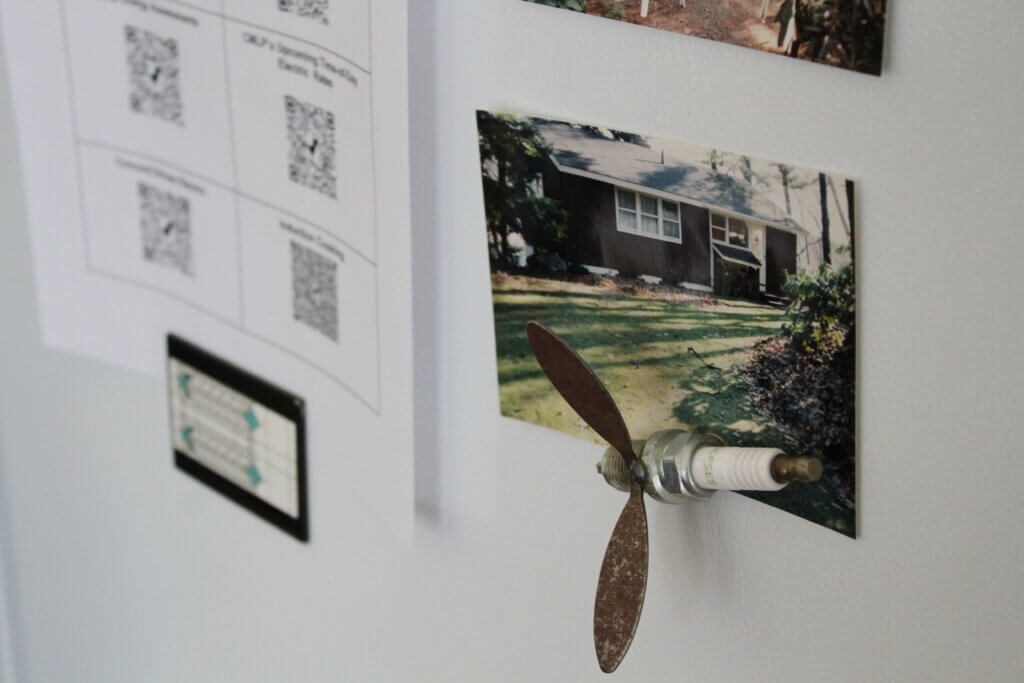
Acton is well known for houses as old as — or older than — Rovelli’s. Geoff and Electa Tritsch have a different slice of history in the Conantum neighborhood, which architect Carl Koch designed as a 1950s planned community.
Their house is “pretty much original” to its construction, Geoff Tritsch said, “and we like to keep it that way.”
Tritsch and his wife have made upgrades anyway.
Like the Rovellis, they considered replacing their windows but opted to refit them instead — due, in part, to the estimated replacement cost of $1,000 apiece.
As they considered heat pumps, their preservation goals led to a system without wall-mounted equipment that could disrupt indoor aesthetics.
The system “struggles from time to time,” Geoff said, but it generally keeps up.
‘What I’m trying to do’
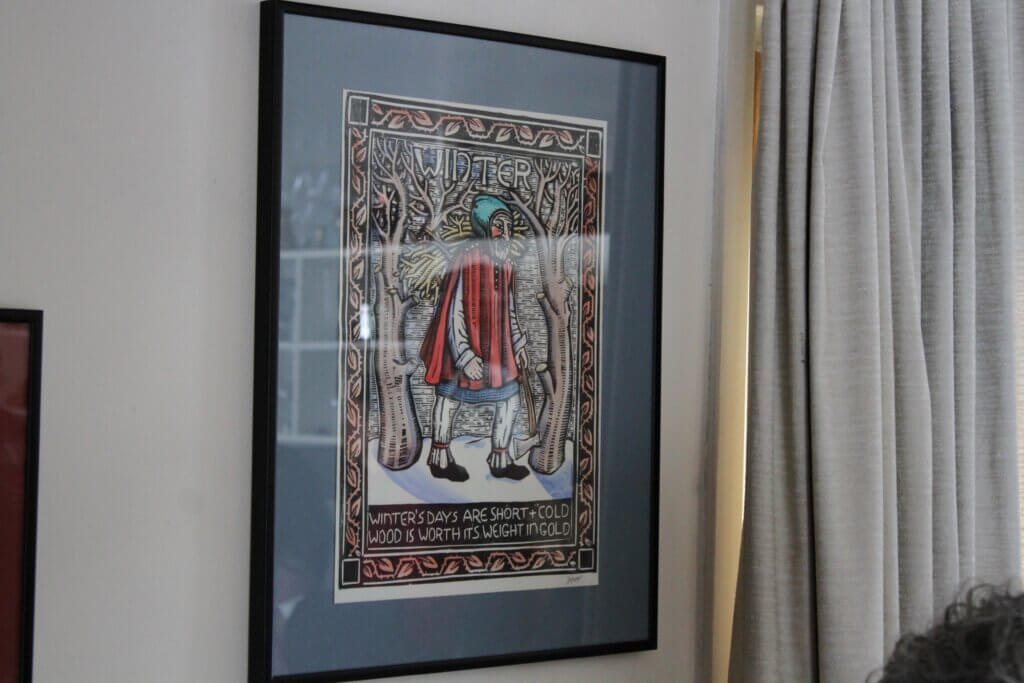
As guests sat inside the Tritsches’ house, a woodcut print on the wall nodded to the fuel that kept generations of Concordians warm long before heat pumps: Painter Mary Azarian’s tableau shows a bearded man with an ax in hand.
“Winter’s days are short + cold,” a caption read. “Wood is worth its weight in gold.”
Attendee Chad Lawson is renting in Acton and looking to buy a house. The Tritsch family’s presentation, he said, “matches up exactly with what I’m trying to do” in a new home.
Fellow visitor Edie Lipinski said she lives in a house built around the same time as the Tritsch home. She and her husband have made some improvements, she said, and heat pumps piqued her interest.

Cost savings
Town reports from the late 1800s show leaders lamenting oil costs as they considered switching to electric street lights. Nearly 150 years later, those considering green tech are similarly cost-conscious.
President Donald Trump’s administration has backed off federal EV and heat pump incentives. “We need to double down,” state Sen. Michael Barrett, whose district includes Acton, told The Bridge.
Tritsch said his family’s heat pump was roughly $2,000 more than an upgraded oil system, even with a rebate.
Climate Action Committee Chair Brad Dye acknowledged significant upfront installation costs for sustainable systems, even though they can eventually pay off.
The state “absolutely has to” redouble its efforts, he said.
Lipinski said that while she was checking out the Tritsch home, her husband was visiting the Hubbard-Nelsons’ newer 1985 house.
“We’ll sort of get together and see what the savings are going to be,” she said.
CMLP coaches are available to help Concordians with sustainable home upgrades. Learn more at concordma.gov/2777/HeatingCooling-Coaches.


