Tick bite hospital visits spike as officials amplify alarms
Public health experts are redoubling their efforts to keep people from getting bitten in the first place.

Emerson Hospital visits due to tick bites are up more than 50% this year.
With new threats arriving, public health experts are redoubling their efforts to keep people from getting bitten in the first place.
“Ticks are a big topic right now,” town Public Health Nurse Katie Stanislawzyk told the Board of Health on June 17.
Most tick bites don’t cause illness, Emerson emergency medicine specialist Dr. Deborah Greene told The Acton Bridge, but it’s important to watch for symptoms.
Forty-three people headed to Emerson’s emergency department with a tick-related complaint from March 1 to June 18, 2025. This year, the same stretch drew 65 patients — a 51% spike — per hospital data.
Emerson Health is also seeing an uptick at its urgent care centers. From January to June 2025, 360 people sought treatment for tick bites. This spring, 585 came calling.
Tick-borne illnesses vary. Greene said people should watch for symptoms including fever, fatigue, headaches, body aches, and expanding rashes, “especially during the summer months.” People should also keep an eye out for flu-like symptoms.
If symptoms develop, even without a known tick bite, Greene said, it’s important to seek medical attention.
“Most tick-borne illnesses respond very well to early recognition and treatment,” she said.
People should head to the emergency room if they have “more serious symptoms,” such as trouble breathing, confusion, severe headaches, facial droop, significant weakness, “or other neurologic changes,” Greene said through a hospital spokesperson.
Experts blame warmer weather due to climate change and booming deer populations for at least some of the increase in tick numbers and bite complaints.
Bite-related hospital visits usually peak in May in the Northeast, according to the Centers for Disease Control and Prevention. This year’s tick season hit harder earlier, with a larger share of related April ER visits than in any year since 2017.
Alpha-gal fears
Lyme disease has long been a familiar tick-borne scourge. Stanislawzyk said Acton officials also see babesiosis, which can prove life-threatening for certain vulnerable groups.
Plus, there’s human granulocytic anaplasmosis.
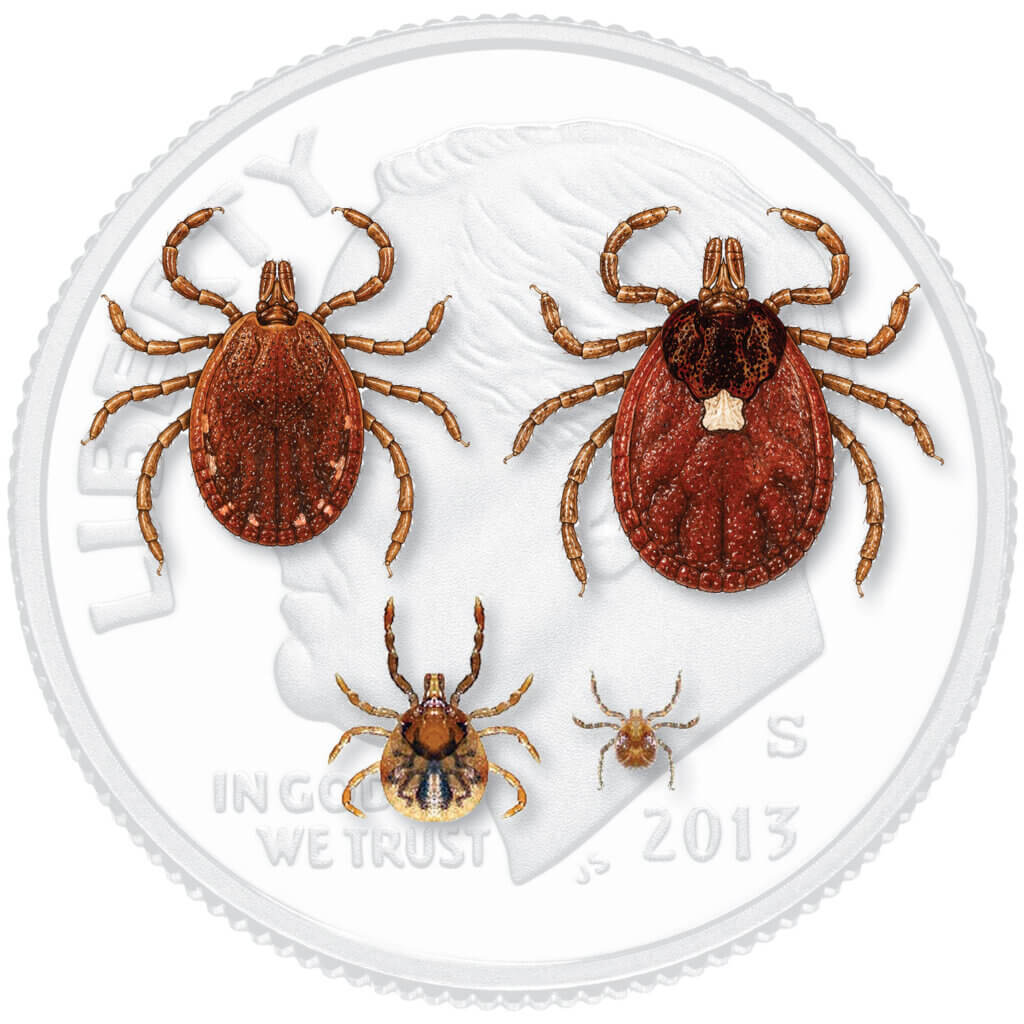
Officials have been on the lookout for alpha-gal syndrome, a potentially deadly allergy to a molecule in many animal products. Unlike Acton’s more common diseases, alpha-gal syndrome spreads mostly through lone star ticks.
Public Health Director Melanie Dineen warned in May that the lone star tick had probably arrived here as it expands its range.
Acton’s first documented alpha-gal case involved someone who was bitten years ago in Martha’s Vineyard, Dineen said.
The town now has a second case, and this one originated locally, Board of Health Chair Dottie Bernard said at a recent meeting of fellow committee heads.
Stanislawzyk said she recently helped staff an information table at the Acton Free Public Library. Staffers passed out tick removal kits and promoted a program where people who find a tick can send it for disease testing.
In terms of prevention, experts have a simple adage.
“The answer is ‘don’t get bit,’” Dineen told the Board of Health.
Alpha-gal cases remain rare. But as the cases crop up, they’re striking fear into Concordians.
“No one wants to not eat red meat for months to the rest of their life,” Stanislawzyk said.
Tick prevention best practices
- Perform regular tick checks after being outdoors.
- Use repellent spray or clothing treated with permethrin to ward off ticks.
- Wear long pants and long sleeves when working or walking outdoors.
- Deploy “tick tubes” to target ticks via mice which host them.
Source: Town Health Division

Make a tick tube: Stuff a cardboard toilet paper tube with cotton balls or dryer lint treated with permethrin and place it in areas where mice are active.


